Product Overview & Key Features
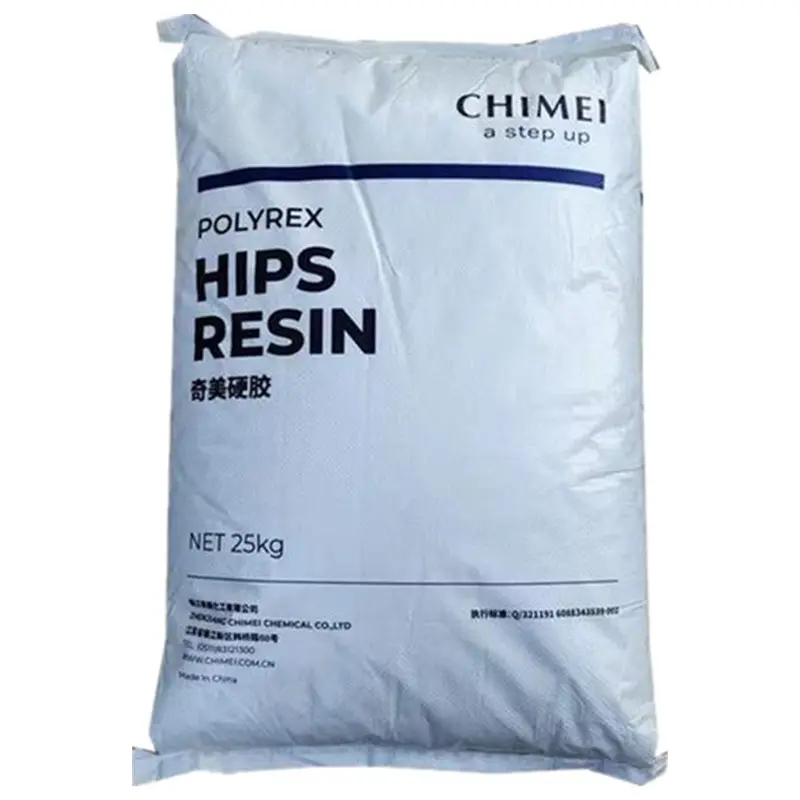
ChiMei POLYREX PH-88 is a high-impact polystyrene (HIPS) injection molding and extrusion resin produced by ChiMei Corporation. As a classic impact grade within the POLYREX polystyrene product matrix, this material maintains the excellent processing and molding characteristics of polystyrene while significantly enhancing impact toughness and crack resistance through rubber-phase modification. Its core physical and mechanical performance metrics include: a density of 1.03 g/cm³, a melt volume flow rate of 5.5 cm³/10 min (200 °C, 5 kg), a tensile strength at break of 24 MPa, an elongation at break of 40%, a flexural modulus of 2100 MPa, and a notched Charpy and Izod impact strength of 11 kJ/m². In terms of thermal performance, its unannealed heat deflection temperature is 74 °C (1.8 MPa), its Vicat softening point reaches 90 °C, and its flame retardancy rating is UL 94 HB (1.5 mm). This grade features excellent melt fluidity, a balanced combination of rigidity and toughness, good dimensional stability, and outstanding secondary processing properties (such as printing, bonding, and electroplating finishes), making it ideal for manufacturing industrial housings and daily goods components via injection molding or extrusion processes.
Technical Specifications
Physical Properties
| Physical Properties | Test Value | Unit | Test Standard |
| Density23 °C | 1.03 | g/cm³ | ISO 1183 |
| Melt Volume-Flow Rate200 °C, 5 kg | 5.5 | cm³/10 min | ISO 1133 |
Mechanical Properties
| Mechanical Properties | Test Value | Unit | Test Standard |
| Tensile Strength, Break50 mm/min | 24 | MPa | ISO 527-2/50 |
| Tensile Strain, Break50 mm/min | 40 | % | ISO 527-2/50 |
| Flexural Modulus2 mm/min | 2100 | MPa | ISO 178 |
| Flexural Strength2 mm/min | 37 | MPa | ISO 178 |
| Charpy Impact Strength, Notched4 mm, 23 °C | 11 | kJ/m² | ISO 179 |
| Izod Impact Strength, Notched4 mm, 23 °C | 11 | kJ/m² | ISO 180/1A |
Thermal Properties
| Thermal Properties | Test Value | Unit | Test Standard |
| Heat Deflection Temperature, Unannealed1.8 MPa | 74 | °C | ISO 75-2/A |
| Heat Deflection Temperature, Annealed1.8 MPa | 89 | °C | ISO 75-2/A |
| Vicat Softening Point50 °C/h, 10 N | 90 | °C | ISO 306/A50 |
| Coefficient of Linear Thermal Expansion (CTE), Parallel | 4.0E-5-6.0E-5 | cm/cm/°C | ISO 11359-2 |
| Flame Rating1.5 mm | HB | — | UL 94 |
Disclaimer: The technical specifications for ChiMei POLYREX PH-88 presented herein are derived from data issued by ChiMei or certified third-party testing institutions. While we have made every effort to ensure the accuracy of the information provided, we assume no liability for any consequences arising from the use of PH-88 based on these data. Given the variables involved in processing conditions, we strongly recommend conducting thorough trials of PH-88 under your specific operational environment prior to final material selection.
Applications & Processing Guidelines
Recommended Applications
- Home Appliances: Extensively used to produce television housings, air conditioner panels, washing machine structural components, as well as interior storage boxes and partitions for refrigerators.
- Consumer Electronics & Office Equipment: Suitable for printer, copier, and fax machine enclosures, internal brackets, and panel components.
- Daily Goods & Toys: Commonly utilized to manufacture children’s toys, model bases, stationery items, and light industrial turnover containers.
- Sheet & Thermoforming Packaging: Leveraging its favorable thermoforming properties, it can be extruded into sheets and subsequently processed via vacuum forming into various interior packaging trays.
Practical Processing Guidelines
- Drying Treatment: HIPS resin possesses low moisture absorption and can typically be introduced directly into production under normal workshop conditions. If operating in high-humidity seasons or if the raw material has been exposed for extended periods, pre-drying at 70 °C to 80 °C for 2 to 3 hours is recommended to prevent surface silver streaks on finished parts.
- Injection Molding Parameters: Recommended melt temperatures range between 190 °C and 230 °C, with mold temperatures maintained at 40 °C to 60 °C. Supported by an MFR of 5.5 cm³/10 min, this material exhibits favorable cavity filling fluidity, suiting moderately complex structural parts.
- Molding and Shrinkage Control: The molding shrinkage rate remains relatively stable. Mold design should incorporate appropriate draft angles and ensure uniform cooling channels to prevent localized stress concentration.
Logistics, Packaging & Compliance
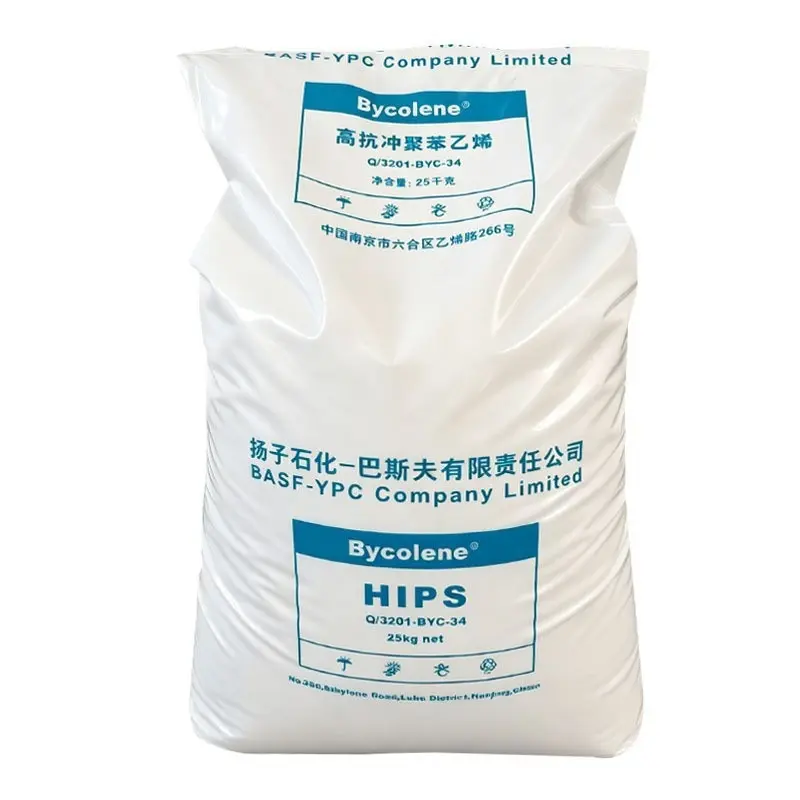
- Packaging Specifications: Packed in standard 25 kg moisture-proof inner-lined composite bags to effectively prevent moisture and contamination during transit and storage; bulk big bags are also supported upon request to accommodate automated continuous factory feeding.
- Hazardous Classification: Classified as a non-hazardous chemical (Non-DG), complying with standard cargo transportation regulations.
- Delivery & Logistics: Backed by ready stock across major domestic ports and inland storage hubs, supporting full container load (FCL), less than container load (LCL), and multimodal land-sea transport to ensure rapid order response and delivery.
- Compliance Certifications: Each outgoing batch can be accompanied by complete manufacturer Technical Data Sheets (TDS), Material Safety Data Sheets (MSDS/SDS), and Certificates of Analysis (COA), fully satisfying environmental compliance requirements under EU RoHS directives and REACH regulations.
- ESG & Environmental Statement: As a recyclable thermoplastic polymer material, this grade supports physical recycling pathways (shredding and re-pelletizing). We champion green supply chain management and encourage customers to appropriately reuse clean runner scraps and trimmings during production, assisting enterprises in meeting sustainable development goals.
Frequently Asked Questions (FAQs)
Q1: Is pre-drying mandatory before processing ChiMei POLYREX PH-88?
A1: Because HIPS resin features extremely low moisture uptake, it can be processed directly upon opening under well-sealed package conditions. However, in regions with high ambient humidity or extended storage durations, drying at 70 °C for 2 hours is advised to ensure bubble-free and defect-free surfaces.
Q2: What are the primary performance and application differences between PH-88 and General-Purpose Polystyrene (GPPS)?
A2: GPPS offers superior transparency and hardness but remains brittle and prone to shattering. In contrast, PH-88 utilizes rubber blend modification (HIPS); while sacrificing transparency (appearing as an opaque milky-white or dyeable form), it drastically enhances notched impact strength (11 kJ/m²) and crack resistance, rendering it far more suitable for housings and structural parts subjected to mechanical stress.
Q3: Is this grade better suited for injection molding or extrusion thermoforming?
A3: Possessing both excellent melt strength and fluidity, PH-88 serves as a classic injection molding material (widely used in home appliance and electronics enclosures) while also being frequently utilized by clients for sheet extrusion followed by vacuum thermoforming due to its favorable processing window.