Product Overview & Key Features
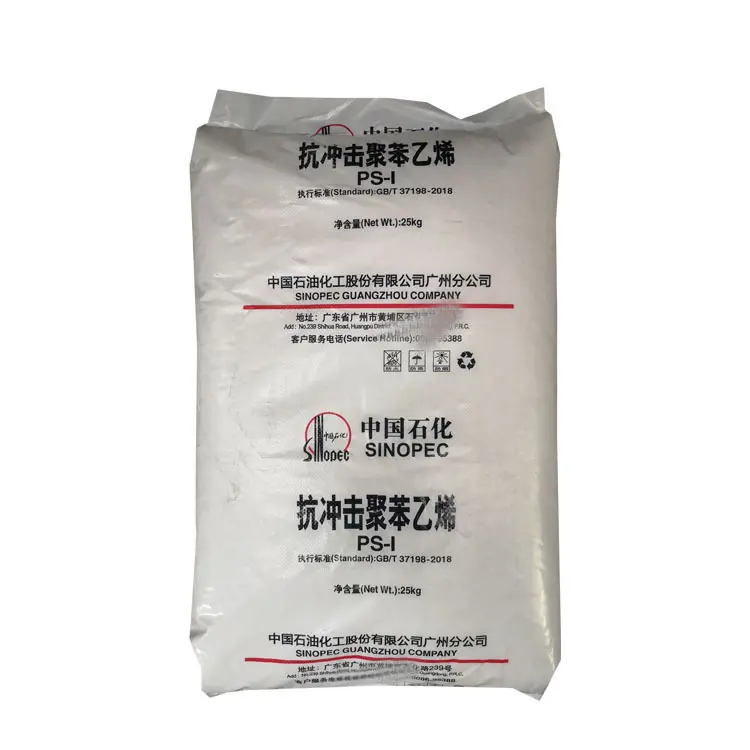
GH-660 is a high-impact polystyrene (HIPS) injection molding grade resin produced by Sinopec Guangzhou Petrochemical Company. The material appears as milky-white opaque pellets and is a general-purpose impact grade with a medium melt flow rate and high rubber phase content, with an MFR ranging from 5.5 to 7.5 g/10 min. The core characteristic of GH-660 lies in the introduction of a polybutadiene rubber phase via in-situ polymerization, which significantly enhances material toughness while maintaining the good rigidity and processability characteristic of PS: it features a notched Izod impact strength of ≥ 71 J/m, a tensile strength of ≥ 17 MPa, and an elongation at break of ≥ 30%. Specifically designed for injection molding processes, this grade is widely applied in home appliance casings, consumer electronics, and daily necessities sectors that require a combination of rigidity, surface gloss, and impact resistance, making it one of Sinopec’s primary HIPS supply grades in the South China market.
Technical Specifications
Physical Properties
| Property | Test Condition | Value | Unit | Test Method |
| Melt Flow Rate (MFR) | 200℃/5kg | 5.5–7.5 | g/10min | ISO 1133 (or equivalent) |
Mechanical Properties
| Property | Test Condition | Value | Unit | Test Method |
| Tensile Strength | — | ≥ 17 | MPa | ISO 527 (or equivalent) |
| Tensile Strain at Break | — | ≥ 30 | % | ISO 527 (or equivalent) |
| Notched Izod Impact Strength | — | ≥ 71 | J/m | ISO 180 (or equivalent) |
Disclaimer: The technical specifications for Sinopec Guangzhou Petrochemical GH-660 presented herein are derived from data issued by Sinopec Guangzhou Petrochemical Company or certified third-party testing institutions. While we have made every effort to ensure the accuracy of the information provided, we assume no liability for any consequences arising from the use of GH-660 based on these data. Given the variables involved in processing conditions, we strongly recommend conducting thorough trials of GH-660 under your specific operational environment prior to final material selection.
Applications & Processing Guidelines
Typical Applications:
- Home Appliance Casings: Front and rear frames of television sets, washing machine control panels, indoor air conditioner unit casings, refrigerator liner partitions, and microwave oven door panels.
- Consumer Electronics: Printer and copier housings, monitor bezels, audio equipment enclosures, and router housings.
- Daily Use & Office: Storage boxes, file boxes, toy housings, clothes hangers, and bathroom accessories.
- Packaging & Containers: Thin-walled packaging boxes, disposable food containers (compliance verification required for non-food grade applications), and cosmetic packaging cases.
Processing Guidelines:
- Drying Pretreatment: HIPS has low moisture absorption (typically < 0.1%) and generally does not require drying when packaging remains intact and well-sealed. However, in high-humidity environments (relative humidity > 70%) or when raw materials are exposed for extended periods, hot-air drying at 70–80 °C for 1–2 hours is recommended to prevent bubbles or silver streaks from appearing in the melt, which could affect the surface appearance of the part.
- Injection Molding Process: The recommended melt temperature ranges between 190 °C and 230 °C. Mold temperature should ideally be controlled between 20 °C and 50 °C to shorten cooling time and enhance production efficiency. Injection pressure typically ranges from 60 to 100 MPa, with holding pressure set at 50–70% of the injection pressure. Care should be taken to control back pressure (typically 0.5–1.0 MPa) and screw speed to prevent material degradation or yellowing caused by excessive shear heat.
- Regrind Usage: Clean runner scrap generated during production can be recycled and reused. A virgin-to-regrind ratio of 4:1 or 3:1 is recommended, alongside close monitoring of melt flow index variations and color consistency to ensure the mechanical strength and appearance of the final parts meet requirements.
Logistics, Packaging & Compliance
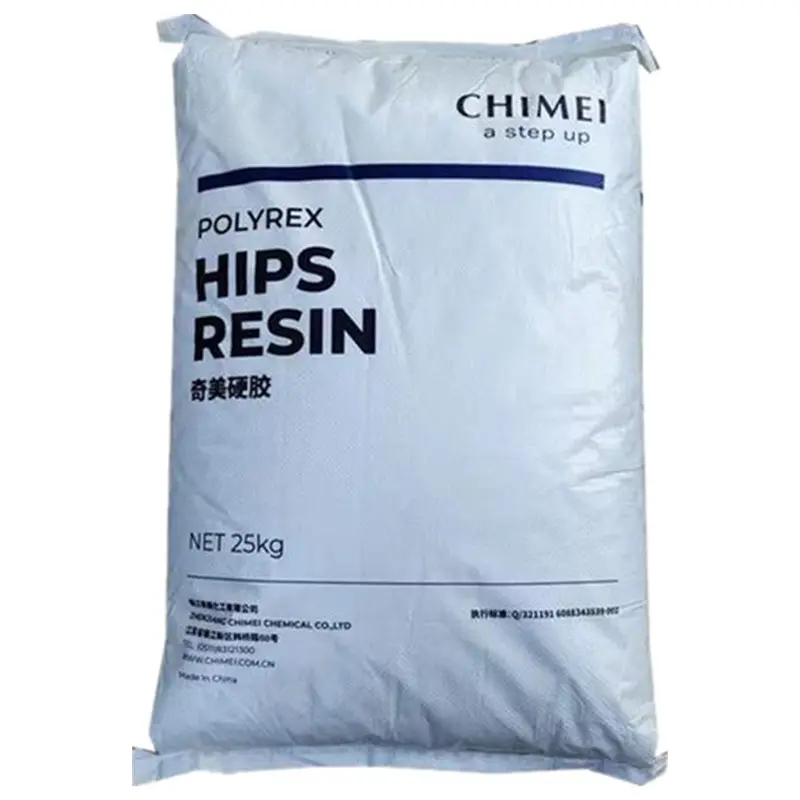
- Packaging Specifications: Standard packaging consists of 25 kg film-coated woven bags or kraft paper composite bags with basic moisture-proof properties. Big bags (typically 500 kg or 1000 kg) are also available upon customer request to accommodate automated production line unbagging requirements.
- Supply Classification: GH-660 is classified as a non-hazardous chemical (Non-DG), complying with regular cargo transportation standards. It supports 20-foot container (FCL) and less-than-container-load (LCL) maritime and land shipping operations, eliminating the need for special hazardous chemical transport qualifications or vehicles.
- Delivery Lead Time: Backed by TaiKuo New Materials‘ steady inventory stationed at major ports and inland hubs, standard orders can be fulfilled with swift responses. Specific delivery timelines depend on Incoterms and destination port logistics conditions, with shipments typically arranged following order confirmation.
- Compliance & Documentation Support: Each batch of products is accompanied by complete quality management documents, including Technical Data Sheets (TDS), Safety Data Sheets (MSDS/SDS), and Certificates of Analysis (COA). The product complies with RoHS directive and REACH regulation restrictions concerning restricted substances.
- ESG & Environmental Statement: As a thermoplastic material, polystyrene possesses physical recycling and reuse properties. We support circular economy practices by encouraging customers to sort, recycle, and reprocess runner scrap and defective parts during manufacturing. Meanwhile, we remain committed to driving supply chain green transformation, ensuring the environmental impact throughout the product’s life cycle is controllable and aligned with global sustainable development trends.
Frequently Asked Questions (FAQs)
Q1: Is the MFR range of GH-660 (5.5–7.5 g/10 min) suitable for producing thin-walled parts?
A1: This MFR range falls under medium flowability, making it suitable for conventional injection molded parts with wall thicknesses between 1.5 and 3.0 mm. For ultra-thin-walled parts (< 1.0 mm), utilizing HIPS or GPPS grades with higher melt flow rates (> 10 g/10 min) is recommended. The advantage of GH-660 lies in its balance of flowability and toughness, rendering it ideal for thicker-walled home appliance housings that demand surface gloss and impact strength.
Q2: What are the differences when selecting between GH-660 and ABS?
A2: GH-660 (HIPS) has a density of approximately 1.05 g/cm³, typically lower in cost than ABS, while being easier to process with higher gloss; however, ABS exhibits superior tensile strength (approx. 40–50 MPa), heat resistance (HDT approx. 90 °C), and impact resistance compared to HIPS. Selection rule of thumb: opt for HIPS if the end application is cost-sensitive, requires high gloss, and has moderate impact resistance requirements (such as regular appliance casings); choose ABS if higher rigidity, heat resistance, or chemical resistance is needed (such as refrigerator liners coming into contact with oils).
Q3: Can this grade be used for food contact applications?
A3: While HIPS base resins can pass food contact compliance evaluations, GH-660 as an industrial-grade product depends on specific additive formulations regarding its suitability for food contact. If intended for food packaging or containers, suppliers must provide FDA 21 CFR §177.1640 or EU 10/2011 compliance declarations, and final parts must pass third-party testing validation. Direct utilization in food contact scenarios is not recommended prior to official confirmation.
Q4: How can internal stress cracking be prevented when processing this material?
A4: HIPS is sensitive to certain organic solvents (such as alcohols, esters, and aromatics) and is prone to environmental stress cracking upon contact. It is recommended to avoid sharp angular transitions during part design and ensure uniform cooling in mold design. For components that will encounter chemical substances, annealing treatments (such as processing at 60–70 °C for 1–2 hours) or switching to alternative materials with better chemical resistance like ABS or PP should be considered.