Product Overview & Key Features
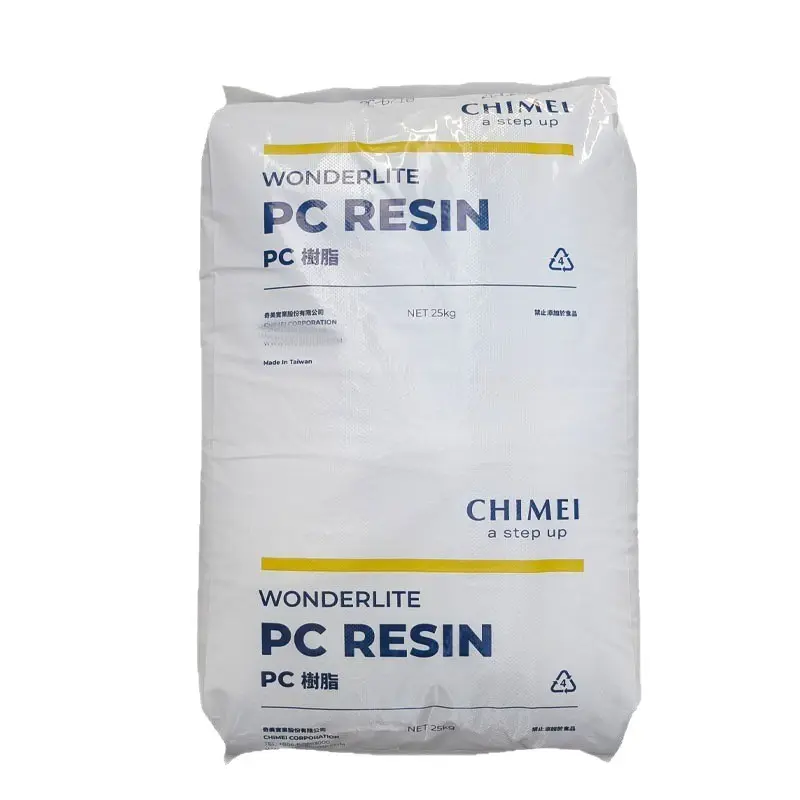
Manufacturer & Product Series: Polycarbonate (PC) engineering plastic of the WONDERLITE series manufactured by ChiMei, a globally renowned polymer material producer.
Basic Material Attributes: ChiMei WONDERLITE PC-6710 is a premium polycarbonate resin tailored for industrial manufacturing, presented as natural-colored uniform pellets with a density of 1.20 g/cm³, offering an exceptional balance of optical transparency and superior mechanical-physical performance.
Core Performance Advantages:
- Mechanical Strength & Toughness: Features high tensile strength (yield strength 60 MPa, break strength 65 MPa) and an excellent elongation at break (120%), while demonstrating outstanding Izod and Charpy notched impact resistance under both ambient and sub-zero temperatures (-30 °C).
- Thermal Stability: Boasts a Vicat softening point of up to 150 °C (1 kg) and an unannealed heat deflection temperature (0.45 MPa) reaching 136 °C, providing excellent resistance to thermal deformation.
- Superior Flame Retardancy & Electrical Properties: Certified to the UL 94 V-0 flame retardancy standard (at 3 mm thickness), accompanied by exceptionally high volume resistivity (1E+14 ohms·cm) and surface resistivity.
Mainstream Processing Methods: Compatible with standard thermoplastic injection molding processes, with a parallel mold shrinkage rate of 0.4-0.6% and favorable molding dimensional stability.
Technical Specifications
Physical Properties
| Property | Test Condition | Test Value | Test Unit | Test Standard |
| Density | — | 1.2 | g/cm³ | ISO 1183 |
| Melt Mass-Flow Rate (MFR) | 300 °C, 1.2 kg | 10 | g/10min | ISO 1133 |
| Mold Shrinkage, Parallel | — | 0.4-0.6 | % | ISO 2577 |
| Rockwell Hardness, R-Scale | 23 °C | 123 | — | ISO 2039-2 |
Mechanical Properties
| Property | Test Condition | Test Value | Test Unit | Test Standard |
| Tensile Stress at Yield | 50 mm/min | 60 | MPa | ISO 527 |
| Tensile Stress at Break | 50 mm/min | 65 | MPa | ISO 527 |
| Tensile Strain at Break | 50 mm/min | 120 | % | ISO 527 |
| Flexural Modulus | 2 mm/min | 2300 | MPa | ISO 178 |
| Flexural Strength | 2 mm/min | 90 | MPa | ISO 178 |
| Izod Impact Strength, Notched | 23 °C, 3.2 mm | 60 | kJ/m² | ISO 180 |
| Izod Impact Strength, Notched | -30 °C, 3.2 mm | 15 | kJ/m² | ISO 180 |
| Charpy Impact Strength, Notched | 23 °C, 3.2 mm | 60 | kJ/m² | ISO 179 |
| Charpy Impact Strength, Notched | -30 °C, 3.2 mm | 15 | kJ/m² | ISO 179 |
Thermal Properties
| Property | Test Condition | Test Value | Test Unit | Test Standard |
| Deflection Temperature Under Load, Unannealed | 4 mm, 1.82 MPa | 125 | °C | ISO 75 |
| Deflection Temperature Under Load, Unannealed | 4 mm, 0.45 MPa | 136 | °C | ISO 75 |
| Vicat Softening Temperature | 50 °C/h, 1 kg, Unannealed | 150 | °C | ISO 306 |
| Vicat Softening Temperature | 50 °C/h, 5 kg, Unannealed | 145 | °C | ISO 306 |
| Flammability Rating | 3 mm | V-0 | — | UL 94 |
| Coefficient of Linear Thermal Expansion (CTE), Parallel | 23 – 55 °C | 6.80E-05 | cm/cm/°C | ISO 11359-2 |
Electrical Properties
| Property | Test Condition | Test Value | Test Unit | Test Standard |
| Relative Permittivity (Dielectric Constant) | 1.0e+6 Hz | 3 | — | IEC 60250 |
| Volume Resistivity | — | 1.00E+14 | ohms·cm | IEC 60093 |
| Surface Resistivity | — | 1.00E+16 | ohms | IEC 60093 |
Optical Properties
| Property | Test Condition | Test Value | Test Unit | Test Standard |
| Light Transmittance | 2 mm | > 87 | % | ASTM D1003 |
| Haze | 2 mm | < 1.2 | % | ASTM D1003 |
Disclaimer: The technical specifications for ChiMei WONDERLITE PC-6710 PC material from ChiMei corporation, if there are differences, please refer to the official website of ChiMei. Given the variables involved in processing conditions, we strongly recommend conducting thorough trials of PC-6710 under your specific operational environment prior to final material selection.
Applications & Processing Guidelines
Recommended Application Scenarios:
- Electronics & Electrical Appliances: Widely utilized in power supply housings, switch plates, IT, and internal home appliance insulating structural components, backed by V-0 flame retardancy and high insulation properties.
- Automotive Components: Suitable for automotive interior trims, peripheral lamp housing components, and instrument clusters requiring high heat resistance and impact strength.
- Optics & Consumer Electronics: High light transmittance (> 87%) and low haze (< 1.2%) make it well-suited for protective lenses, transparent dashboard visors, and consumer electronics protective outer casings.
Practical Processing Tips:
- Melt Flow Behavior: Features a melt mass-flow rate of 10 g/10min (300 °C, 1.2 kg), providing stable moderate fluidity suitable for standard precision injection molding cavity filling.
- Drying Recommendations: Polycarbonate resin is hygroscopic. Pre-drying with a dehumidifying dryer prior to injection molding is strongly advised (recommended temperature at 100 °C – 120 °C for 3 – 4 hours) to strictly control moisture content below 0.02%, preventing surface silver streaks, bubbling, or mechanical property degradation.
Logistics, Packaging & Compliance
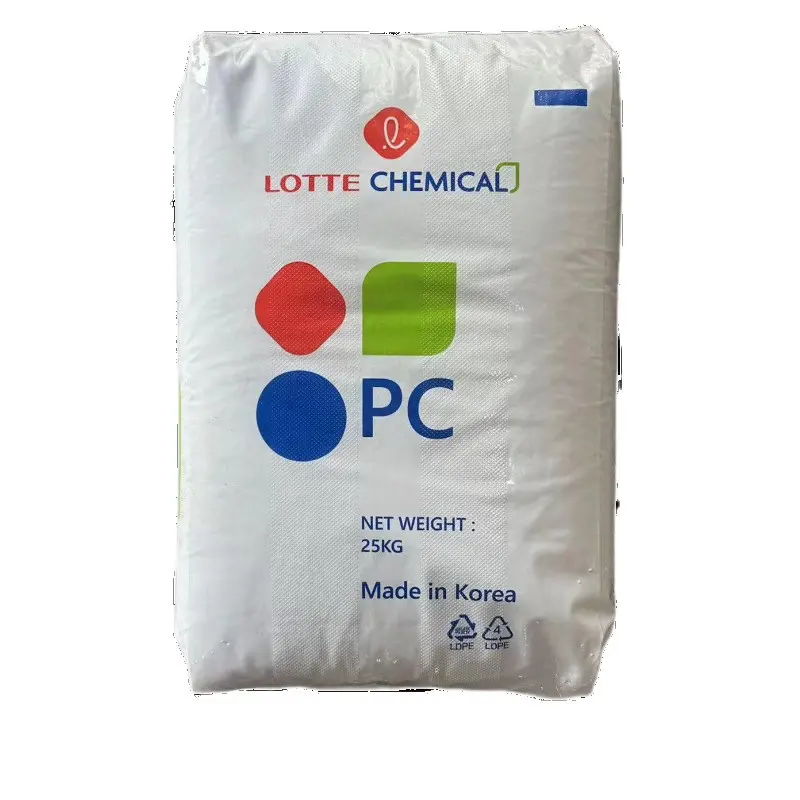
Packaging Specifications: Standard industrial moisture-proof packaging with a net weight of 25 kg/bag (multi-layer paper bag lined with a moisture-resistant plastic film), available with palletization options for container shipping and forklift handling.
Hazardous Material Classification: Classified as a non-hazardous chemical product, exempt from dangerous goods transport restrictions.
Lead Time & Transportation: Routine stock orders are typically dispatched within 3 – 7 business days upon payment receipt; full container load (FCL) and less than container load (LCL) ocean freight or cross-border trucking options are supported depending on global destination ports.
Compliance Certifications & Environmental Declarations:
- Manufacturer’s Technical Data Sheet (TDS), Material Safety Data Sheet (MSDS), and Certificate of Analysis (COA) can be provided along with the shipment.
- Complies with the European Union REACH regulation and RoHS environmental directives.
- Actively aligns with ESG and green manufacturing initiatives, ensuring production supply chains meet international environmental and sustainability benchmarks.
FAQs
Q1: Is pre-drying mandatory for ChiMei PC-6710 prior to injection molding?
A1: Yes. Polycarbonate (PC) resin is sensitive to moisture. If excessive moisture is present during high-temperature processing, it easily triggers hydrolysis reactions, resulting in surface silver streaks, bubbles, or weakened mechanical strength. Strict adherence to recommended dehumidifying and drying guidelines (100 °C – 120 °C for 3 – 4 hours) is recommended.
Q2: How does PC-6710 perform in terms of flame retardancy, and which industries is it suited for?
A2: This grade achieves a UL 94 V-0 flame retardancy standard at a 3 mm thickness, alongside outstanding electrical insulation performance (volume resistivity of 1E+14 ohms·cm). Consequently, it is exceptionally well-suited for electronic enclosures, power supply modules, and industrial manufacturing fields with strict fire safety requirements.
Q3: During actual processing, how should parameters be adjusted if demolding difficulties or surface sink marks occur?
A3: If demolding issues arise, appropriately reduce the injection pressure, shorten the holding time, or verify whether the mold draft angles meet specifications. If surface sink marks occur, it is recommended to extend the holding time, increase the holding pressure, or moderately decrease the melt and mold temperatures to ensure sufficient volumetric compensation during cooling.