PMMA (polymethyl methacrylate) is an amorphous thermoplastic produced by the free-radical polymerization of methyl methacrylate (MMA) monomer. Among transparent plastics it comes closest to inorganic glass in optical performance, which is why it is commonly known as “acrylic glass”; the terms “acrylic” and “acrylic resin” used across the industry generally refer to the same family of materials. This article starts from the material itself and covers the chemical nature of PMMA, its product forms, typical property ranges, and how it differs from PC, styrenic plastics and inorganic glass.
What Is PMMA?
PMMA has three defining characteristics:
- Outstanding optical and surface performance: visible light transmittance is typically around 92%, and surface hardness reaches Rockwell M 89–102, giving better scratch resistance than most general-purpose transparent plastics.
- Limited impact resistance and notch sensitivity: general-purpose grades show a notched impact strength of roughly 1.3–1.5 kJ/m² and tend toward brittle fracture, so sharp notches and impact loads must be avoided in design and use.
- Thermal limits governed by the amorphous structure: there is no distinct melting point; heat resistance is normally expressed through the Vicat softening temperature (about 86–118 °C) and the heat deflection temperature (90–111 °C at 1.8 MPa).
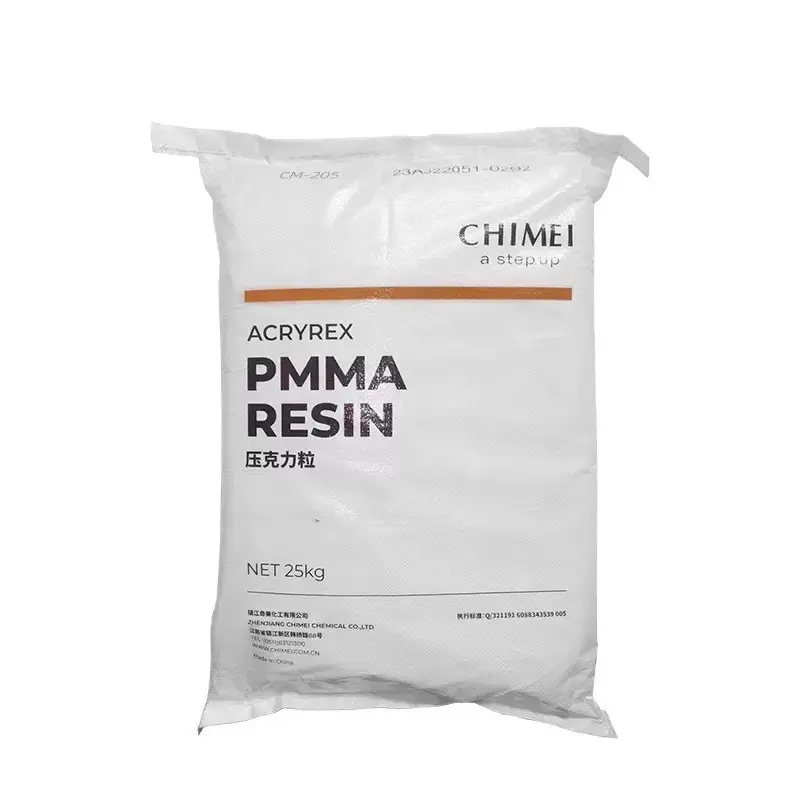
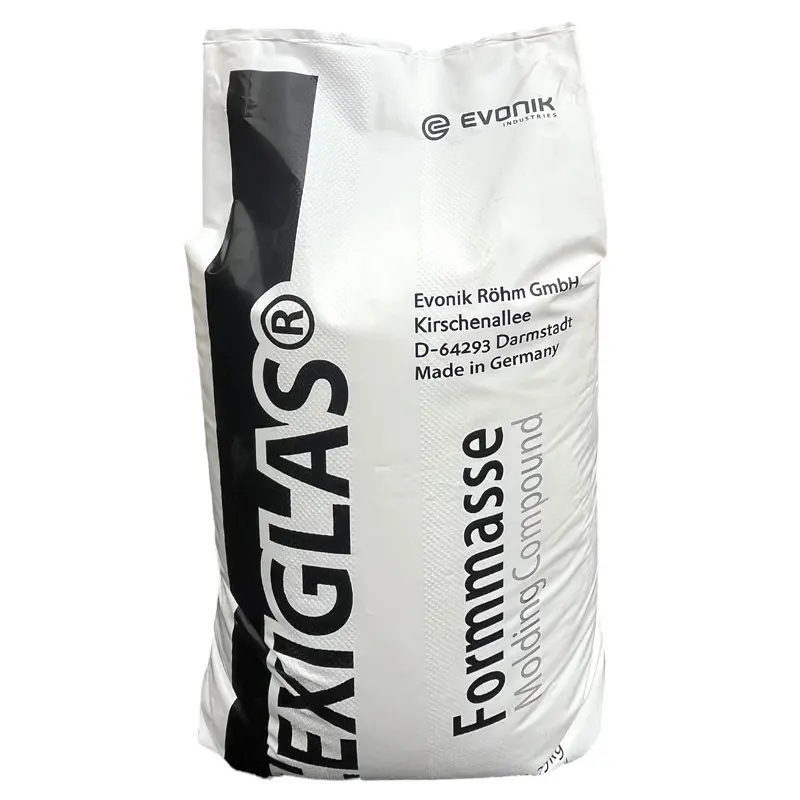
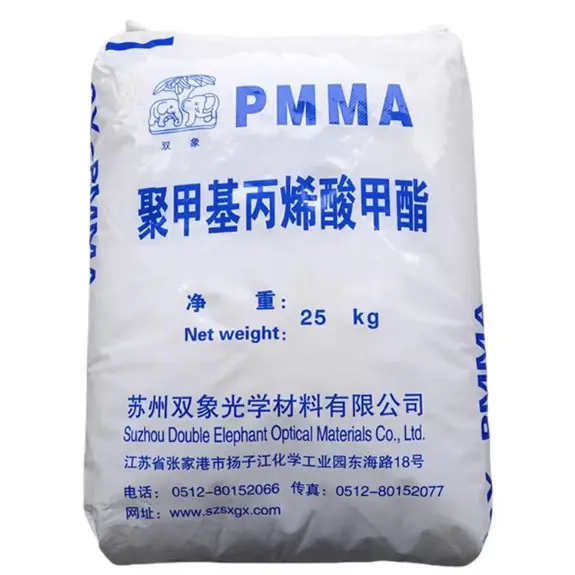
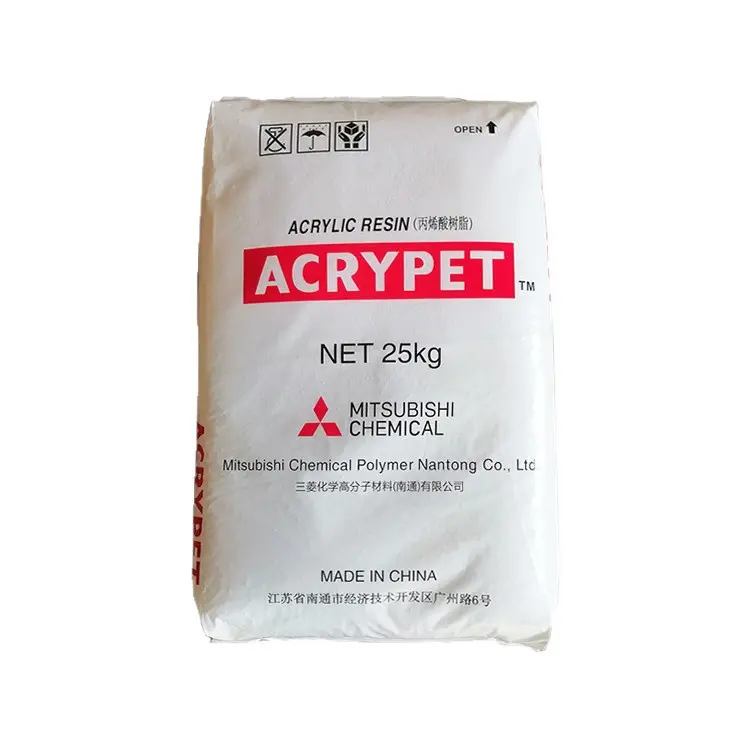
In industrial supply chains PMMA moves in two forms — pellets and sheet. Pellets are the feedstock for injection molding and extrusion and are typically traded as PMMA resin in procurement and production.
Chemical Nature and Naming
The PMMA backbone is a carbon–carbon single-bond chain, and each repeat unit carries a methyl group and a methyl ester side group. The polarity of the ester group raises the forces between polymer chains, which gives the material its high surface hardness and rigidity; the bulky side groups, however, prevent the chains from packing regularly, making PMMA a classic amorphous polymer — the fundamental reason it is highly transparent, optically isotropic, and has no distinct melting point. Its molecular composition contains only carbon, hydrogen and oxygen.
The same material appears under several names depending on context:
- PMMA / polymethyl methacrylate — the chemical name and industry abbreviation
- acrylic / acrylic resin — the common commercial and processing term
- acrylic glass / plexiglass — the familiar name for transparent PMMA
- Plexiglas®, Acrypet®, ACRYREX® — registered trade names of individual manufacturers
It is important to distinguish PMMA from PC (polycarbonate), PS (polystyrene) and PETG: all four can be transparent, but their chemical structures, impact behaviour and weathering performance are entirely different, and they are not interchangeable. In material classification, PMMA belongs to the transparent amorphous group of engineering plastics, characterised by rigidity and surface hardness taking priority over toughness.
Product Forms and Polymerization Routes
The same PMMA material reaches the market in two markedly different forms, which is the key to understanding it.
Bulk (cast) polymerization: MMA monomer is polymerized directly in a mold to produce sheet, rod and tube. Molecular weight is higher, solvent resistance is relatively better, and the material is well suited to subsequent machining.
Suspension polymerization to pellets: the monomer is polymerized in water into bead resin, which is then pelletized into pellets for injection molding and extrusion. Grade positioning for pellets is mainly differentiated by melt flow rate.
Homopolymer and copolymer: most general-purpose grades are MMA homopolymers; introducing other acrylate comonomers improves toughness and yields impact-modified PMMA. Homopolymer and copolymer therefore trade off transparency, surface hardness and impact resistance — the difference is explained in more detail in homopolymer vs copolymer.
Across the grades commonly available in the industry, the melt mass-flow rate (MFR) of PMMA pellets covers roughly 1.7–23 g/10 min (ISO 1133, 230 °C / 3.8 kg); the spread reflects the positioning of general-purpose, heat-resistant and high-flow types.
How PMMA Differs from Other Plastics and Glass
PMMA vs. PC
Both are transparent engineering plastics; the difference is essentially one of orientation — rigidity, hardness and weathering on one side, toughness on the other.
| Item | PMMA (general purpose) | PC |
|---|---|---|
| Density | 1.17 – 1.19 g/cm³ | 1.20 – 1.40 g/cm³ |
| Visible light transmittance | 92% (3 mm specimen) | High transparency achievable; optical use requires extra control of haze and colour |
| Notched Izod impact strength | approx. 20 – 21 J/m | approx. 140 – 850 J/m |
| Surface hardness | Rockwell M 89 – 102 | Lower than PMMA; scratches more readily |
| Heat deflection temperature (1.8 MPa) | 90 – 111 °C | 130 – 150 °C |
| Outdoor weathering | UV-stable polymer; slow yellowing | Requires UV coextrusion or coating for long-term UV exposure |
In short: for parts exposed to drops, impact loads or higher service temperatures, PC is the better choice; where high transparency, surface hardness and long-term appearance stability are the priority, PMMA is more targeted. PC impact and heat data vary widely between sources and grades, so practical comparisons should be based on the technical data sheets of grades with equivalent specifications.
PMMA vs. Inorganic Glass
PMMA does not replace glass in every application. The differences come down to three points: lower density (1.17–1.19 g/cm³ against roughly 2.4–2.6 g/cm³ for soda-lime glass), greater freedom in forming and machining, and no glass-like sharp shards when it breaks. The trade-off is lower surface hardness than inorganic glass, so care is needed with wiping and cleaning. For transparent applications that are weight-sensitive, complex in shape, or involve human contact, PMMA is a common substitute.
PMMA vs. SAN, ABS and Other Styrenic Plastics
PMMA, SAN and ABS can all be transparent or translucent, but they occupy different positions: PMMA leads on optical clarity, surface hardness and weathering while having the weakest impact resistance; SAN has notably better chemical resistance; ABS has the highest impact resistance but the lowest transparency. A point-by-point comparison of the three across transparency, impact, heat and chemical resistance is available in the SAN vs ABS vs PMMA comparison.
Application Areas
PMMA applications concentrate where transparency, surface hardness and long-term appearance stability are required:
- Automotive: tail lamp and signal lamp lenses, headlamp lenses, instrument cluster windows. Such parts face UV radiation and thermal cycling over long periods and must combine transparency with weatherability.
- Lighting and optics: LED luminaire lenses and covers, light guide plates (LGP), light diffusion components. Optical grades require low haze and a stable refractive index (1.49).
- Displays and electronics: instrument panels, display protection panels, indicator lamp covers, clear protective lenses.
- Architecture and advertising signage: signs, advertising light boxes, decorative transparent parts. For long-term intense sunlight, the grade’s weathering rating should be confirmed.
- Home appliances: transparent panels, viewing windows, display windows.
- Daily use and medical: cosmetic and food containers, lenses, transparent household parts; transparent housings and viewing windows for medical devices require confirmation of biocompatibility and sterilisation compatibility on a grade-by-grade basis.
Where the selection must be narrowed further by temperature, mechanical load, chemical contact or compliance requirements, the plastic application selection guides are a useful starting point.
Safety, Environment and Sustainability
Stability of the material itself: PMMA is a high-molecular-weight polymer — non-volatile and non-migrating at ambient temperature, chemically stable, and composed only of carbon, hydrogen and oxygen. Residual monomer levels, food-contact suitability and medical-use compliance, however, are not determined by the material name “PMMA” but by whether the specific grade holds the relevant regulatory documentation, which must be confirmed from the batch documents for that grade.
Combustion behaviour: the typical flammability rating of PMMA is UL 94 HB (1.5 mm), i.e. not a flame-retardant classification. This means the material can sustain combustion in the presence of a flame, and applications with flame-retardant requirements should use flame-retardant material systems instead. In addition, processing and use at high temperatures should follow the manufacturer’s guidance on exhaust gas collection and treatment.
Mechanical safety: a notched Charpy impact strength of 1.3–1.5 kJ/m² and tensile strain at break of 2.8–7.5% show that PMMA is notch-sensitive and tends to fail in a brittle manner. Designs should avoid sharp notches and stress concentrations, and impact loads should be avoided in service.
Environment and recycling: PMMA is a thermoplastic and supports mechanical recycling and reprocessing; sprue and runner scrap and rejected parts can be reused under controlled conditions, and the effect of the regrind ratio on transparency and haze needs to be verified through trials. Recycling and reprocessing must avoid prolonged high-temperature residence, which can cause thermal degradation.
Compliance: RoHS and REACH compliance is governed by the manufacturer’s declaration and the batch documentation.
Frequently Asked Questions
Q1: Is PMMA a plastic or a glass? What is its full name?
A1: PMMA is a plastic. Its full name is polymethyl methacrylate — an amorphous thermoplastic formed by the free-radical polymerization of MMA monomer. It is not a silicate glass; it is called “acrylic glass” only because its transparency and appearance come close to glass.
Q2: Are PMMA, “acrylic” and “plexiglass” the same material?
A2: Essentially yes. Acrylic is the common commercial and processing term for PMMA-type materials, and “plexiglass” generally refers to transparent PMMA. Note that “acrylic” is sometimes used loosely for other acrylic copolymers, so confirmation should be based on the chemical name polymethyl methacrylate and the specific grade.
Q3: Does PMMA melt? What temperature can it withstand?
A3: PMMA is an amorphous polymer with no distinct melting point; it softens gradually over a temperature range. Its heat limits are normally expressed through the Vicat softening temperature (about 86–118 °C for general-purpose grades, ISO 306) and the heat deflection temperature (90–111 °C, ISO 75, 1.8 MPa); impact-modified grades withstand noticeably less heat (about 73–97 °C).
Q4: What is the difference between PMMA and PC?
A4: The core difference is one of orientation: PMMA offers higher surface hardness, better weathering and more stable transparency, while PC offers significantly higher impact resistance and heat resistance (notched Izod around 140–850 J/m, against roughly 20–21 J/m for PMMA) but scratches more easily and needs UV protection for long-term outdoor use. Parts subject to drops and impact loads are better served by PC.
Q5: Is PMMA safe? Can it contact food?
A5: PMMA is a high-molecular-weight polymer that is chemically stable at ambient temperature and composed only of carbon, hydrogen and oxygen. Whether it can contact food, however, does not depend on the material category but on whether the specific grade holds the relevant regulatory documentation. Food-contact and medical applications must be confirmed from the batch documents for the grade, never on the basis of the material name alone.
Q6: Can PMMA be recycled?
A6: Yes. PMMA is a thermoplastic and supports mechanical recycling and reprocessing; sprue and runner scrap and rejected parts can be reused under controlled conditions, and the effect of the regrind ratio on transparency and haze needs to be verified through trials.