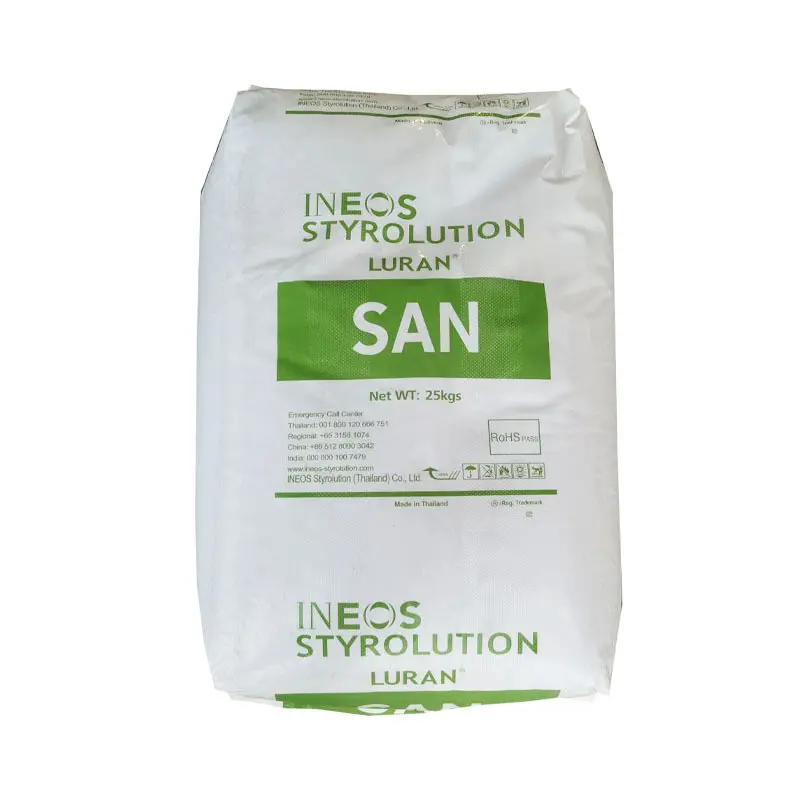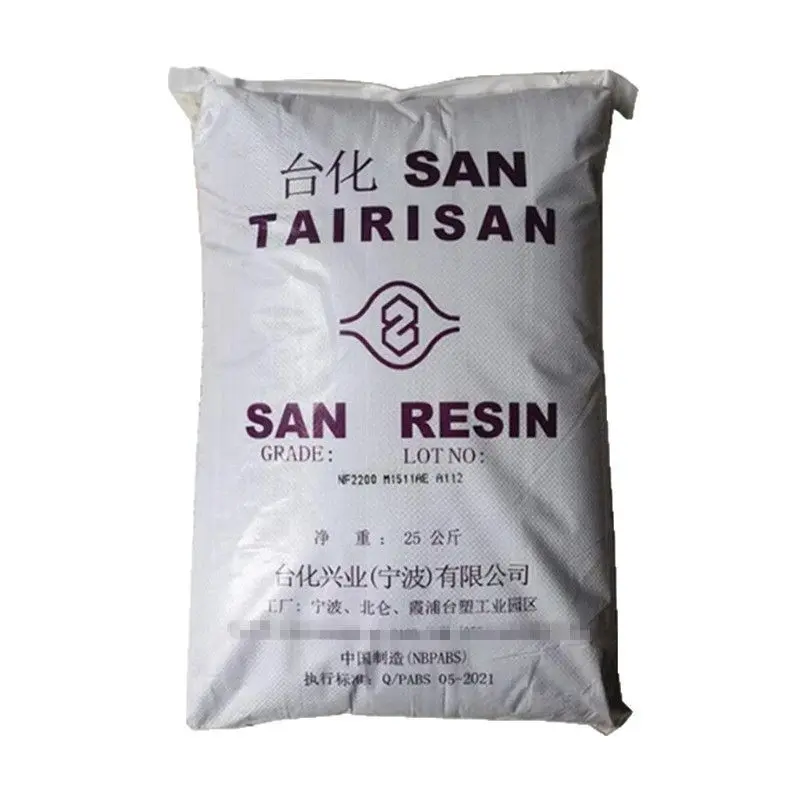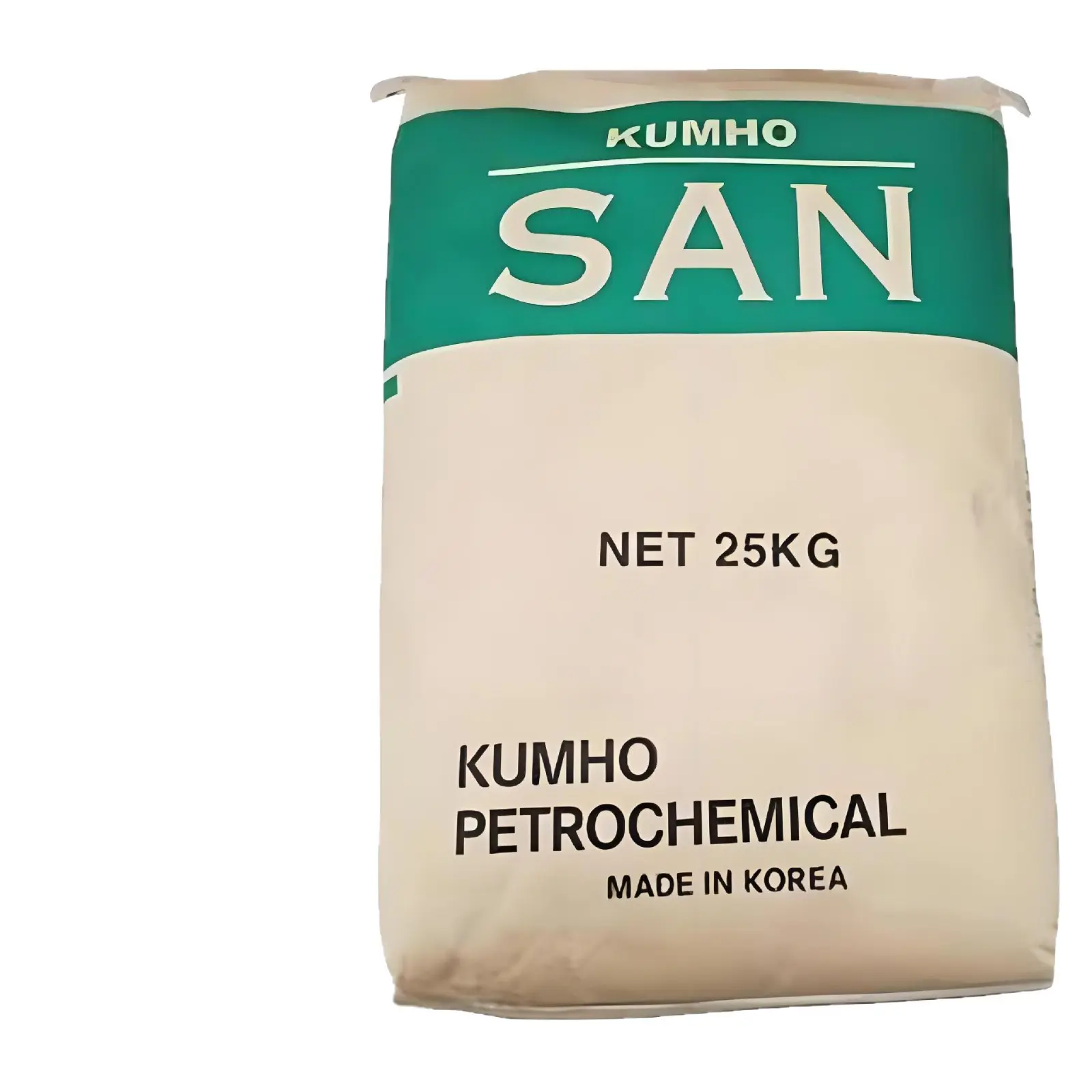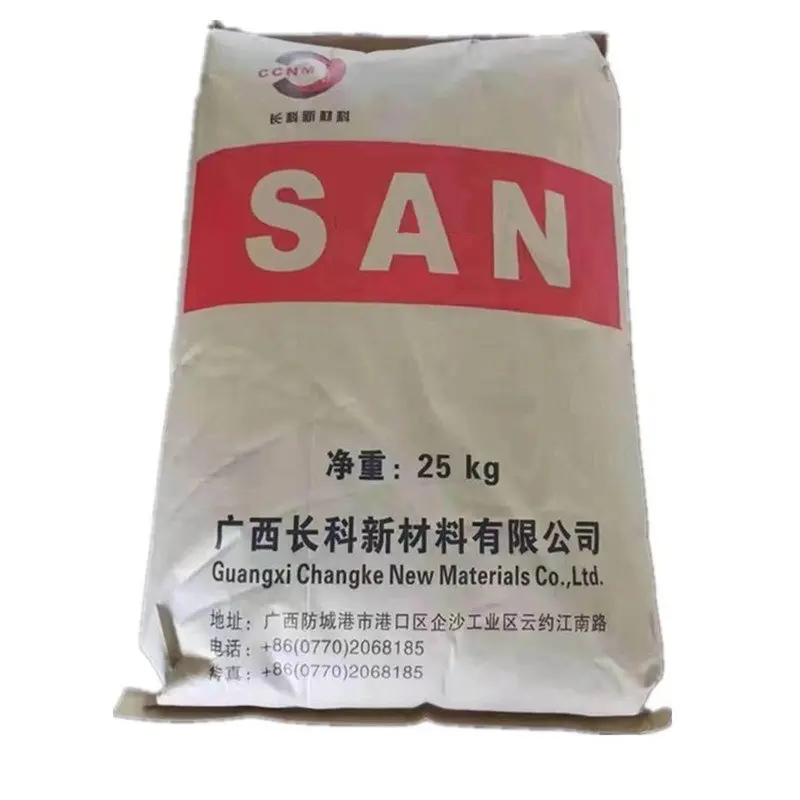
Styrene-acrylonitrile copolymer (SAN, also known as AS) is an amorphous transparent engineering plastic polymerized from 70–75% styrene and 25–30% acrylonitrile. It offers superior rigidity, chemical resistance, and surface hardness compared to GPPS.
Core Insight: The vast majority of global SAN output is consumed internally as the continuous matrix for ABS production, with only a small residual volume entering the merchant spot market. Consequently, spot supply availability cannot be inferred directly from total nominal capacity.
Price: Market Ranges and Quotation Logic
2026 Regional Reference Price Ranges
| Region | 2026 Reference Range (USD/t) | Scope Type | Regional Characteristics |
| North America | Approx. 2,000–2,220 | Price Index | Highest global premium |
| Europe | Approx. 1,600–2,240 | EXW / Index | Scope variations reach up to 40% |
| Northeast Asia | Approx. 1,360–1,790 | Price Index | Widest divergence among reporting agencies |
| Southeast Asia | Approx. 1,590–1,640 | EXW / Index | Global price trough |
| Mainland China | Approx. 1,890–1,900 | Spot Assessment | June assessment value |
Note: Quotations for the same period can vary by 20–30% across agencies due to differences in delivery terms (FOB/CFR), testing standards (MFI at 230 °C/3.8 kg vs. 200 °C/5 kg), packaging scale, and credit terms. Direct cross-source price comparisons frequently lead to misjudgments.
Grade Premiums and Arbitrage
- General Grades vs. Certified Grades: General-purpose injection grades face intense competition and track costs closely. In contrast, food-contact, high-flow, heat-resistant, and flame-retardant (UL 94) grades carry technical and regulatory certification barriers, maintaining stable premiums insulated from general-grade price wars.
- Cross-Regional Arbitrage: Although price spreads exist between Northeast Asia and Southeast/South Asia, shipping costs and transit lead times rapidly erode arbitrage windows, keeping them narrow and fleeting.
Cost: The Two-Monomer Price Floor
- Styrene Chain: Shares a cost axis with GPPS, HIPS, and ABS, moving in tandem with the broader styrenics complex driven by crude oil and plant turnarounds.
- Acrylonitrile Chain (Structural Overcapacity in 2025–2026):
- Global capacity additions reached ~1.31 million tons/year in 2025, with growth remaining above 15% in 2026, continuously pressing down the cost floor.
- SAN vs. GPPS: SAN contains 25–30% acrylonitrile; the price spread between SAN and GPPS is essentially an “acrylonitrile premium.” When ACN is oversupplied, this spread narrows, enhancing SAN’s relative cost-competitiveness.
- Integration Advantage: Fully integrated dual-monomer facilities enjoy strong cost resilience. Conversely, merchant-sourcing units cut operating rates first during raw material spikes, inadvertently tightening merchant spot supply.
Supply: Captive Dominance and ABS Linkage
- Captive Nature: Most production is consumed internally for integrated ABS compounding and does not enter merchant circulation.
- Capacity Distribution: Heavily concentrated in Northeast Asia (net exporter), while Southeast/South Asia are net importers, and Europe/North America remain balanced regionally.
- Linkage Mechanism with ABS:
- When ABS production schedules are scaled down, integrated plants cut SAN operating rates synchronously to manage monomer inventory and costs, tightening merchant spot volumes (rather than loosening them).
- When ABS production ramps up, overall operating rates increase; however, because internal compounding needs take priority, merchant availability can still remain tight.
Demand and Substitution Boundaries
Four Major Merchant Applications
- Cosmetics & Personal Care Packaging: Cream jars, compact cases, transparent caps (highest demands for clarity, chemical resistance, and environmental stress cracking resistance).
- Transparent Containers & Housewares: Storage boxes, tableware (cost-sensitive, dominated by general-purpose grades).
- Home Appliance Components: Decorative panels, display windows, light covers (requiring balanced rigidity and heat resistance).
- Industrial & Instrument Windows: Transparent protective guards (small batch sizes, low price sensitivity).
Material Substitution Landscape
| Comparison Material | SAN Relative Advantages | SAN Relative Disadvantages | Substitution Conditions |
| GPPS | Better rigidity, chemical & heat resistance | Higher cost, higher brittleness | Penetrates downward when Styrene-ACN spread narrows |
| HIPS | Transparent, good rigidity | Inferior impact strength | Limited overlap, restricted to low-to-mid-tier clear parts |
| PMMA | Lower cost, higher rigidity | Lower weatherability & optical purity | Substitutes for indoor clear parts only; cannot replace in outdoor applications |
| ABS | Transparent, lower cost | Noticeable gap in impact performance | Complementary relationship; cannot fully replace ABS |
Outlook and Risks (Heading into 2027)
Three Scenario Forecasts
- Base Case: ACN capacity additions release on schedule, keeping cost support weak; ABS production schedules remain steady, merchant volumes neutral.
- Bull Case: Concentrated ACN turnarounds or delayed capacity additions; ABS restocking boosts operating rates, tightening merchant supply.
- Bear Case: Crude oil pullbacks drag down both monomers; downstream demand weakens.
Key Tracking Metrics & Potential Risks
Metrics to Track: ACN pricing and commissioning dynamics, styrene trends, ABS operating rates, Northeast Asian export volumes, container freight rates.
Potential Risks:
- Actual ACN commissioning progress may lag due to environmental constraints or funding delays, leading to a rebound in cost support.
- Merchant SAN trading volumes are small and market sampling is thin; large single orders can distort price quotes, creating significant short-term price noise.
Conclusion: The SAN market is jointly governed by ABS production scheduling rhythms and dual-monomer raw material costs. Looking toward 2027, the market presents a profile of “loose cost support, tight merchant supply, and steady demand,” operating within a bounded range.