Product Overview & Key Features
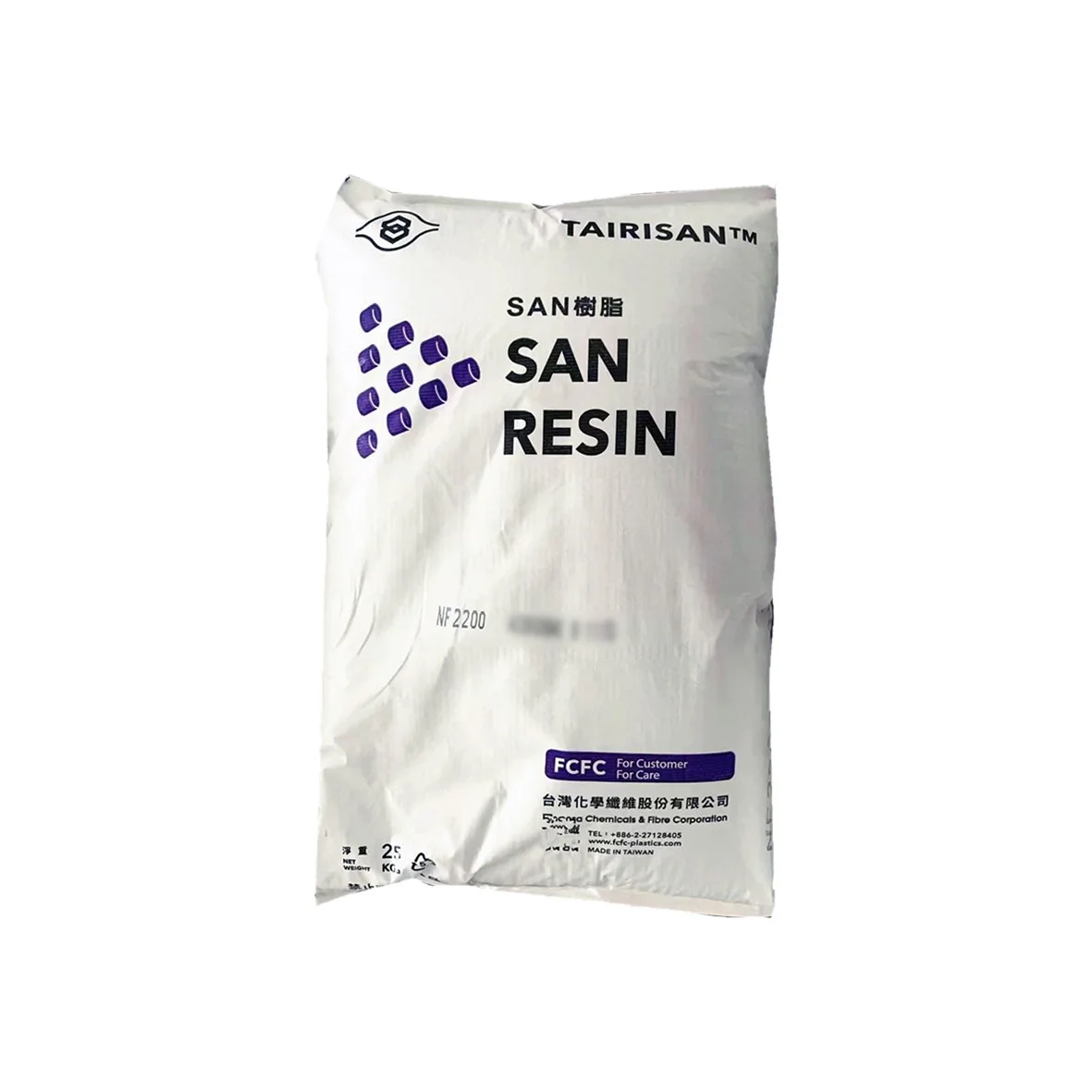
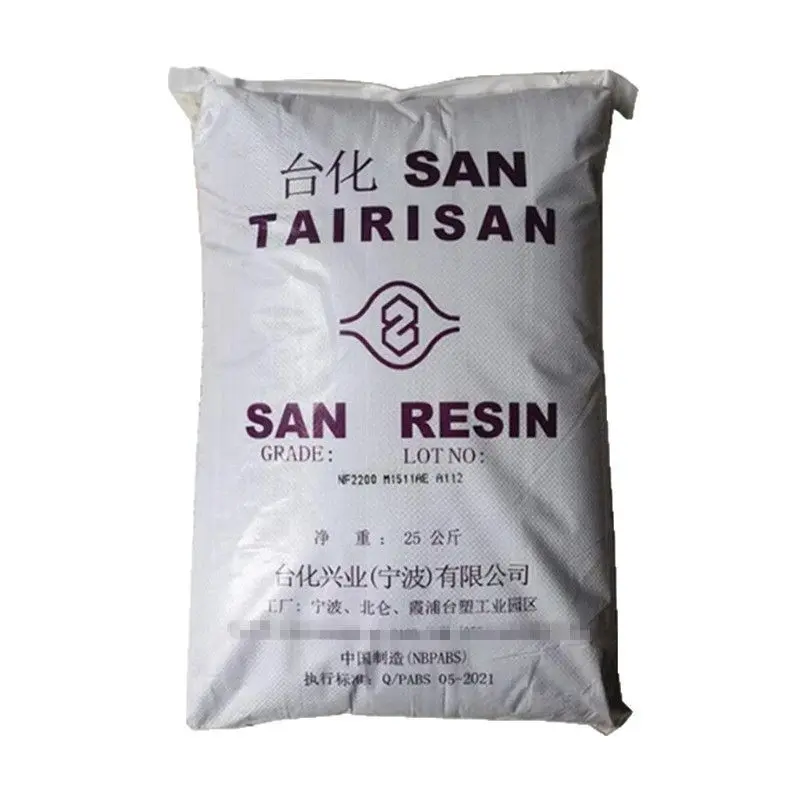
- Manufacturer: Formosa Chemicals & Fibre Corporation (FCFC)
- Brand / Series: TAIRISAN®
- Product Grade: NX3400
- Material Category: SAN (Styrene-Acrylonitrile Copolymer)
- Physical Appearance: Colorless transparent or slightly amber pellets (typical SAN resin appearance)
TAIRISAN® NX3400 is a standard injection-molding grade SAN resin produced by Formosa Chemicals. By copolymerizing styrene and acrylonitrile, cyano functional groups are incorporated into the general-purpose polystyrene (GPPS) backbone, significantly enhancing the material’s chemical resistance, rigidity, and thermal performance. Featuring a high-gloss surface and crystal-clear clarity while maintaining a balanced melt flowability, NX3400 serves as an ideal engineering plastic choice that balances cost, appearance, and durability.
Key Performance Features:
- Structural Durability: High flexural modulus (3620 MPa) and tensile strength (80 MPa) ensure that molded parts retain dimensional stability under prolonged mechanical loads.
- Chemical Resistance: Offers superior resistance to oils, grease, gasoline, alcohols, hydrocarbons, and various household detergents compared to general-purpose PS and ABS.
- Mechanical Strength: Delivers higher surface hardness and scratch resistance (Rockwell Hardness M 83) than GPPS while maintaining optical transparency.
- Processing Adaptability: Primarily designed for injection molding, it can also be adapted for extrusion and compression molding, making it suitable for high-volume automated production.
Technical Specifications
Physical Properties
| Physical Properties | Test Value (Unit) | Test Standard |
| Density (23 °C) | 1.06 g/cm³ | ASTM D792 |
| Melt Flow Rate (Mass, 200 °C, 5 kg) | 1.0 g/10min | ASTM D1238 |
| Melt Flow Rate (Mass, 220 °C, 10 kg) | 10 g/10min | ASTM D1238 |
| Rockwell Hardness (M Scale, 23 °C) | 83 | ASTM D785 |
Mechanical Properties
| Mechanical Properties | Test Value (Unit) | Test Standard |
| Tensile Strength (23 °C) | 80 MPa | ASTM D638 |
| Flexural Modulus (23 °C) | 3620 MPa | ASTM D790 |
| Flexural Strength (23 °C) | 118 MPa | ASTM D790 |
| Izod Impact Strength (Unnotched, 23 °C, 6.35 mm; bar 0) | 18 J/m | ASTM D256 |
Thermal Properties
| Thermal Properties | Test Value (Unit) | Test Standard |
| Heat Deflection Temperature (Unannealed, 1.8 MPa, 6.35 mm; bar 0) | 97 °C | ASTM D648 |
| Flammability Rating (All Colors, 1.6 mm) | HB | UL 94 |
Notice: The technical specifications for Formosa TAIRISAN® NX3400 provided herein are compiled from data published by Formosa Plastics Corporation or certified third-party testing laboratories. While prepared with professional diligence, these values serve as reference guidelines rather than absolute performance guarantees. Because molding and processing conditions vary significantly across operational environments, we recommend performing trial runs with NX3400 under your actual manufacturing conditions prior to final material selection and mass production.
Features & Benefits
- High Rigidity & Dimensional Stability: Features a high flexural modulus of up to 3620 MPa, preventing creep deformation under assembly loads or temperature fluctuations, making it well-suited for precision snaps and structural parts.
- Superior Chemical Corrosion Resistance: The acrylonitrile content endows the material with resistance to oils, greases, alcohols, and various solvents, making it suitable for containers, pump dispensers, and industrial components exposed to chemical media.
- Good Heat Resistance: Reaches a Heat Deflection Temperature (HDT) of 97 °C (1.8 MPa, unannealed), maintaining mechanical integrity under moderate thermal environments, outperforming general-purpose polystyrene.
- High Transparency & Surface Gloss: Inherits typical SAN crystal clarity and high surface gloss (Rockwell Hardness M 83), ideal for display packaging, appliance panels, and consumer goods requiring high visual quality.
- Balanced Melt Flowability: Offers a melt flow rate of 10 g/10min at 220 °C / 10 kg, achieving a balance between mold filling capability and surface finish, ensuring consistent cycle times in standard injection processes.
Applications & Processing Guidelines
Typical Applications
- Housewares & Kitchenware: Mixing bowls, drinking tumblers, condiment bottles, and food containers (food-grade compliance verification required).
- Cosmetics & Packaging: Cream jars, perfume caps, lotion pump heads, and transparent packaging boxes.
- Home Appliances & Consumer Electronics: Washing machine detergent dispensers, control panels, adjustment knobs, meter display windows, and small appliance housings.
- Industrial & Stationery: Battery casings, lighter shells, transparent file folders, rulers, and office supplies.
- Medical & Laboratory Equipment: Test tube racks, Petri dishes, and disposable instrument casings (subject to relevant medical regulatory compliance).
Processing Guidelines
- Drying Treatment: SAN resin exhibits a moisture absorption rate of approximately 0.2%–0.3%. Although lower than engineering plastics (such as PA or PC), pre-drying is recommended to prevent silver streaks, bubbles, or surface gloss degradation during molding. Recommended drying conditions: Hot-air drying at 70–80 °C for 2–4 hours, keeping target moisture content below 0.1%.
- Injection Molding Temperature: Barrel temperatures are typically set between 200–240 °C. Fine-tune settings based on part wall thickness, mold runner design, and cycle time requirements. Avoid prolonged melt residence at temperatures above 260 °C to prevent thermal degradation.
- Mold Temperature: Recommended mold temperature ranges between 50–70 °C. Higher mold temperatures help improve surface gloss and reduce internal stresses that lead to warpage risks.
- Screw Speed & Back Pressure: Utilize moderate screw rotational speeds paired with appropriate back pressure (approx. 0.5–1.5 MPa) to ensure uniform melt plasticization while preventing shear overheating.
Frequently Asked Questions (FAQs)
Q1: Must TAIRISAN® NX3400 be dried prior to processing?
A1: Although SAN is less hygroscopic than nylon or polycarbonate, pre-drying NX3400 before processing is still recommended. If raw materials are exposed to high-humidity environments, residual moisture vaporizes under high melt temperatures, leading to surface silver streaks, bubbles, or reduced gloss. Pre-drying at 70–80 °C for 2–4 hours to keep moisture content below 0.1% is recommended for optimal molding quality.
Q2: How should I choose between NX3400, ABS, and GPPS?
A2: Compared to GPPS, NX3400 (SAN) provides higher rigidity, superior chemical resistance, and a higher heat deflection temperature, though with slightly lower optical clarity and higher material cost. Compared to ABS, NX3400 lacks rubber-phase toughening, resulting in lower notched impact strength (more brittle), but offers superior chemical resistance (especially against greases and environmental stress cracking) and higher surface hardness. Selection rule: Choose SAN for high rigidity, grease resistance, and a cost profile between GPPS and ABS; choose ABS for high impact resistance; choose GPPS for supreme transparency without mechanical load requirements.
Q3: What is the flame retardancy rating of NX3400? Can it be used for flame-retardant electronic parts?
A3: According to technical datasheets, NX3400 carries a UL 94 HB (1.6 mm) flammability rating, indicating slow-burning characteristics rather than V-0 or V-2 flame retardancy. Consequently, it is not suitable for direct use in electronic housings requiring strict flame-retardant certifications (such as V-0). If flame-retardant SAN is needed, specifically modified flame-retardant grades or flame-retardant additives must be selected.
Q4: Does this material comply with RoHS, REACH, or food contact regulations?
A4: Standard industrial-grade NX3400 typically complies with basic RoHS and REACH SVHC restriction requirements; however, confirmation against specific batch COAs and third-party test reports is required. For food contact applications (such as FDA or EU 10/2011), while the SAN base resin itself may meet raw material requirements, official manufacturer food-grade statements must be verified, and finished articles must pass comprehensive overall migration testing prior to direct food or beverage contact.