Product Overview & Key Features
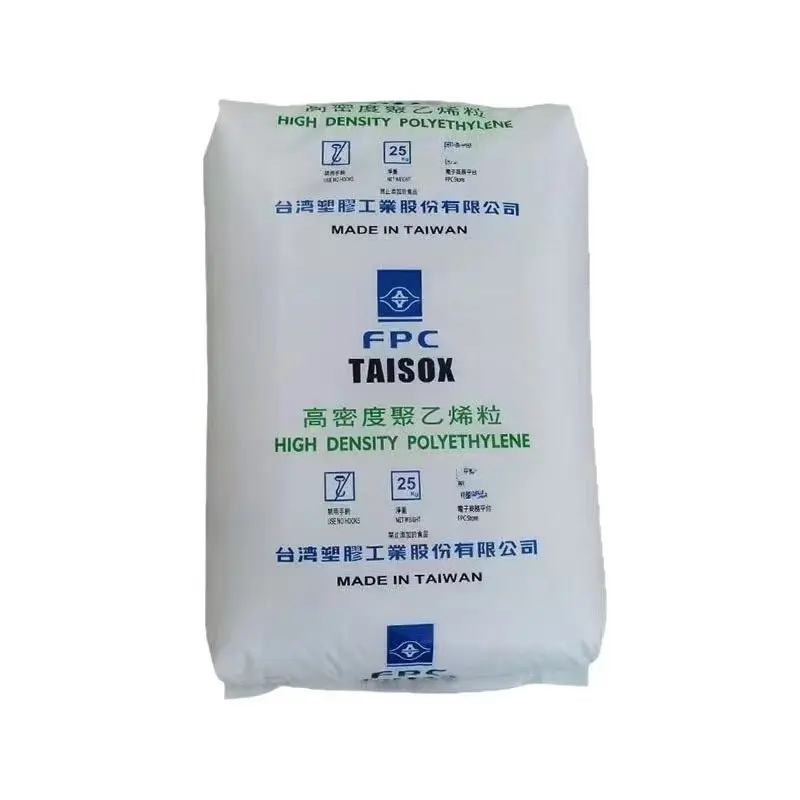
Manufacturer: Formosa Plastics Corporation
Product series: TAISOX® high-density polyethylene
Grade: 8001 (grade 8001U, the light-stabilized version in the same series, is available for exposure conditions requiring UV resistance)
Base material properties: High-density polyethylene (HDPE), an ethylene/butene copolymer produced by a multi-stage polymerization process, characterized by high density, high molecular weight and a broad molecular weight distribution. Classified under ISO 12162:1995(E), grade 8001 is a PE100 resin (minimum required strength, MRS, of 10 MPa) and withstands a minimum hoop stress of 10 MPa at 20 °C for more than 50 years.
Key performance advantages
- ESCR and creep resistance: suitable for long-term internal pressure and chemical media contact — the core selection criterion for pressure pipe applications.
- Chemical resistance: good resistance to common chemical media, suitable for chemical pipes and industrial piping.
- Balanced strength and toughness: tensile strength at yield of 23.5 MPa, tensile strength at break of 35.3 MPa, and elongation at break of 850%.
- Low-temperature performance: brittleness temperature of -70.0 °C, suitable for outdoor installation in cold regions.
- Electrical properties: good electrical properties, suitable as cable conduit material.
- Compliance (as stated in the manufacturer’s grade sheet): the entire series contains antioxidants and meets FDA 21-177-1520 and RoHS (this statement originates from the grade sheet revised 2007.12.01; verify against Formosa’s current version at publishing).
Main processing methods: primarily extrusion — pipe extrusion (water supply, gas, sewer and industrial piping) and cable conduit extrusion; also suitable for coating. With a very low melt index (0.05 g/10min at 190 °C/2.16 kg), this grade is a high-molecular-weight resin and is not intended for thin-wall injection molding.
As the pressure pipe grade within our HDPE plastic raw material range, grade 8001 occupies a different molecular-weight design bracket from blow molding and injection molding grades (see Section 4); the general purpose plastics category it belongs to is the foundational material platform for piping, packaging and household products.
Technical Specifications
Physical Properties
| Physical Properties | Test Value | Unit | Test Standard |
|---|---|---|---|
| Density | 0.948 | g/cm³ | ASTM D1505 |
| Melt index, mass 190 °C, 2.16 kg | 0.050 | g/10min | ASTM D1238 |
| Melt index, mass 190 °C, 21.6 kg | 7.0 ※ | g/10min | ASTM D1238 |
| Melt index, mass 190 °C, 5 kg | 0.24 | g/10min | ASTM D1238 |
| Environmental stress cracking resistance (ESCR) | ≥ 1,000 | hr | ASTM D1693 |
| Shore hardness D | 64 | — | ASTM D2240 |
Mechanical Properties
| Mechanical Properties | Test Value | Unit | Test Standard |
|---|---|---|---|
| Tensile strength, yield | 23.5 | MPa | ASTM D638 |
| Tensile strength, break | 35.3 | MPa | ASTM D638 |
| Tensile strain, break | 850 | % | ASTM D638 |
| Tensile impact strength | 735 | kJ/m² | ASTM D1822 |
Thermal Properties
| Thermal Properties | Test Value | Unit | Test Standard |
|---|---|---|---|
| Brittleness temperature | -70.0 | °C | ASTM D746 |
| Vicat softening temperature | 122 | °C | ASTM D1525 |
| Melting temperature | 129 | °C | — (DSC method per the manufacturer) |
Notice: The technical specifications for Formosa TAISOX® 8001 provided herein are compiled from data published by Formosa Plastics Corporation or certified third-party testing laboratories. While prepared with professional diligence, these values serve as reference guidelines rather than absolute performance guarantees. Because molding and processing conditions vary significantly across operational environments, we recommend performing trial runs with 8001 under your actual manufacturing conditions prior to final material selection and mass production.
Applications & Processing Guidelines
Recommended Applications (per the manufacturer’s typical application list)
- Water supply pipes (PE potable water pipe): the PE100 classification and MRS of 10 MPa long-term hydrostatic capability are the basis for material selection in this application.
- Gas pipes: requires long-term pressure resistance and creep resistance — a core application area for PE100.
- Sewer and drainage pipes: combines chemical resistance with environmental stress cracking resistance.
- Chemical pipes: for conveying media that are corrosive to metals.
- Cable conduits: utilizing its good electrical properties and environmental stress cracking resistance.
The common feature of the above applications is long-term pressure service combined with long service life, which differs from the material selection logic for conventional blow molded containers and injection molded parts — lower-grade or high-MI grades must not be substituted.
When planning long-term procurement cycles from the supply side, refer to our analysis of global PE market trends 2026.
Processing Notes
The processing parameters below are general industry reference ranges and not manufacturer specification data; actual settings must be determined in combination with equipment configuration, die head design and trial run results.
- Drying: HDPE is non-hygroscopic and normally requires no drying in intact packaging; only when packaging is damaged or material has been stored long-term in humid conditions is brief drying at 70–80 °C recommended.
- Extrusion temperature: melt temperature is typically controlled in the range of approximately 190–230 °C. Because this grade has a melt index of only 0.05 g/10min and a high molecular weight, melt viscosity is high: allow sufficient screw torque and melt pressure margin, start at a lower screw speed and increase gradually to a stable output.
- Sizing and cooling: for pipe, vacuum sizing combined with spray cooling is recommended, with haul-off speed matched to wall thickness to reduce internal stress and dimensional fluctuation.
- Regrind control: if regrind is used, first verify its effect on long-term hydrostatic performance and ESCR, and control the blending ratio.
- Trial runs: prior to full-scale production, complete a trial run under your actual conditions as described in the Notice in Section 2.
To check the supply range by material category, see the polyethylene (PE) raw material category page.
Grade Comparison & Selection Guide
Comparison of Grades in the Same Series
The grades below all belong to the Formosa TAISOX® HDPE series; the data is taken from the manufacturer’s grade sheet (pipe, blow molding and injection molding grades sit in different molecular-weight brackets):
| Grade | Category / Process | Melt index 190 °C, 2.16 kg (g/10min) | Density (g/cm³) | Typical applications (per manufacturer) |
|---|---|---|---|---|
| 8001 / 8001U | Pipe grade (extrusion) | 0.05 | 0.948 | Potable water/gas pipes, sewer pipes, chemical pipes, cable conduits |
| 7501 | Drum grade (large blow molding) | 0.02 | 0.951 | 200 L open-top / double L-ring chemical drums, industrial pallets |
| 8003 | Blow molding grade | 0.25 | 0.958 | Food containers, milk containers, pharmaceutical jars, tool boxes |
| 9003 | Blow molding grade | 0.25 | 0.952 | Detergent bottles, engine oil bottles, tool boxes, shoe lasts, toys |
| 8050 | Injection molding grade | 6.0 | 0.960 | Beer crates, transport boxes, medical items, furniture, sports protectors, water tanks |
Position of this grade in the matrix: 8001 has the lowest melt index (0.05 g/10min) and the highest molecular weight of the grades listed above, and is the only pressure pipe grade classified as PE100 under ISO 12162. Its performance tendency is “long-term pressure resistance, creep resistance and environmental stress cracking resistance” rather than “high flow and easy filling”. Grades 7501/7500 belong to the extra-large hollow article bracket (low MI supports parison sag control and ESCR), 8003/9003 to the small-to-medium blow molded container bracket (better flow, easier molding), and 8050 to the high-flow injection molding bracket.
Selection Guidance for Engineers
- By long-term load and service life: for any pressure pipe application (water supply, gas, industrial piping), the PE100 classification should be a mandatory threshold — select 8001/8001U. Blow molding or injection molding grades must not be substituted: their long-term hydrostatic capability is not in the same class.
- By outdoor exposure conditions: for pipes permanently exposed to UV, choose 8001U with its light stabilizer; 8001 is better suited to installation with soil cover or shielding.
- By part wall thickness and cross-section: the low melt index (0.05) goes hand in hand with high melt viscosity, which suits medium-to-large diameter, relatively thick-walled extruded products. If the product is a hollow container with tight wall-thickness uniformity requirements, move to the 8003/9003 bracket; for thin-wall injection molded parts, use a high-flow grade such as 8050.
- By mold and gate design: the gate size and flow ratio of an injection mold determine the required flowability — this grade’s flow capability cannot meet injection molding filling requirements, so such grades should be ruled out at the mold design stage.
- By chemical contact media: for chemical pipes and industrial drainage applications, combine the specific medium concentration and temperature, and where necessary carry out immersion and ESCR validation before finalizing the selection.
- By supply form: if a project requires polyethylene grades for blow molding or injection molding, check the immediately deliverable types under blow molding grade HDPE and source them separately from pressure pipe grades.
FAQs
The following are the most frequent technical questions on this grade in procurement and processing.
Q1: Does 8001 need drying before processing?
A1: HDPE is a non-hygroscopic material and requires no drying under normal packaging and storage conditions — it can be fed directly. Only when packaging is damaged or the material has been stored long-term in high-humidity conditions is brief drying at 70–80 °C recommended to eliminate surface-adsorbed moisture that could affect part appearance.
Q2: How do I choose between 8001, 8001U, 7501 and 8003?
A2: The core difference lies in molecular weight and application positioning: 8001/8001U is the PE100 pressure pipe grade (MI 0.05, density 0.948), with 8001U containing a light stabilizer; 7501/7500 is the extra-large hollow article bracket (MI 0.02/0.01, for 200 L class chemical drums); 8003/9003 is the small-to-medium blow molded container bracket (MI 0.25, density 0.952–0.958). Pressure pipes must use a PE100 grade and cannot be substituted with blow molding grades.
Q3: The melt index is only 0.05 g/10min — what should I watch out for during processing?
A3: A low melt index corresponds to a high molecular weight, which means higher melt viscosity and better creep resistance and ESCR, but also higher demands on equipment torque reserve and temperature control: start at a lower screw speed, keep melt pressure stable, and avoid melt fracture caused by excessive shear. This grade is not suitable for injection molding, especially not for thin-wall or long-flow-path parts.