Product Overview & Key Features
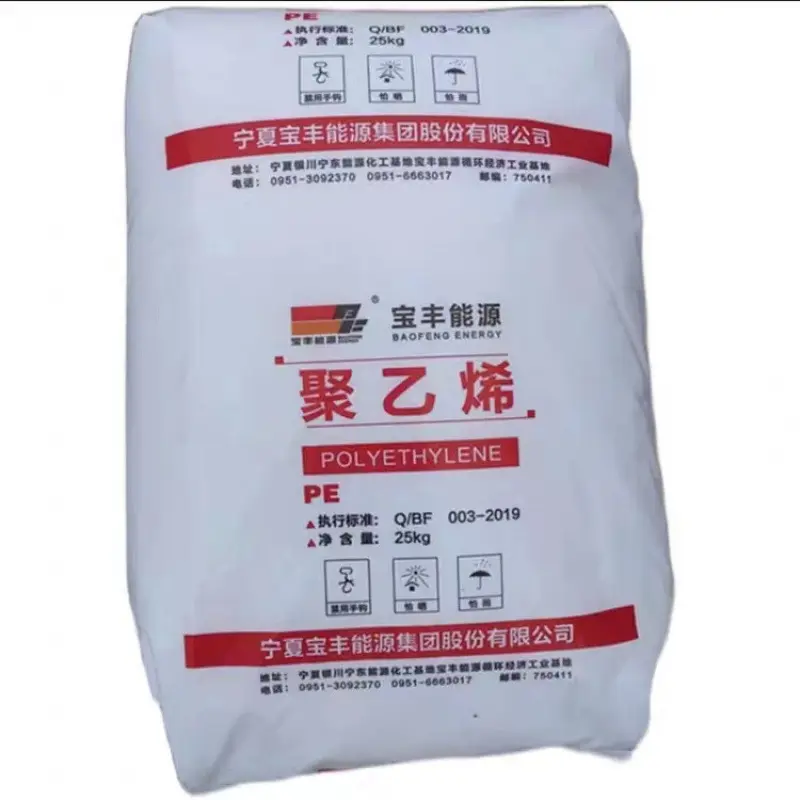
Ningxia Baofeng 5502S is a blow-molding-grade high-density polyethylene (HDPE) resin produced by Ningxia Baofeng Energy Group Co., Ltd. Located in the Ningdong Energy and Chemical Industry Base in Ningxia, Baofeng Energy manufactures polyolefins such as polyethylene and polypropylene via the coal-to-olefins (CTO) route, with 5502S belonging to its low-melt-flow HDPE lineup designed for hollow blow molding.
From its fundamental material profile, 5502S has a density of 0.9539 g/cm³ (GB/T 1033.2) and a melt mass-flow rate of 0.18 g/10min (2.16 kg, GB/T 3682.1). The combination of high density and low melt flow rate indicates higher molecular weight and melt strength, positioning its processing window toward blow molding and extrusion rather than thin-wall, high-speed injection molding.
In product positioning, 5502S is primarily aimed at medium-to-large hollow blow-molded containers as well as applications requiring part rigidity, stress crack resistance, and clean appearance. As a representative coal-to-olefins producer in China, Baofeng Energy supplies polyolefins domestically and into international markets; within its blow-molding lineup, 5502S serves as a low-melt-flow, high-rigidity base grade suitable for chemical and household/personal-care packaging containers.
Technical Specifications
Physical Properties
| Item | Test Condition | Value | Unit | Test Method |
| Pellets: Colored and Black Specks | — | 0 | counts/kg | SH/T 1541.1 |
| Pellets: Snakeskin and Tailings | — | 0 | counts/kg | SH/T 1541.1 |
| Pellets: Black Specks | — | 0 | counts/kg | SH/T 1541.1 |
| Pellets: Oversized and Undersized Pellets | — | 1.6 | g/kg | SH/T 1541.1 |
| Melt Flow Rate (MFR) | 2.16 kg | 0.18 | g/10min | GB/T 3682.1 |
| Density | — | 0.9539 | g/cm³ | GB/T 1033.2 |
| Environmental Stress Crack Resistance (ESCR) | — | 20 | hr | GB/T 1842 |
Mechanical Properties
| Item | Test Condition | Value | Unit | Test Method |
| Tensile Stress at Yield | — | 27 | MPa | GB/T 1040.2 |
| Tensile Stress at Break | — | 31.9 | MPa | GB/T 1040.2 |
| Nominal Tensile Strain at Break | — | 970 | % | GB/T 1040.2 |
| Charpy Notched Impact Strength | 23°C | 14 | kJ/m² | GB/T 1043.1 |
| Flexural Modulus | — | 1185 | MPa | GB/T 9341 |
Optical Properties
| Item | Test Condition | Value | Unit | Test Method |
| Yellowness Index | — | -3.5 | — | HG/T 3862 |
Notice: The technical specifications for Baofeng 5502S provided herein are compiled from data published by Ningxia Baofeng Energy Group Co., Ltd. or certified third-party testing laboratories. While prepared with professional diligence, these values serve as reference guidelines rather than absolute performance guarantees. Because molding and processing conditions vary significantly across operational environments, we recommend performing trial runs with 5502S under your actual manufacturing conditions prior to final material selection and mass production.
Features & Benefits
- Low Melt Flow Rate and High Melt Strength (MFR 0.18 g/10min, 2.16 kg): Higher molecular weight reduces parison sag during blow molding, helping control wall-thickness uniformity in medium-to-large hollow parts and minimizing weak spots from localized thinning.
- High Density and High Rigidity (Density 0.9539 g/cm³, Flexural Modulus 1185 MPa): Delivers good part stiffness and creep resistance, offering room for wall-thickness downgauging at equivalent rigidity to help control part weight and resin consumption.
- Environmental Stress Crack Resistance (20 hr, GB/T 1842): Provides sound resistance to stress cracking when exposed to surfactants, oils, and similar media, supporting medium- to long-term use in chemical and household/personal-care packaging containers.
- Toughness and Impact Resistance (Nominal Strain at Break 970%, Charpy Notched Impact 14 kJ/m² @23 °C): Gives containers corresponding resistance to damage during drop, stacking, and transit, helping reduce distribution breakage rates.
- Cleanliness and Color Consistency (0 counts/kg colored/black specks, 0 counts/kg snakeskin/tailings, Yellowness Index -3.5): Good control of contaminants and color specks yields clean, bright white appearance and low lot-to-lot color variation for natural and light-colored parts with appearance requirements.
Applications
- Chemical & Household/Personal-Care Packaging Containers: Hollow blow-molded products such as lubricating oil drums, antifreeze containers, detergent and cleaner bottles, disinfectant containers, and agrochemical packaging represent the primary end uses for this grade.
- Automotive Fluid Containers: Automotive urea (AdBlue) jugs, windshield washer fluid containers, and similar parts, utilizing its media resistance and rigidity for vehicle and storage environments.
- Industrial Hollow Products: Medium-sized storage and transport drums, chemical raw material containers, and similar items suited to applications requiring stacking strength and stress crack resistance.
- Food & Agricultural Packaging: Hollow containers such as edible oil jugs, beverage containers, and agricultural or gardening water tanks; prior to food-contact use, confirm that the specific lot has applicable food-contact compliance documentation.
- Extruded Products: Subject to equipment and process validation, it can be evaluated for extruded items such as sheets and profiles; suitability should be confirmed based on actual screw geometry, die, and cooling conditions.
Note: Where end products involve food contact or pharmaceutical packaging, separate compliance declarations and third-party test reports for the corresponding grade should be requested and verified against target-market regulations.
Frequently Asked Questions (FAQs)
Q1: Does 5502S require drying prior to processing?
A1: HDPE is a non-polar polymer with very low moisture absorption, so it can typically be processed directly without drying under normal packaging and storage conditions. If resin is stored for extended periods in high-temperature, high-humidity environments with damaged packaging, or if parts show surface bubbles or silver streaks (splay), drying at 80–90 °C for 1–2 hours may be considered to remove surface moisture. Whether to dry should be judged based on actual resin condition and part appearance.
Q2: How should I select between 5502S and high-melt-flow injection-grade HDPE?
A2: Their processing windows differ markedly. 5502S has a melt flow rate of 0.18 g/10min and high melt strength, suiting hollow blow molding and extrusion rather than thin-wall injection parts with complex geometries or long, narrow flow paths; injection-grade HDPE typically has an MFR of several g/10min or higher with better flowability for rapid mold filling. During selection, screen by molding process first, then compare density, rigidity, and stress crack resistance.
Q3: What should be noted during blow molding with an MFR of 0.18 g/10min?
A3: This melt flow rate represents a low-flow level, so ensure sufficient melt temperature and plasticizing residence time during processing to avoid excessive screw torque or uneven plasticization caused by high melt viscosity. Industry practice generally keeps HDPE blow-molding melt temperatures around 180–210 °C and mold temperatures around 20–40 °C; these figures serve as general processing references rather than TDS values for this grade, and actual settings should be established through trial runs based on machine capability, part wall thickness, and parison design. Also control parison sag and adjust extrusion speed and pre-blow timing when necessary to improve wall-thickness distribution.
Q4: Does an environmental stress crack resistance of 20 hr mean it can be used for all chemical packaging?
A4: 20 hr is a reference value measured under the specified conditions of GB/T 1842, reflecting resistance to cracking under specific media and stress conditions rather than universal compatibility with all chemicals. In actual selection, evaluate comprehensively based on chemical type, concentration, contact temperature, and container structural stress; for strongly oxidizing media, organic solvents, or elevated temperatures, conduct chemical compatibility soaking along with full-container drop and stacking tests before confirming suitability.