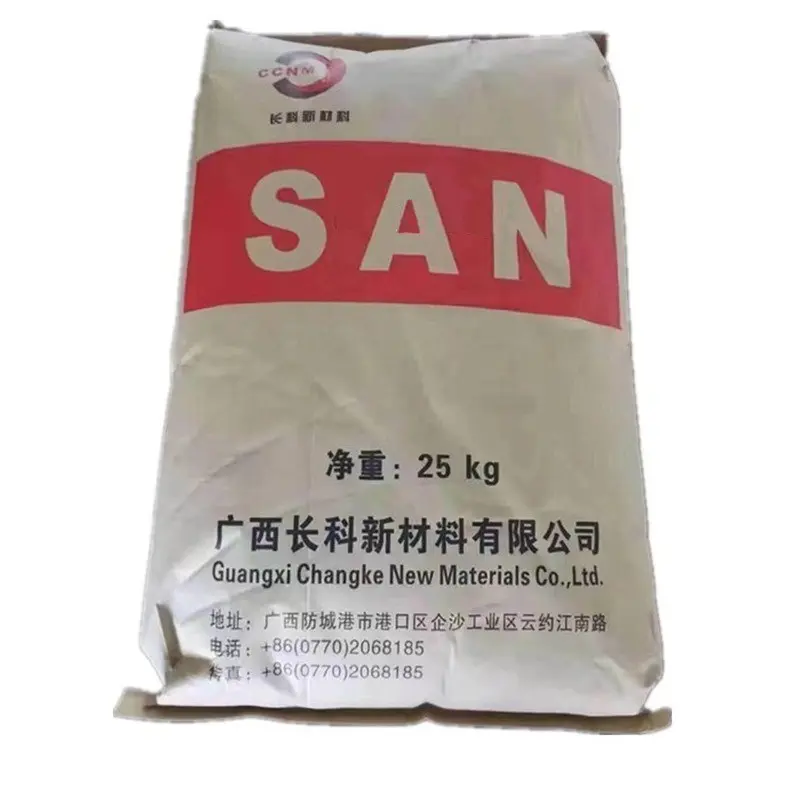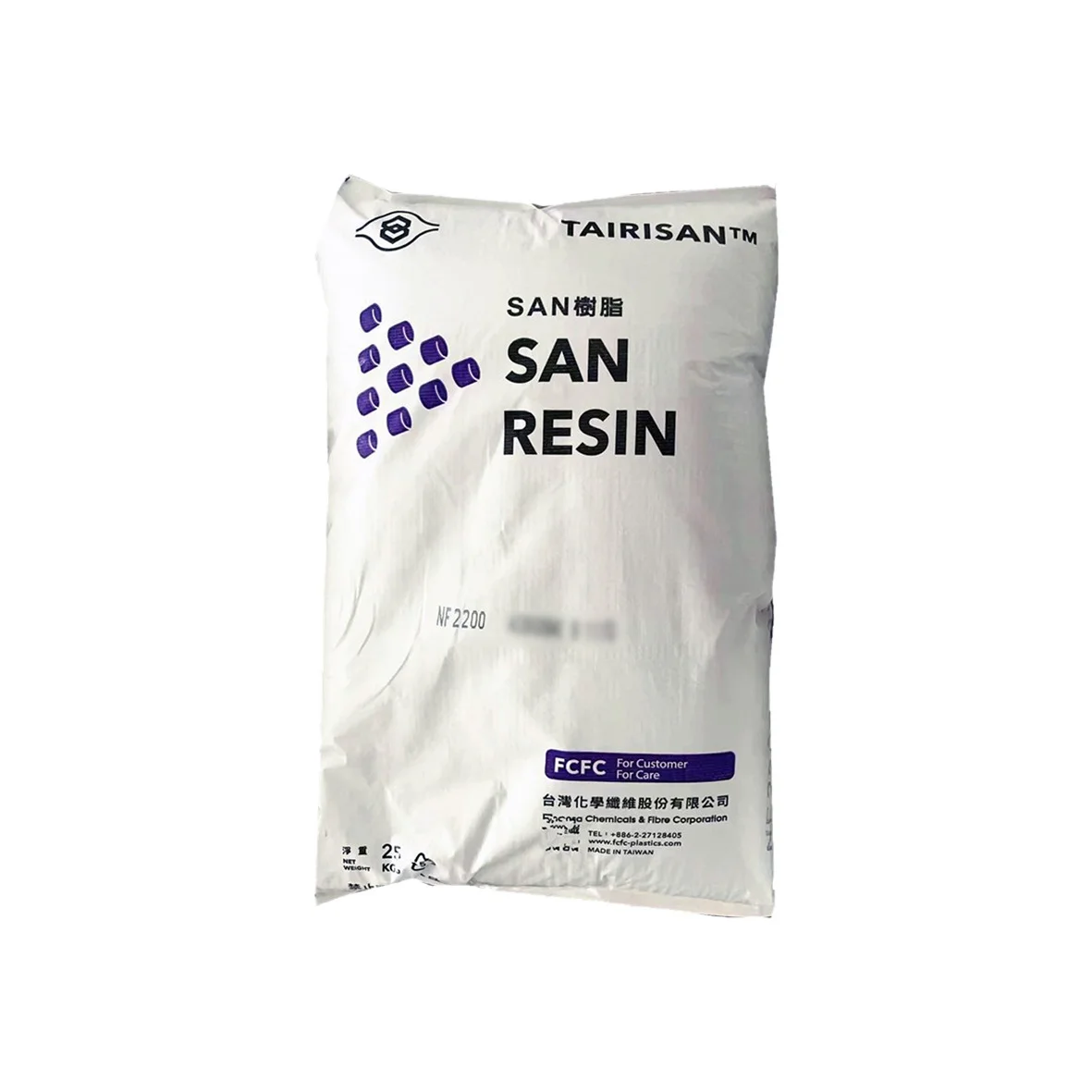
Product Overview
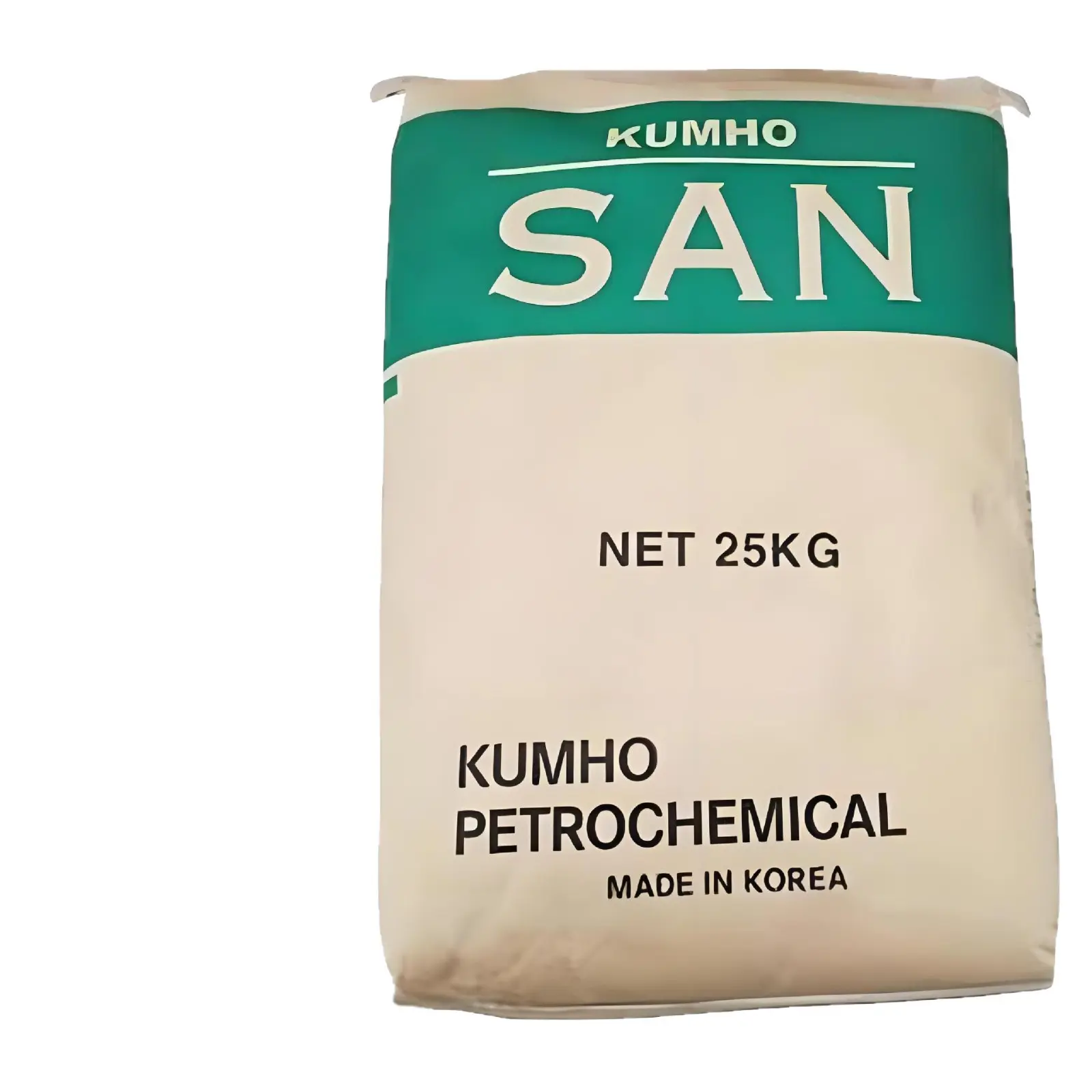
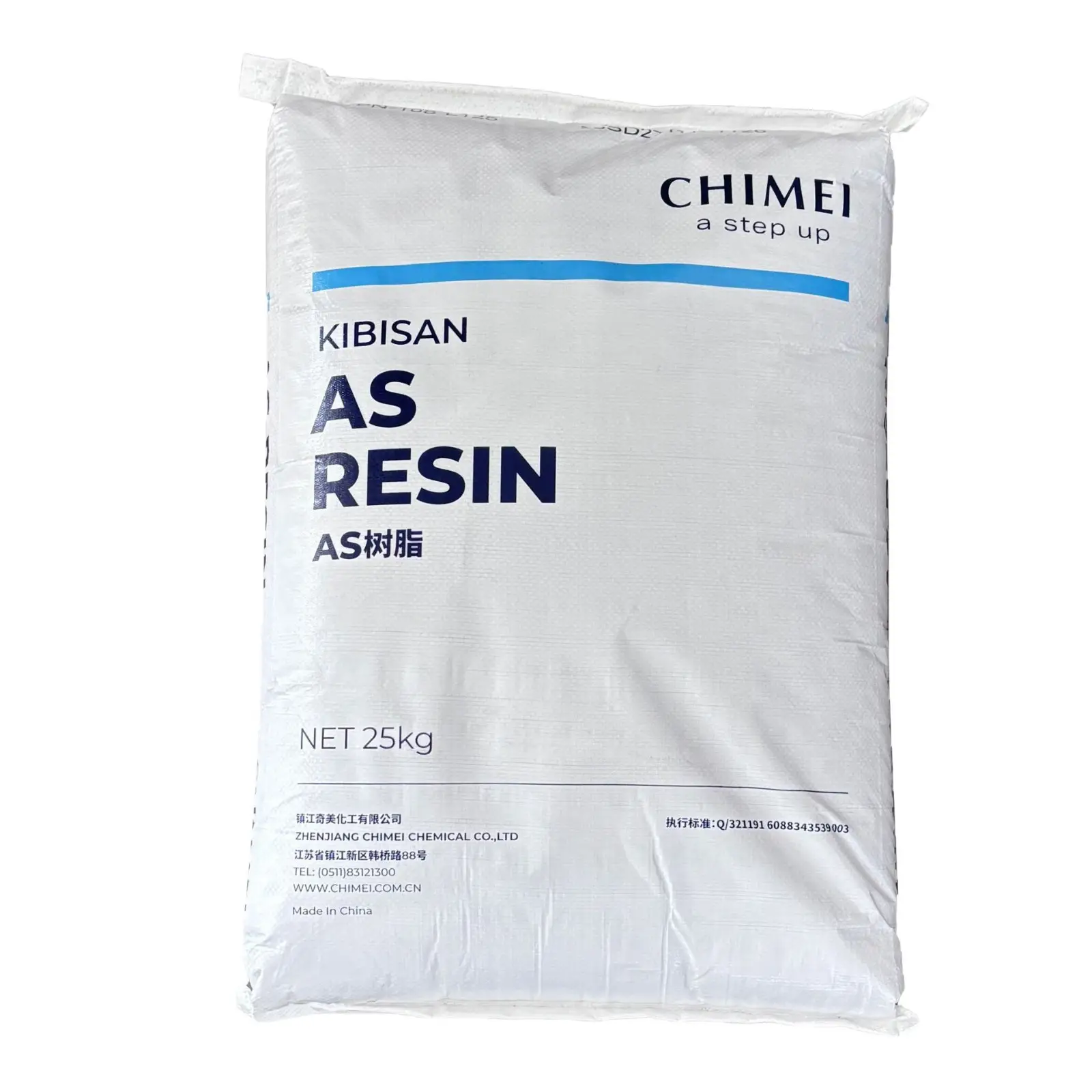
This product is manufactured by ChiMei Corporation and belongs to the KIBISAN® series of Styrene-Acrylonitrile (SAN) copolymer resins. This material is a high-flow, rigid, transparent SAN grade, characterized by high melt flowability, high tensile and flexural modulus, and a low coefficient of linear thermal expansion. The finished products exhibit uniform light transmission and stable surface gloss. This grade allows for stable molding of thin-walled, complex structural components with good dimensional precision. The raw material is compatible with the primary injection molding process.
Technical Specifications
Physical Properties
| Physical Properties | Test Condition | Test Value | Test Standard |
| Density | 23 ℃ | 1.06 g/cm³ | ISO 1183 |
| Melt Flow Index, Volume | 220 ℃, 10 kg | 58 cm³/10 min | ISO 1133 |
| Mold Shrinkage | — | 0.20-0.70 % | ISO 294-4 |
Mechanical Properties
| Mechanical Properties | Test Condition | Test Value | Test Standard |
| Tensile Strength, Yield | 50 mm/min | 65 MPa | ISO 527-2/50 |
| Tensile Strength, Break | 50 mm/min | 65 MPa | ISO 527-2/50 |
| Tensile Strain, Break | 50 mm/min | 4 % | ISO 527-2/50 |
| Flexural Modulus | 2 mm/min | 2600 MPa | ISO 178 |
| Flexural Strength | 2 mm/min | 89 MPa | ISO 178 |
| Charpy Impact Strength, Notched | 23 ℃ | 2 kJ/m² | ISO 179 |
| Izod Impact Strength, Notched | 23 ℃ | 2 kJ/m² | ISO 180/1A |
Thermal Properties
| Thermal Properties | Test Condition | Test Value | Test Standard |
| Heat Deflection Temperature, Unannealed | 1.8 MPa | 88 ℃ | ISO 75-2/A |
| Vicat Softening Point | 5 kg, 50 ℃/hr | 101 ℃ | ISO 306/B50 |
| Vicat Softening Point | 50 ℃/hr, 1 kg | 104 ℃ | ISO 306/A50 |
| Coefficient of Linear Thermal Expansion (CTE), Parallel | — | 3.6E-5~3.8E-5 cm/cm/℃ | ISO 11359-2 |
| Flammability Rating | 1.5 mm | HB | UL 94 |
Disclaimer: The technical specifications for ChiMei KIBISAN® PN-107 L125FG presented herein are derived from data issued by ChiMei or certified third-party testing institutions. While we have made every effort to ensure the accuracy of the information provided, we assume no liability for any consequences arising from the use of PN-107 L125FG based on these data. Given the variables involved in processing conditions, we strongly recommend conducting thorough trials of PN-107 L125FG under your specific operational environment prior to final material selection.
Logistics & Supply Standards
ChiMei KIBISAN® PN-107 L125FG SAN is packaged in standard 25 kg woven bags with moisture-proof inner liners. The raw material is in solid plastic granule form and is not classified as hazardous chemical. We maintain safe, permanent inventory in domestic regional warehouses and cross-border bonded warehouses. The delivery lead time for domestic spot orders is 3–7 working days, while the lead time for export FOB orders is 7–15 working days; final delivery timelines are subject to agreed-upon trade terms. The product has no transportation control restrictions. Under compliant transportation conditions, it can be mixed and loaded with other non-hazardous general plastic raw materials, and shipments can be consolidated based on the customer’s total procurement needs to optimize logistics costs.
Compliance & Quality Commitment
Purchasers may apply for a complete set of documents, including original factory-stamped electronic or paper TDS (Technical Data Sheet), MSDS (Material Safety Data Sheet), and COA (Certificate of Analysis) for batch quality inspection. This grade has passed UL 94 HB flammability rating certification and meets EU REACH and RoHS hazardous substance control standards. For food-contact batches, FDA and EU 10/2011 compliance test reports can be provided. A complete production traceability system is implemented for all batches, with each batch bound to a unique production lot number. Full-process records including polymerization, granulation, quality inspection, and warehousing are kept, allowing for the retrieval of corresponding production and inspection archives based on purchase orders and material lot numbers to achieve full-process quality verification.
Sustainability & ESG Statement
ChiMei PN-107 L125FG is a thermoplastic SAN resin. Scraps and defective products generated during molding can be crushed, granulated, and mixed with virgin material in fixed proportions for secondary injection molding, providing a foundation for circular recycling. During the production stage, the monomer polymerization process is optimized, and residual monomer content in the finished raw material is controlled at a low industry level. VOC emissions during high-temperature injection molding are managed to meet the requirements for low-odor terminal products. The raw material production base follows international green supply chain management standards; production wastewater and exhaust gas undergo multi-stage purification processes, and industrial solid waste is classified, recycled, and disposed of in accordance with global downstream brand ESG supply chain audit requirements. The outer packaging uses recyclable woven bags to reduce the use of non-degradable consumables.
Frequently Asked Questions (FAQs)
Q1: How should the drying process parameters for ChiMei PN-107 L125FG SAN be set before injection molding?
A: This SAN raw material possesses a certain degree of hygroscopicity. If stored in an environment with humidity above 60% or used for high-transparency appearance parts, it is recommended to perform hot-air drying at 80℃ for 3–5 hours, with the drying air dew point controlled below -35℃. This eliminates appearance defects such as silver streaks, bubbles, and fog spots in molded parts. The thickness of the material layer during drying should not exceed 30mm.
Q2: What are the differences in molding production between PN-107 L125FG SAN and lower-flow SAN grades in the same series?
A: PN-107 L125FG has a melt volume flow rate of 58 cm³/10min, offering higher flowability. It is compatible with thin-walled molds (under 0.5mm thickness) and complex multi-rib structures, requiring lower injection pressure and temperature. Lower-flow SAN grades have higher melt strength, making them more suitable for thick-walled, high-structural-strength large parts, with relatively longer molding cycles.
Q3: How should this SAN grade and transparent PMMA material be distinguished for terminal product selection?
A: PN-107 L125FG SAN offers excellent rigidity, better molding flowability, and lower raw material costs, but its light transmittance and weather resistance are inferior to PMMA. PMMA possesses higher light transmittance and better outdoor yellowing resistance, making it suitable for optical lenses and outdoor transparent decorative parts. This SAN grade is more suitable for indoor small transparent housings and daily commodity decorations.