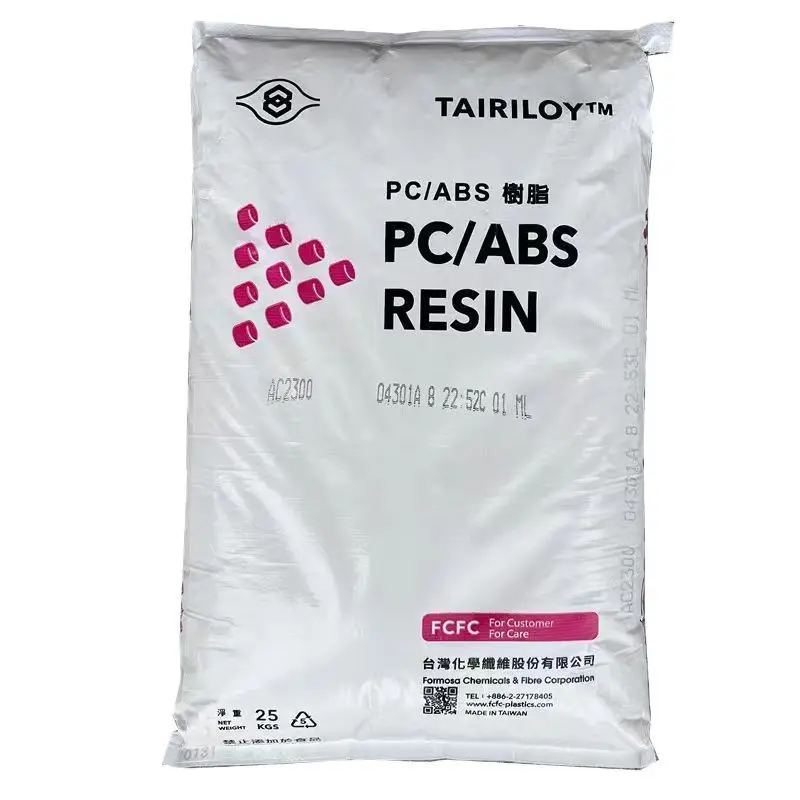
Product Overview
Formosa TAIRILOY® AC2300 is a modified compound resin within the TAIRILOY® PC/ABS alloy series manufactured by Taiwan Chemical Fibre Corporation (FCFC). This material is a general-purpose, non-flame-retardant alloy blend of polycarbonate and ABS, combining the heat resistance and rigidity of polycarbonate with the processing fluidity and ambient temperature impact strength of ABS resin. The balanced melt flow performance, stable mechanical strength, and moderate heat deflection temperature of this material satisfy the requirements for long-term stable use in conventional structural components. This grade is compatible with standard injection molding processing technologies and is suitable for the mass production of structural housings for various household appliances and electronic devices.
Technical Specifications
Physical Properties
| Property | Value | Unit | Test Standard |
| Density23 ℃ | 1.1 | g/cm³ | ASTM D792 |
| 1.1 | g/cm³ | ISO 1183 | |
| Melt Mass-Flow Rate (MFR) (240 ℃, 5 kg) | 9 | g/10min | ASTM D1238, ISO 1133 |
| Melt Mass-Flow Rate (MFR) (260 ℃, 5 kg) | 21 | g/10min | ASTM D1238, ISO 1133 |
| Molding Shrinkage, Parallel (3.2 mm) | 0.40-0.60 | % | ASTM D955 |
| Molding Shrinkage, Parallel (3.2 mm) | 0.40-0.60 | % | ISO 2577 |
| Rockwell Hardness R (23 ℃) | 110 | — | ASTM D785, ISO 2039-2 |
Mechanical Properties
| Property | Value | Unit | Test Standard |
| Tensile Strength (23 ℃) | 50 | MPa | ASTM D638, ISO 527-2 |
| Flexural Modulus (23 ℃) | 2350 | MPa | ASTM D790, ISO 178 |
| Flexural Strength (23 ℃) | 86 | MPa | ASTM D790, ISO 178 |
| Charpy Unnotched Impact Strength (23 ℃, 4 mm) | 50 | kJ/m² | ISO 179 |
| Izod Unnotched Impact Strength (23 ℃, 3.2 mm) | 410 | J/m | ASTM D256 |
Thermal Properties
| Property | Value | Unit | Test Standard |
| Deflection Temperature Under Load, Unannealed (1.8 MPa, 6.35 mm) | 96 | ℃ | ISO 75-2/A, ASTM D648 |
| Vicat Softening Temperature (10 N, Loading 1) | 117 | ℃ | ASTM D1525, ISO 306/A |
| Flammability Classification, All Colors (1.5 mm) | HB | — | UL 94 |
Disclaimer: The technical data provided above is for reference purposes only and is based on typical values provided by the manufacturer. While we strive to ensure the accuracy of this information, actual product performance may vary based on specific processing conditions and testing methods. Please refer to the official Technical Data Sheet (TDS) and Material Safety Data Sheet (MSDS) provided with your order for precise technical specifications and safety guidance.
Logistics & Supply Standards
Formosa TAIRILOY® AC2300 PC/ABS is packaged in standard 25kg polyethylene-lined woven bags, with distinct identification of lot number, grade, and production details. Standard inventory is consistently maintained across global regions, and spot stock availability of conventional specifications remains stable, ensuring continuous mass production scheduling for customers. Under standard international trade terms such as EXW, FOB, and CIF, the average lead time for standard orders ranges from 7 to 15 business days, with exact timelines fluctuating based on the destination logistics corridor. This product is not classified as a hazardous chemical, features stable physicochemical properties, and supports consolidated container shipping with other non-hazardous general-purpose plastic pellets within compliant freight frameworks, allowing customers to optimize logistics costs for full container load (FCL) purchasing.
Compliance & Quality Commitment
For every batch of Formosa TAIRILOY® AC2300, we can provide purchasers with original hardcopy or electronic versions of TDS, MSDS, and COA quality certification documents, fully preserving production lot numbers, test data, and raw material traceability records. This grade has achieved UL 94 HB certification, and its formulation components comply with EU REACH and RoHS hazardous substance control directives, satisfying compliance audit requirements for electronic/electrical enclosures and automotive interior components. Batch traceability management is implemented across the entire chain—archiving comprehensive data from the arrival of base resin raw materials at the plant, compounding and pelletizing production, finished product factory testing, to warehouse dispatch—enabling the retrieval of complete traceability files based on customer orders to safeguard downstream finished product regulatory filings and quality issue troubleshooting.
Sustainability & ESG
The base material of TAIRILOY® AC2300 PC/ABS alloy is a thermoplastic polymer. Qualified regrind from molding processing and non-contaminated scrap parts can be re-granulated under compliant processing for secondary recycling and blending, providing a foundation for circular recycling and reuse. The compounding and pelletizing process utilizes enclosed extrusion and off-gas collection systems to control the release of volatile organic compounds (VOCs) on the surface of the finished pellets, minimizing volatile pollutant emissions in downstream injection molding workshops. The product manufacturing facility complies with international green supply chain management systems, continuously optimizing unit energy consumption and solid waste output. The material contains no heavy metals, halogenated flame retardants, or other restricted additives, aligning with the low-carbon and low-toxicity supply chain procurement guidelines of mainstream global manufacturing.
Frequently Asked Questions (FAQs)
Q1: What are the standard pre-drying process parameters for TAIRILOY® AC2300 prior to processing?
A: This PC/ABS alloy contains a polycarbonate component and is highly hygroscopic. The recommended drying parameters are: hot air drying temperature of 80–90 ℃ for a duration of 4–6 hours, controlling the moisture content of the raw material below 0.02% to prevent defects such as silver streaks and bubbles in the molded products.
Q2: What are the recommended mold temperatures and melt temperatures during injection molding for this grade?
A: To ensure parts achieve optimal surface gloss and minimize residual internal stress, the recommended injection molding melt temperature should be set between 240–270 ℃, and the mold temperature should be controlled between 60–80 ℃. In actual operations, fine adjustments can be made within these ranges based on part wall thickness and the complexity of the mold structure.
Q3: How do you select and differentiate AC2300 from other PC/ABS grades within the same series?
A: AC2300 is a general-purpose, high-flow, non-flame-retardant grade that prioritizes molding efficiency and ambient temperature impact performance. If customers require higher heat resistance and high rigidity, high-modulus grades should be selected; if the end product has fire-rating requirements, it is necessary to switch to the UL 94 V-0 flame-retardant modified PC/ABS series.