Product Overview
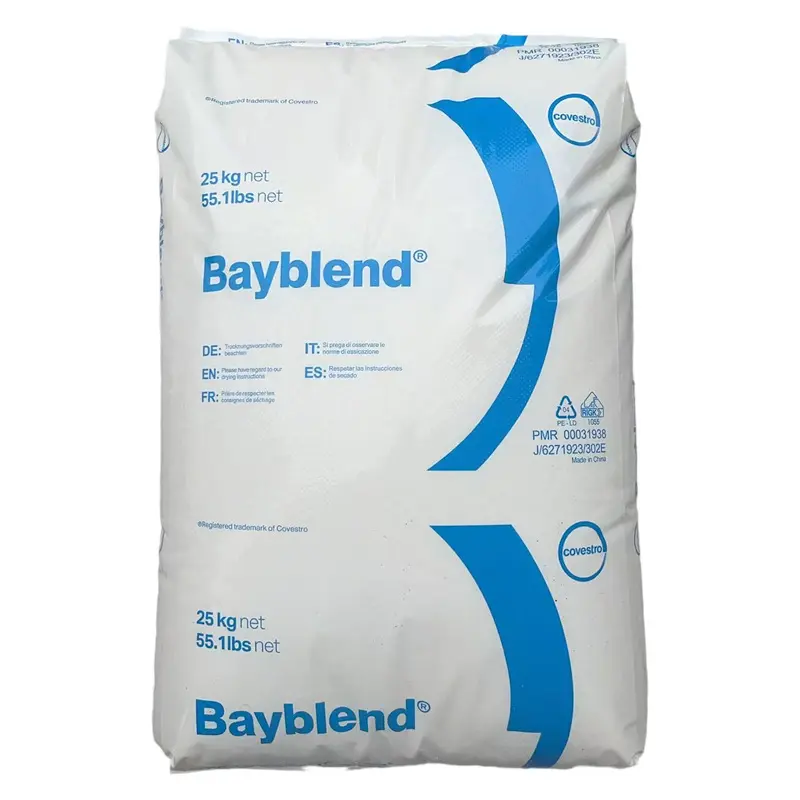
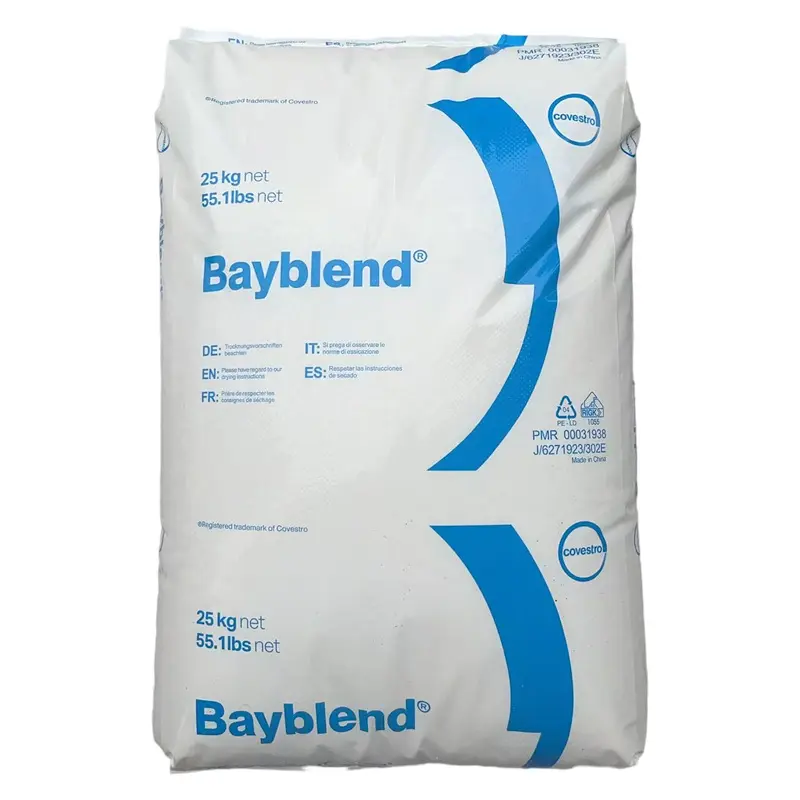
Covestro Bayblend® FR3002 is a polycarbonate and acrylonitrile-butadiene-styrene (PC+ABS) blend engineering thermoplastic manufactured by Covestro, belonging to its high-performance flame-retardant engineering plastics series. This material features exceptional flame retardancy (achieving a V-0 rating at 1 mm thickness and a 5VB rating at 1.8 mm thickness) alongside a balanced combination of mechanical strength, heat resistance, and electrical insulation properties. Its core functional value lies in balancing high fire safety with favorable impact resistance, effectively meeting the stringent fire safety and structural integrity requirements demanded of electronic and electrical enclosures. This grade is primarily designed for high-efficiency injection molding processes.
Technical Specifications
Physical Properties
| Physical Properties | Test Conditions | Test Value | Test Standard |
| Density | 23 °C | 1.18 g/cm³ | ISO 1183 |
| Melt Volume-Flow Rate (MVR) | 240 °C, 5 kg | 19 cm³/10 min | ISO 1133 |
| Molding Shrinkage, Parallel | 240 °C, MT 80 °C, 3 mm, 150x105x3mm | 0.50-0.70 % | ISO 2577 |
| Molding Shrinkage, Normal | 240 °C, MT 80 °C, 3 mm, 150x105x3mm | 0.50-0.70 % | ISO 2577 |
| Water Absorption, Saturated | 23 °C | 0.5 % | ISO 62 |
| Water Absorption, Equilibrium | 50% RH, 23 °C | 0.2 % | ISO 62 |
| Melt Viscosity | 260 °C, 1000s-1 | 190 Pa·s | ISO 11443-A |
Mechanical Properties
| Mechanical Properties | Test Conditions | Test Value | Test Standard |
| Tensile Modulus | 1 mm/min | 2700 MPa | ISO 527-2/1 |
| Tensile Stress at Yield | 50 mm/min | 60 MPa | ISO 527-2/50 |
| Tensile Stress at Break | 50 mm/min | 50 MPa | ISO 527-2/50 |
| Tensile Strain at Yield | 50 mm/min | 4 % | ISO 527-2/50 |
| Tensile Strain at Break | 50 mm/min | > 50 % | ISO 527-2/50 |
| Flexural Modulus | 2 mm/min | 2600 MPa | ISO 178 |
| Flexural Strength | 2 mm/min | 98 MPa | ISO 178 |
| Charpy Notched Impact Strength | 23 °C | 30 kJ/m² | ISO 180/1A |
| Charpy Unnotched Impact Strength | 23 °C | No Break | ISO 180 |
Thermal Properties
| Thermal Properties | Test Conditions | Test Value | Test Standard |
| Deflection Temperature Under Load, Unannealed | 0.45 MPa | 92 °C | ISO 75-2/B |
| Deflection Temperature Under Load, Unannealed | 1.8 MPa | 84 °C | ISO 75-2/A |
| Vicat Softening Temperature | — | 97 °C | ISO 306/B50 |
| Vicat Softening Temperature | — | 99 °C | ISO 306/B120 |
| Coefficient of Linear Thermal Expansion (CTE), Flow | 23 – 55 °C | 0.000076 cm/cm/°C | ISO 11359-2 |
| Coefficient of Linear Thermal Expansion (CTE), Transverse | 23 – 55 °C | 0.00008 cm/cm/°C | ISO 11359-2 |
| Flammability Rating | 1 mm | V-0 | UL 94 |
| Flammability Rating | 1.8 mm | 5VB | UL 94 |
Electrical Properties
| Electrical Properties | Test Conditions | Test Value | Test Standard |
| Surface Resistivity | — | 1.00E+16 ohms | IEC 60093 |
| Volume Resistivity | 23 °C | 1.00E+14 ohms·cm | IEC 60093 |
| Electric Strength | 23 °C, 1 mm | 35 kV/mm | IEC 60243-1 |
| Relative Permittivity | 100 Hz, 23 °C | 3.2 | IEC 60250 |
| Relative Permittivity | 23 °C, 1.0e+6 Hz | 3.1 | IEC 60250 |
| Dissipation Factor | 100 Hz, 23 °C | 5.00E-03 | IEC 60250 |
| Dissipation Factor | 23 °C, 1.0e+6 Hz | 6.00E-03 | IEC 60250 |
| Comparative Tracking Index (CTI), Solution A | — | 350 V | IEC 60112 |
Other Properties
| Other Properties | Test Conditions | Test Value | Test Standard |
| ISO Abbreviation | — | PC+ABS-FR(40) | — |
Disclaimer: The technical specifications for Covestro Bayblend® FR3002 PC/ABS presented herein are derived from data issued by Covestro or certified third-party testing institutions. While we have made every effort to ensure the accuracy of the information provided, we assume no liability for any consequences arising from the use of FR3002 based on these data. Given the variables involved in processing conditions, we strongly recommend conducting thorough trials of FR3002 under your specific operational environment prior to final material selection.
Logistics & Supply Standards
This product is packaged in standard 25 kg/bag moisture-proof packaging. Our warehousing facilities maintain sufficient and stable inventory levels to support continuous industrial manufacturing schedules. Standard order lead times follow normal international shipping speeds, and specific dispatch and delivery milestones are executed in accordance with the agreed Incoterms. As a conventional non-hazardous chemical product, this material is eligible for compliant mixed-load shipping with other standard plastic raw materials.
Compliance & Quality Commitment
We provide complete quality traceability support for every shipment batch, with official original copies of TDS (Technical Data Sheets), MSDS/SDS (Material Safety Data Sheets), and COA (Certificates of Analysis) available upon request. The base grade Covestro Bayblend® FR3002 complies with major international regulatory standards, including REACH, RoHS, and UL 94 flammability standards. We strictly implement full-chain supply chain management to ensure end-to-end traceability from the original manufacturing plant to final delivery, safeguarding our customers’ regulatory and production compliance needs.
Sustainability & ESG
This product adheres to modern polymer manufacturing standards focused on environmental protection and sustainability. As an engineering thermoplastic, it supports recycling and reuse under proper life-cycle management, helping to minimize industrial waste. Within recommended processing temperature ranges, the material exhibits high thermal stability and low volatile organic compound (VOC) emissions characteristics, meeting current rigorous green supply chain and industrial environmental standards.
Frequently Asked Questions (FAQ)
Q1: What drying procedures are required for Covestro Bayblend® FR3002 prior to injection molding?
A1: Because PC/ABS alloy materials are sensitive to moisture, pre-drying using a dehumidifying dryer is recommended prior to injection molding to prevent hydrolytic degradation during high-temperature processing, which can otherwise cause surface silver streaks or mechanical performance degradation. Recommended drying parameters typically include a temperature setting of 80–90 °C for 3–4 hours, maintaining a moisture content level below 0.02%.
Q2: How should mold temperature and melt temperature be configured during the injection molding process for this grade?
A2: To ensure smooth mold filling and achieve optimal surface quality and dimensional stability, it is recommended to set the melt temperature between 240 °C and 280 °C, and control the mold temperature within the range of 70 °C to 90 °C. Specific processing parameters should be fine-tuned according to the wall thickness structure, flow path design, and the performance characteristics of the injection molding machine.
Q3: When selecting a flame-retardant PC/ABS grade, how should FR3002 be evaluated for applicability compared to similar grades?
A3: Grade selection primarily depends on the end-product’s wall thickness design, flowability requirements, and specific flame retardancy and heat resistance thresholds. FR3002 offers exceptional thin-wall flame retardancy (V-0 at 1 mm) coupled with well-balanced mechanical properties. If an application demands differentiated flowability or Vicat softening point characteristics, it is recommended to review the MVR (Melt Volume-Flow Rate) and HDT (Heat Deflection Temperature) metrics across respective grades and evaluate them in conjunction with specific mold geometries.