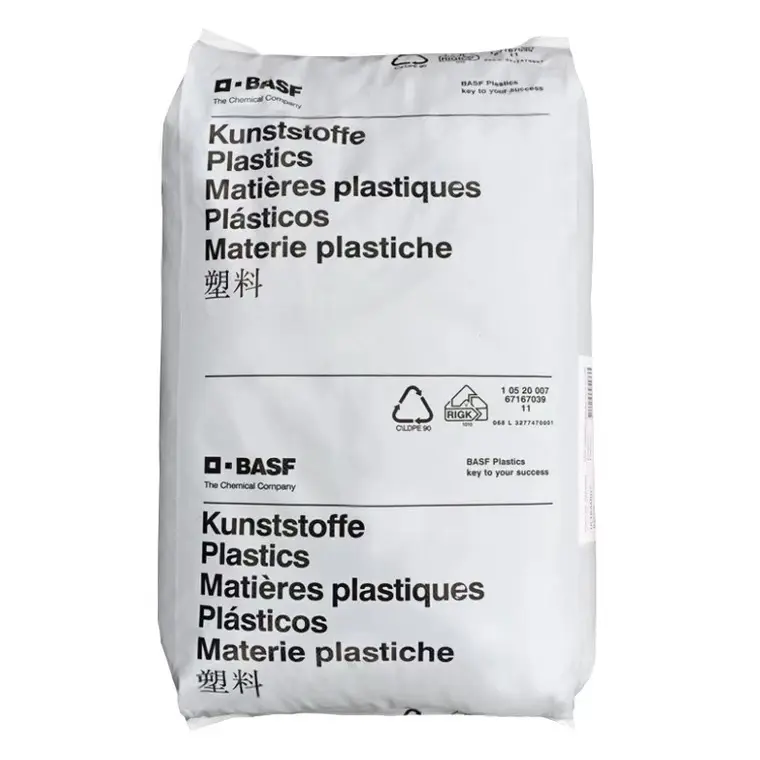
Product Overview & Key Features
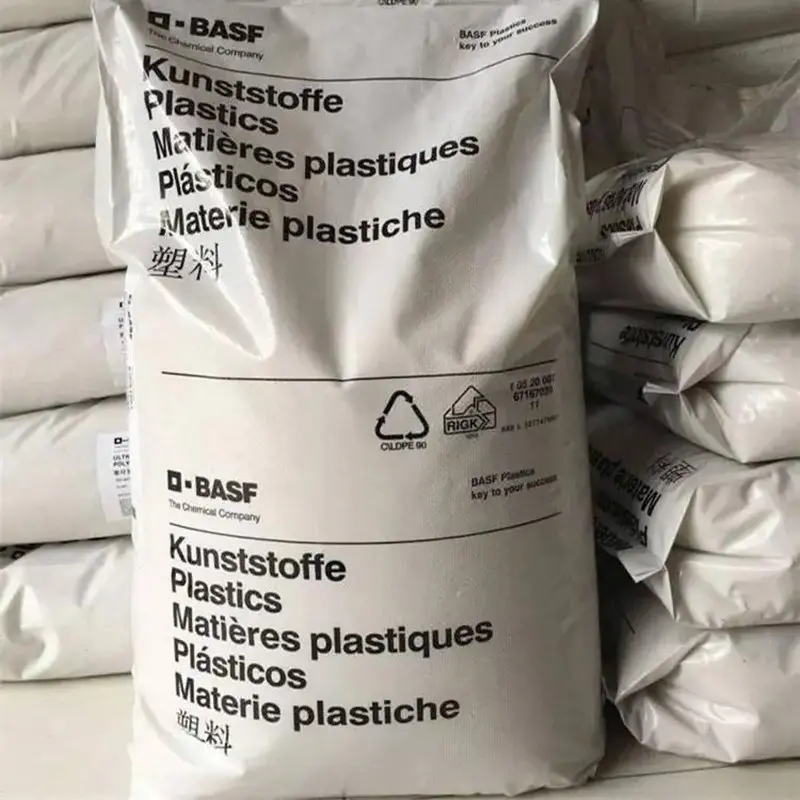
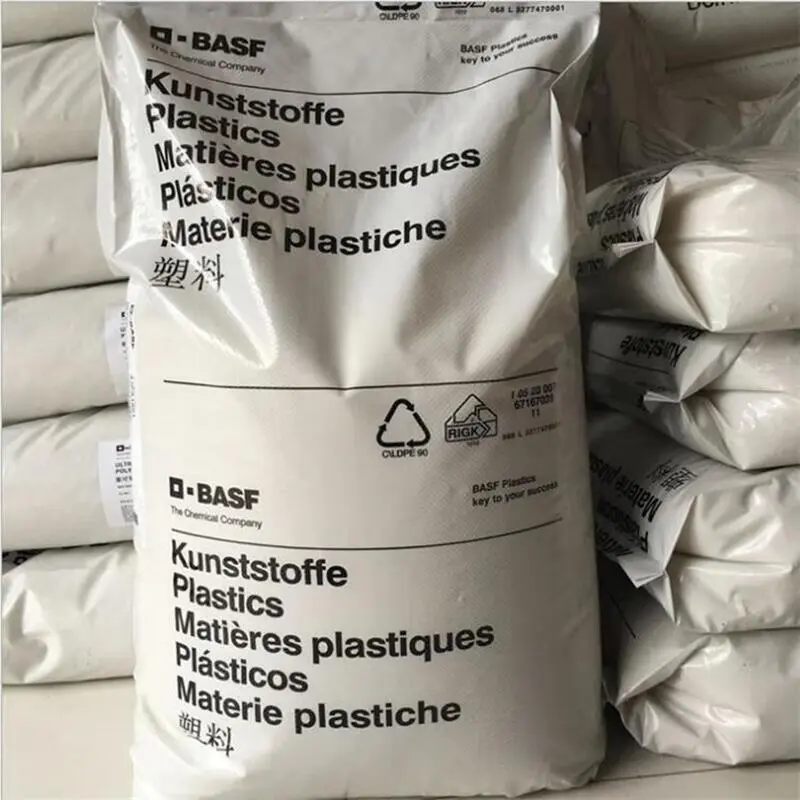
- Manufacturer: BASF (Germany)
- Product Series: Ultramid® Polyamide Engineering Plastics Series
- Material Category: 30% Glass-Fiber-Reinforced Polyamide 66 (PA66-GF30), Food-Contact (FC) Injection Molding Grade Engineering Plastic
- Physical Appearance: Natural cylindrical pellets, opaque thermoplastic resin
Ultramid® A3EG6 FC is a classic glass-fiber-reinforced, food-contact (FC) PA66 grade from BASF with a mature and extensive application base in food-contact equipment and engineering plastic structural parts. Modified with 30% glass fiber, this material significantly enhances the stiffness, strength, and heat deflection resistance of unreinforced PA66 while complying with relevant food-contact safety regulations and retaining the inherent chemical/wear resistance and stable electrical insulation of the polyamide matrix. Its melt flowability is well suited for conventional injection molding processes.
With balanced mechanical and thermal properties alongside controlled mold shrinkage, this grade is a mainstream engineering plastic choice for food-contact equipment components, thermally stressed home appliance parts, electrical and electronic insulating components, and wear-resistant industrial machinery parts, enabling metal replacement, part lightweighting, and cost optimization across medium-to-high-temperature load-bearing applications.
Technical Specifications
Physical Properties
| Item | Test Condition | Value | Unit | Test Method |
| Density (Dry) | — | 1.36 | g/cm³ | ISO 1183 |
| Apparent Density (Dry) | — | 0.70 | g/cm³ | No Standard |
| Melt Volume-Flow Rate (MVR, Dry) | 275°C, 5 kg | 40 | cm³/10 min | ISO 1133 |
| Water Absorption, Saturation (Dry) | 23°C | 5.2–5.8 | % | ISO 62 |
| Water Absorption, Equilibrium (Dry) | 50% RH, 23°C | 1.5–1.9 | % | ISO 62 |
| Viscosity Number, 96% Sulfuric Acid (Dry) | 96% H₂SO₄ | 145 | cm³/g | ISO 307 |
| Mold Shrinkage, Constrained (Dry) | TW = 80°C, 5 mm, 107471.0, TM = 290°C | 0.55 | % | — |
Mechanical Properties
| Item | Test Condition | Value | Unit | Test Method |
| Tensile Modulus (Dry) | — | 10000 | MPa | ISO 527-2 |
| Tensile Modulus (Conditioned) | — | 7200 | MPa | ISO 527-2 |
| Tensile Stress at Break (Dry) | — | 190 | MPa | ISO 527-2 |
| Tensile Stress at Break (Conditioned) | — | 130 | MPa | ISO 527-2 |
| Tensile Strain at Break (Dry) | — | 3 | % | ISO 527-2 |
| Tensile Strain at Break (Conditioned) | — | 5 | % | ISO 527-2 |
| Creep Modulus (Conditioned) | 1.0e+3 h, 23°C, strain <= 0.5% | 5300 | MPa | ISO 899-1 |
| Flexural Modulus (Dry) | — | 8600 | MPa | ISO 178 |
| Flexural Modulus (Conditioned) | — | 6500 | MPa | ISO 178 |
| Flexural Strength (Dry) | — | 280 | MPa | ISO 178 |
| Flexural Strength (Conditioned) | — | 210 | MPa | ISO 178 |
| Charpy Notched Impact Strength (Dry) | -30°C | 11 | kJ/m² | ISO 179 1eA |
| Charpy Notched Impact Strength (Dry) | 23°C | 13 | kJ/m² | ISO 179 1eA |
| Charpy Notched Impact Strength (Conditioned) | 23°C | 22 | kJ/m² | ISO 179 1eA |
| Charpy Unnotched Impact Strength (Dry) | -30°C | 70 | kJ/m² | ISO 179 1eU |
| Charpy Unnotched Impact Strength (Dry) | 23°C | 85 | kJ/m² | ISO 179 1eU |
| Charpy Unnotched Impact Strength (Conditioned) | 23°C | 100 | kJ/m² | ISO 179 1eU |
| Izod Notched Impact Strength (Dry) | 23°C | 12 | kJ/m² | ISO 180/1A |
| Izod Notched Impact Strength (Conditioned) | 23°C | 16 | kJ/m² | ISO 180/1A |
Thermal Properties
| Item | Test Condition | Value | Unit | Test Method |
| Heat Deflection Temperature (HDT), Unannealed (Dry) | 0.45 MPa | 250 | °C | ISO 75-2/B |
| Heat Deflection Temperature (HDT), Unannealed (Dry) | 1.8 MPa | 250 | °C | ISO 75-2/A |
| Melting Temperature (Dry) | — | 260 | °C | ISO 11357-3 |
| Specific Heat Capacity of Melt (Dry) | — | 1500 | J/kg/°C | No Standard |
| Thermal Conductivity (Dry) | — | 0.35 | W/m-K | DIN 52612 |
| Max. Service Temperature, Short Cycle | — | 240 | °C | — |
| Long-Term Max. Service Temperature, Tensile Strength (Dry) | 5.0e+3 h | 165 | °C | IEC 60216 |
| Long-Term Max. Service Temperature, Tensile Strength (Dry) | 2.0e+4 h | 135 | °C | IEC 60216 |
Flame Retardancy
| Item | Test Condition | Value | Unit | Test Method |
| Flame Rating (Dry) | 1.6 mm | HB | — | IEC 60695-11-10/-20 |
Electrical Properties
| Item | Test Condition | Value | Unit | Test Method |
| Surface Resistivity (Conditioned) | — | 1.0E+10 | ohms | IEC 60093 |
| Volume Resistivity (Dry) | — | 1.0e+15 | ohms·cm | IEC 60093 |
| Volume Resistivity (Conditioned) | — | 1.0E+12 | ohms·cm | IEC 60093 |
| Dielectric Constant (Dry) | 1.0e+6 Hz | 3.5 | — | IEC 60250 |
| Dielectric Constant (Conditioned) | 1.0e+6 Hz | 5.6 | — | IEC 60250 |
| Dissipation Factor (Dry) | 1.0e+6 Hz | 0.014 | — | IEC 60250 |
| Dissipation Factor (Conditioned) | 1.0e+6 Hz | 0.16 | — | IEC 60250 |
| Comparative Tracking Index (CTI), Solution A (Dry) | — | 550 | V | IEC 60112 |
Notice: The technical specifications for BASF Ultramid® A3EG6 FC provided herein are compiled from data published by BASF or certified third-party testing laboratories. While prepared with professional diligence, these values serve as reference guidelines rather than absolute performance guarantees. Because molding and processing conditions vary significantly across operational environments, we recommend performing trial runs with Ultramid® A3EG6 FC under your actual manufacturing conditions prior to final material selection and mass production.
Features & Benefits
- 30% Glass-Fiber Reinforcement for High Strength and Load-Bearing Stiffness: Delivers a dry tensile modulus of 10,000 MPa and tensile stress at break of 190 MPa, providing exceptional structural load-bearing capacity to replace non-ferrous metals in stressed components while reducing part weight and total manufacturing costs.
- Outstanding Heat and Long-Term Thermal Resistance: Achieves a heat deflection temperature of 250°C under a 1.8 MPa load and a short-term maximum service temperature of 240°C, while retaining thermal tensile strength up to 165°C over 5,000 hours of continuous service, making it suitable for medium-to-high-temperature operating environments with controlled long-term property degradation.
- Balanced Processing Flowability: Exhibits a melt volume-flow rate of 40 cm³/10 min at 275°C/5 kg, offering favorable mold-filling capability among glass-fiber-reinforced PA66 grades to support high-volume injection molding of moderately complex parts and multi-cavity molds without sacrificing reinforcement efficiency.
- Reliable Electrical Insulation and Tracking Resistance: Offers a dry volume resistivity of 1.0e+15 ohms·cm and a Comparative Tracking Index (CTI) of 550 V, providing dependable insulation performance to meet insulation and tracking resistance requirements for low-voltage electrical structural components and reduce electrical safety risks.
- Low Constrained Mold Shrinkage and Good Dimensional Stability: Constrained mold shrinkage is held at 0.55%, as glass fibers effectively suppress PA66 molding shrinkage for tighter dimensional control; conditioned toughness increases after moisture absorption to help absorb external impact loads in precision-assembled structural parts.
Applications
- Food-Contact & Home Appliances: Internal coffee machine structural components and brewing units, food-processing machinery gears and connectors, drinking-water-contact valve bodies, and heat-resistant appliance functional parts, combining food-contact regulatory compliance with high-temperature resistance and molding efficiency.
- Automotive Industry: Under-the-hood structural brackets, air intake system components, powertrain mounting parts, connector housings, and seat adjustment mechanisms, leveraging high strength and heat deflection resistance for medium-to-high-temperature engine compartment service and vehicle lightweighting.
- Electrical & Electronics Industry: Low-voltage electrical bases, connector insulating structures, internal circuit breaker support frames, and terminal blocks, utilizing stable electrical insulation and tracking resistance to meet baseline safety standards.
- Industrial Machinery & Equipment: Drive gears, bearing cages, pump housings, wear-resistant bushings, and industrial fasteners, replacing metals in wear- and load-bearing parts to reduce operating noise and maintenance costs.
Frequently Asked Questions (FAQs)
Q1: Must Ultramid® A3EG6 FC PA66 be dried before processing? What are the recommended parameters?
A: Because PA66 is strongly hygroscopic, thorough pre-drying is mandatory before processing; excessive moisture can cause splay marks (silver streaks), bubbles, molecular degradation, and reduced mechanical properties. A dehumidifying dryer is recommended at 80°C (not exceeding 80–90°C to prevent thermal-oxidative yellowing of the pellets) for 4–6 hours to achieve a target moisture content below 0.05%. Dried pellets should be conveyed in sealed lines and kept insulated to prevent moisture reabsorption.
Q2: How should I choose between 30% glass-fiber-reinforced A3EG6 FC and unreinforced PA66 resin?
A: Their core performance profiles differ significantly: unreinforced PA66 offers higher toughness and lower density, but its stiffness, strength, and heat deflection resistance are markedly lower than those of glass-fiber-reinforced grades; with 30% glass fiber, A3EG6 FC delivers substantially higher modulus, strength, heat deflection temperature, and dimensional stability, though with lower notched impact toughness. Selection Principle: Choose A3EG6 FC for load-bearing structural parts, high-temperature service, or food-contact applications requiring high rigidity; select unreinforced PA66 for lower-load applications demanding high toughness.
Q3: What is the flame rating of this PA66 grade, and can it be used for electrical parts with strict flame-retardant requirements?
A: This grade carries a baseline flame rating of HB under IEC 60695, which is a slow-burning classification without V-0 or higher flame retardancy, and therefore cannot be used directly in electrical safety components subject to mandatory flame-retardant standards. Where flame retardancy is required, dedicated flame-retardant modified PA66 grades from BASF’s Ultramid series should be selected.
Q4: How does moisture absorption affect the properties of A3EG6 FC, and what should be considered during part design?
A: Upon moisture absorption, PA66 experiences a moderate decrease in tensile strength and flexural modulus, while elongation at break and notched impact toughness increase, accompanied by slight dimensional expansion due to water uptake. During structural design, engineers should account for conditioned mechanical property reductions and dimensional changes by allowing appropriate assembly tolerances; precision parts should be validated for dimensions and performance in the moisture-conditioned equilibrium state to avoid assembly failures in service.