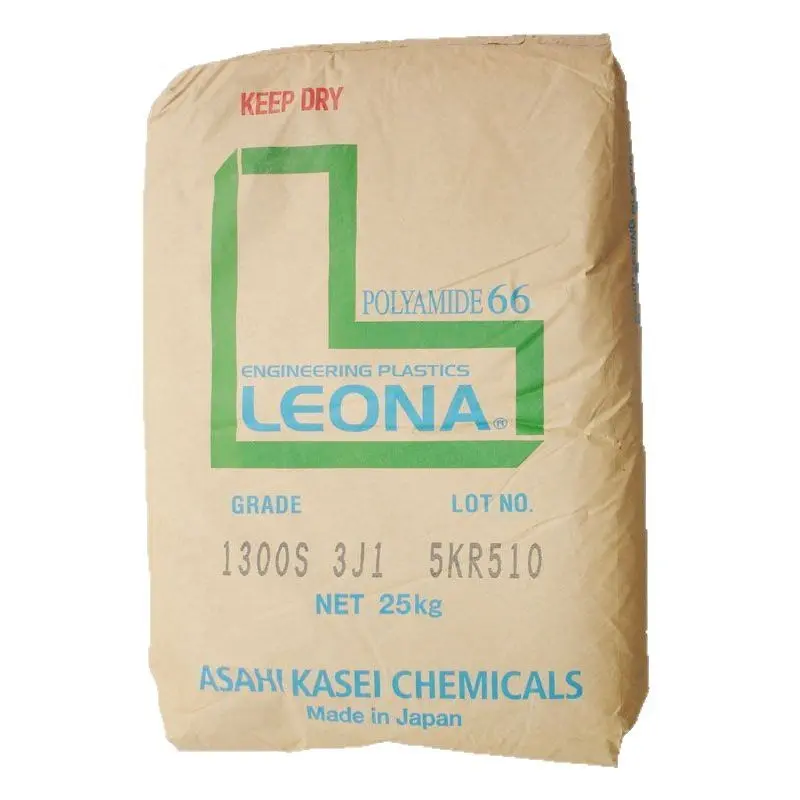
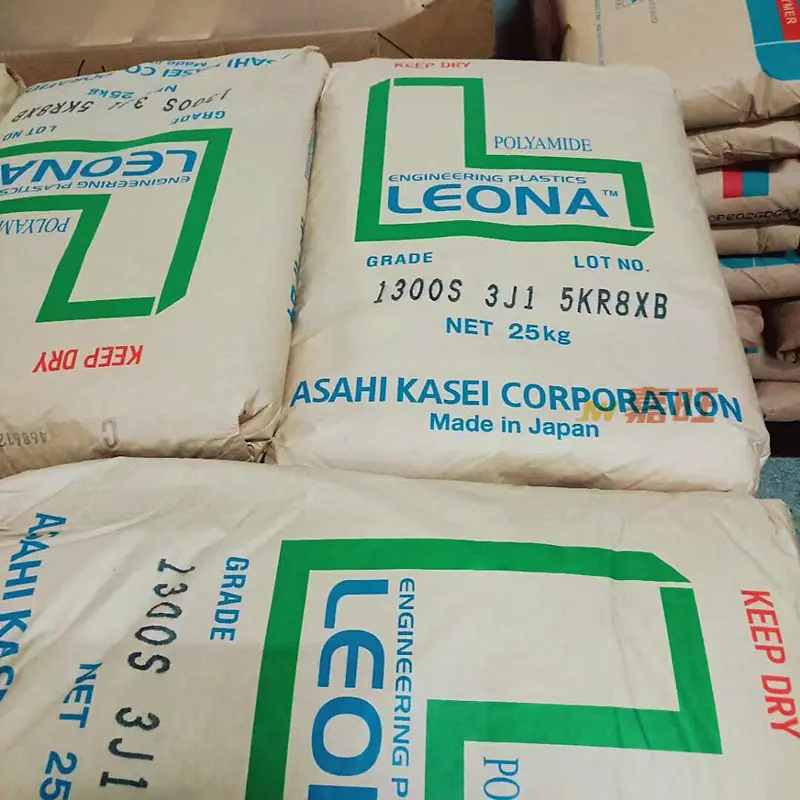
Product Overview & Key Features
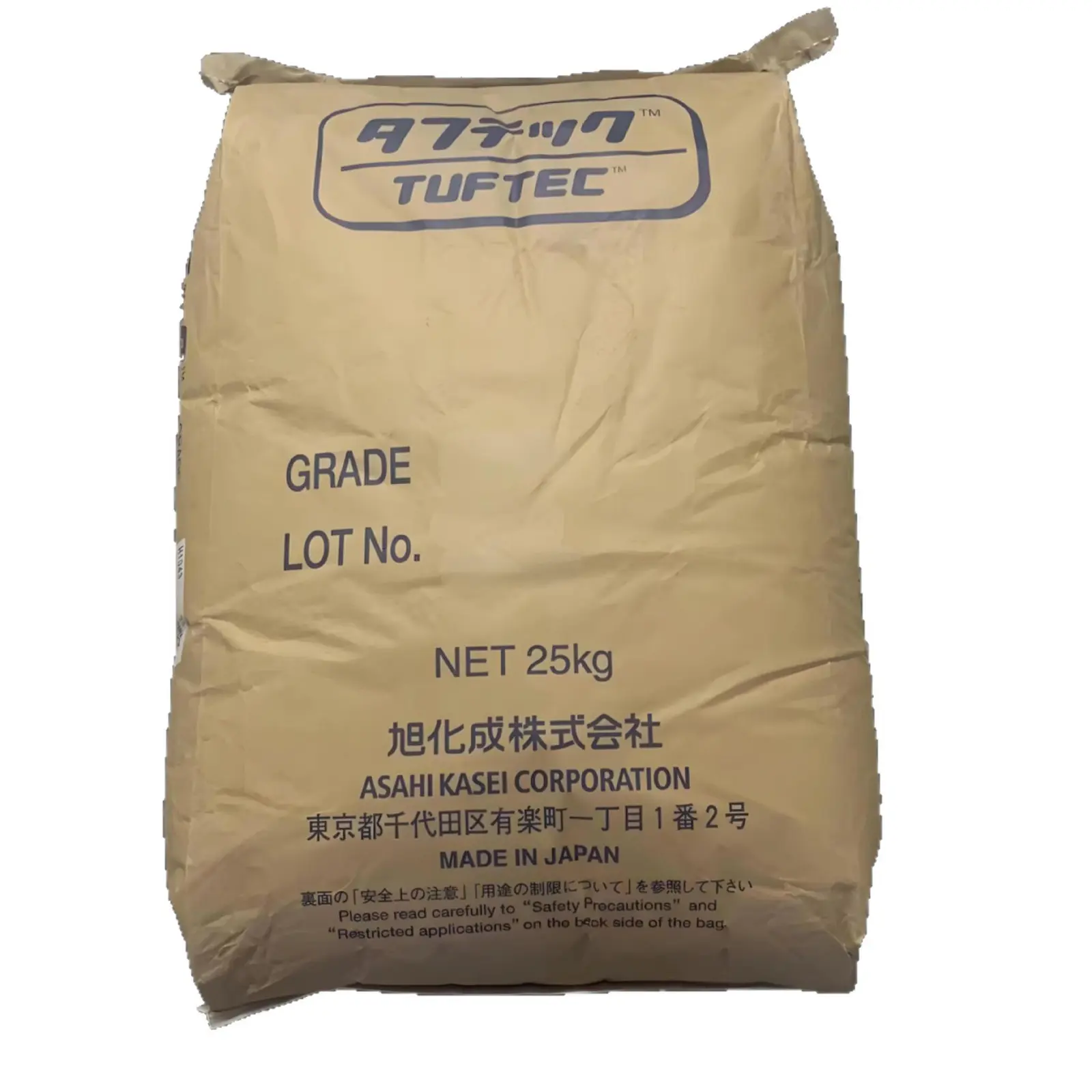
Manufacturer: Asahi Kasei
Product Series: Leona™
Material Base Attributes: Polyamide 66 (PA66), unreinforced general-purpose injection molding engineering thermoplastic.
Core Performance Advantages:
- Exceptional Mechanical Strength and Rigidity: Exhibits outstanding tensile modulus (3000 MPa) and flexural strength in dry condition, capable of withstanding high structural loads.
- Good Wear Resistance and Impact Performance: Features superior Taber abrasion resistance and favorable Charpy/Izod impact resistance.
- Excellent Electrical Insulation: High volume resistivity (1.0E+14 ohms·cm), superior surface resistance, and a high Comparative Tracking Index (CTI 600V), making it well-suited for electrical and electronic applications.
- Thermal Stability and Flame Retardancy: Delivers robust heat deflection performance, with a UL 94 V-2 flammability rating (0.75 mm) and a Glow Wire Flammability Index (GWFI) of 960 °C (3 mm).
- Supported Processing Method: Injection Molding.
Technical Specifications
Physical Properties
| Physical Properties | Test Value | Test Unit | Test Standard |
| Density | 1.14 | g/cm³ | ASTM D792 / ISO 1183 |
| Mold Shrinkage, Parallel | 1.3 – 2.0 | % | Internal Method |
| Water Absorption, Equilibrium (50% RH, 23 °C) | 2.5 | % | ISO 62 |
| Rockwell Hardness, M | 80 | — | ASTM D785 / ISO 2039-2 |
| Rockwell Hardness, R | 120 | — | ASTM D785 / ISO 2039-2 |
Mechanical Properties
| Mechanical Properties | Test Value | Test Unit | Test Standard |
| Tensile Modulus, Dry (23 °C) | 3000 | MPa | ISO 527-1 |
| Tensile Modulus, Moist (23 °C) | 1200 | MPa | ISO 527-1 |
| Tensile Stress, Yield, Dry (23 °C) | 82 | MPa | ISO 527-2 |
| Tensile Stress, Yield, Moist (23 °C) | 52 | MPa | ISO 527-2 |
| Tensile Strength, Dry | 79 | MPa | ASTM D638 |
| Tensile Strength, Moist | 57 | MPa | ASTM D638 |
| Tensile Strain, Yield, Dry (23 °C) | 4 | % | ISO 527-2 |
| Tensile Strain, Yield, Moist (23 °C) | 24 | % | ISO 527-2 |
| Tensile Strain, Break, Dry | 50 | % | ASTM D638 |
| Tensile Strain, Break, Moist | 250 | % | ASTM D638 |
| Tensile Strain, Break, Dry (23 °C) | > 100 | % | ISO 527-2 |
| Flexural Modulus, Dry (23 °C) | 2800 | MPa | ASTM D790 |
| Flexural Modulus, Dry | 2700 | MPa | ISO 178 |
| Flexural Modulus, Moist | 1200 | MPa | ASTM D790 |
| Flexural Modulus, Moist (23 °C) | 1100 | MPa | ISO 178 |
| Flexural Strength, Dry | 118 | MPa | ASTM D790 |
| Flexural Strength, Moist | 54 | MPa | ASTM D790 |
| Flexural Strength, Dry (23 °C) | 113 | MPa | ISO 178 |
| Flexural Strength, Moist (23 °C) | 42 | MPa | ISO 178 |
| Taber Abrasion Resistance (1.0E+3 Cycles) | 7 | mg | ASTM D1044 |
| Charpy Impact Strength, Notched, Dry | 6 | kJ/m² | ISO 179 |
| Charpy Impact Strength, Notched, Dry (No Break) | No Break | — | ISO 179 |
| Charpy Impact Strength, Notched, Moist | 15 | kJ/m² | ISO 179 |
| Charpy Impact Strength, Notched, Moist (No Break) | No Break | — | ISO 179 |
| Izod Impact Strength, Notched, Dry | 39 | J/m | ASTM D256 |
| Izod Impact Strength, Notched, Moist | 150 | J/m | ASTM D256 |
Thermal Properties
| Thermal Properties | Test Value | Test Unit | Test Standard |
| Deflection Temperature Under Load, Unannealed (0.45 MPa) | 230 | °C | ASTM D648 |
| Deflection Temperature Under Load, Unannealed (0.45 MPa) | 190 | °C | ISO 75-2/B |
| Deflection Temperature Under Load, Unannealed (1.8 MPa) | 70 | °C | ISO 75-2/A / ASTM D648 |
| Coefficient of Linear Thermal Expansion (CTE), Parallel | 8.00E-05 | cm/cm/°C | ASTM D696 |
| Specific Heat | 1670 | J/kg/°C | — |
| Thermal Conductivity | 0.2 | W/m/K | — |
| Flammability Rating (0.75 mm) | V-2 | — | UL 94 |
| Glow Wire Flammability Index (GWFI, 3 mm) | 960 | °C | IEC 60695-2-12 |
| Oxygen Index | 26 | % | ASTM D2863 |
Electrical Properties
| Electrical Properties | Test Value | Test Unit | Test Standard |
| Surface Resistivity | 1.00E+13 | ohms | ASTM D257 / IEC 60093 |
| Volume Resistivity | 1.00E+14 | ohms · cm | ASTM D257 |
| Volume Resistivity (23 °C) | 1.00E+14 | ohms · cm | IEC 60093 |
| Dielectric Strength | 20 | kV/mm | ASTM D149 / IEC 60243-1 |
| Comparative Tracking Index (CTI, 3 mm) | 600 | V | IEC 60112 |
Disclaimer: The technical specifications for Asahi Kasei Leona™ 1300S PA66 presented herein are derived from data issued by Asahi Kasei or certified third-party testing institutions. While we have made every effort to ensure the accuracy of the information provided, we assume no liability for any consequences arising from the use of 1300S based on these data. Given the variables involved in processing conditions, we strongly recommend conducting thorough trials of 1300S under your specific operational environment prior to final material selection.
Applications & Processing Guidelines
Recommended Applications and End Products:
- Automotive Industry: Under-the-hood engine components, electrical connectors, mechanical structural parts, and wear-resistant sliding blocks.
- Electrical & Electronics: Switch housings, insulating brackets, low-voltage electrical components (leveraging high CTI value and flame-retardant properties).
- Industrial & Consumer Goods: High-strength gears, bearings, precision mechanical parts, and load-bearing structural components.
Processing Guidelines:
- Drying: PA66 is hygroscopic (equilibrium water absorption reaches 2.5%); thorough drying prior to injection molding is mandatory (recommended moisture content below 0.1%) to prevent surface splay, silver streaks, or molecular chain degradation during processing.
- Flow and Temperature Control: This grade belongs to the balanced general-purpose injection molding category, offering favorable melt flowability. Barrel and mold temperatures must be properly adjusted to ensure uniform crystallization, minimize internal stress, and optimize surface finish.
- Mold Shrinkage Compensation: Mold design must account for the parallel mold shrinkage rate (1.3% – 2.0%) within dimensional tolerances, while also considering post-shrinkage characteristics driven by PA66 crystallization.
Grade Comparison & Selection Guide
Intra-series Flowability and Hardness Gradient Comparison:
Within the Asahi Kasei Leona™ polyamide 66 resin portfolio, grades are typically categorized based on flowability, mechanical strength, and reinforcement status (such as glass fiber reinforcement):
- Low-Flow High-Strength Types (High Viscosity Grades): Generally feature higher molecular weight and superior impact/fatigue resistance, though they demand higher shear and injection pressure from processing equipment.
- Medium-Flow General-Purpose Types (such as 1300S): Achieve an optimal balance between processing flowability and physical-mechanical performance, accommodating both complex mold filling and structural strength requirements.
- High-Flow Thin-Wall Types: Specifically engineered for miniaturized, thin-walled electronic or automotive components, offering exceptionally low melt viscosity.
Engineer Selection Recommendations:
- When component wall thickness is moderate, geometry is complex, and balanced mechanical and electrical performance is required, priority should be given to general-purpose injection grades like 1300S to ensure smooth mold filling and reduced processing complexity.
- If end-use conditions demand higher rigidity, tensile strength, and a lower coefficient of linear thermal expansion, shifting toward Glass Fiber Reinforced PA66 grades within the same series is recommended; for ultra-thin-wall structures, high-flow grades should be evaluated.
Frequently Asked Questions (FAQs)
Q1: Is drying strictly necessary prior to injection molding Leona™ 1300S? What are the recommended processing parameters?
A1: Yes, drying is mandatory. PA66 readily absorbs ambient moisture. If left undried, moisture will cause hydrolytic degradation of the resin during high-temperature injection molding, leading to surface silver streaks, bubbles, and a significant drop in mechanical strength. A dehumidifying dryer is recommended, operating at 80°C – 100°C for 4 – 6 hours.
Q2: How does ambient humidity affect the mechanical properties (such as tensile modulus and strength) of 1300S?
A2: As indicated in the technical specification table, PA66 exhibits moisture-plasticizing behavior. The dry-state tensile modulus (3000 MPa) drops to 1200 MPa after moisture equilibrium is reached. Consequently, during structural design and finite element analysis (FEA), engineers must select the data corresponding to the actual operating environment of the finished part (dry state vs. long-term moisture-conditioned state).
Q3: Is this grade suitable for insulating structural parts located near live components in electrical and electronic applications?
A3: Highly suitable. 1300S offers outstanding volume resistivity (1.0E+14 ohms·cm), high dielectric strength (20 kV/mm), a comparative tracking index (CTI) up to 600V, UL 94 V-2 flammability ratings, and GWFI compliance at 960 °C, fully satisfying rigorous electrical insulation and fire safety standards.