Product Overview
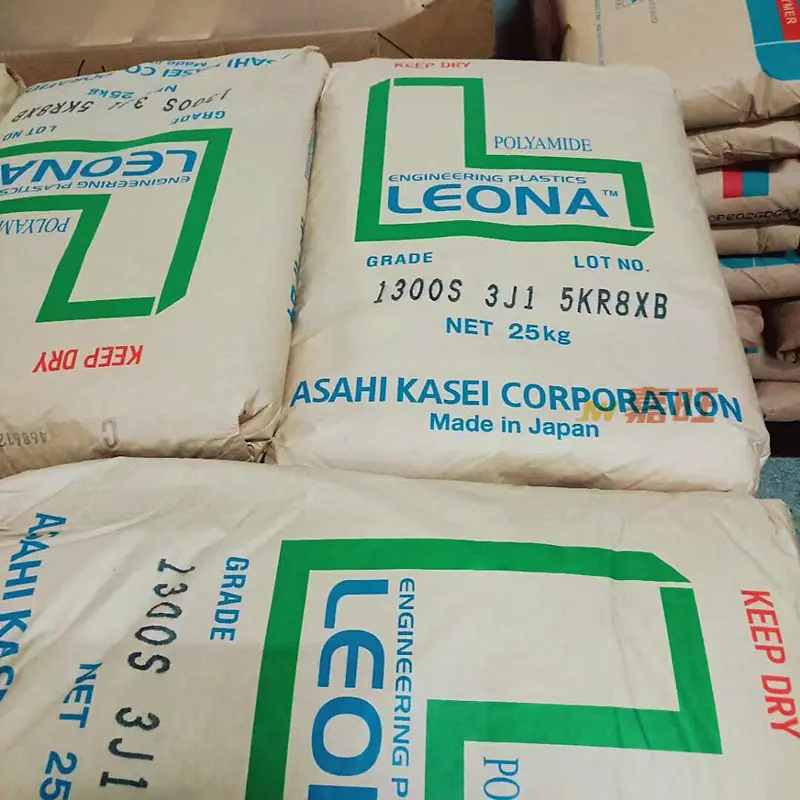
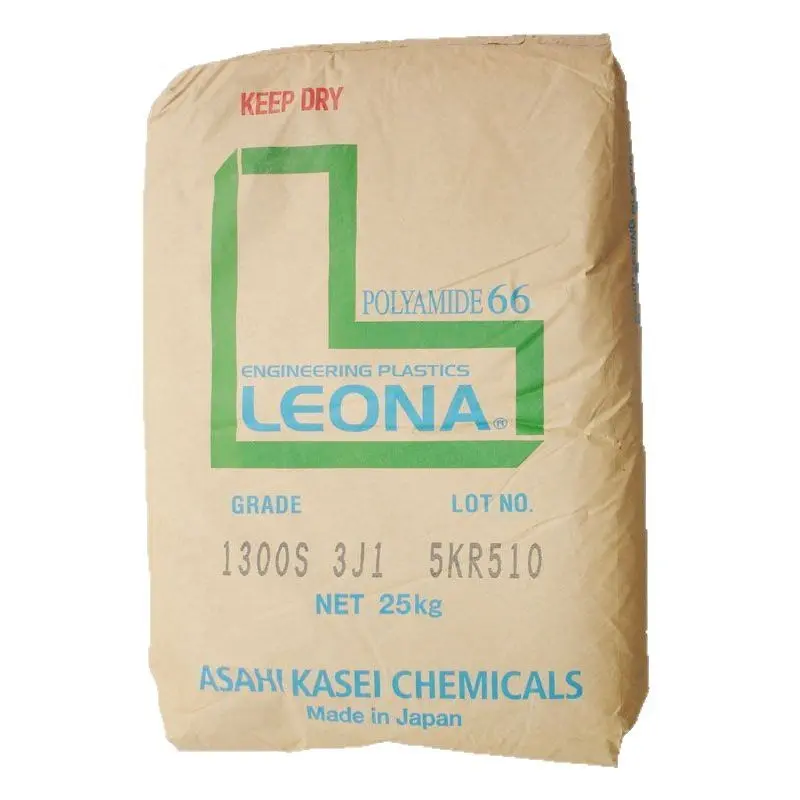
Leona™ FG172 is a polyamide 66 (PA66) engineering plastic developed and manufactured by Asahi Kasei Corporation, belonging to the Leona™ performance polymer portfolio. This specific grade is a halogen-free, unreinforced, flame-retardant injection molding compound characterized by its excellent thermal rating and well-balanced mechanical-to-electrical properties. Its core functional value lies in providing high tracking resistance (CTI 250V) combined with an explicit UL 94 V-0 flammability rating at thin walls, ensuring critical electrical insulation safety under standard operating conditions. The material is optimized for conventional injection molding processes, specifically engineered for precision thin-walled electronic components, terminal blocks, and industrial circuit breakers.
Technical Specifications
Physical Properties
| Property | Value | Unit | Test Method |
| Density, Dry | 1.52 | g/cm³ | ASTM D792 / ISO 1183 |
| Mold Shrinkage, Normal, Dry | 0.9 | % | Internal Method |
| Mold Shrinkage, Parallel, Dry | 0.4 | % | Internal Method |
| Moisture Absorption, Equilibrium (50% RH, 23 °C) | 1.1 | % | ISO 62 |
| Rockwell Hardness M, Dry | 95 | — | ASTM D785 / ISO 2039-2 |
| Rockwell Hardness M, Conditioned | 55 | — | ASTM D785 / ISO 2039-2 |
Mechanical Properties
| Property | Value | Unit | Test Method |
| Density, Dry | 1.52 | g/cm³ | ASTM D792 / ISO 1183 |
| Mold Shrinkage, Normal, Dry | 0.9 | % | Internal Method |
| Mold Shrinkage, Parallel, Dry | 0.4 | % | Internal Method |
| Moisture Absorption, Equilibrium (50% RH, 23 °C) | 1.1 | % | ISO 62 |
| Rockwell Hardness M, Dry | 95 | — | ASTM D785 / ISO 2039-2 |
| Rockwell Hardness M, Conditioned | 55 | — | ASTM D785 / ISO 2039-2 |
Thermal Properties
| Property | Value | Unit | Test Method |
| Tensile Modulus, Dry (23 °C) | 9100 | MPa | ISO 527-2 |
| Tensile Modulus, Conditioned (23 °C) | 6600 | MPa | ISO 527-2 |
| Tensile Strength, Break, Dry (23 °C) | 136 | MPa | ISO 527-2 |
| Tensile Strength, Break, Conditioned (23 °C) | 107 | MPa | ISO 527-2 |
| Tensile Strength, Dry | 153 | MPa | ASTM D638 |
| Tensile Strength, Conditioned | 123 | MPa | ASTM D638 |
| Tensile Elongation, Break, Dry | 2.5 | % | ASTM D638 |
| Tensile Elongation, Break, Conditioned | 2.7 | % | ASTM D638 |
| Tensile Elongation, Break, Dry (23 °C) | 2.5 | % | ISO 527-2 |
| Tensile Elongation, Break, Conditioned (23 °C) | 3 | % | ISO 527-2 |
| Flexural Modulus, Dry | 7600 | MPa | ASTM D790 |
| Flexural Modulus, Conditioned | 5900 | MPa | ASTM D790 |
| Flexural Modulus, Dry (23 °C) | 8000 | MPa | ISO 178 |
| Flexural Modulus, Conditioned (23 °C) | 5000 | MPa | ISO 178 |
| Flexural Strength, Dry | 216 | MPa | ASTM D790 |
| Flexural Strength, Conditioned | 177 | MPa | ASTM D790 |
| Flexural Strength, Dry (23 °C) | 208 | MPa | ISO 178 |
| Flexural Strength, Conditioned (23 °C) | 152 | MPa | ISO 178 |
| Taber Abrasion Resistance, Conditioned (1.0e+3 Cycles) | 24 | mg | ASTM D1044 |
| Charpy Notched Impact Strength, Dry | 7 | kJ/m² | ISO 179 |
| Charpy Notched Impact Strength, Conditioned | 11 | kJ/m² | ISO 179 |
| Charpy Unnotched Impact Strength, Dry | 64 | kJ/m² | ISO 179 |
| Charpy Unnotched Impact Strength, Conditioned | 62 | kJ/m² | ISO 179 |
| Izod Notched Impact Strength, Dry | 75 | J/m | ASTM D256 |
| Izod Notched Impact Strength, Conditioned | 92 | J/m | ASTM D256 |
Electrical Properties
| Property | Value | Unit | Test Method |
| Surface Resistivity, Dry | 1.00E+14 | ohms | ASTM D257 / IEC 60093 |
| Volume Resistivity, Dry | 1.00E+15 | ohms · cm | ASTM D257 |
| Volume Resistivity, Dry (23 °C) | 1.00E+15 | ohms · cm | IEC 60093 |
| Dielectric Strength, Dry | 28 | kV/mm | ASTM D149 / IEC 60243-1 |
| Comparative Tracking Index (CTI), Dry (3 mm) | 250 | V | IEC 60112 |
Disclaimer: The technical data provided above is for reference purposes only and is based on typical values provided by the manufacturer. While we strive to ensure the accuracy of this information, actual product performance may vary based on specific processing conditions and testing methods. Please refer to the official Technical Data Sheet (TDS) and Material Safety Data Sheet (MSDS) provided with your order for precise technical specifications and safety guidance.
Logistics & Supply Standards
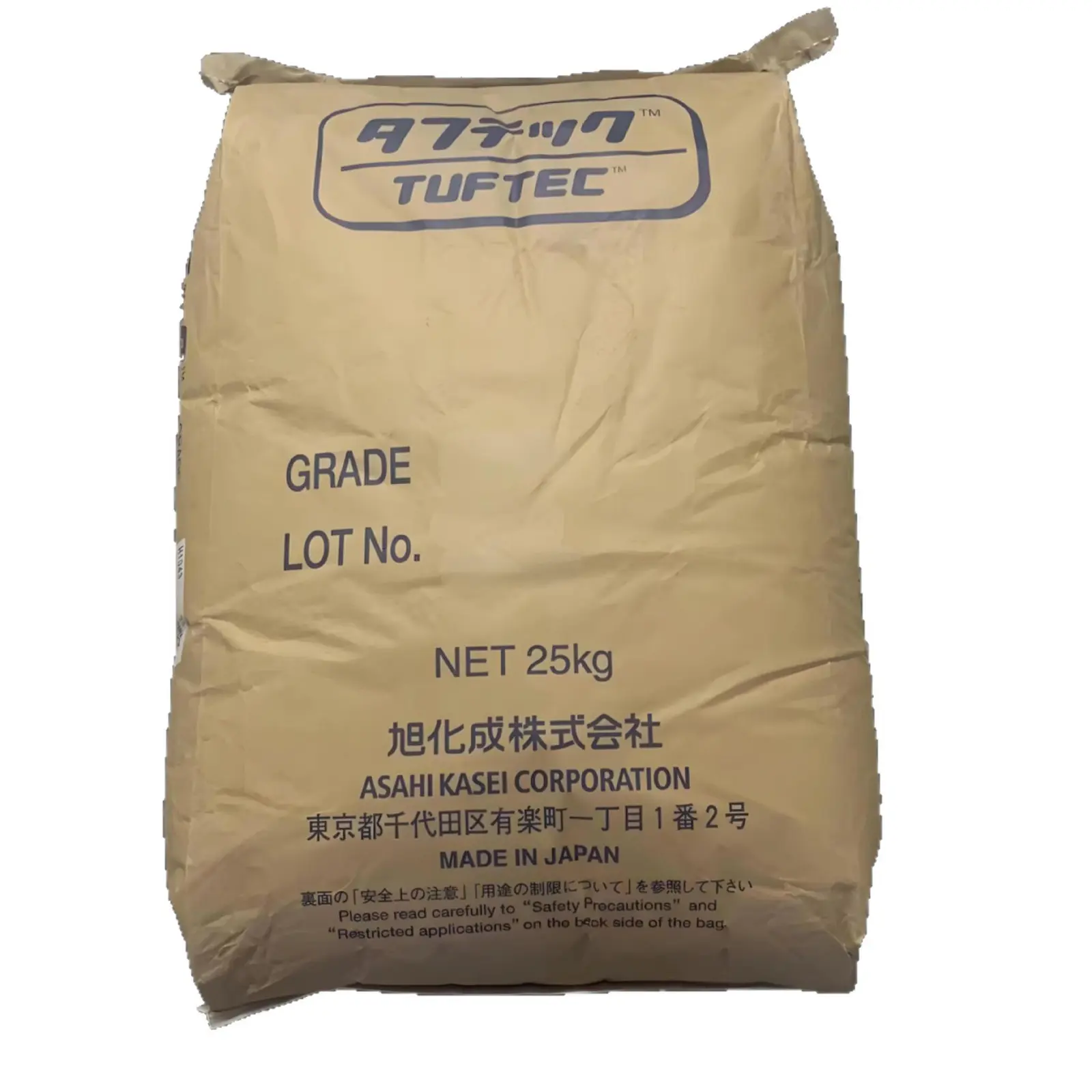
Asahi Kasei Leona™ FG172 is supplied in standard 25 kg moisture-proof composite bags, palletized and stretch-wrapped to protect against atmospheric humidity during transport. Routine inventory levels are maintained at central regional distribution centers to fulfill contractual safety stock obligations. For standard non-allocated orders, the average ex-works lead time is 3 to 5 business days, while international transit timelines remain subject to specific Incoterms and port-of-destination arrangements. As a non-hazardous, non-toxic solid pellet, this grade is stable and fully compliant with consolidated shipping protocols, permitting combined freight with other non-hazardous chemical thermoplastic raw materials to maximize container volume efficiency.
Compliance & Quality Commitment
Every commercial batch of Leona™ FG172 is backed by complete original technical verification and documentation, including the Technical Data Sheet (TDS), Safety Data Sheet (SDS) compliant with GHS, and a batch-specific Certificate of Analysis (COA) detailing mandatory quality parameters. This grade satisfies the stringent restrictions of the European Union’s REACH Regulation and RoHS Directive regarding hazardous substances. The material is formulated with a non-halogenated flame retardant package, achieving an explicit UL 94 V-0 listing at a minimal wall thickness of 0.75 mm and a GWFI rating of 960°C. A comprehensive, lot-controlled traceability system is implemented from monomer synthesis through compounding and final packaging, ensuring that downstream manufacturers can verify production lineage for regulatory compliance auditing.
Sustainability & ESG
Leona™ FG172 is a thermoplastic polymer matrix capable of being mechanically reprocessed and recycled into secondary industrial formulations via physical grinding and compounding, provided the waste streams are uncontaminated. During injection molding operations, the resin demonstrates high thermal stability with minimal volatile organic compound (VOC) emissions, minimizing the hazardous emission footprint in manufacturing spaces and reducing factory air-filtration loads. The production processes implemented by Asahi Kasei align with current global environmental management standards, assisting downstream manufacturers in satisfying scope-of-supply criteria for sustainable and auditable industrial supply chains.
Frequently Asked Questions (FAQs)
Q1: What are the mandatory pre-drying parameters required for Leona™ FG172 to prevent hydrolytic degradation during processing?
A1: Polyamide 66 is naturally hygroscopic, and its flame-retardant additives are sensitive to water-induced degradation at processing temperatures. It is technically required to dry the pellets prior to injection molding using a desiccant or dehumidifying dryer at 80°C to 90°C for 4 to 6 hours. The residual moisture content must be maintained below 0.05% to avoid surface defects, drooling, and severe reduction of physical properties due to polymer chain cleavage during melt processing.
Q2: What is the Minimum Order Quantity (MOQ) for commercial supply, and what is the protocol for obtaining trial samples?
A2: The standard commercial Minimum Order Quantity (MOQ) is one complete pallet (typically 1,000 kg consisting of forty 25 kg bags). For preliminary material evaluation and laboratory testing, sample quantities can be requested via our official technical review channel. Upon confirmation of the application’s technical specifications and technical compatibility, standard trial samples or representative molded specimens can be dispatched for validation.
Q3: How does the unreinforced Leona™ FG172 contrast with a glass-reinforced flame-retardant PA66 grade when designing thin-walled electrical connectors?
A3: Leona™ FG172 is an unreinforced formulation, which yields superior isotropic shrinkage, a smoother surface finish, and significantly higher tensile elongation at break compared to glass-filled variants. This makes it suitable for complex connector housings containing living hinges or snap-fit geometries that require high flexibility during assembly. However, if the connector assembly requires maximum load-bearing modulus, dimensional stability at high continuous-use temperatures, or resistance to bending under external mechanical loads, a glass fiber reinforced alternative should be evaluated through finite element analysis (FEA) to balance stiffness against part ductility.