Product Overview & Key Features
Ultramid® B3S is a polyamide 6 (PA6) injection molding grade resin manufactured by BASF SE. The material appears as translucent to milky-white cylindrical pellets, belonging to a high-fluidity and fast-crystallization grade with a volumetric melt flow rate (275 °C, 5 kg) of 160 cm³/10 min. B3S features excellent mechanical strength and rigidity, with a tensile strength of 90.0 MPa and a flexural modulus of 3000 MPa in the dry state. Its core characteristics lie in extremely short molding cycles and good mold release performance, attributed to high fluidity and rapid crystallization kinetics. This grade is specifically designed for high-speed injection molding processes of thin-walled complex structural parts, and is widely applied in fields demanding high production efficiency and dimensional accuracy, such as automotive connectors, electronic and electrical housings, and precision industrial components.
Technical Specifications
Physical Properties
| Physical Properties | Test Value | Test Unit | Test Standard |
| Density, dry | 1.13 | g/cm³ | ISO 1183 |
| Melt Flow Rate, Volume, dry (275°C, 5 kg) | 160 | cm³/10 min | ISO 1133 |
| Molding Shrinkage, vertical, dry | 1 | % | ISO 294-4 |
| Molding Shrinkage, parallel, dry | 0.87 | % | ISO 294-4 |
| Water Absorption, saturation, dry (23°C) | 9.0-10 | % | ISO 62 |
| Water Absorption, equilibrium, dry (50% RH, 23°C) | 2.6-3.4 | % | ISO 62 |
| Viscosity Number, 96% sulfuric acid, dry | 145 | cm³/g | ISO 307 |
| Molding Shrinkage, restrained, dry (107×47×10.5 mm, TM=260°C, TW=60°C) | 0.55 | % | — |
Mechanical Properties
| Mechanical Properties | Test Value | Test Unit | Test Standard |
| Tensile Modulus, dry | 3500 | MPa | ISO 527-2 |
| Tensile Modulus, conditioned | 1200 | MPa | ISO 527-2 |
| Tensile Stress at Yield, dry | 90 | MPa | ISO 527-2/50 |
| Tensile Stress at Yield, conditioned | 45 | MPa | ISO 527-2/50 |
| Tensile Strain at Yield, dry | 4 | % | ISO 527-2/50 |
| Tensile Strain at Yield, conditioned | 20 | % | ISO 527-2/50 |
| Tensile Strain at Break, dry | 10 | % | ISO 527-2/50 |
| Tensile Strain at Break, conditioned | >50 | % | ISO 527-2/50 |
| Tensile Creep Modulus, conditioned (1.0e+3 hr, 23°C, strain ≤ 0.5%) | 1100 | MPa | ISO 899-1 |
| Flexural Modulus, dry | 3000 | MPa | ISO 178 |
| Charpy Notched Impact Strength, dry (-30°C) | 3 | kJ/m² | ISO 179 1eA |
| Charpy Notched Impact Strength, dry (23°C) | 4 | kJ/m² | ISO 179 1eA |
| Charpy Notched Impact Strength, conditioned (23°C) | 50 | kJ/m² | ISO 179 1eA |
| Charpy Unnotched Impact Strength, dry (-30°C) | 200 | kJ/m² | ISO 179 1eU |
| Charpy Unnotched Impact Strength, dry (23°C) | 250 | kJ/m² | ISO 179 1eU |
| Charpy Unnotched Impact Strength, dry | No Break | — | ISO 179 1eU |
| Izod Notched Impact Strength, dry (-30°C) | 5 | kJ/m² | ISO 180/1A |
| Izod Notched Impact Strength, dry (23°C) | 5 | kJ/m² | ISO 180/1A |
| Izod Notched Impact Strength, conditioned (23°C) | No Break | — | ISO 180/1A |
Electrical Properties
| Electrical Properties | Test Value | Test Unit | Test Standard |
| Surface Resistance, conditioned | 1.00E+10 | ohms | IEC 60093 |
| Volume Resistivity, dry | 1.00E+15 | ohms·cm | IEC 60093 |
| Volume Resistivity, conditioned | 1.00E+12 | ohms·cm | IEC 60093 |
| Dielectric Constant, dry (1.0e+6 Hz) | 3.3 | — | IEC 60250 |
| Dielectric Constant, conditioned (1.0e+6 Hz) | 7 | — | IEC 60250 |
| Dissipation Factor, dry (1.0e+6 Hz) | 0.03 | — | IEC 60250 |
| Dissipation Factor, conditioned (1.0e+6 Hz) | 0.3 | — | IEC 60250 |
| Comparative Tracking Index (CTI), Solution A, dry | 600 | V | IEC 60112 |
Other Properties
| Other Properties | Test Value | Test Unit | Test Standard |
| Dry: Polymer Abbreviation | PA6 | — | — |
Disclaimer: The technical specifications for BASF Ultramid® B3S presented herein are derived from data issued by BASF SE or certified third-party testing institutions. While we have made every effort to ensure the accuracy of the information provided, we assume no liability for any consequences arising from the use of B3S based on these data. Given the variables involved in processing conditions, we strongly recommend conducting thorough trials of B3S under your specific operational environment prior to final material selection.
Applications & Processing Guidelines
Typical Applications
The high fluidity and rapid crystallization characteristics of Ultramid® B3S make it an optimal material for thin-walled injection molded parts:
- Electrical & Electronics: Miniature circuit breaker housings, relay bobbins, terminal blocks, thin-walled connectors, coil formers.
- Automotive Industry: Small peripheral sensor housings in engine compartments, quick connectors, clips, wiring harness ties, and interior trim clips.
- Consumer Goods & Industry: Zipper teeth, spectacle frames, precision gears, power tool housings, and pneumatic component valve bodies.
Processing Guidelines
- Drying Pretreatment: PA6 exhibits significant moisture absorption, and moisture can lead to hydrolytic degradation and surface defects in molded parts. Drying prior to processing is strongly recommended. Recommended process: Treat in a hot-air circulating dryer at 80-90 °C for 4-6 hours to ensure the raw material moisture content is below 0.1%.
- Injection Temperature: Melt temperature is typically controlled between 240-280 °C. Given that B3S is a high-fluidity grade, excessively high back pressure and shear rates should be avoided to prevent thermal degradation of the material.
- Mold Temperature: A mold temperature of 80-100 °C is recommended to promote crystallization, reduce internal stress, and improve dimensional stability of the parts. For thin-walled rapid molding, the mold temperature can be appropriately reduced, but warpage risk must be evaluated.
- Holding Pressure & Cooling: Utilizing the rapid crystallization characteristics of B3S, holding time and cooling time can be shortened to achieve short-cycle production. Cooling circuit design needs to be adjusted according to part wall thickness and structural complexity.
Logistics, Packaging & Compliance
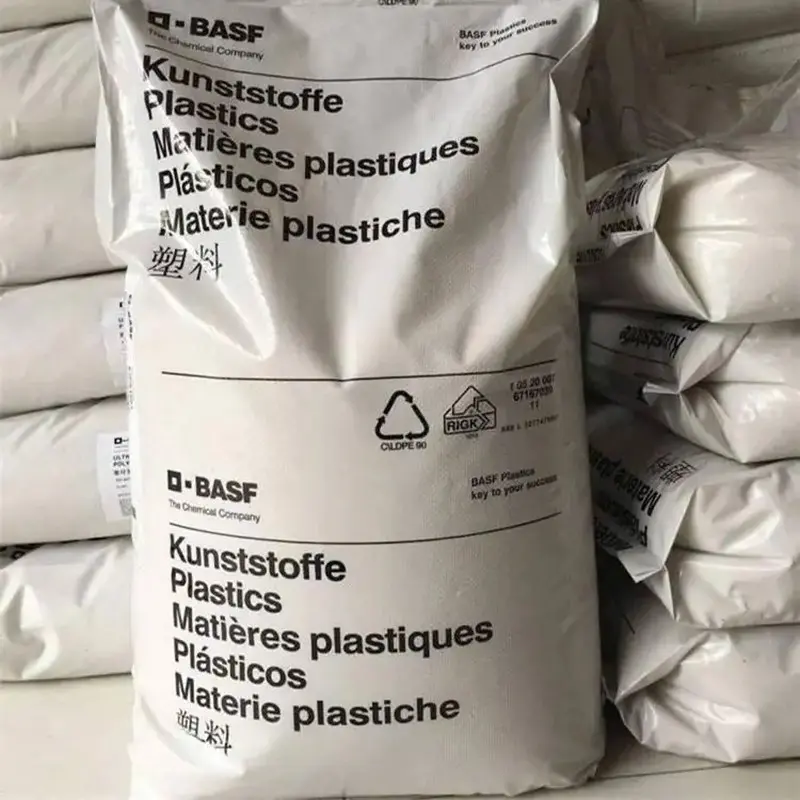
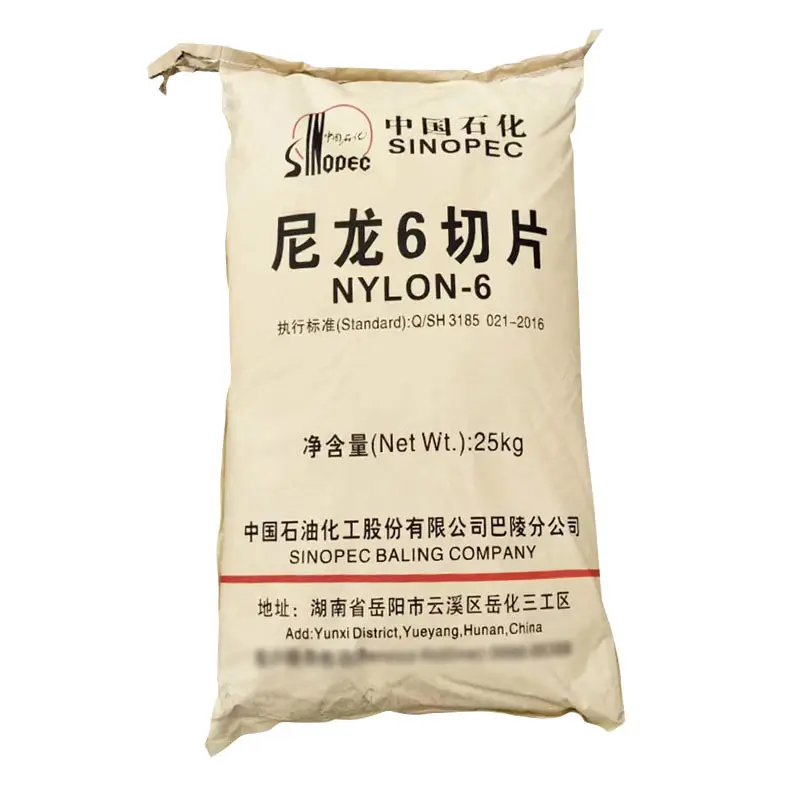
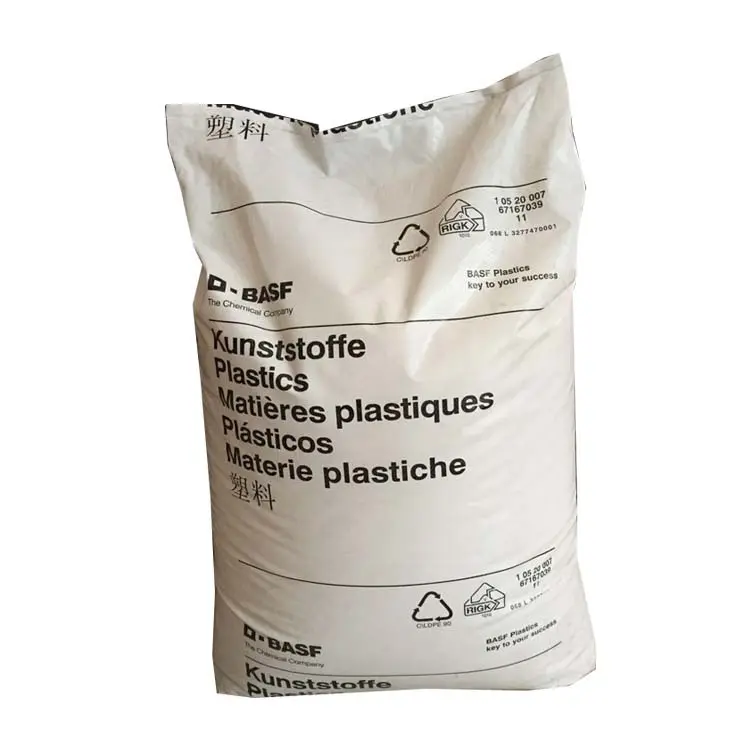
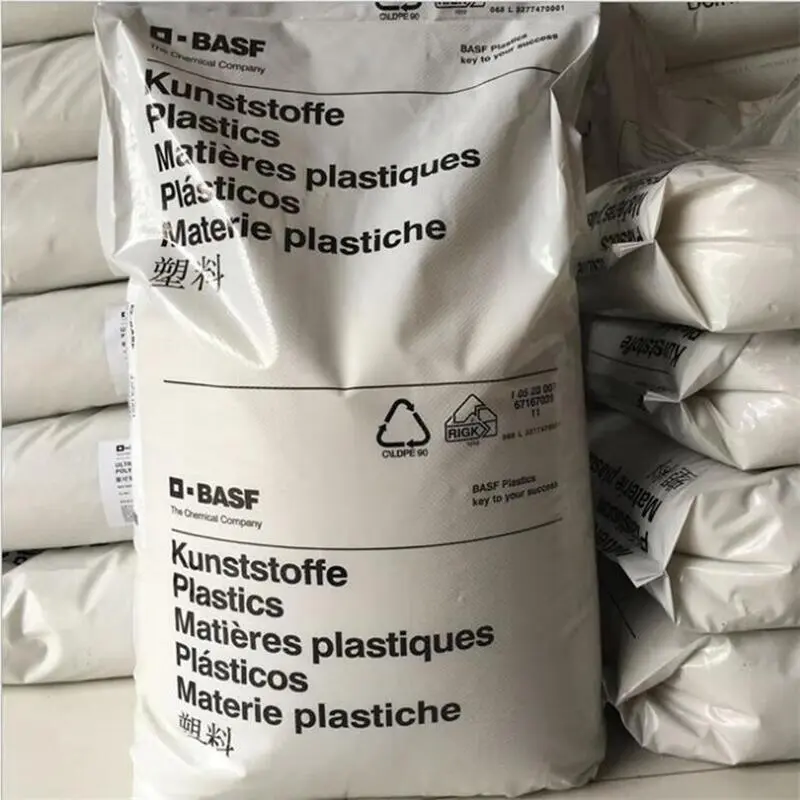
- Packaging Specifications: Standard packaging is 25 kg multi-layer composite paper bags lined with polyethylene film, featuring moisture-proof functions. Big bag options are also available upon customer request.
- Supply Attribute: Ultramid® B3S belongs to non-hazardous chemicals (Non-DG), complying with general cargo transportation standards, and supports multi-modal transport via sea, land, and air as well as container consolidation (LCL/FCL).
- Delivery Lead Time: Backed by the ready stock maintained by TaiKuo New Materials at major ports and inland hubs, standard orders can achieve rapid response. Specific delivery lead times depend on Incoterms and destination port logistics conditions.
- Compliance & Document Support: Each batch of products is accompanied by complete quality management documents, including Technical Data Sheets (TDS), Material Safety Data Sheets (MSDS/SDS), and Certificates of Analysis (COA). The product complies with RoHS directives and REACH regulations regarding restricted substances.
- ESG & Environmental Statement: As a thermoplastic material, PA6 possesses the property of physical recycling and reuse. We support circular economy practices and encourage customers to classify, recycle, and reprocess scrap material and defective products during processing. At the same time, we are committed to driving the green transition of the supply chain to ensure controllable environmental impacts throughout the product life cycle.
Frequently Asked Questions (FAQs)
Q1: Must Ultramid® B3S be dried prior to processing? What are the consequences if not dried?
A1: Yes, drying is mandatory. The molecular structure of PA6 contains polar amide groups, which readily absorb moisture from the environment. Without drying, moisture at high temperatures causes hydrolytic cleavage of polymer chains, leading to a decrease in molecular weight. This directly results in silver streaks, bubbles, and surface flaking on molded parts, while mechanical strengths (especially impact strength and tensile strength) significantly decrease; in severe cases, it may even clog the nozzle. Always ensure moisture content is < 0.1%.
Q2: What are the advantages of the high melt flow rate (160 cm³/10min) of B3S in actual processing? How should process parameters be set?
A2: A high melt flow rate implies excellent fluidity, enabling B3S to fill complex mold cavities that are extremely thin (e.g., < 0.8 mm) or have exceptionally high flow length-to-thickness ratios, while allowing molding at lower injection pressures. In parameter setup, shorter injection times and lower injection pressures are recommended, coupled with a higher mold temperature (80-100 °C) to ensure crystallinity. Due to high fluidity, special attention must be paid to gate size and location to prevent jetting or flow marks/air traps.
Q3: The performance of this material changes significantly after moisture absorption. How should this be considered in part design?
A3: PA6 is hydrophilic and undergoes a plasticizing effect after absorbing moisture. From the dry state to the equilibrium moisture-absorption state (approx. 2.6-3.4%), the tensile modulus drops from 3500 MPa to approximately 1200 MPa, elongation at break increases significantly, while strength decreases. When designing precision mating components (such as snaps and gears), dimensional tolerances must be reserved, and the influence of operating environment humidity on modulus and dimensional stability must be accounted for. Final functional validation is recommended to be performed on conditioned samples.