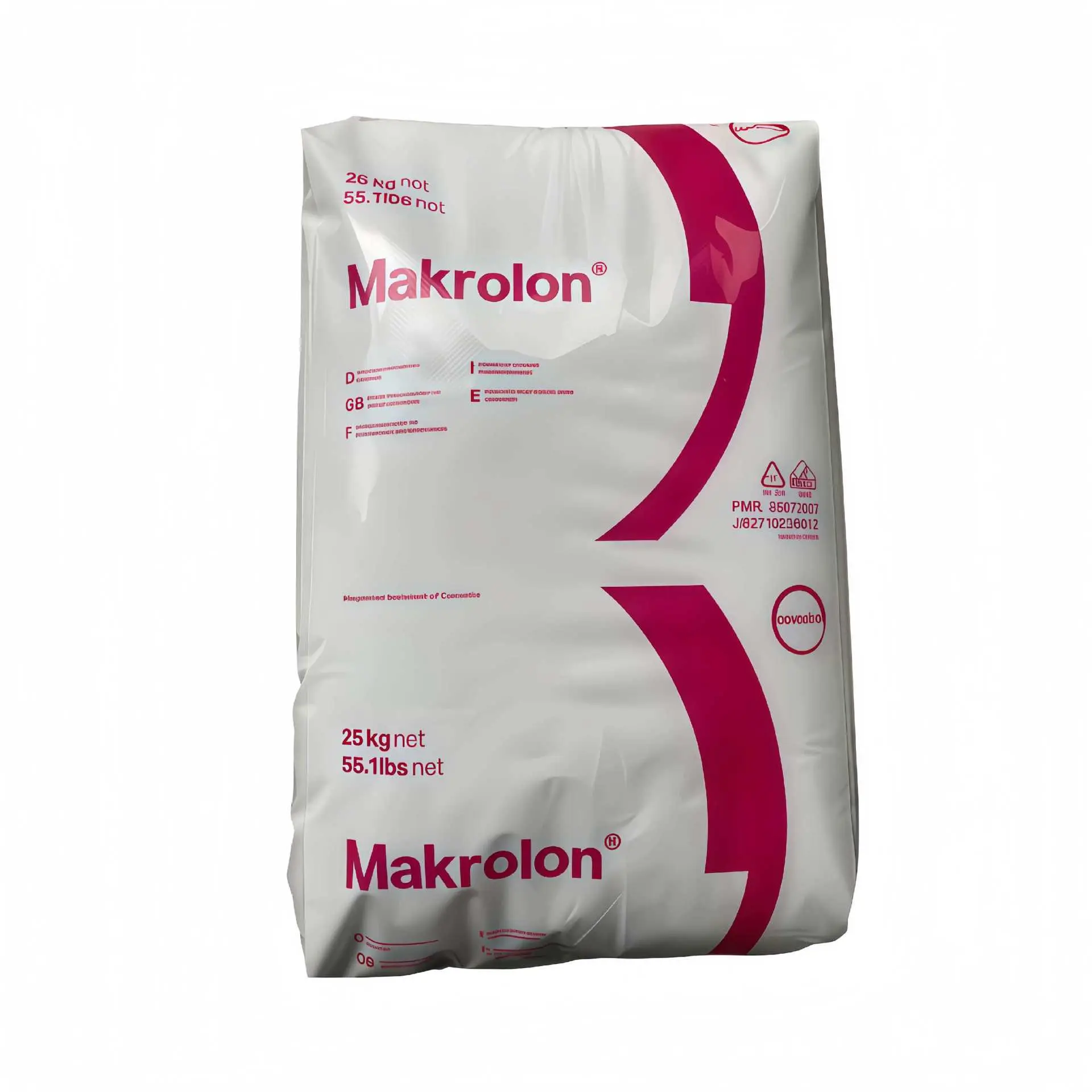
Polycarbonate is a transparent, tough, and shatter-resistant plastic, commonly abbreviated as PC. Hard hats, luggage shells, automotive headlight lenses, and wall switch panels are frequently made from it. Its most distinct quality is simultaneously achieving two traits that are usually mutually exclusive: offering glass-like clarity while remaining virtually shatterproof.
What Is Polycarbonate?
Polycarbonate is an engineering plastic with a high molecular weight, consisting of long molecular chains formed by thousands of repeating units. Because these repeating units contain carbonate groups, the material derives its name from them. Industrially, it is mainly produced via the reaction of Bisphenol A (BPA) with diphenyl carbonate, or through the phosgene route—both processes having operated reliably for decades.
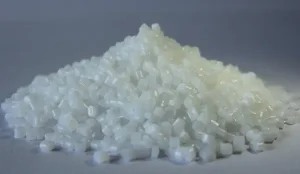
It leaves the factory as transparent or slightly yellowish pellets. Processing plants feed these pellets into machinery where they are heated, softened, and injected into molds, forming the final shape upon cooling. This process is repeatable: finished parts can be reground, reheated, and remolded. Plastics capable of being repeatedly melted and reshaped are known as thermoplastics.
Two common misconceptions are worth clarifying upfront. First, PC alone is not bulletproof glass; bulletproof glass is a laminated assembly of multiple glass layers with an interlayer of PC, where the PC functions to absorb kinetic energy and prevent penetration. Second, “PC sheet” or “PC board” in building materials refers specifically to polycarbonate sheeting and has no relation to Personal Computers (PC), despite sharing the same acronym.
Key Characteristics of Polycarbonate
- Shatter Resistance: Glass exhibits almost no plastic deformation under load, fracturing immediately once stress exceeds its limit. PC behaves differently: under impact, it yields and flexes to absorb and dissipate force before springing back. Consequently, given the same panel thickness, glass shatters into fragments upon impact, whereas PC merely leaves a minor stress mark.
- Optical Transparency: Most plastics appear milky white or translucent because their aligned polymer chains scatter light. PC features an amorphous, randomly tangled molecular chain structure, allowing light to pass directly through it. With a luminous transmittance of approximately 90%, it is nearly indistinguishable from glass to the naked eye.
- Thermal Resistance: PC performs reliably in elevated-temperature environments, such as boiling water containers, headlight housings near light bulbs, and electrical switch panels subject to resistive heating. Standard grades operate continuously around 120 °C, withstanding even higher temperatures for short durations.
- Lightweight Efficiency: With a density of approximately 1.2 g/cm³, it weighs about half as much as glass of equivalent thickness. When used in large-surface applications like automotive windows or architectural skylights, the weight reduction is substantial.
It also presents three inherent limitations:
- Susceptibility to Surface Scratching: PC has a relatively soft surface and tends to accumulate fine scratches over time. Consequently, automotive headlight covers and optical lenses typically require a hard protective coating.
- UV Degradation: Prolonged exposure to ultraviolet radiation causes yellowing and embrittlement; outdoor applications generally incorporate UV stabilizers or protective surface treatments.
- Solvent Sensitivity: Contact with certain chemicals, such as alcohol or acetone, can induce environmental stress cracking. Cleaning PC surfaces with water or neutral detergents is recommended.
A side-by-side comparison highlights the differences among these three transparent materials:
| Performance Property | Polycarbonate (PC) | Glass | Acrylic (PMMA) |
| Luminous Transmittance | ~90% | >90% | ~92% (Brighter aesthetic) |
| Impact Resistance | Exceptional (Shatterproof) | Fractures easily upon impact | Stronger than glass, but still brittle |
| Weight | Lightweight (~50% of glass) | Heavy | Lighter than glass |
| Scratch Resistance | Prone to scratching | High scratch resistance | Slightly better than PC; still scratchable |
| Heat Resistance | ~120 °C continuous | Extremely high | Softens around 80 °C |
| Relative Cost | Highest among the three | Lowest | Moderate |
Selection rule of thumb: Choose PC for shatter resistance, Acrylic for maximum optical clarity and brilliance, and Glass for ultimate scratch resistance.
Application Areas of Polycarbonate
- Electrical & Electronics: Switch panels, wall sockets, charger enclosures, ceiling light covers, and distribution box inspection windows frequently utilize pure PC or PC/ABS blends. These parts demand electrical insulation, heat resistance, and structural durability against mechanical impacts.
- Automotive: Automotive headlight lenses represent a primary application for PC, requiring high light transmission, resistance to flying gravel impacts, and thermal tolerance to bulb temperatures—typically finished with an anti-scratch hard coat. Instrument cluster covers, specialized glazing, and motorcycle windshields also utilize PC.
- Building & Construction: Skylights, canopies, bus shelter roofs, and highway noise barriers extensively use PC hollow or solid sheets due to their light weight and fracture resistance during transport and installation.
- Medical Devices: Oxygen masks, dialyzer housings, and IV connectors utilize medical-grade PC for its transparency, ease of visual inspection, and sterilization compatibility. Medical grades undergo rigorous biocompatibility testing and differ from standard injection molding grades.
- Consumer Goods: Hard-shell luggage, sunglasses lenses, safety helmets, and drinkware. Common requirements include high impact strength and light weight; sunglasses lenses additionally ensure non-shattering safety upon impact.
- Other Uses: Optical disc substrates, machine guards, and helmet visors rely on PC for its optical clarity and mechanical toughness.
Because neat PC has a narrower processing window and higher material costs, a significant portion of commercial components uses PC/ABS alloys. Incorporating ABS improves melt flowability and reduces cost while retaining superior heat resistance and impact strength compared to neat ABS. Notebook computer housings, printer bodies, and EV charging station panels commonly feature this alloy.
Safety Considerations
- Non-toxic Material: Finished polycarbonate is stable at room temperature, non-volatile, and insoluble in water, posing no health hazards upon skin contact. It contains no plasticizers or heavy metal stabilizers, which are more common sources of concern in plastic safety.
- Potential Bisphenol A (BPA) Migration: PC is synthesized using Bisphenol A, leaving minute trace amounts of residual unreacted BPA in the polymer matrix. Migration levels may increase under high temperatures, strongly alkaline environments, exposure to fats/oils, or severe surface degradation. As BPA is a recognized endocrine disruptor, potential migration represents the primary safety consideration for PC. Material safety is governed by usage conditions.
- Food Contact Compliance: Food-grade PC must comply with regional food contact regulations (such as US FDA 21 CFR 177.1580, EU 10/2011, or China GB 4806 series) and pass specific migration limits. PC water carboys, tableware, and appliance parts meeting these standards are compliant under normal operating conditions. High-temperature, highly acidic, or alcoholic food items should avoid prolonged contact with PC to minimize migration.
- Infant Care Restrictions: In 2011, the EU prohibited PC infant feeding bottles, followed by similar production and sales bans in China, because an infant’s weight-adjusted tolerance to BPA is significantly lower than that of an adult. This restriction applies strictly to infant feeding bottles and does not affect PC usage in electronics, automotive, or medical sectors.
- Medical Grade Standards: Medical-grade PC used in dialyzer housings and respiratory masks undergoes ISO 10993 biocompatibility testing, operating under a separate regulatory framework from food-contact standards.
Recyclability
Polycarbonate is a thermoplastic; after grinding, washing, and re-pelletizing, it can be remolded into secondary products with manageable performance retention. This contrasts with thermosetting plastics, which cannot be remelted once cured.
Recycling challenges lie mainly in identification and sorting. In plastic resin identification codes, numbers 1 through 6 denote PET, HDPE, PVC, LDPE, PP, and PS, respectively. PC is categorized under Code 7 (“OTHER”). While “OTHER” simply denotes resins outside the first six categories rather than non-recyclability, many municipal recycling systems automatically reject Code 7 plastics.
Established recycling streams exist for single-origin PC scrap, such as optical disc substrates, water carboys, and sheet edge-trims, which are reprocessed into non-transparent structural parts. Challenges arise with consumer electronics housings made of PC/ABS compounds containing metal inserts, surface coatings, and adhesive labels, where manual disassembly and sorting costs often exceed the value of the recycled resin.
Recycled PC primarily finds use in opaque applications, including automotive interior trims, internal structural brackets for electronics, and industrial pallets. Chemical recycling—depolymerizing PC back into monomers for re-polymerization—remains largely in development with limited commercial-scale deployment.
The bottle-neck in PC recycling is not technical feasibility, but rather collection, sorting, and economic viability.
Conclusion
Polycarbonate’s primary value resides in its combination of optical transparency and high impact resistance, where glass and acrylic each compromise on one aspect. Recognizing its physical boundaries—sensitivity to scratching, UV exposure, and specific solvents—ensures optimal material selection and component performance.