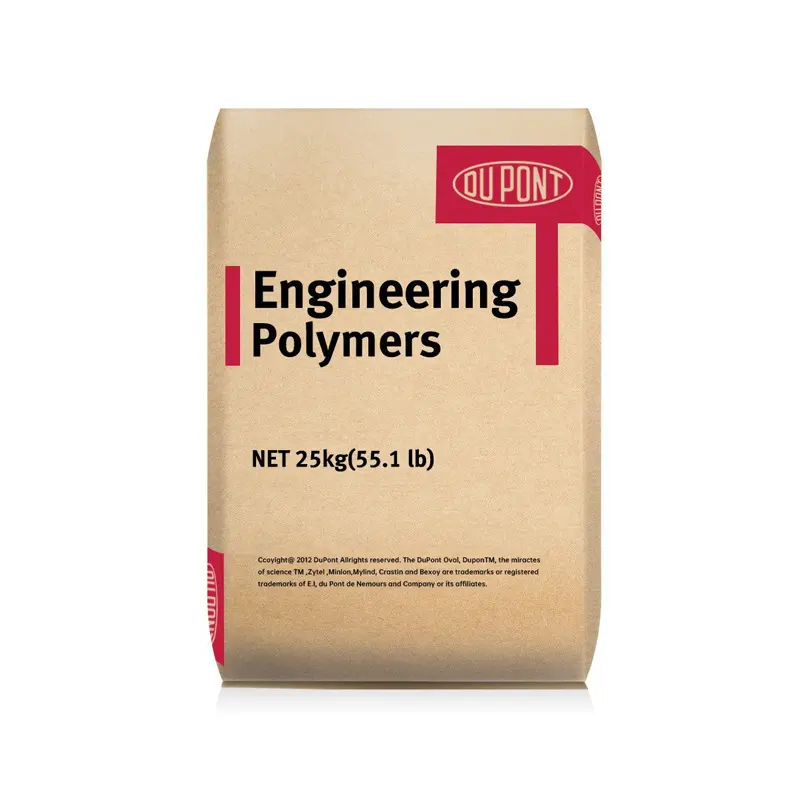
In modern plastics and chemical industries, thermoplastic polymer materials are ubiquitous. Among them, the polyester family and its flagship product, PET resin, occupy an extremely important position. Whether it is plastic bottles and lightweight, comfortable textiles for daily drinking, or electronic and electrical components in demanding industrial environments, all rely on the support of these materials. This article provides an in-depth analysis of the basic concepts of PET resin, core performance differences, and application selection guides for different scenarios.
Basic Concepts
What is PET Resin (Polyethylene Terephthalate)
- Definition and Basic Characteristics: PET (Polyethylene Terephthalate) is a saturated polyester synthesized through the polycondensation of purified terephthalic acid (PTA) and ethylene glycol (EG). It features excellent mechanical strength, high transparency, exceptional barrier properties, and good chemical stability.
- Molecular Structure Characteristics: The molecular chain of PET contains rigid benzene rings and polar ester groups, which grant it a high degree of crystallization capability, superior rigidity, wear resistance, and dimensional stability.
- Overview of Common Applications: Widely used in packaging fields such as beverage bottles and food containers, electrical and electronic insulation parts, automotive components, and textile fibers.
What is Polyester
- Broad Definition of Polyester: Polyester is a general term for a large class of macromolecular compounds containing ester groups (-COO-) in their main chains. It encompasses both synthetic resins synthesized via polycondensation reactions and naturally occurring plant cutins.
- Members of the Polyester Family: Polyester is an extensive family that includes not only common PET, but also polybutylene terephthalate (PBT), copolyesters (PETG), and polytrimethylene terephthalate (PTT).
- Overview of Basic Characteristics: Broadly speaking, polyester materials generally feature excellent wear resistance, chemical resistance, insulation, and high strength; however, due to minor differences in molecular structures, different members exhibit varying melting points, crystallization speeds, and processing traits.
Core Performance Comparison
Physical Performance Comparison
- Strength and Rigidity: PET resin possesses high tensile strength and rigidity, ranking among the top general engineering plastics for tensile performance; similarly, PBT within the polyester family offers outstanding rigidity, and both can experience significant performance enhancements for load-bearing structural parts through glass fiber reinforcement.
- Toughness and Impact Resistance: Unmodified PET exhibits moderate toughness but tends to be brittle at low temperatures; certain specialty polyesters (such as PETG) significantly improve impact resistance and tear strength through the introduction of comonomers.
- Temperature Resistance Range: PET features a relatively high glass transition temperature and melting point, with stable heat deflection performance; polyesters overall exhibit good heat resistance, though specific limits depend on crystallinity and reinforcement states.
- Chemical Resistance: PET and most polyesters demonstrate good tolerance to common alcohols, hydrocarbons, oils, and weak acids and bases, but are susceptible to hydrolysis under strong alkaline or high-temperature strong acid conditions.
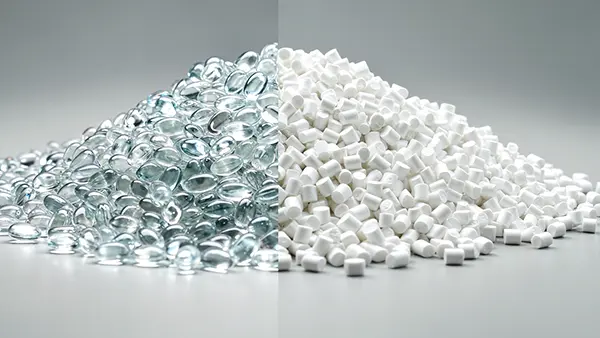
- Transparency and Optical Properties: Amorphous PET or rapidly cooled PET achieves extremely high light transmittance (up to over 90%); many polyesters appear milky white or opaque due to high crystallinity.
Processing Performance Comparison
- Melting Point and Processing Temperature: The melting point of PET typically ranges around 255 °C to 265 °C, requiring higher barrel temperatures during injection molding or extrusion; processing temperature ranges vary among different materials within the polyester family.
- Processing Difficulty: PET is extremely sensitive to moisture; trace amounts of moisture at high temperatures lead to severe polymer hydrolysis (degradation), making strict pre-drying treatment mandatory prior to processing.
- Molding Process Adaptability: PET perfectly adapts to injection molding, blow molding (such as Injection Stretch Blow Molding – ISBM), and extrusion; meanwhile, polyesters like PBT exhibit extremely high production efficiency in rapid crystallization injection molding.
Economic Comparison
- Raw Material Costs: As a global bulk thermoplastic, PET benefits from massive production capacity and sufficient raw material supply, yielding a very high scale-based cost advantage.
- Production Costs: Due to its strong hygroscopicity and specific requirements for drying equipment and mold temperature control, processing energy consumption for PET is slightly higher than that of conventional plastics.
- Cost-Effectiveness Analysis: PET demonstrates unmatched, ultra-high cost-effectiveness in packaging, films, and bulk fiber sectors; meanwhile, engineering-grade polyesters (such as PBT) have secured market space in high-performance electronics and automotive connector applications through their comprehensive performance.
Application Scenarios
Main Application Fields of PET Resin
- Beverage Bottles and Food Containers: Benefiting from exceptional gas barrier properties (preventing carbon dioxide leakage) and hygienic safety, PET serves as the material of choice for carbonated drink bottles, mineral water bottles, and edible oil drums.
- Fibers and Textiles: Formed as filaments and staple fibers, PET (polyester) forms the cornerstone of the global textile industry, widely utilized in apparel fabrics, industrial fabrics, and home textiles.
- Films and Packaging: Biaxially oriented PET film (BOPET) features high strength and excellent electrical insulation, widely applied in magnetic tapes, capacitor base films, and food packaging composite films.
- Engineering Plastic Applications: Glass fiber-reinforced modified PET is utilized to manufacture automotive wipers, gears, pump bodies, and electronic switch housings.
Main Applications of Other Polyester Types
- PBT Engineering Plastic Applications:
- Automotive Components: Ignition coils, fuse boxes, sensor housings, and connectors.
- Appliance Housings: Hairdryer shells, switch and socket panels, and energy-saving lamp components.
- Specialty Industrial Applications: Due to outstanding transparency and toughness, PETG is frequently used for medical device blister packaging, cosmetic bottles, and high-end 3D printing filaments.
Application Scenario Selection Guide
- Selection Based on Environment: When facing outdoor conditions or long-term alternating temperature cycles, the material’s weatherability and hydrolysis resistance must be evaluated; food-contact scenarios must strictly comply with food-grade regulatory standards.
- Selection Based on Performance Requirements: If high transparency and barrier properties are desired, PET resin is the primary choice; if electrical insulation and high-frequency precision injection molding are prioritized, PBT from the polyester family is more suitable.
- Selection Based on Cost Budget: For high-volume, cost-effective container and packaging projects, PET resin represents the optimal solution for minimizing comprehensive costs.
Summary and Recommendations
As the most representative material in the polyester family, PET resin plays an indispensable role in industrial manufacturing and consumer markets through its balanced physical and mechanical properties, exceptional transparency, and competitive economy. A deep understanding of the subtle differences in molecular structures, performance characteristics, and processing techniques between PET and generalized polyesters enables engineers and procurement professionals to accurately select materials for practical projects, achieving an optimization of product performance and cost control.