When manufacturers face a critical choice: how to choose the right polyolefin elastomer?
In global industrial manufacturing, material selection often determines the success or failure of a product. From automotive components to photovoltaic encapsulation, and from wires and cables to wearable devices, engineers continually need to find a solution that both meets strict performance requirements and maintains cost competitiveness.
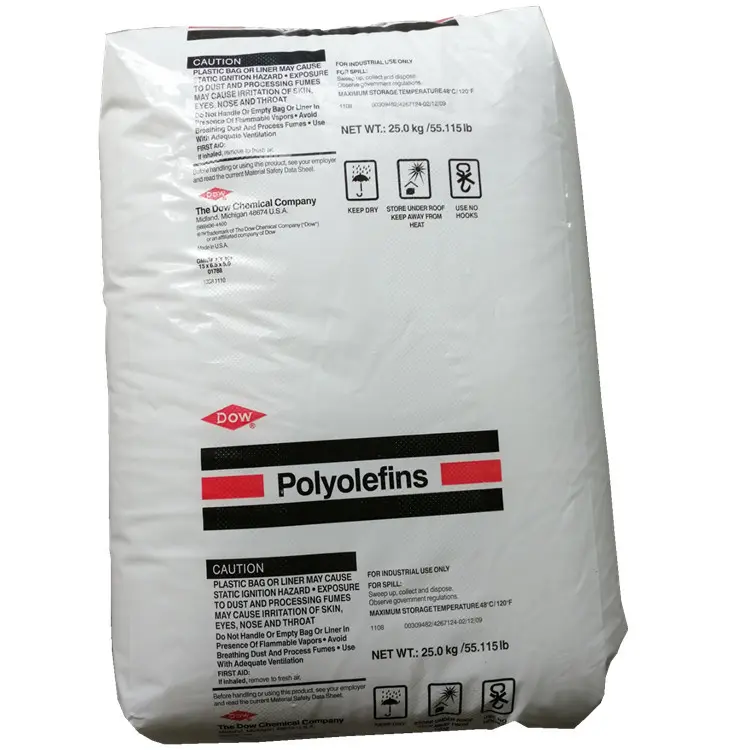
Dow Engage® 8150 POE plays a critical role in this decision-making process.
Understanding the Performance DNA of Engage® 8150: Why Are Specification Data So Crucial?
The performance differences of polyolefin elastomer (POE) stem from its molecular structure. As an ethylene-octene copolymer, Dow Engage® 8150 features key technical indicators that directly affect final product performance.
According to product specifications, Engage® 8150 has a density of 0.868 g/cm³ and an MFR of 0.50 g/10min (190 °C, 2.16 kg). This set of data may seem simple, but it carries profound meaning—a relatively lower density implies a lighter final product, while a low MFR value guarantees excellent melt strength, which is vital for applications requiring high precision molding.
Mechanical Properties: Why Does Engage® 8150 Perform Exceptionally in Low-Temperature Environments?
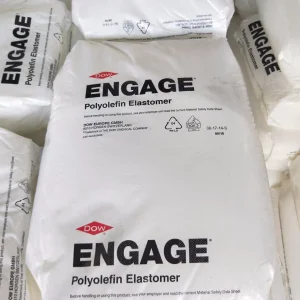
Engage® 8150 has a tensile strength (yield) of 1.90 MPa and a maximum tensile strength of up to 10.9 MPa. Even more striking is its tensile elongation at break of up to 780%, which indicates that the material possesses extremely high toughness and ductility.
In cold environments, this characteristic becomes especially valuable. When temperatures drop below -76 °C (the material’s brittleness temperature), traditional EPDM or other rigid materials may become brittle and break, whereas Engage® 8150’s microscopic structure ensures it still maintains flexibility. This is precisely why it has become the ideal choice for automotive instrument panels, bumpers, and door trim strips in cold regions.
Processability: Optimization from Laboratory to Production Line
Engage® 8150 has a Mooney viscosity of 35 MU (121 °C, ML 1+4), an indicator that determines material fluidity and processing difficulty. A relatively moderate viscosity value means:
- No excessively high temperatures are required during injection molding (typically 180–220 °C)
- Higher flexibility in filler loading, which can significantly reduce formulation costs
- Shorter production cycles, improving production efficiency
- Better product surface quality, reducing subsequent grinding processes For global manufacturing enterprises, this processing advantage translates directly into cost competitiveness.
Thermal Stability: Reliability under Extreme Conditions
Engage® 8150 has a melting point of approximately 70 °C and a Vicat softening point of approximately 63 °C. These thermal parameters ensure that the material possesses good dimensional stability at room temperature and under conventional service environments. Under conventional processing conditions (180–200 °C), the material exhibits sufficient fluidity; once cooled to operating temperatures, its thermal stability fully satisfies most industrial application requirements. Especially in applications with strict dimensional stability demands—such as automotive interior parts and consumer electronics housings—this performance indicator provides an essential safeguard.
In-Depth Analysis of Application Scenarios
Automotive Industry: Balancing Lightweighting and Safety
Due to its combination of high toughness and low density, Engage® 8150 has become a standard material for automotive bumpers, interior trims, protective strips, and other components. Compared with traditional EPDM formulations, using Engage® 8150 can reduce individual component weight by 5% to 15%, which, on a scale of millions of vehicles produced annually, translates into significant fuel efficiency improvements.
Photovoltaics and New Energy: The Value of Electrical Insulation Performance
In photovoltaic module encapsulation, Engage® 8150 offers high volume resistivity and excellent anti-PID performance, which directly relates to the service life of solar panels. With the rapid global growth of renewable energy installed capacity, the demand for high-performance POE materials exhibits exponential growth.
Cables and Connectors: The Last Mile of Weather Resistance
Compression set is a key indicator for evaluating the long-term durability of a material. Engage® 8150 demonstrates excellent compression set performance after proper crosslinking, making it an ideal choice for outdoor cables, automotive high-voltage connectors, and other applications.
Market Reality: Supply Chain and Cost Trends
According to industry data, the global POE market maintains a steady compound annual growth rate of 5% to 7%. As a technological leader in this field, Dow’s Engage® series has gained recognition from top global OEM manufacturers. For global suppliers, a stable supply of Engage® 8150 ensures fulfillment commitments to international customers.
Conclusion: Data-Driven Decisions
The success of Engage® 8150 POE stems not only from marketing, but also from its solid performance data. Whether you are a design engineer, procurement manager, or material supplier, understanding the engineering implications behind these specification parameters will help you make smarter choices in a competitive market.