Product Overview
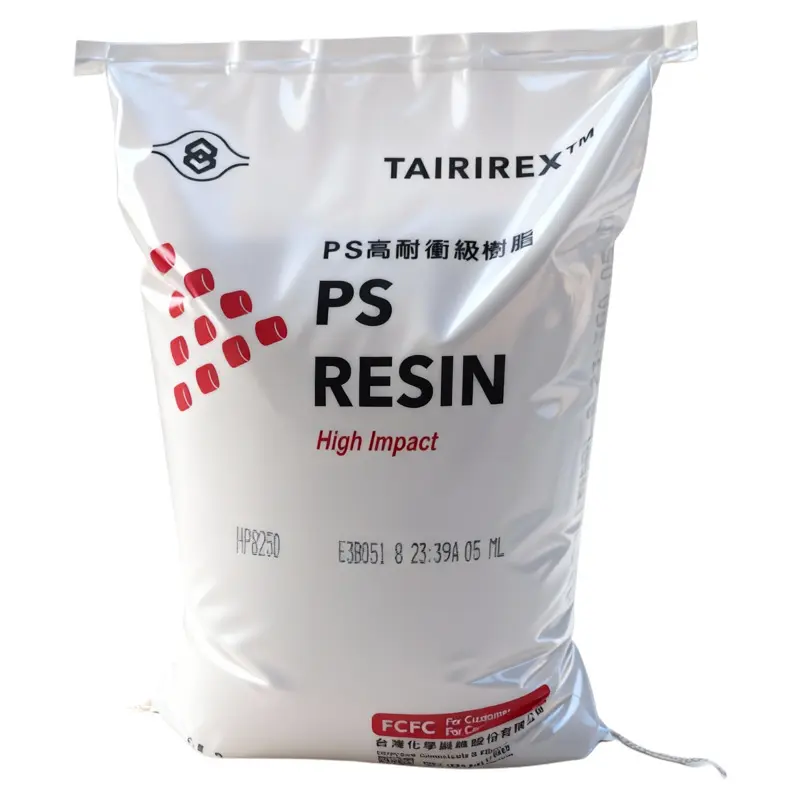
This product is manufactured by Formosa Chemicals & Fibre Corporation (FCFC) and belongs to the TAIRIREX® series of High Impact Polystyrene (HIPS) resin grades. This material is a high-performance rubber-modified polystyrene that possesses a balanced combination of rigidity and room-temperature impact resistance, features a stable melt flow rate, and offers a wide processing window. Molded parts made from this material exhibit good dimensional stability and are resistant to stress cracking under low-temperature processing conditions, making them suitable for the mass production of standardized components. This resin is intended exclusively for injection molding processes.
Technical Specifications
Physical Properties
| Physical Properties | Test Conditions | Typical Value | Test Standard |
| Melt Flow Rate | 200 ℃, 5 kg | 5.5 g/10min | ASTM D1238 |
Mechanical Properties
| Mechanical Properties | Test Conditions | Typical Value | Test Standard |
| Tensile Modulus | 1 mm/min, 23 ℃ | 2160 MPa | ASTM D638 |
| 23 ℃ | 2200 MPa | ISO 527-1/1 | |
| Tensile Strength | 5 mm/min, 23 ℃ | 23.5 MPa | ASTM D638 |
| 23 ℃ | 24.0 MPa | ISO 527-2/20 | |
| Tensile Strain at Break | 5 mm/min, 23 ℃ | 53 % | ASTM D638 |
| 23 ℃ | 33 % | ISO 527-2/20 | |
| Flexural Modulus | 23 ℃, 1.2 mm/min | 2260 MPa | ASTM D790 |
| 2 mm/min, 23 ℃ | 2200 MPa | ISO 178 | |
| Flexural Strength | 23 ℃, 1.2 mm/min | 44.1 MPa | ASTM D790 |
| 2 mm/min, 23 ℃ | 41.0 MPa | ISO 178 | |
| Charpy Notched Impact Strength | 23 ℃, 4 mm | 8.5 kJ/m² | ISO 179 |
| Izod Notched Impact Strength | 23 ℃, 6.35 mm | 130 J/m | ASTM D256 |
| Izod Unnotched Impact Strength | 23 ℃, 4 mm | 11 kJ/m² | ISO 180 |
Thermal Properties
| Thermal Properties | Test Conditions | Typical Value | Test Standard |
| Heat Deflection Temperature (Annealed) | 1.8 MPa, 120 ℃/h, 3.18 mm | 89.0 ℃ | ASTM D648 |
| 1.8 MPa, 120 ℃/h, 4 mm | 96.0 ℃ | ISO 75-2/A | |
| Vicat Softening Point | Annealed 80℃*2hr, 1/8″ | 101 ℃ | ASTM D1525 |
| Annealed 80℃*2hr, 4mm | 98 ℃ | ISO 306/A50 | |
| Flammability Rating | 0.8 – 3 mm | HB | UL 94 |
Other Properties
| Other Properties | Test Conditions | Typical Value | Test Standard |
| Residual Monomer | — | < 700 ppm | — |
The technical parameters provided for TAIRIREX® HP8250 HIPS represent typical values obtained under controlled laboratory conditions by Formosa Chemicals & Fibre Corporation (FCFC). Please note that actual material performance may vary depending on specific injection molding parameters, mold design, and ambient processing environments. This information is intended for professional reference only and does not constitute a legal warranty of fitness for a particular application. For precise technical specifications, safety protocols, and regulatory compliance data, please refer to the official Technical Data Sheet (TDS) and Material Safety Data Sheet (MSDS) issued by Formosa Chemicals & Fibre Corporation (FCFC) for your specific batch.
Logistics & Supply Standards
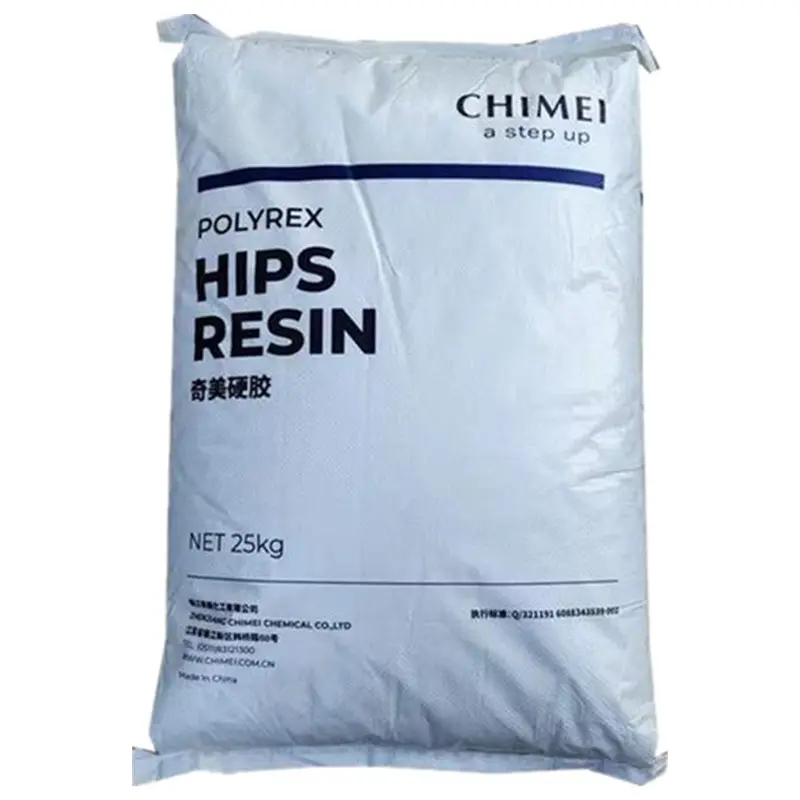
FCFC TAIRIREX® HP8250 HIPS resin is packed in 25kg woven composite bags. Domestic central warehouses and overseas partner bonded warehouses maintain regular safety stock, so standard procurement orders do not require long-term scheduling. Average lead times for standard sea and land freight orders vary based on trade terms: domestic delivery takes 3-7 working days, while export FOB orders take 7-15 working days. This product is not classified as a hazardous chemical; as granular solid resin, it has no transportation restrictions. Within compliant container/truck capacity, it can be shipped alongside other general plastic raw materials and non-conflicting chemical auxiliaries, provided that loading operations follow international cargo transport isolation standards.
Compliance & Quality Commitment
Purchasers may apply for the full set of documentation, including the original factory TDS technical data sheet, MSDS chemical safety data sheet, and COA factory quality inspection report. This HP8250 grade product has completed compliance testing, meeting the EU REACH control requirements for substances of very high concern and the RoHS standard for hazardous substance restriction in electronics. It has also passed the UL 94 HB flammability certification, and food-grade batches can provide FDA contact compliance certification. Full traceability is implemented for all batches, with each batch retaining the corresponding production lot number, quality inspection records, factory exit time, and logistics shipping documents. The full-chain production and inspection archive can be retrieved based on the customer’s purchase order number and product lot number to ensure that product quality data is verifiable.
Sustainability & ESG Statement
TAIRIREX® HP8250 HIPS is a thermoplastic polystyrene material. Used products that are clean and free of impurities can be mechanically recycled and re-granulated, and the recycled material can be mixed with virgin raw material at a fixed ratio for secondary injection molding. The production stage optimizes the polymerization process to keep the residual monomer content of the finished resin below 700 ppm, and the release of volatile organic compounds (VOCs) during high-temperature melt processing is in the lower industry range. The raw material production plant follows international green supply chain management standards; production wastewater and exhaust gas are treated through multi-stage purification, and waste is classified, recycled, and disposed of in compliance with regional carbon emission reduction and industrial clean production control requirements. The product packaging uses recyclable woven bags to reduce the use of disposable non-degradable packaging materials.
Related FAQ (Frequently Asked Questions)
Q1: Does TAIRIREX® HP8250 require drying before injection molding, and how should drying parameters be set?
A: This grade of raw material has low moisture content and can be molded directly when storage humidity is below 60%. If the raw material is exposed to humid air for a long time, it is recommended to dry it with hot air at 80℃ for 2-4 hours to avoid defects such as bubbles and silver streaks on molded parts.
Q2: What are the common surface defects and optimization solutions for this material during the injection molding process?
A: Common defects such as short shots or flow marks are usually related to insufficient injection speed or mold temperature. It is recommended to appropriately increase the mold temperature and increase the end holding pressure. If the gloss is uneven, check the back pressure setting; increasing back pressure can increase melt density, thereby improving the surface gloss and density of the part.
Q3: How should one choose between HP8250 and other HIPS grades in the same series based on the end product?
A: HP8250 has a melt flow rate of 5.5 g/10min, making it suitable for medium-to-large thin-walled housings. High-flow grades are suitable for ultra-thin-walled small plastic parts, while super-high-impact grades are used for appliance housings that require drop resistance and resistance to external impacts. Selection can be matched to the corresponding grade based on product wall thickness and impact resistance requirements.