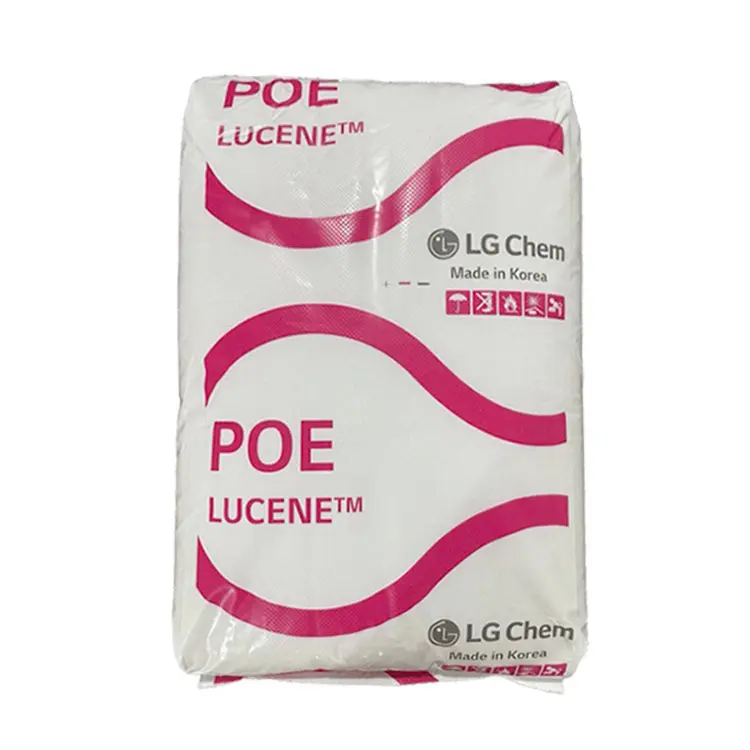
Product Overview & Key Features
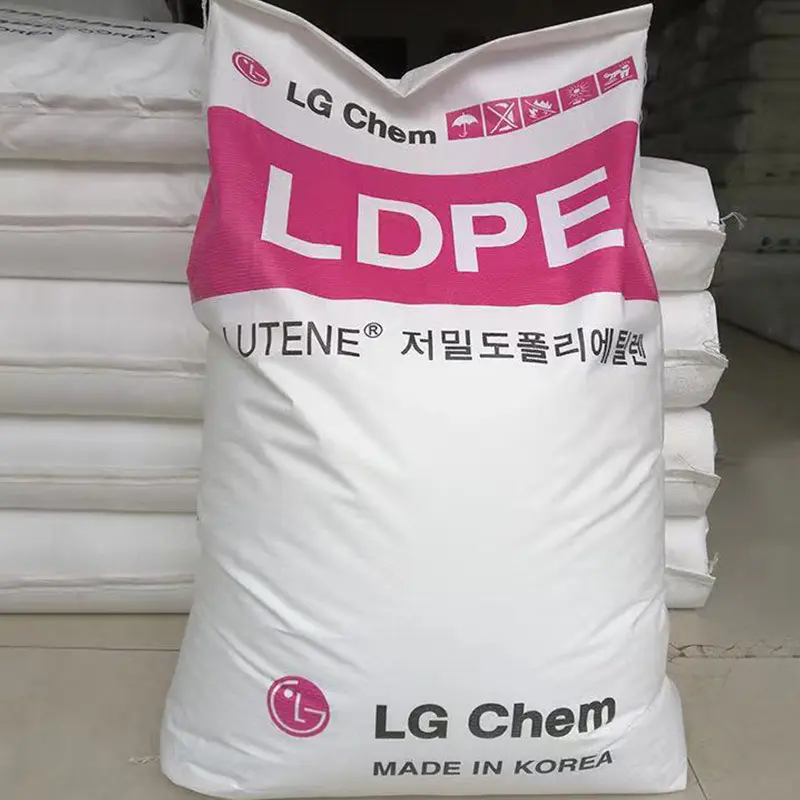
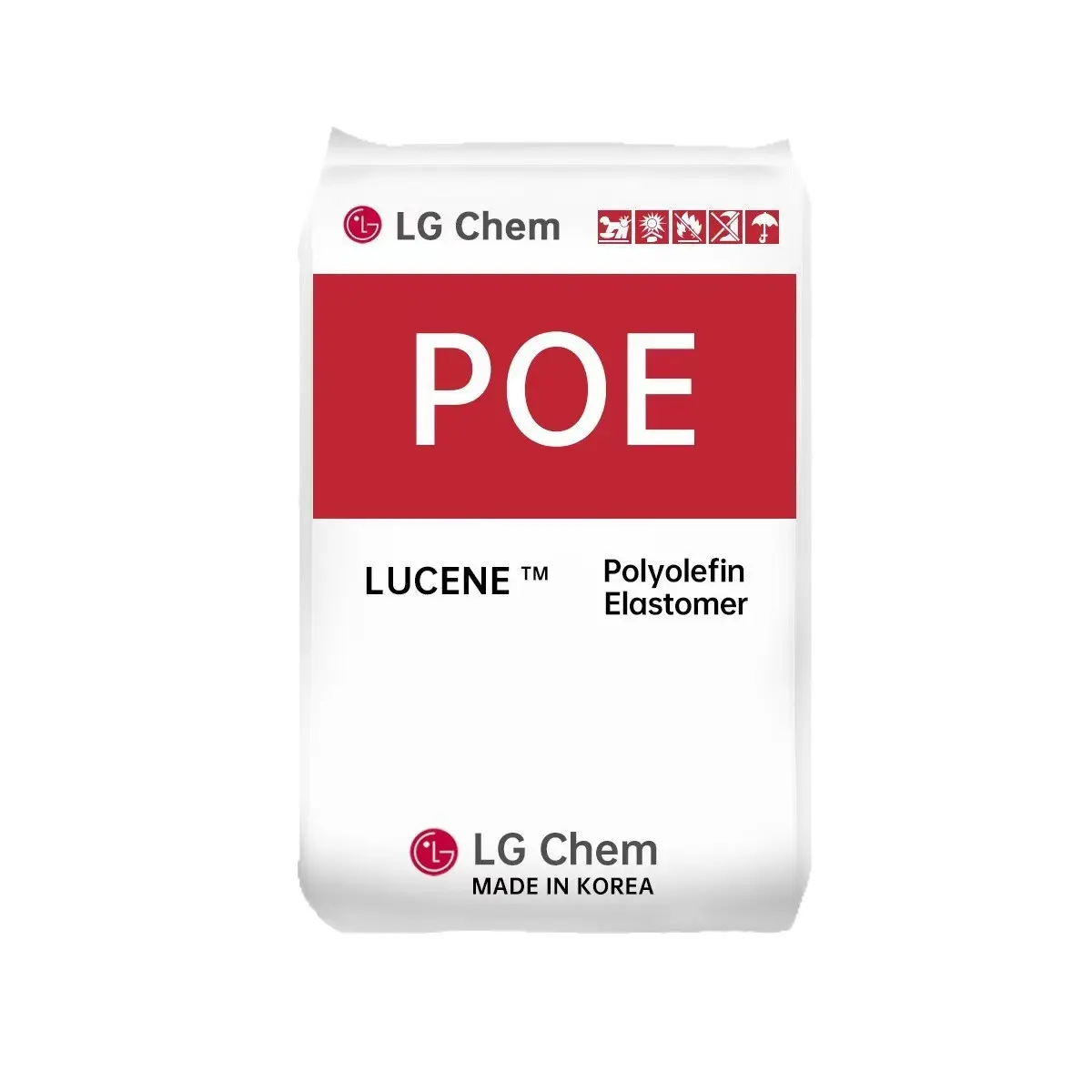
- Manufacturer: LG Chem
- Product Series: Lucene™
- Product Grade: LC565
- Material Category: POE (Polyolefin Elastomer / Ethylene-Octene Copolymer)
- Appearance: Translucent to white granular thermoplastic elastomer pellets.
LG Chem Lucene™ LC565 is a high-performance polyolefin elastomer (POE) produced using metallocene catalysis technology. It features low density (0.865 g/cm³), a moderate melt flow rate (5.0 g/10min at 190°C/2.16kg), a Shore A hardness of 54, and an ultra-low glass transition temperature (Tg = -54.0°C). In industrial manufacturing and international trade, LC565 is widely used as an efficient impact modifier and toughening agent for thermoplastics, as well as in automotive components, wire and cable compounds, and specialty compounding modifications, owing to its superior flexibility, ultra-high tensile elongation at break (>550%), and excellent compatibility with polyolefins (such as PP and PE).
Technical Specifications
Physical Properties
| Property | Value / Unit | Test Method |
| Density | 0.865 g/cm³ | ASTM D1505 |
| Melt Mass-Flow Rate (MFR) (190 °C, 2.16 kg) | 5.0 g/10min | ASTM D1238 |
| Mooney Viscosity (ML 1+4, 121 °C) | 8 MU | ASTM D1646 |
| Shore A Hardness | 54 | ASTM D2240 |
Mechanical Properties
| Property | Value / Unit | Test Method |
| Tensile Strength, Break, Compression Molded (500 mm/min) | 1.8 MPa | ASTM D638 |
| Tensile Strain, Break, Compression Molded (500 mm/min) | > 550 % | ASTM D638 |
| Flexural Modulus – 1% Secant, Compression Molded | 8 MPa | ASTM D790 |
| Tear Strength | 20.0 kN/m | ASTM D624 |
Thermal Properties
| Property | Value / Unit | Test Method |
| Glass Transition Temperature (Tg) | -54.0 °C | Internal Method |
Notice: The technical specifications for LG Chem Lucene™ LC565 POE provided herein are compiled from data published by LG Chem or certified third-party testing laboratories. While prepared with professional diligence, these values serve as reference guidelines rather than absolute performance guarantees. Because molding and processing conditions vary significantly across operational environments, we recommend performing trial runs with LC565 under your actual manufacturing conditions prior to final material selection and mass production.
Features & Benefits
- Superior Low-Temperature Toughness & Impact Modification Capability: Featuring an ultra-low glass transition temperature (-54.0°C), this grade significantly enhances the impact strength of base resins in cold environments when used as an impact modifier for PP or PE, preventing low-temperature brittle fracture.
- Excellent Elongation at Break: Possessing a tensile strain at break greater than 550% (compression molded), it imparts outstanding flexibility and deformation recovery to blended systems, meeting the demands of high-deformation industrial applications.
- Low Density & Lightweight Advantage: With a density of only 0.865 g/cm³, it helps end products achieve significant lightweight designs, reducing overall material costs and energy consumption.
- Good Processing Compatibility: A melt flow rate of 5.0 g/10min (190°C/2.16kg) and tailored molecular structure allow it to blend uniformly with polyolefin matrices, ensuring stability and production efficiency during extrusion and injection molding.
- Outstanding Elasticity & Low-Modulus Characteristics: With a Shore A hardness of 54 and a flexural modulus (1% secant) of just 8 MPa, it exhibits a rubber-like elastic feel and low rigidity, making it ideal for developing soft-touch compounds.
Applications
- Automotive Industry: Widely used in the PP toughening modification of automotive bumpers, instrument panels, door trim panels, and under-the-hood components to improve low-temperature impact safety performance.
- Wire, Cable & Extruded Products: Suitable for elastomer compounding modification of low-smoke zero-halogen (LSZH) flame-retardant cable compounds, specialty hoses, and sealing strips, providing good flexibility and insulation support.
- Plastic Compounding & Pelletizing: Serves as an efficient toughening masterbatch and compatibilizing base material for commodity plastics (PP, PE), improving the brittleness of recycled or virgin plastics.
- Footwear & Daily Goods: Applicable in the production of athletic shoe midsole foaming materials, high-grade cushioning pads, and daily elastomer blended products.
Frequently Asked Questions (FAQs)
Q1: Does Lucene™ LC565 require drying prior to injection molding or extrusion?
A1: POE is a non-polar polyolefin elastomer with extremely low inherent moisture absorption. However, in actual plant environments, if surface condensation occurs on the pellets or during storage in rainy and humid seasons, simple surface drying at 70–80°C for 2–3 hours is recommended to prevent surface bubbles or splay marks during processing.
Q2: What is the recommended addition ratio when using LC565 as a PP impact modifier?
A2: The specific addition ratio depends on the impact strength requirements of the end product (such as notched impact strength at room temperature or -20°C) and the fluidity of the base PP. Typically, addition levels in industrial compounding range between 15% and 30%. Conducting small-scale trials based on your actual formulation and screw configuration is recommended prior to mass production.
Q3: How do the Mooney viscosity and melt flow rate of this grade affect processing fluidity?
A3: LC565 has a melt flow rate (MFR) of 5.0 g/10min (190°C, 2.16kg) and a Mooney viscosity (ML 1+4, 121°C) of 8 MU, indicating good shear flowability. During twin-screw pelletizing or compounding, it matches well with high-flow or medium-flow PP/PE matrices without causing severe screw pressure fluctuations or feeding difficulties.