Product Overview & Key Features
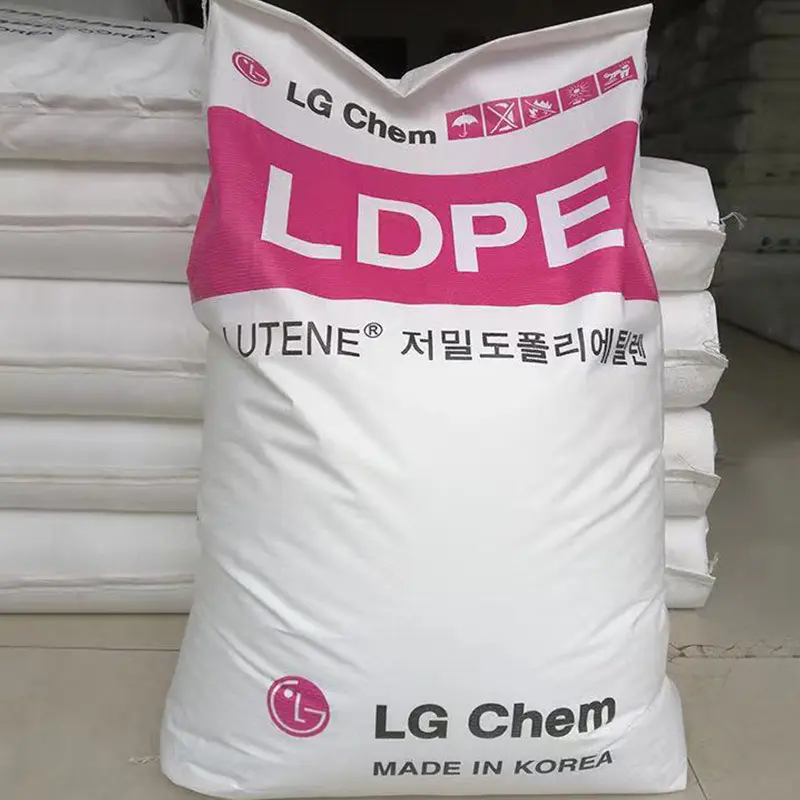
- Manufacturer: LG Chemical (LG Chem)
- Product Series: Lutene®
- Material Category: LDPE (Low-Density Polyethylene)
- Appearance: Translucent pellets
LG Chemical Lutene® LB7000 is an LDPE (Low-Density Polyethylene) resin with a melt index of 7.3 g/10min. It features good processing fluidity, high elongation at break, and excellent chemical resistance. The molded material has a soft texture, making it suitable for mainstream processing techniques such as extrusion and injection molding. This grade exhibits balanced fluidity and excellent molding stability. Finished products deliver superior toughness, making it adaptable for the production of packaging films, general-purpose injection-molded parts, and other products. It is a widely used LDPE raw material in the packaging and daily plastic components sectors.
Technical Specifications
Physical Properties
| Physical Properties | Test Value | Unit | Test Standard |
| Density | 0.917 | g/cm³ | ASTM D792 |
| Melt Index, Mass (190 °C, 2.16 kg) | 7.3 | g/10min | ASTM D1238 |
| Durometer Hardness, Shore D, Compression Molded | 43 | — | ASTM D2240 |
Mechanical Properties
| Mechanical Properties | Test Value | Unit | Test Standard |
| Tensile Strength, Yield, Compression Molded | 8.8 | MPa | ASTM D638 |
| Tensile Strength, Break, Compression Molded | 11.3 | MPa | ASTM D638 |
| Tensile Strain, Break, Compression Molded | > 500 | % | ASTM D638 |
Thermal Properties
| Thermal Properties | Test Value | Unit | Test Standard |
| Vicat Softening Point | 82 | °C | ASTM D1525 |
Notice: The technical specifications for LG Chemical Lutene® LB7000 LDPE provided herein are compiled from data published by LG Chemical or certified third-party testing laboratories. While prepared with professional diligence, these values serve as reference guidelines rather than absolute performance guarantees. Because molding and processing conditions vary significantly across operational environments, we recommend performing trial runs with Lutene® LB7000 under your actual manufacturing conditions prior to final material selection and mass production.
3. Applications & Processing Guidelines
Recommended Applications
- Packaging films and light-duty extruded film materials
- General-purpose injection-molded flexible fittings and plastic protective caps
- Flexible hoses and small extruded profiles
- Daily necessity plastic parts and container liners
Key Processing Guidelines
- Drying Treatment: LB7000 does not require pre-drying under standard storage conditions. If the warehouse environment has high humidity and the raw material absorbs moisture, pre-drying at 60–70 °C for 1–2 hours is recommended.
- Melt Index Characteristics: A melt index of 7.3 represents a medium-to-high flow LDPE. During injection molding, screw rotation speed can be appropriately reduced to minimize shear overheating.
- Processing Temperature Range: The recommended extrusion/injection processing temperature should be controlled within 160–200 °C. Avoid prolonged residence at excessively high temperatures to prevent thermal degradation.
- Molds: Ensure appropriate mold venting design to reduce the risk of bubbles in finished parts.
Grade Comparison & Selection Guide
Cross-Comparison of Similar LDPE Grades
| Grade | Melt Index (g/10min) | Density (g/cm³) | Vicat Softening Point | Performance Tendency |
| Lutene® LB7000 | 7.3 | 0.917 | 82 °C | Medium-high flow, fast mold filling, dual-purpose for injection/extrusion, excellent flexibility |
| Lutene® LB4000 | 4 | 0.918 | 84 °C | Medium flow, higher rigidity, optimized for film applications |
| Lutene® LB8000 | 8.5 | 0.916 | 80 °C | High flow, suitable for thin-wall injection molding, slightly lower toughness |
| Lutene® LB3000 | 3 | 0.919 | 86 °C | Low flow, tear-resistant, ideal for heavy-duty packaging films |
Selection Recommendations for Engineers
- Thin-wall injection parts requiring fast mold filling: Prefer higher melt index grades such as LB7000 and LB8000. LB7000 balances fluidity with toughness, yielding shorter injection molding cycles.
- Thick-walled products, heavy-duty packaging films, or applications demanding higher heat resistance: Select LB3000 / LB4000.
- If the product requires repeated bending with high demands on toughness and elongation: Lutene® LB7000 is an optimal choice.
- Molds with smaller gate dimensions: Prioritize medium-high flow LB7000 to improve mold filling and eliminate short-shot defects.
Frequently Asked Questions (FAQs)
Q1: Is drying required before processing LG Lutene® LB7000?
A: Sealed, standard-stored LB7000 raw material has very low moisture content and does not require drying under normal production conditions. If opened for extended periods or stored in high-humidity environments, pre-drying at 60–70 °C is recommended to eliminate bubble issues caused by moisture.
Q2: Is LB7000 suitable for film extrusion or injection molding?
A: This grade is a dual-purpose LDPE suitable for both injection molding and extrusion. Its medium-high fluidity makes it suitable for thin-wall injection molded parts as well as light-duty film extrusion. For heavy-duty thick film applications, lower melt index grades within the same series are recommended.
Q3: What does the Vicat softening point of 82 °C for LB7000 represent, and what are the operational limits?
A: A Vicat softening point of 82 °C indicates that the material is prone to deformation when continuously heated close to this temperature. Continuous long-term operating temperatures for finished products should not exceed 70 °C, making it unsuitable for high-temperature service conditions.
Q4: Can LB7000 be directly blended with other PE materials?
A: LB7000 can be blended with HDPE or LLDPE for modification to enhance overall mechanical properties. A small-scale trial run must be conducted prior to full-scale production to evaluate mechanical performance and molding stability after blending.