Product Overview & Key Features
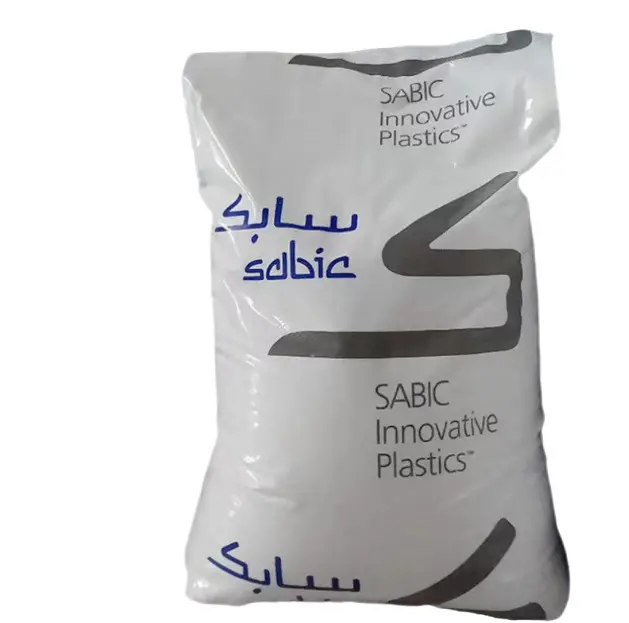
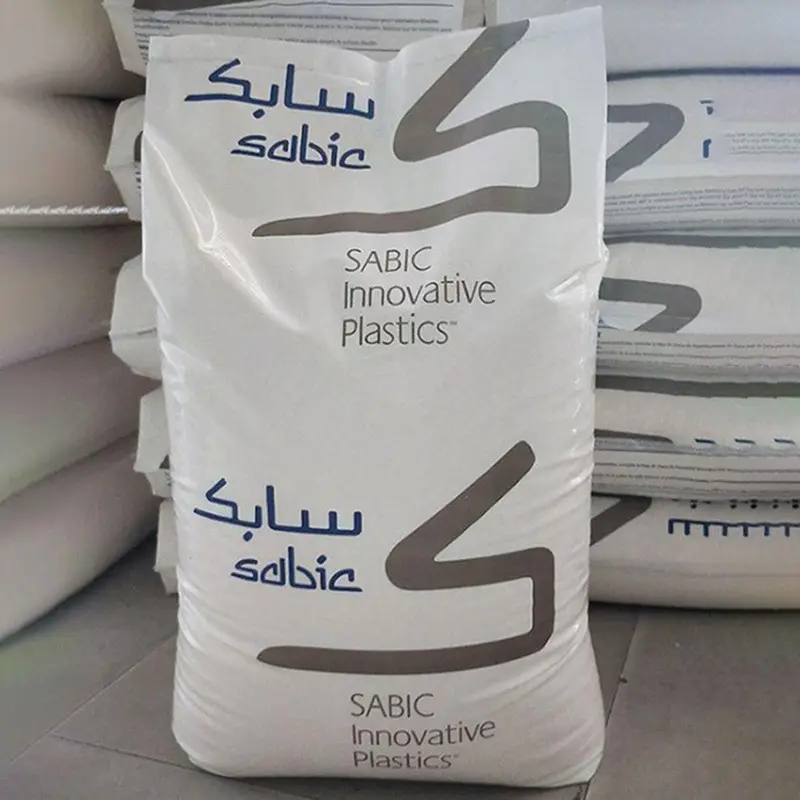
- Brand: SABIC
- Series: CYCOLOY™ FR Resins
- Material Type: PC/ABS Alloy (PC / ABS), unreinforced, injection molding grade
- Appearance: Natural color, opaque pellets; supplied conventionally in natural color, can be color-matched according to customer color chips
- Flame Retardant System: Non-chlorinated, non-brominated
- Processing Method: Injection molding
Key Features
C2800 is a standard injection molding grade in the CYCOLOY FR series designed for electronic and electrical enclosures. Its performance profile focuses on four aspects: low melt viscosity, accommodating the filling of thin-walled, long-flow-length, and multi-ribbed parts; halogen-free flame retardancy meeting mainstream regulatory standards; a balance of rigidity and ductility, adapting to snap-fits, bosses, and other assembly structures; and isotropic shrinkage and thermal expansion, resulting in low warpage risk for long-dimension parts. Electrical insulation indicators meet low-voltage electrical component requirements, while heat resistance is at a medium level, with a long-term continuous use temperature (RTI) of 70–80 °C.
Technical Specifications
Physical Properties
| Property | Value | Unit | Test Standard |
| Density (—) | 1.17 | g/cm³ | ASTM D792 |
| Density (color 0) | 1.18 | g/cm³ | ASTM D792 |
| Water Absorption (24 h) | 0.1 | % | ASTM D570 |
| Equilibrium Moisture Absorption | 0.4 | % | ASTM D570 |
| Molding Shrinkage, Parallel (3.2 mm) | 0.4–0.6 | % | — |
| Molding Shrinkage, Normal (3.2 mm) | 0.4–0.6 | % | — |
| Melt Mass-Flow Rate (2.16 kg, 260 °C) | 16 | g/10min | ASTM D1238 |
| Rockwell Hardness, R Scale | 120 | — | ASTM D785 |
Mechanical Properties
| Property | Value | Unit | Test Standard |
| Tensile Strength, Yield (50 mm/min) | 58 | MPa | ASTM D638 |
| Tensile Strain, Yield (50 mm/min) | 5 | % | ASTM D638 |
| Tensile Strain, Break (50 mm/min) | 50 | % | ASTM D638 |
| Tensile Modulus | 2680 | MPa | ASTM D638 |
| Flexural Strength, Yield (100 mm, 2.6 mm/min) | 96 | MPa | ASTM D790 |
| Flexural Modulus (100 mm, 2.6 mm/min) | 2680 | MPa | ASTM D790 |
| Izod Impact Strength, Notched (23 °C) | 427 | J/m | ASTM D256 |
| Instrumented Impact Test, Total Energy (23 °C) | 58.0 | J | ASTM D3763 |
Thermal Properties
| Property | Value | Unit | Test Standard |
| Coefficient of Linear Thermal Expansion (CLTE), Parallel (−40 – 60 °C) | 72.0 | μm/m·°C | ASTM E831 |
| Coefficient of Linear Thermal Expansion (CLTE), Normal (−40 – 60 °C) | 72.0 | μm/m·°C | ASTM E831 |
| Thermal Conductivity | 0.2 | W/m·K | ASTM C177 |
| Heat Deflection Temperature (1.8 MPa, 3.2 mm) | 73 | °C | ASTM D648 |
| Heat Deflection Temperature (1.8 MPa, 6.4 mm) | 80 | °C | ASTM D648 |
| Vicat Softening Point (Rate B/50) | 90 | °C | ASTM D1525 |
| Relative Thermal Index (RTI), Electrical | 80 | °C | UL 746B |
| Relative Thermal Index (RTI), Impact | 70 | °C | UL 746B |
| Relative Thermal Index (RTI), Tensile | 80 | °C | UL 746B |
| Flammability Rating (0.88 mm) | V-2 | — | UL 94 |
| Flammability Rating (1.47 mm) | V-0 | — | UL 94 |
| Flammability Rating (2.31 mm) | 5VB | — | UL 94 |
| Oxygen Index | 35 | % | ASTM D2863 |
| Hot Wire Ignition (HWI) | 15–30 | sec | UL 746A |
Electrical Properties
| Property | Value | Unit | Test Standard |
| Volume Resistivity | 1.00×10¹⁷ | Ω·cm | ASTM D257 |
| Surface Resistivity | ≥1.00×10¹⁴ | Ω | ASTM D257 |
| Dielectric Constant (50 – 60 Hz) | 3 | — | ASTM D150 |
| Dielectric Constant (100 Hz) | 3 | — | ASTM D150 |
| Dielectric Strength (In Oil, 3.2 mm) | 17.9 | kV/mm | ASTM D149 |
| Dissipation Factor (50 – 60 Hz) | 0.0048 | — | ASTM D150 |
| Arc Resistance (Tungsten) | 60–120 | sec | ASTM D495 |
| Comparative Tracking Index (CTI) | 400–600 | V | UL 746A |
| High Amp Arc Ignition (HAI) | ≥120 | arcs | UL 746A |
| High Voltage Arc Tracking Rate (HVTR) | 80.0–150 | mm/min | UL 746A |
Notice: The technical specifications for SABIC Cycoloy® C2800 provided herein are compiled from data published by SABIC or certified third-party testing laboratories. While prepared with professional diligence, these values serve as reference guidelines rather than absolute performance guarantees. Because molding and processing conditions vary significantly across operational environments, we recommend performing trial runs with C2800 under your actual manufacturing conditions prior to final material selection and mass production.
Features & Benefits
- High Flow Filling Capacity—Shortens molding cycles and lowers equipment thresholds: Melt mass-flow rate is 16 g/10min (260 °C / 2.16 kg). Compared to conventional flow grades in the same series, this value means that at the same wall thickness, the melt can complete filling at lower injection pressure and shorter holding time, reducing the risk of short shots and weld lines for parts with high flow-length ratios, multi-point gates, and multiple ribs, while lowering the requirement for high clamping force machines.
- Clear Wall-Thickness Flame Retardant Tiers—Designers can precisely match regulatory requirements: UL 94 flammability rating is V-2 at 0.88 mm, reaches V-0 at 1.47 mm, and reaches 5VB at 2.31 mm, with an oxygen index of 35%. Structural designers can make precise regulatory filings according to actual wall thickness, stably achieving V-0 certification when the wall thickness reaches 1.47 mm or above. Combined with a CTI of 400–600 V, volume resistivity of 1.00×10¹⁷ Ω·cm, and dielectric strength of 17.9 kV/mm, it provides reliable data support for structural electrical insulation design.
- Balanced Ductility and Rigidity—Reduces brittle fracture complaints during assembly and transportation: Izod notched impact strength of 427 J/m (23 °C), elongation at break of 50%, instrumented impact total energy of 58.0 J, while maintaining a flexural modulus of 2680 MPa and flexural strength of 96 MPa. For housings containing snap-fits, bosses, and hinges, this combination absorbs assembly interference and drop impact without sacrificing structural rigidity, reducing after-sales cracking issues.
- Isotropic Shrinkage and Expansion—Controllable warpage for long-dimension parts: Molding shrinkage rates in both parallel and vertical directions are identical at 0.4–0.6%, and CTE is identical at 72.0 μm/m·°C. Compared to glass fiber reinforced systems whose shrinkage behavior differs significantly along and perpendicular to the flow direction, isotropic shrinkage makes the deformation of flat plates, strip parts, and large-perimeter housings more predictable, eliminating the need to set mold compensations directionally.
- Non-Chlorinated, Non-Brominated Flame Retardant System—Avoids secondary damage to precision parts from acidic, corrosive combustion products: This grade adopts a non-halogen flame retardant system. In electronic and electrical assembly environments, the significance of this orientation is that it does not release acidic gases such as hydrogen halides during combustion or overheating decomposition, reducing the risk of corrosion to adjacent circuit boards, terminal platings, and mold cavities; meanwhile, it more easily meets export market restrictions on specific halogenated flame retardants.
Applications & Processing Guidelines
Recommended Applications
- Information Technology & Office Equipment: Printer and copier housings, monitor front and rear bezels, scanner upper covers, keyboard and mouse bases, server management module panels. Most of these parts feature large projected areas, thin walls, and multi-rib structures, where C2800’s high flow characteristics provide direct value.
- Communication & Network Equipment: Router and switch housings, optical network terminal (ONT) enclosures, rack-mounted device panels, radome linings. Wall thicknesses of 1.5 mm and above can correspond to the V-0 rating.
- Low-Voltage Electrical & Power Distribution: Circuit breaker panels, distribution box lining parts, terminal blocks, meter box structural components, industrial HMI front and rear shells. CTI of 400–600 V supports conventional low-voltage insulation design.
- Home Appliance Electronic Control Parts: Washing machine and refrigerator control boxes, air conditioner control panels, small appliance flame-retardant housings. Note that if such components are close to compressors or power modules, the actual ambient temperature should be calculated to ensure it does not fall below the RTI of 70–80 °C.
- Commercial Terminal Equipment: POS machine housings, self-service terminal panels, receipt printer mechanism brackets.
Processing Guidelines
- Drying (Mandatory): PC/ABS will exhibit splay, bubbles, and flow marks during high-temperature injection after absorbing moisture, accompanied by a decrease in impact strength. It is recommended to use a desiccant dryer at 80–90 °C for 3–4 hours, controlling moisture below 0.02% prior to molding. If packaging has been opened for more than 4 hours, during rainy seasons, or when regrind is exposed in storage, re-drying is required.
- Melt Temperature: Recommended barrel temperature range is 240–270 °C. C2800 has an MFR of 16 g/10min, providing ample flow capability without relying on elevated melt temperatures to improve filling; prolonged exposure above 280 °C carries the risk of PC phase degradation and flame retardant decomposition, manifested as yellowing, black specks, and flame retardant performance drift.
- Mold Temperature: Recommended at 60–80 °C. Higher mold temperatures reduce orientation stress, improve weld line strength, and enhance surface gloss/haze; lower mold temperatures shorten cycles but increase stress cracking risk. For structures with metal inserts or sudden changes in wall thickness, the upper limit of the range is preferred.
- Injection & Holding Pressure: Control back pressure at 5–15 MPa to prevent local overheating caused by high back pressure and prolonged shear. Holding pressure is typically 50–75% of the injection pressure. Shot size should ideally occupy 30–70% of the barrel capacity to prevent material from residing in the barrel for too long.
- Venting: Vent depth should be 0.025–0.075 mm. Flame retardant PC/ABS is sensitive to trapped gas; poor venting easily causes scorching, yellow streaks, and localized deterioration of impact strength in dead corners.
- Regrind Usage: Clean runner scrap can be recycled; it is recommended to start with a virgin-to-regrind ratio of 3:1, testing MFR, impact strength, and appearance batch by batch. Strictly prohibit mixing non-halogen flame retardant regrind with halogen-based flame retardant regrind, as mixing makes neither regulatory compliance nor performance predictable.
The above processing parameters serve as a general window for the PC/ABS system. Official recommended values for C2800 should be based on processing guides published by SABIC, and trial runs must be completed under factory machine and mold conditions prior to final mass production.
Frequently Asked Questions (FAQs)
Q1: Is pre-drying mandatory before C2800 injection molding? What are the consequences of not drying?
Mandatory. This grade has a 24-hour water absorption rate of 0.1% and an equilibrium moisture absorption rate of 0.4%. Although these values are low, the PC phase will undergo hydrolysis when exposed to moisture above 260 °C, leading to molecular chain breakage. Actual manifestations include surface splay and hazy flow marks, internal micro-bubbles, a significant drop in notched impact strength, and in severe cases, abnormal burning during flammability tests. It is recommended to dehumidify and dry at 80–90 °C for 3–4 hours (moisture ≤0.02%), using hopper temperature and dew point records as batch traceability data.
Q2: How should C2800 be chosen compared to SABIC C2950 from the same manufacturer?
Both are flame-retardant PC/ABS grades, with differences centered on the trade-off between fluidity and heat resistance. C2800 has an MFR of 16 g/10min, a heat deflection temperature of 73 °C (1.8 MPa / 3.2 mm), and a notched impact strength of 427 J/m; SABIC C2950 has an MFR of 10 g/10min, an HDT of 90 °C, and a notched impact strength of 534 J/m. The selection principle is: choose C2800 when the part has long flow lengths, thin walls, dense ribs, and filling difficulty is the primary constraint; choose C2950 when the part is adjacent to heating elements and requires higher long-term heat resistance and impact strength. If neither covers the requirements, switch to a heat-resistant grade rather than increasing processing temperatures.
Q3: How should an MFR of 16 g/10min be applied during actual machine tuning?
High MFR implies low melt viscosity; the tuning focus shifts from “can it fill” to “will it flash and trap gas”. Recommendations: use multi-stage medium-to-low injection speed, filling slowly through the gate first, then at medium speed, and slowing down at the final stage for venting to avoid burn marks caused by high shear; holding pressure should not be excessively high to prevent flash and internal stress concentration; clamping force can be appropriately reduced after calculating based on projected area. If weld line strength is insufficient, prioritize increasing mold temperature and injection speed rather than continuing to raise barrel temperature.
Q4: Does this grade’s flame retardant system contain halogens? How should compliance documents be verified during procurement?
C2800 utilizes a non-chlorinated, non-brominated flame retardant system. Note that UL 94 and CTI are both certifications bound by grade + color + thickness; procurement should verify whether the manufacturer, grade, color code, and thickness on the UL yellow card match the order, rather than inferring solely from the grade name. Additionally, TDS, SDS, and COA for the batch should be requested with the shipment; if end products are exported to markets with specific restrictions, it is recommended to explicitly write a “Non-Halogen Flame Retardant System Statement” and RoHS / REACH compliance statements into purchase orders rather than relying on verbal confirmation.