Product Overview & Key Features
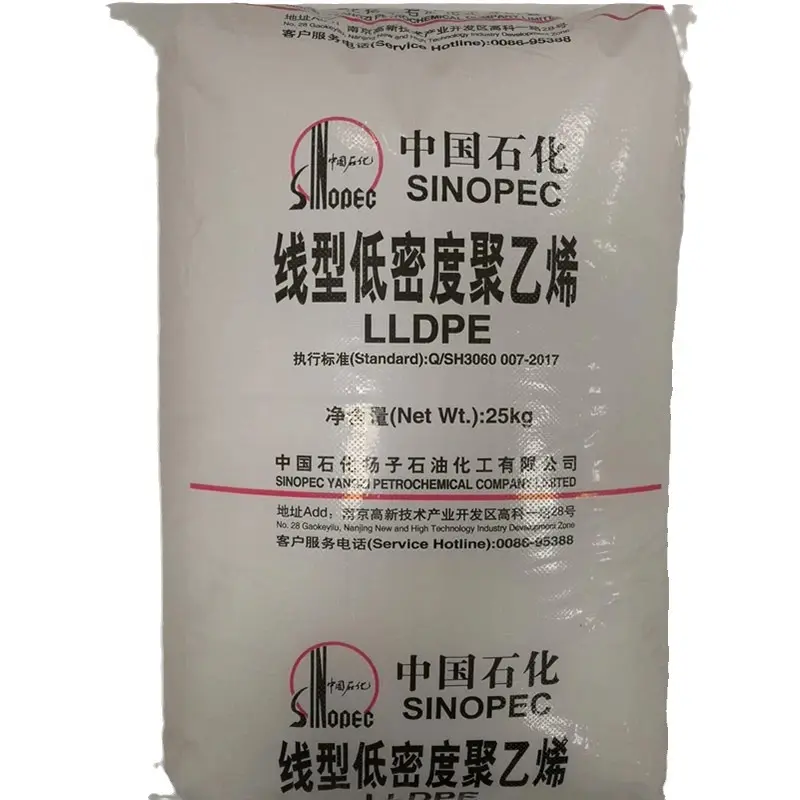
PE-L M2750 (YLJ-2650) is a linear low-density polyethylene (LLDPE) injection-molding grade resin produced by Sinopec Yangzi Petrochemical Company Ltd. The material appears as milky-white translucent cylindrical pellets, belonging to a specialized grade characterized by a high melt mass-flow rate and a narrow molecular weight distribution, with a melt flow rate (MFR) of 52 g/10 min (190 °C, 2.16 kg). The core characteristics of M2750 lie in the balance between extremely high fluidity and good toughness: a density of 0.926 g/cm³ imparts moderate rigidity, and a notched Charpy impact strength of 52 kJ/m² ensures the drop-resistance performance of molded products. Designed specifically for thin-wall, high-speed injection molding processes, this grade is widely used in food containers, daily chemical bottle caps, household thin-walled products, and small industrial components, serving as a high-efficiency solution for high-speed injection molding production lines.
Technical Specifications
Physical Properties
| Property | Testing Condition | Value | Unit | Test Method |
| Melt Flow Rate (MFR) | 190°C, 2.16kg | 52 | g/10min | GB/T 3682-2000 |
| Density | — | 0.926 | g/cm³ | GB/T 1033.2-2000 |
Mechanical Properties
| Property | Testing Condition | Value | Unit | Test Method |
| Tensile Yield Strength | — | 10.1 | MPa | GB/T 1040.2-2006 |
| Notched Charpy Impact Strength | — | 52 | kJ/m² | GB/T 1043.1-2008 |
Disclaimer: The technical specifications for Sinopec Yangzi Petrochemical LLDPE PE-L M2750 (YLJ-2650) presented herein are derived from data issued by Sinopec Yangzi Petrochemical Company Ltd. or certified third-party testing institutions. While we have made every effort to ensure the accuracy of the information provided, we assume no liability for any consequences arising from the use of PE-L M2750 (YLJ-2650) based on these data. Given the variables involved in processing conditions, we strongly recommend conducting thorough trials of PE-L M2750 (YLJ-2650) under your specific operational environment prior to final material selection.
Applications & Processing Guidelines
Typical Applications
Backed by its extremely high melt flow rate (52 g/10 min), PE-L M2750 is primarily targeted at injection molding applications requiring strict production efficiency and thin-wall moldability:
- Thin-Walled Packaging Containers: Yogurt cups, jelly cups, ice cream boxes, disposable lunch boxes, and lids, leveraging high fluidity for short-cycle molding.
- Daily Chemical & Food Bottle Caps: Tamper-evident caps and inner plugs for shampoo, body wash, and beverage bottles, ensuring clear threads and reliable sealing.
- Household & Consumer Goods: Thin-walled storage boxes, toy components, clothes hangers, flowerpots, and small household sundries.
- Industrial & Logistics: Small logistics turnover boxes, pallet pads, cable clamps, and non-pressure pipe fittings.
Processing Guidelines
- Drying Pretreatment: LLDPE has low moisture absorption and generally requires no drying under well-sealed packaging conditions. However, in high-humidity environments (relative humidity > 70%) or when raw materials are exposed for extended periods, hot-air drying at 70–80 °C for 1–2 hours is recommended to prevent bubbles or silver streaks in the melt, which could affect the appearance of thin-walled products.
- Injection Molding Process: The recommended melt temperature ranges from 180 °C to 230 °C. Given its extremely high MFR (52 g/10 min), the material exhibits exceptional mold-filling capacity, making it suitable for forming products with wall thicknesses below 1.0 mm. Mold temperature should be controlled between 20 °C and 50 °C to facilitate cooling time reduction and enhance production efficiency. Back pressure (typically 0.5–1.0 MPa) and screw speed must be carefully controlled to prevent material degradation caused by excessive shear heat.
- Regrind Usage: Clean runner scrap generated during production can be recycled and reused. Because M2750 has a high melt flow rate, its viscosity drops faster after multiple thermal histories; therefore, a virgin-to-regrind ratio of 4:1 or 3:1 is recommended, along with close monitoring of melt flow variations to ensure mechanical strength standards are met.
Logistics, Packaging & Compliance
- Packaging Specifications: Standard packaging consists of 25 kg film-coated woven bags or kraft paper composite bags offering basic moisture protection. Big bags (typically 500 kg or 1000 kg) are also available upon customer request to accommodate automated unpacking production lines.
- Shipping Classification: PE-L M2750 is classified as a non-dangerous chemical (Non-DG) and complies with standard cargo transportation regulations. It supports ocean and land shipping via 20-foot standard containers (FCL) or less-than-container load (LCL), requiring no specialized hazardous material transport licenses or vehicles.
- Delivery Lead Time: Backed by TaiKuo New Materials’ constant inventory at major ports and inland hubs, standard orders can be fulfilled with rapid response times. Specific delivery lead times depend on international trade terms (Incoterms) and destination port logistics conditions, and regular shipments can typically be arranged upon order confirmation.
- Compliance & Documentation Support: Every batch is accompanied by comprehensive quality management documents, including a Technical Data Sheet (TDS), Safety Data Sheet (SDS), and Certificate of Analysis (COA). The product complies with RoHS directives and REACH regulations concerning restricted substances. For food contact applications, corresponding compliance declarations can be provided based on specific market regulations (such as FDA or EU 10/2011).
- ESG & Environmental Statement: As a thermoplastic material, polyethylene features physical recyclability. We support circular economy practices, encouraging customers to sort and reprocess runner scraps and unqualified products during manufacturing. Furthermore, we are committed to driving green supply chain transformation to ensure controllable environmental impacts throughout the product lifecycle, aligning with global sustainable development trends.
Frequently Asked Questions (FAQs)
Q1: PE-L M2750 has a high melt flow rate of up to 52 g/10 min. What specific advantages does this offer for injection molding?
A1: An extremely high melt flow rate signifies excellent material fluidity, enabling rapid cavity filling under lower injection pressures. This is vital for producing thin-walled items (such as disposable lunch boxes and bottle caps) because it shortens injection time, reduces clamping force requirements, and ultimately cuts down the cycle time significantly, thereby boosting unit output and production efficiency. However, note that high fluidity may also cause flashing; hence, injection volume and clamping force must be precisely controlled.
Q2: How does this grade differ in application from general-purpose HDPE (such as 5000S)?
A2: The core differences lie in fluidity and rigidity. M2750 (LLDPE) has an extremely high MFR (52), targeting high-speed injection-molded thin-walled parts, whereas 5000S (HDPE) has a lower MFR (0.9), targeting flat yarn and monofilament extrusion with higher rigidity. Although both can be used for injection molding, M2750 is better suited for thin-walled, complex small parts, whereas HDPE is better suited for thick-walled, high-rigidity, and environmental stress-crack resistant items (such as turnover boxes and pallets).
Q3: M2750 features a tensile yield strength of 10.1 MPa. Does this mean the product has low strength?
A3: Tensile yield strength reflects the resistance of a material to the onset of plastic deformation. For an ultra-high fluidity injection-grade LLDPE with an MFR of 52, 10.1 MPa reflects its genuine physical behavior stemming from its short-chain structure and high melt flow. Although its rigidity is lower than that of HDPE or PP, LLDPE’s strength lies in its exceptional impact resistance and elongation (exhibited by a high notched Charpy impact strength of 52 kJ/m²). Consequently, the material is well-suited for thin-walled containers requiring toughness and drop-impact resistance rather than structures subjected to heavy static loads.
Q4: When processing this high-flow grade, how can product shrinkage and warpage be effectively controlled?
A4: High-flow LLDPE exhibits relatively high shrinkage rates during cooling and crystallization, and is prone to internal stress-induced warpage caused by uneven cooling. The following measures are recommended: first, optimize the packing pressure curve to avoid over-packing while ensuring complete mold filling; second, control the mold cooling circuit to ensure the temperature difference between the moving and stationary molds does not exceed 10 °C, while maintaining steady cooling water temperatures; finally, for high-precision products, air cooling or warm water (40–50 °C) annealing treatment after ejection is recommended to eliminate residual stress and stabilize dimensions.