Product Overview & Key Features
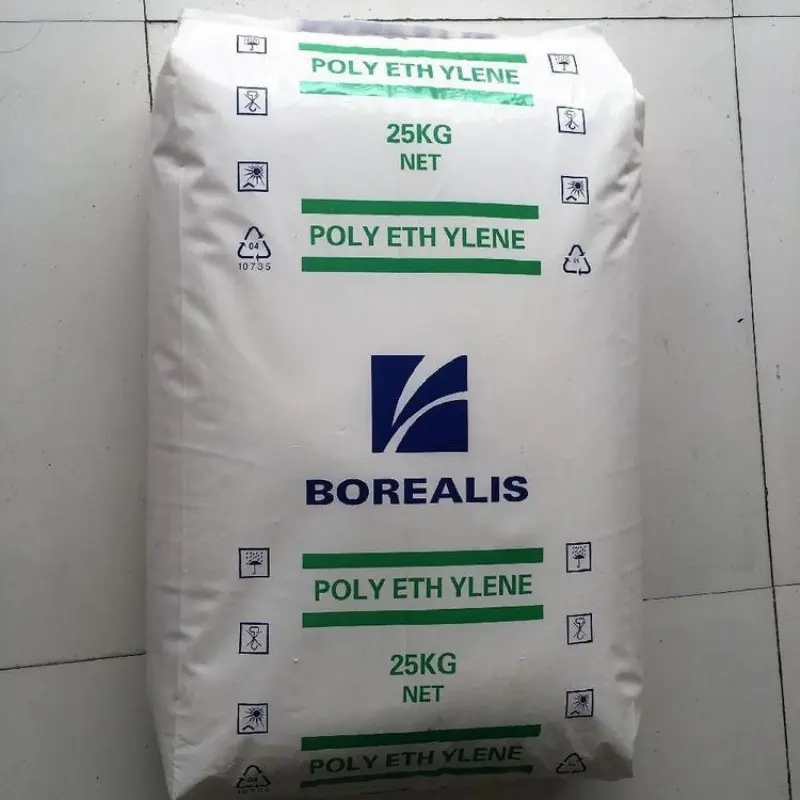
Borealis Borstar® FB2230 LLDPE is a high-performance linear low-density polyethylene (LLDPE) film grade resin produced by Borealis using its proprietary Borstar® multimodal polymerization technology. The product is supplied in standard industrial pellet form and is designed for high-strength blown film and heavy-duty packaging applications.
Core Performance Advantages
- Excellent tensile and mechanical strength: Owing to its multimodal molecular weight distribution, the material delivers outstanding tensile strength in both the machine direction (MD) and the transverse direction (TD) — 55 MPa MD and 45 MPa TD — together with excellent puncture impact resistance.
- Outstanding tear resistance: It performs strongly in Elmendorf tear strength testing, reaching up to 25 g/µm in the transverse direction, effectively preventing the film from splitting in the machine and transverse directions under load.
- Excellent bubble stability: Its distinctive melt index combination (0.20 g/10min at 190 °C / 2.16 kg) provides excellent melt strength and a stable bubble during blown film processing.
Main Processing Technology
Designed specifically for the blown film extrusion process, it is widely used in the production of high-performance films and heavy-duty packaging bags.
Technical Specifications
Physical Properties
| Property | Test Value | Test Unit | Test Standard |
|---|---|---|---|
| Density (23 °C) | 0.923 | g/cm³ | ISO 1183 |
| Melt Index, Mass (190 °C, 2.16 kg) | 0.20 | g/10min | ISO 1133 |
| Melt Index, Mass (190 °C, 21.6 kg) | 22 | g/10min | ISO 1133 |
| Melt Index, Mass (190 °C, 5 kg) | 1.0 | g/10min | ISO 1133 |
Mechanical Properties
| Property | Test Value | Test Unit | Test Standard |
|---|---|---|---|
| Coefficient of Friction, Dynamic (Dynamic 0, Blown Film 0) | 0.40 | — | ISO 8295 |
| Tensile Modulus, Parallel, Film (Blown Film 0, 40 µm) | 250 | MPa | ISO 527-3 |
| Tensile Modulus, Perpendicular, Film (Blown Film 0, 40 µm) | 300 | MPa | ISO 527-3 |
| Tensile Strength, Parallel, Film (Blown Film 0, 40 µm) | 55 | MPa | ISO 527-3 |
| Tensile Strength, Perpendicular, Film (Blown Film 0, 40 µm) | 45 | MPa | ISO 527-3 |
| Tensile Strain, Break, Parallel, Film (Blown Film 0, 40 µm) | 450 | % | ISO 527-3 |
| Tensile Strain, Break, Perpendicular, Film (Blown Film 0, 40 µm) | 750 | % | ISO 527-3 |
| Dart Drop Impact, Film (Blown Film 0, 40 µm) | 250 | g | ISO 7765-1 |
| Elmendorf Tear Strength, Parallel, Film (Blown Film 0, 40 µm) | 7.6 | g/µm | ISO 6383-2 |
| Elmendorf Tear Strength, Perpendicular, Film (Blown Film 0, 40 µm) | 25 | g/µm | ISO 6383-2 |
| Multiaxial Instrumented Impact Energy, Total Penetration Energy (Blown Film 0, 40 µm) | 2 × 10⁴ | J/m | ISO 7765-2 |
Optical Properties
| Property | Test Value | Test Unit | Test Standard |
|---|---|---|---|
| Gloss (Blown Film 0, 40 µm) | 7 | — | ASTM D2457 |
| Haze (Blown Film 0, 40 µm) | 70 | % | — |
Notice: The technical specifications for Borealis FB2230 LLDPE provided herein are compiled from data published by Borealis or certified third-party testing laboratories. While prepared with professional diligence, these values serve as reference guidelines rather than absolute performance guarantees. Because molding and processing conditions vary significantly across operational environments, we recommend performing trial runs with FB2230 under your actual manufacturing conditions prior to final material selection and mass production.
Applications & Processing Guidelines
Recommended Applications & End Products
- Heavy-duty sacks: Packaging of bulk industrial goods such as chemical raw materials, fertilizers, and resin pellets.
- Agricultural mulch film and greenhouse film: Leveraging its high tensile strength and excellent environmental stress resistance.
- High-strength composite substrates and industrial stretch film: For industrial film applications with strict anti-puncture and anti-tear requirements.
Processing Operation Essentials
- Melt index and extrusion characteristics: This grade has a relatively low melt index (0.20 g/10min at 190 °C / 2.16 kg) and exhibits very high melt strength, delivering excellent bubble stability during blown film processing.
- Temperature and equipment settings: A standard blown film extrusion line is recommended. Set the barrel and die temperatures reasonably (typically between 170 °C and 210 °C, depending on the plasticizing capacity of the equipment) to ensure the resin is fully plasticized without thermal degradation.
- Drying: As a polyethylene raw material, it has very low moisture absorption and normally requires no complex deep drying under standard storage conditions. However, in high-humidity environments or when sealed pellets have absorbed moisture, routine surface dehumidification is recommended.
Grade Comparison & Selection Guide
Comparison with Same-Series / Similar Grades
- Borealis Borstar® FB2230: Balances excellent mechanical strength with outstanding bubble stability. Its haze is relatively high (70%), making it suitable for heavy-duty packaging and industrial films that prioritize physical load-bearing capacity.
- Higher-flow film grades in the same series: Compared with conventional general-purpose LLDPE grades, Borstar multimodal technology gives FB2230 higher impact and tear resistance. However, where the application requires high transparency or very low haze, dedicated metallocene polyethylene (mLLDPE) or LDPE grades are usually needed instead. For example, Dow DOWLEX™ 2045G, also an LLDPE blown film grade, has a haze of approximately 10%, clearly outperforming FB2230 in optical performance and making it better suited to films with transparency requirements.
Selection Recommendations for Engineers
- Define the mechanical load-bearing requirement first: When selecting a grade, R&D and procurement engineers should first confirm the end product’s requirements for dart drop impact and Elmendorf tear strength.
- Prioritize heavy-duty applications: Where products must withstand significant drop impact or fall under heavy-duty packaging, FB2230 is an ideal choice that balances processing stability with tear resistance. During die design and blown film parameter tuning, pay attention to its performance at the 40 µm standard test thickness and adjust the blow-up ratio (BUR) according to the actual product wall thickness to achieve the optimal mechanical balance.
- Material family: FB2230 and conventional LLDPE both belong to the general purpose plastics family. The selection difference stems mainly from the mechanical performance gains delivered by the multimodal molecular structure, rather than a change in the base material category.
- Watch the procurement timing: PE spot prices are driven jointly by three cost routes — crude oil, ethane, and coal-to-olefins — and the fourth quarter, the peak stocking season for agricultural film, sees concentrated LLDPE demand that periodically pushes prices up. Before bulk purchasing, we recommend using the 2026 global PE market price and supply-demand trends to judge the right stocking window.
Frequently Asked Questions (FAQs)
Q1: Does Borealis Borstar® FB2230 LLDPE require drying before processing?
A1: The material is a polyethylene (PE) resin with inherently very low moisture absorption. Under standard dry storage conditions it can normally be fed directly into the extruder without dedicated drying equipment. However, if packaging is damaged or workshop humidity is extremely high and causes surface condensation, simple dehumidification at 60–70 °C is recommended to prevent moisture vaporization from producing fine gel spots.
Q2: Why does FB2230 have multiple melt flow rate (MFR) test conditions? Which one should be used in actual processing?
A2: Multimodal polymers are usually supplied with melt index data at several loads. At 190 °C / 2.16 kg, for example, the material shows relatively low flowability (0.20 g/10min), which safeguards high melt strength, whereas at a higher load such as 21.6 kg flowability rises markedly (22 g/10min). In blown film processing, we recommend assessing bubble stability primarily from the melt strength at the low load, and adjusting the screw speed in line with the shear rate of the extruder.
Q3: Is FB2230 suitable for producing transparent packaging bags?
A3: This grade has a haze value of approximately 70%, and its optical performance is oriented toward conventional industrial-grade film rather than high clarity. It is therefore better suited to heavy-duty packaging bags, industrial liners, and agricultural films where high see-through clarity is not essential, but tensile strength, puncture resistance, and tear resistance are critical.