Product Overview & Key Features
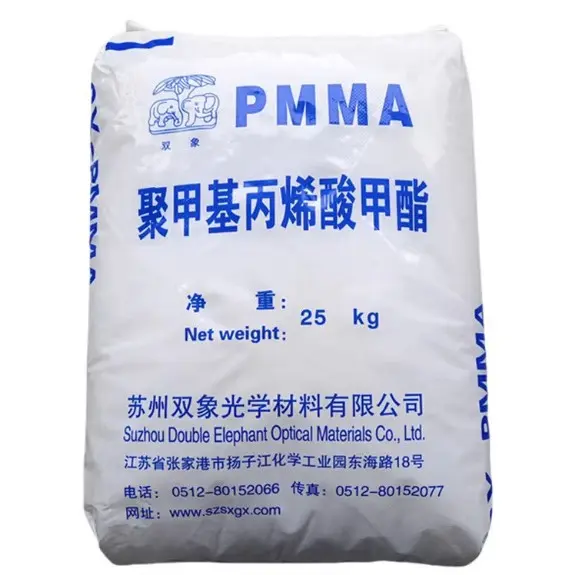
SX-301 is an injection molding grade Polymethyl Methacrylate (PMMA, commonly known as Acrylic) resin produced by Shuangxiang Group. The material is supplied in colorless, transparent cylindrical pellets and is a high-flow, high-transparency general-purpose optical grade resin with a Melt Flow Rate (MFR) of 13 g/10 min (230 °C, 3.8 kg). The core characteristics of SX-301 lie in the balance between exceptional optical purity and processing efficiency: it features 93% light transmittance, 0.3% haze, and a refractive index of 1.49. Simultaneously, its flexural modulus of 3200 MPa and tensile strength of 67 MPa provide the finished parts with sufficient rigidity and surface hardness (Rockwell hardness 90). Specifically designed for injection molding, this grade is widely used in industrial and consumer sectors requiring high transparency, surface gloss, and dimensional stability, making it one of the benchmark domestic PMMA grades in the market that offers both cost-effectiveness and optical quality.
Technical Specifications
Physical Properties
| Property | Value | Unit | Test Standard |
| Density | 1.19 | g/cm³ | ISO 1183 |
| Molding Shrinkage | 0.2-0.6 | % | ISO 294-4 |
| Water Absorption | 0.3 | % | ISO 62 |
| Melt Flow Rate (230 °C, 3.8 kg) | 13 | g/10 min | ISO 1133 |
| Rockwell Hardness | 90 | — | ISO 2039-2 |
Mechanical Properties
| Property | Value | Unit | Test Standard |
| Tensile Strength | 67 | MPa | ISO 527-2 |
| Tensile Strain | 3 | % | ISO 527-2 |
| Flexural Strength | 115 | MPa | ISO 178 |
| Flexural Modulus | 3200 | MPa | ISO 178 |
| Charpy Notched Impact Strength | 1.3 | kJ/m² | ISO 179-1 |
Thermal Properties
| Property | Value | Unit | Test Standard |
| Coefficient of Linear Thermal Expansion (CTE) | 7.00E-05 | cm/cm/°C | ISO 11359-2 |
| Vicat Softening Temperature | 89 | °C | ISO 306 |
| Heat Deflection Temperature (1.82 MPa) | 84 | °C | ISO 75-2 |
| Flammability Rating | HB | — | UL 94 |
Electrical Properties
| Property | Value | Unit | Test Standard |
| Surface Resistivity | > 1.0E+16 | ohms | IEC 60093 |
| Volume Resistivity | > 1.0E+14 | ohms·cm | IEC 60093 |
| Insulation Resistance | > 1.0E+15 | ohms | IEC 60167 |
| Dielectric Strength | 20 | kV/mm | IEC 60243-1 |
| Dielectric Constant | 3.5 | — | IEC 60250 |
Optical Properties
| Property | Value | Unit | Test Standard |
| Refractive Index | 1.49 | — | ISO 489 |
| Light Transmittance | 93 | % | ISO 13468-1 |
| Haze | 0.3 | % | ISO 14782 |
Disclaimer: The technical specifications for Shuangxiang SX-301 presented herein are derived from data issued by Shuangxiang Group or certified third-party testing institutions. While we have made every effort to ensure the accuracy of the information provided, we assume no liability for any consequences arising from the use of SX-301 based on these data. Given the variables involved in processing conditions, we strongly recommend conducting thorough trials of SX-301 under your specific operational environment prior to final material selection.
Applications & Processing Guidelines
Typical Applications
SX-301, with its high transparency, excellent flow, and surface hardness, is primarily suited for the following applications:
- Lighting & Optics: LED covers, light guide plates, luminaire lenses, decorative lighting housings.
- Appliances & Consumer Electronics: Transparent appliance windows, control panels, instrument cluster covers, cosmetic bottles, and display props.
- Industrial & Construction: Mechanical inspection windows, protective masks, advertising signage, skylights.
- Stationery & Daily Necessities: Transparent folder clips, pen barrels, storage containers, display stands.
Processing Guidelines
- Drying Pretreatment: PMMA has a water absorption rate of approximately 0.3%. Trace moisture at high temperatures can lead to silver streaks, bubbles, and increased haze. It is recommended to dry the material in a hot air circulating dryer at 80–85 °C for 3–4 hours before processing, ensuring a moisture content below 0.05%. Dried material should be stored in sealed containers to prevent re-absorption.
- Injection Molding: The recommended melt temperature is 220–260 °C. Mold temperature should be controlled at 40–70 °C to help reduce internal stress and improve surface finish. Injection speed should be set to medium to fast to ensure the melt fully fills thin-walled sections. A back pressure of 0.5–1.0 MPa is recommended, and screw speed should not be too high to avoid material degradation caused by shear heat.
- Post-processing: For products with extremely high optical requirements, an annealing process at 70–80 °C for 1–2 hours may be performed to eliminate internal stress and reduce cracking or “stress whitening” caused by environmental stress during subsequent use.
Logistics, Packaging & Compliance
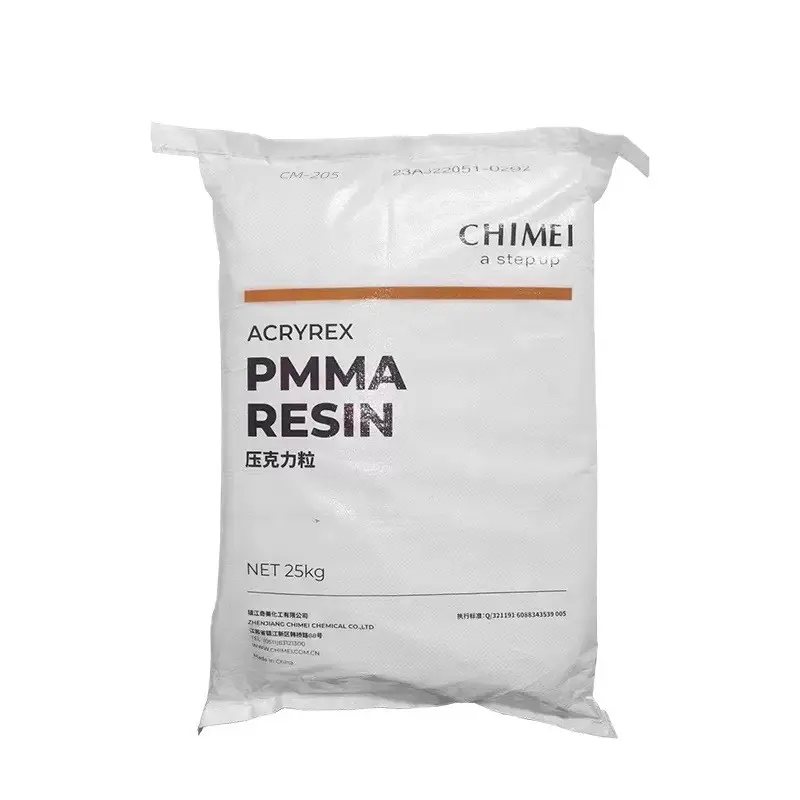
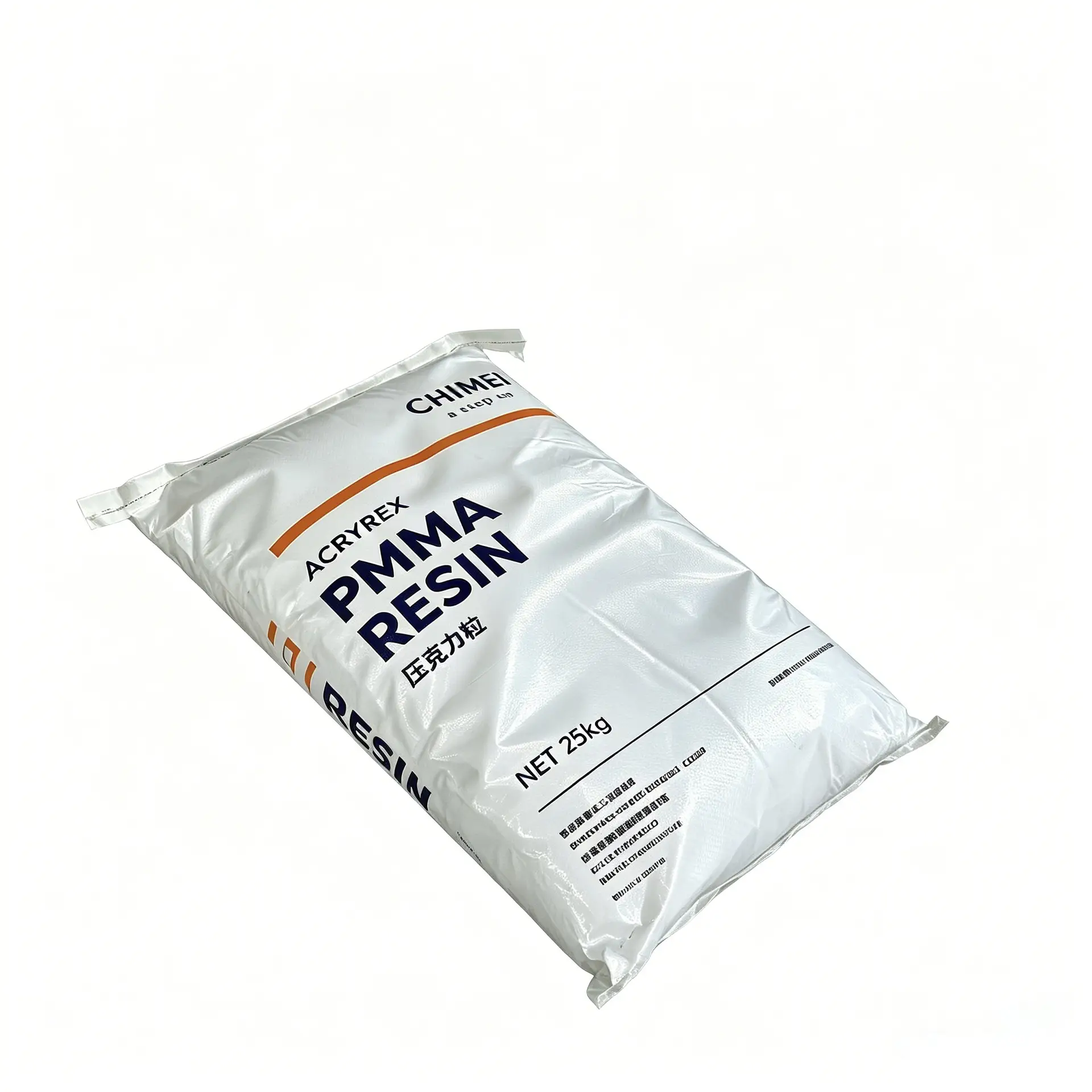
- Packaging: Standard packaging is in 25 kg multi-layer composite paper bags or moisture-proof woven bags with a polyethylene inner liner, providing basic moisture protection. Options for big bags (usually 500 kg or 1000 kg) are available upon request to accommodate automated production line requirements.
- Supply Status: SX-301 is a non-hazardous chemical (Non-DG) and complies with standard cargo transportation regulations. It supports Full Container Load (FCL) and Less than Container Load (LCL) sea and land transport without the need for special hazardous material shipping qualifications.
- Delivery Lead Time: Supported by the consistent inventory of TaiKuo New Materials at major ports and inland hubs, standard orders can be processed with rapid response. Actual lead time depends on Incoterms and destination port logistics conditions; under normal circumstances, shipments can be arranged upon order confirmation.
- Compliance & Documentation: Each batch is provided with complete quality management documentation, including Technical Data Sheets (TDS), Safety Data Sheets (SDS), and Certificates of Analysis (COA). The product meets the requirements of the RoHS Directive and REACH regulation concerning restricted substances.
- ESG & Environmental Statement: As a thermoplastic material, PMMA features physical recyclability. We support circular economy practices and encourage customers to classify, recycle, and reprocess sprues and non-conforming products during the manufacturing stage. Furthermore, we are committed to driving a green transformation of the supply chain, ensuring that the environmental impact over the entire product life cycle is controllable, in line with global sustainable development trends.
FAQs
Q1: The melt flow rate of SX-301 is 13 g/10 min. How does this benefit thin-wall injection molding?
A1: A higher MFR implies better flowability in the molten state, allowing for rapid filling of mold cavities at lower injection pressures. This is particularly important for producing thin-walled transparent parts (e.g., LED light guide plates, cosmetic bottle caps), as it shortens injection cycles, reduces clamping force requirements, and improves production efficiency. However, care should be taken to control injection speed to avoid trapped air or burning caused by high-speed filling.
Q2: How should one choose between SX-301 and PC (e.g., Makrolon 6557) for transparent applications?
A2: SX-301 features 93% light transmittance and 0.3% haze, matching PC in optical performance, and offers higher surface hardness (Rockwell 90 vs. approx. 75–80 for PC), making it more scratch-resistant. However, the impact strength of PC is significantly higher than that of PMMA (Charpy notched impact for PC is approx. 65 kJ/m², compared to 1.3 kJ/m² for SX-301). Selection principle: If the application involves drop risks or exposure to impact loads, PC should be chosen; if the priority is high transparency, high surface hardness, weather resistance, and cost-effectiveness, SX-301 is the more suitable choice.
Q3: Can this grade be used for long-term outdoor exposure?
A3: PMMA itself has good resistance to UV radiation, showing a slow yellowing rate during long-term outdoor use. However, as a general-purpose injection grade, SX-301 is not specifically formulated with UV stabilizers. If terminal applications involve severe, long-term direct sunlight (e.g., outdoor advertising light boxes, skylights), it is recommended to verify if a specialized weather-resistant PMMA grade is required, or if the product surface requires UV coating.
Q4: How can I apply for SX-301 samples for trial testing?
A4: TaiKuo New Materials provides commercial trial samples for downstream manufacturers. The application process typically involves submitting basic company information, a description of the intended application, and estimated usage volume. Sample costs and shipping fees are to be covered by the customer. Samples are primarily intended for laboratory formulation screening and small-scale machine process verification. It is recommended to store samples in sealed containers immediately upon receipt and perform drying according to recommended processing parameters before use.