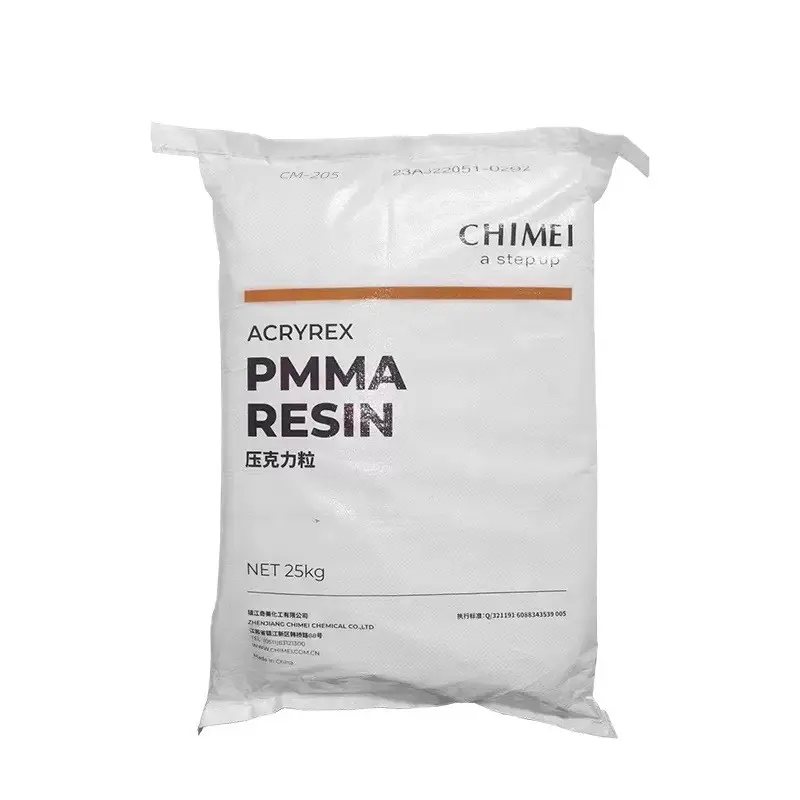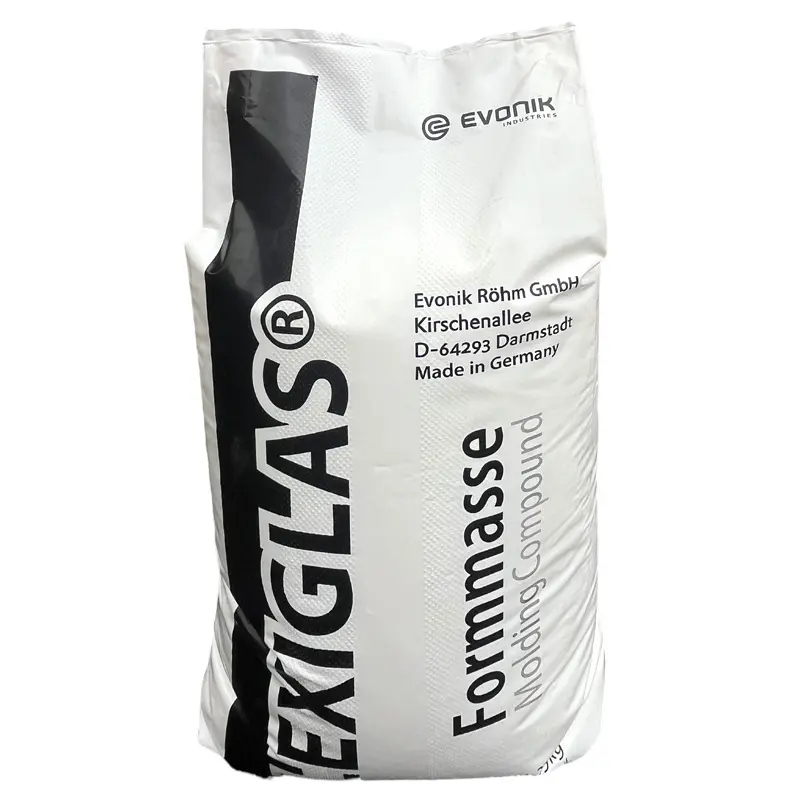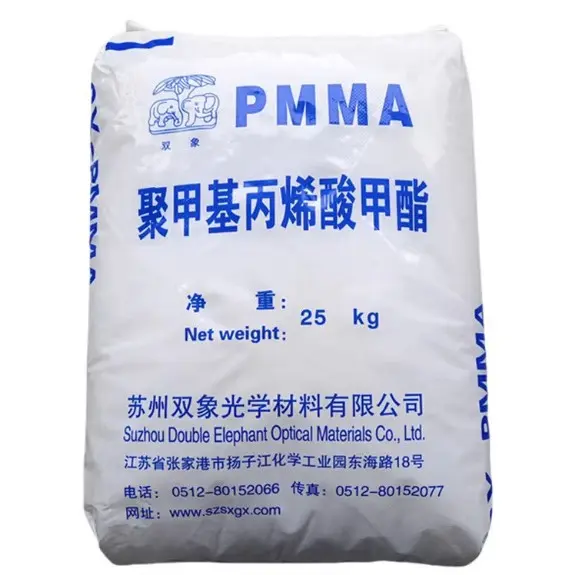
Product Overview & Key Features
Mitsubishi Chemical Acrypet® VH-001 is an injection-molding grade polymethyl methacrylate (PMMA, commonly known as acrylic) resin produced by Mitsubishi Chemical. This material features exceptional optical properties, high mechanical strength, and good surface hardness, with a high visible light transmittance (0.3 mm) of up to 92.5%, a refractive index of 1.49, and a haze of only 0.300%. VH-001 combines outstanding rigidity and weather resistance, boasting a Rockwell hardness M of 101 and a tensile strength of 77.0 MPa. Specifically designed for precision injection molding processes, this grade is widely used in automotive industries, electronics, optical displays, and consumer goods where strict requirements are placed on light transmittance, surface texture, and long-term dimensional stability.
Technical Specifications
Physical Properties
| Performance Item | Test Value | Test Unit | Test Standard |
| Density | 1.19 | g/cm³ | JIS K7112ISO 1183 |
| Water AbsorptionTime 24 hr | 0.3 | % | ISO 62 |
| Mold Shrinkage, Parallel | 0.2-0.6 | % | MRC method |
| Melt Mass-Flow Rate (MFR)230 °C, 3.8 kg | 2 | g/10min | ISO 1133 |
| Spiral Flow Distance230 °C, 0.2 mm | 130 | cm | MRC method |
| Spiral Flow Distance0.2 mm, 250 °C | 220 | cm | MRC method |
| Rockwell Hardness M | 101 | — | ISO 2039 |
Mechanical Properties
| Performance Item | Test Value | Test Unit | Test Standard |
| Tensile Strength | 77 | MPa | ISO 527/1A/5 |
| Tensile Strain at Break | 6 | % | ISO 527-1A/5 |
| Tensile Modulus | 3300 | MPa | ISO 527-1A/1 |
| Flexural Strength | 140 | MPa | ISO 178 |
| Flexural Modulus | 3300 | MPa | ISO 178 |
| Compressive Strength, Yield | 108 | MPa | ASTM D695 |
| Charpy Impact Strength, Unnotched23 °C | 2.1 | kJ/m² | ISO 180/1A |
| Charpy Impact Strength, Unnotched23 °C | 20 | kJ/m² | ISO 179 1eU |
| Charpy Impact Strength, Notched23 °C | 1.4 | kJ/m² | ISO 179 1eA |
Thermal Properties
| Performance Item | Test Value | Test Unit | Test Standard |
| Coefficient of Linear Thermal Expansion (CTE), Parallel | 60 | μm/m−∘C | ASTM D696 |
| Specific Heat Capacity | 1.5 | J/g-∘C | JIS K7123 |
| Thermal Conductivity | 0.2 | W/m-K | ASTM C177 |
| Heat Deflection Temperature1.8 MPa | 100 | ∘C | ISO 75 |
| Vicat Softening Point5.1 kg | 107 | ∘C | ISO 75 |
Electrical Properties
| Performance Item | Test Value | Test Unit | Test Standard |
| Volume Resistivity | >= 1.00e+12 | ohms ⋅ cm | JIS K6911 |
| Surface Resistivity | >= 1.00e+16 | Ohms | JIS K6911 |
| Dielectric Constant60 Hz | 3.7 | — | JIS K6911 |
| Dielectric StrengthRate 4 kV/s | 20 | kV/mm | JIS K6911 |
| Dissipation Factor60 Hz | 0.05 | — | JIS K6911 |
Optical Properties
| Performance Item | Test Value | Test Unit | Test Standard |
| Refractive IndexND | 1.49 | — | ASTM D542 |
| Haze0.3 mm | 0.3 | % | — |
| Light Transmittance, Visible0.3 mm | 92.5 | % | ISO 13468 |
Disclaimer: The technical specifications for Mitsubishi Chemical Acrypet® VH-001 presented herein are derived from data issued by Mitsubishi Chemical Corporation or certified third-party testing institutions. While we have made every effort to ensure the accuracy of the information provided, we assume no liability for any consequences arising from the use of VH-001 based on these data. Given the variables involved in processing conditions, we strongly recommend conducting thorough trials of VH-001 under your specific operational environment prior to final material selection.
Applications & Processing Guidelines
Typical Applications
Backed by its exceptional light transmittance, surface hardness, and mechanical properties, Mitsubishi Chemical Acrypet® VH-001 is widely used in the following end products and working environments:
- Optics & Electronics: LCD light guide plates, instrument cluster transparent panels, indicator lamp covers, and electronic product protective lenses.
- Automotive Industry: Automotive tail lamp covers, interior dashboard shields, decorative trims, and light-transmitting buttons.
- Construction & Consumer Goods: High-end lighting fixture light-transmitting covers, signage, advertising display stands, and various high-gloss consumer product structural parts.
Processing Guidelines
- Drying Treatment: PMMA possesses a certain level of moisture absorption. To prevent surface silver streaks, bubbles, or degradation during injection molding, thorough drying is required prior to processing. A hot-air circulation drying oven is recommended at 75-85 °C for 2-4 hours, keeping the moisture content below 0.05%.
- Injection Molding: The melt temperature is generally recommended to be controlled between 210-250 °C. Mold temperature directly affects internal stress, surface gloss, and shrinkage rate, and is recommended to be set at 60-80 °C. Standard screws should be used in the injection molding machine to prevent material decomposition caused by shear overheating.
- Molding Shrinkage: The parallel mold shrinkage rate for this grade ranges between 0.2%-0.6%. Mold design and dimensional tolerances should be precisely compensated based on specific wall thicknesses.
Logistics, Packaging & Compliance
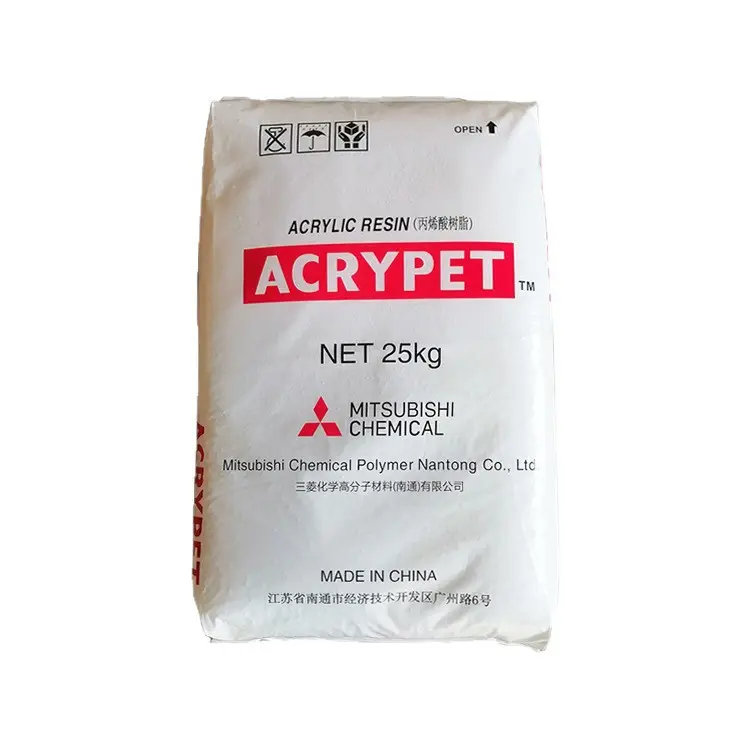
- Packaging Specifications: Standard packaging utilizes 25 kg moisture-proof multi-layer composite paper bags or paper-plastic composite packaging lined with a high-density polyethylene moisture-proof film, effectively preventing moisture absorption during transit and storage. Bulk customer requirements can also be met with big bags or customized packaging services.
- Supply Attribute: This product belongs to non-hazardous chemicals (Non-DG) and complies with international general chemical raw material and engineering plastic transportation standards. It supports global shipping via sea freight (FCL/LCL), land freight, and air freight without requiring special hazardous material transportation qualifications.
- Lead Time: Backed by TaiKuo New Materials’ efficient global supply chain network and comprehensive warehousing layout, standard orders achieve fast response times and stable delivery. Specific delivery schedules are determined according to International Commercial Terms (Incoterms) and destination port logistics timelines.
- Compliance & Documentation Support: Every shipment can be accompanied by comprehensive quality and compliance documents, including Technical Data Sheets (TDS), Material Safety Data Sheets (MSDS/SDS), and Certificates of Analysis (COA). The product fully complies with RoHS directives and REACH regulations regarding hazardous substance control.
- ESG & Environmental Statement: As a standard engineering plastic supplier, we support circular economy and green manufacturing concepts. We recommend the classified recycling and rational reuse of runner and sprue materials generated during production under compliant conditions to jointly promote low-carbon and sustainable development in the plastics industry.
FAQs
Q1: Must Mitsubishi Chemical Acrypet® VH-001 be dried prior to injection molding?
A1: Yes, strict drying is mandatory. Although PMMA has relatively low moisture absorption, excess residual moisture can easily cause surface silver streaks, bubbles, or molecular chain degradation during high-temperature injection molding, severely impacting optical transmittance and mechanical strength. It is recommended to dry at 75-85 °C for 2-4 hours.
Q2: Where do the primary optical advantages of this grade lie?
A2: VH-001 features exceptional optical purity, exhibiting a visible light transmittance (0.3 mm) of up to 92.5%, a haze of only 0.300%, and a refractive index of 1.49. This makes it exceptionally suited for applications with strict demands on optical performance, such as transparent optical parts, automotive lamp covers, and display panels.
Q3: How should shrinkage rates be considered during mold design for this material?
A3: VH-001 has a parallel mold shrinkage rate of 0.2%-0.6%. Since PMMA is a rigid amorphous polymer, its shrinkage rate is relatively low and stable; however, mold design still requires meticulous adjustments based on product wall thickness, gate placement, and cooling rates to avoid internal stress concentrations or warpage.