Product Overview & Key Features
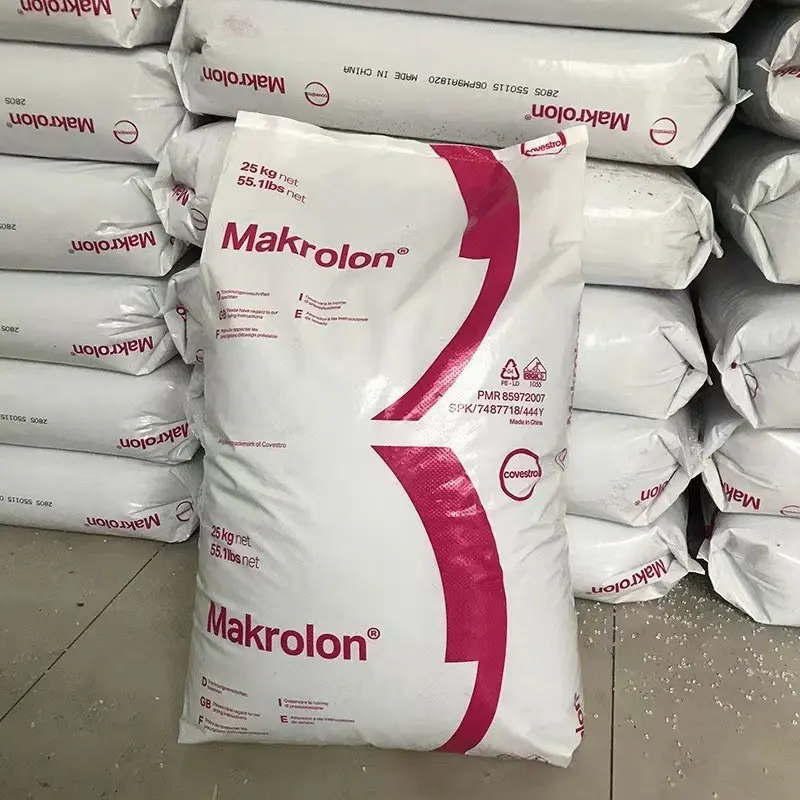
Makrolon® 6557 is a polycarbonate (PC) injection molding grade resin produced by Covestro AG. Presented as transparent to translucent pellets, it is a medium-viscosity, high-impact, general-purpose engineering plastic grade meeting the UL 94 V-0 flame retardant standard, with a melt mass-flow rate (MFR) of 10 g/10 min (300 °C, 1.2 kg). The core characteristic of 6557 lies in its excellent balance of comprehensive properties: a tensile yield strength of 66.0 MPa, an elongation at break of up to 130%, a Charpy notched impact strength showing partial break (70 kJ/m²) at 23 °C, and a luminous transmittance of up to 89% (1-2 mm thickness). Specifically designed for electrical and electronic, lighting, and industrial components with rigorous demands for transparency, flame retardant safety, and impact toughness, this grade is one of the most widely applied general-purpose flame-retardant grades in the Covestro Makrolon® series.
Technical Specifications
Physical Properties
| Property | Testing Value | Testing Unit | Test Standard |
| Density (23 °C) | 1.2 | g/cm³ | ISO 1183 |
| Bulk Density | 0.64 | g/cm³ | ISO 60 |
| Melt Flow Rate, Mass (300 °C, 1.2 kg) | 10 | g/10min | ISO 1133 |
| Melt Flow Rate, Volume (300 °C, 1.2 kg) | 10 | cm³/10 min | ISO 1133 |
| Mold Shrinkage, Vertical | 0.60-0.80 | % | ISO 2577 |
| Mold Shrinkage, Parallel | 0.60-0.80 | % | ISO 2577 |
| Mold Shrinkage, Vertical (2 mm, 300 bar, 60x60x2mm, 280 °C) | 0.7 | % | ISO 294-4 |
| Mold Shrinkage, Parallel (2 mm, 500 bar, 60x60x2mm) | 0.65 | % | ISO 294-4 |
| Water Absorption, Saturated (23 °C) | 0.3 | % | ISO 62 |
| Water Absorption, Equilibrium (50% RH, 23 °C) | 0.12 | % | ISO 62 |
| Ball Indentation Hardness | 115 | MPa | ISO 2039-1 |
| Water Vapor Permeability (85% RH, 100 μm, 23 °C) | 15 | g/m²/24hr | ISO 15106-1 |
| Carbon Dioxide Permeability (25.4 μm, 23 °C) | 16900 | cm³/m²/bar/24hr | ISO 2556 |
Mechanical Properties
| Property | Testing Value | Testing Unit | Test Standard |
| Tensile Modulus (1 mm/min, 23 °C) | 2400 | MPa | ISO 527-2/1 |
| Tensile Strength, Yield (50 mm/min, 23 °C) | 66 | MPa | ISO 527-2/50 |
| Tensile Strength, Break (50 mm/min, 23 °C) | 70 | MPa | ISO 527-2/50 |
| Tensile Strain, Yield (50 mm/min, 23 °C) | 6.1 | % | ISO 527-2/50 |
| Tensile Strain, Break (50 mm/min, 23 °C) | 130 | % | ISO 527-2/50 |
| Tensile Strength | > 50 | % | ISO 527-2/50 |
| Tensile Creep Modulus (1 h) | 2200 | MPa | ISO 899-1 |
| Tensile Creep Modulus (1.0e+3 h) | 1900 | MPa | ISO 899-1 |
| Flexural Modulus (2 mm/min, 23 °C) | 2400 | MPa | ISO 178 |
| Flexural Strength (2 mm/min, 23 °C) | 99 | MPa | ISO 178 |
| Flexural Strength (2 mm/min, 3.5% Strain, 23 °C) | 75 | MPa | ISO 178 |
| Flexural Strain (2 mm/min, 23 °C) | 7 | % | ISO 178 |
| Gas Permeation, Carbon Dioxide (100 μm) | 3800 | cm³/m²/bar/24hr | ISO 2556 |
| Gas Permeation, Nitrogen (25.4 μm) | 510 | cm³/m²/bar/24hr | ISO 2556 |
| Gas Permeation, Nitrogen (100 μm) | 120 | cm³/m²/bar/24hr | ISO 2556 |
| Gas Permeation, Oxygen (25.4 μm) | 2760 | cm³/m²/bar/24hr | ISO 2556 |
| Gas Permeation, Oxygen (100 μm) | 650 | cm³/m²/bar/24hr | ISO 2556 |
| Charpy Impact Strength, Notched, Complete Break (-30 °C, 3 mm) | 14 | kJ/m² | ISO 179 1eA |
| Charpy Impact Strength, Notched, Partial Break (23 °C, 3 mm) | 70 | kJ/m² | ISO 179 1eA |
| Charpy Impact Strength, Unnotched (-60 °C) | No Break | — | ISO 179 1eU |
| Charpy Impact Strength, Unnotched (-30 °C) | No Break | — | ISO 179 1eU |
| Charpy Impact Strength, Unnotched (23 °C) | No Break | — | ISO 179 1eU |
| Izod Impact Strength, Notched, Complete Break (-30 °C, 3 mm) | 12 | kJ/m² | ISO 180/1A |
| Izod Impact Strength, Notched, Partial Break (23 °C, 3 mm) | 65 | kJ | ISO 180/1A |
| Instrumented Impact Test, Total Energy (-30 °C) | 65 | J | ISO 6603-2 |
| Instrumented Impact Test, Total Energy (23 °C) | 60 | J | ISO 6603-2 |
| Instrumented Impact Test, Peak Force (-30 °C) | 6300 | N | ISO 6603-2 |
| Instrumented Impact Test, Peak Force (23 °C) | 5400 | N | ISO 6603-2 |
Thermal Properties
| Property | Testing Value | Testing Unit | Test Standard |
| Deflection Temperature Under Load, Unannealed (0.45 MPa) | 136 | °C | ISO 75-2/B |
| Deflection Temperature Under Load, Unannealed (1.8 MPa) | 124 | °C | ISO 75-2/A |
| Glass Transition Temperature (Tg) (10 °C/min) | 148 | °C | ISO 11357-2 |
| Vicat Softening Temperature | 144 | °C | ISO 306/B120 |
| Ball Pressure Test (135 °C) | Pass | — | IEC 60695-10-2 |
| Coefficient of Linear Thermal Expansion (CTE), Parallel (23 – 55 °C) | 6.50E-05 | cm/cm/°C | ISO 11359-2 |
| Coefficient of Linear Thermal Expansion (CTE), Vertical (23 – 55 °C) | 6.50E-05 | cm/cm/°C | ISO 11359-2 |
| Thermal Conductivity, Through-Plane (23 °C) | 0.2 | W/m·K | ISO 8302 |
| Relative Thermal Index (RTI), Electrical (1.5 mm) | 125 | °C | UL 746 |
| Relative Thermal Index (RTI), Impact (1.5 mm) | 115 | °C | UL 746 |
| Relative Thermal Index (RTI), Tensile (1.5 mm) | 125 | °C | UL 746 |
| Flame Rating (0.75 mm) | V-2 | — | UL 94 |
| Flame Rating (1.5 mm) | V-2 | — | UL 94 |
| Flame Rating (3 mm) | V-0 | — | UL 94 |
| Glow Wire Flammability Index (GWFI) (0.75 mm) | 900 | °C | IEC 60695-2-12 |
| Glow Wire Flammability Index (GWFI) (1.5 mm) | 960 | °C | IEC 60695-2-12 |
| Glow Wire Flammability Index (GWFI) (3 mm) | 960 | °C | IEC 60695-2-13 |
| Glow Wire Ignition Temperature (GWIT) (0.75 mm) | 875 | °C | IEC 60695-2-13 |
| Glow Wire Ignition Temperature (GWIT) (1.5 mm) | 875 | °C | IEC 60695-2-13 |
| Glow Wire Ignition Temperature (GWIT) (1.5 mm) | 750 | °C | EDF HN60 E.02 |
| Glow Wire Ignition Temperature (GWIT) (3 mm) | 900 | °C | IEC 60695-2-13 |
| Glow Wire Ignition Temperature (GWIT) (3 mm) | 750 | °C | EDF HN60 E.02 |
| Oxygen Index, Procedure A | 36 | % | ISO 4589-2 |
| Heating with Small Flame, Methods K and F | K1 – F1 | — | DIN 53438-1 |
| Burning Rate (> 1 mm) | passed | — | ISO 3795 |
| Flash Ignition Temperature | 460 | °C | ASTM D1929 |
| Needle Flame Test, Method F (1.5 mm) | 2 | min | IEC 60695-11-5 |
| Needle Flame Test, Method F (2 mm) | 1 | min | IEC 60695-11-5 |
| Needle Flame Test, Method F (2.0 mm) | 2 | min | IEC 60695-11-5 |
| Needle Flame Test, Method F (3 mm) | 2 | min | IEC 60695-11-5 |
| Needle Flame Test, Method K (3 mm) | 2 | min | IEC 60695-11-5 |
| Auto-Ignition Temperature | 530 | °C | ASTM D1929 |
Electrical Properties
| Property | Testing Value | Testing Unit | Test Standard |
| Surface Resistivity | 1.00E+16 | ohms | IEC 6093 |
| Volume Resistivity (23 °C) | 1.00E+14 | ohms·cm | IEC 6093 |
| Dielectric Strength (23 °C, 1 mm) | 34 | kV/mm | IEC 60243-1 |
| Permittivity (100 Hz, 23 °C) | 3.1 | — | IEC 60250 |
| Permittivity (23 °C, 1.0e+6 Hz) | 3 | — | IEC 60250 |
| Dissipation Factor (100 Hz, 23 °C) | 8.00E-04 | — | IEC 60250 |
| Dissipation Factor (23 °C, 1.0e+6 Hz) | 9.00E-03 | — | IEC 60250 |
| Comparative Tracking Index (CTI), Solution A | 225 | V | IEC 60112 |
| Comparative Tracking Index (CTI), Solution B | 125 | V | IEC 60112 |
Chemical Properties
| Property | Testing Value | Testing Unit | Test Standard |
| Electrochemical Corrosion (23 °C) | A1 | — | IEC 60426 |
Optical Properties
| Property | Testing Value | Testing Unit | Test Standard |
| Refractive Index | 1.586 | — | ISO 489 |
| Transmittance (1 mm) | 89 | % | ISO 13468-2 |
| Transmittance (2 mm) | 89 | % | ISO 13468-2 |
| Transmittance (3 mm) | 88 | % | ISO 13468-2 |
| Transmittance (4 mm) | 87 | % | ISO 13468-2 |
Disclaimer: The technical specifications for Covestro Makrolon® 6557 presented herein are derived from data issued by Covestro AG or certified third-party testing institutions. While we have made every effort to ensure the accuracy of the information provided, we assume no liability for any consequences arising from the use of Makrolon® 6557 based on these data. Given the variables involved in processing conditions, we strongly recommend conducting thorough trials of Makrolon® 6557 under your specific operational environment prior to final material selection.
Applications & Processing Guidelines
Typical Applications
Thanks to its high transparency, UL 94 V-0 flame rating (3 mm), and outstanding impact performance, Makrolon® 6557 is widely used in the following fields:
- Electrical & Electronics: Circuit breaker housings, relay modules, terminal blocks, switch plates, power adapter housings, LED lenses, and lamp covers.
- Automotive Industry: Instrument cluster clear covers, interior lighting assemblies, sensor housings, electrical connectors, and non-load-bearing interior trim parts.
- Home Appliances: Coffee machine/electric kettle transparent view windows, microwave oven door observation windows, washing machine control panels, and air purifier housings.
- Industrial & Safety Protection: Safety glasses lenses, face shields, industrial instrument housings, transparent inspection windows, and explosion-proof equipment components.
Processing Guidelines
- Drying Pretreatment: PC is highly sensitive to moisture, and hydrolysis leads to molecular weight reduction and part embrittlement. Strict drying is mandatory prior to processing; it is recommended to treat the material in a hot-air circulating dryer at 120 °C for 4-6 hours to ensure a moisture content below 0.02%. Dried material should be sealed and stored to prevent secondary moisture absorption.
- Injection Molding: Melt temperature is recommended to be set between 280-320 °C. Mold temperature has a significant effect on the crystallinity and internal stress of PC; using a high-temperature mold at 80-120 °C is recommended to reduce internal stress, enhance impact strength, and improve demolding performance. The screw length-to-diameter (L/D) ratio of the injection molding machine should preferably be greater than 18:1, with a compression ratio between 2.0-2.5. Excessively high back pressure and screw speed should be avoided to minimize material degradation caused by shear heat.
- Post-Processing (Annealing): For components with larger thicknesses or extremely high dimensional stability requirements, annealing treatment at 125-135 °C (with duration depending on wall thickness) followed by slow cooling is recommended. This helps eliminate internal stress and prevents parts from cracking under chemical environments or stress conditions.
Logistics, Packaging & Compliance
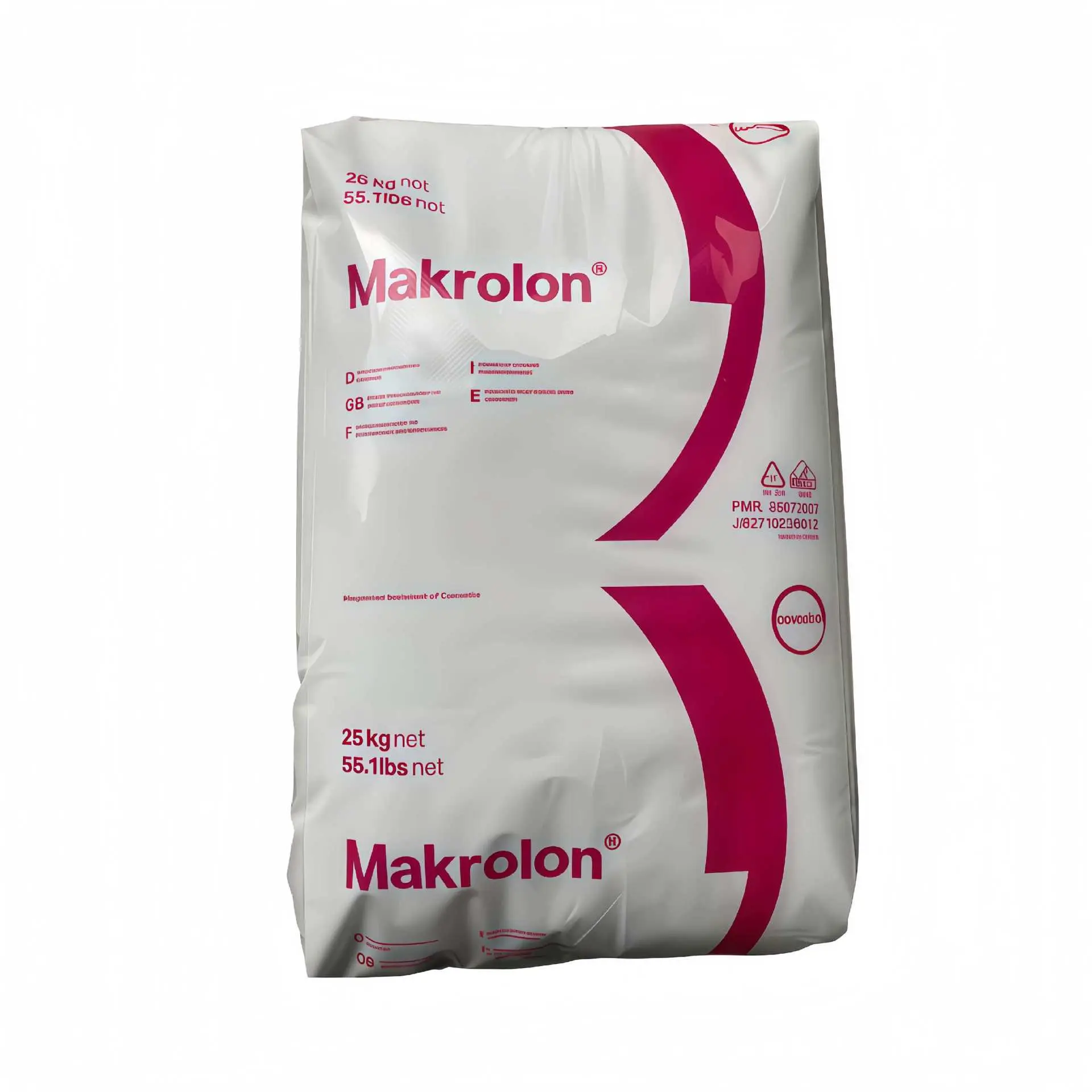
- Packaging Specifications: Standard packaging consists of 25 kg multi-layer aluminum-plastic composite bags or moisture-proof cartons, lined with anti-static polyethylene bags to ensure material dryness and cleanliness during transportation and storage. Big bags or customized packaging solutions can also be provided according to customer requirements to meet automated production line needs.
- Supply Attributes: Makrolon® 6557 is classified as a non-dangerous chemical (Non-DG), complying with standard engineering plastic transportation standards. Global sea, land, and air shipments are supported, allowing for FCL (Full Container Load) or LCL (Less than Container Load) operations without the need for special hazardous chemical transport qualifications.
- Lead Time: Backed by the global supply chain network and regional inventory layout of TaiKuo New Materials, standard orders can achieve a rapid response. Specific delivery lead times depend on Incoterms and destination port logistics conditions. For orders requiring customized drying or special testing, the lead time will be extended accordingly.
- Compliance & Documentation Support: Each product batch is accompanied by complete quality management documents, including Technical Data Sheets (TDS), Material Safety Data Sheets (MSDS/SDS), and Certificates of Analysis (COA). The product complies with RoHS directives and REACH regulations concerning restricted substances. The Comparative Tracking Index (CTI) reaches up to 225 V (Solution A), indicating excellent arc tracking resistance, making it suitable for electrical insulation components.
- ESG & Environmental Statement: As a high-performance thermoplastic material, PC possesses an exceptionally long service life and high recycling potential. We support circular economy practices and encourage customers to classify and recycle processing regrind (under strictly controlled processing parameters). Concurrently, we are committed to promoting the green manufacturing of specialty engineering plastics and reducing carbon emissions during production, aligning with global sustainable development trends.
Frequently Asked Questions (FAQs)
Q1: The flame rating of Makrolon® 6557 varies across different thicknesses; how should it be confirmed during material selection?
A: According to the specification sheet, 6557 achieves a UL 94 V-0 rating at a thickness of 3 mm, while it is V-2 at 0.75 mm and 1.5 mm thicknesses. This implies that in thin-walled applications (such as certain electronic connectors), its flame retardancy may not meet V-0 requirements. Therefore, the final wall thickness of the product must be clearly defined during selection, and the corresponding thickness Yellow Card data should be requested to ensure compliance with end-product safety certification demands.
Q2: How can common “silver streaks” and “bubbles” in PC processing be avoided when using 6557?
A: Silver streaks and bubbles are typically caused by insufficient material drying. The molecular chains of PC contain ester bonds, making them extremely sensitive to moisture. Even trace amounts of moisture at high temperatures will cause polymer hydrolysis, generating gases that form bubbles or creating silver streaks along the direction of stress. The solution is to strictly execute the pre-drying procedure at 120 °C for 4-6 hours, and utilize dehumidifying drying equipment with a dew point below -40 °C. Additionally, check that mold venting is sound to prevent gas trapping.
Q3: What are the advantages and disadvantages of 6557 compared to PMMA (Acrylic) in transparent part applications?
A: Both have comparable light transmittance (89% for 6557, typically >92% for PMMA), but the core differences lie in toughness and heat resistance. 6557 exhibits extremely high impact strength (Charpy notched impact of 70 kJ/m²), which is 10-20 times that of PMMA, and features a higher heat deflection temperature (124 °C vs. ~90-100 °C). The advantages of PMMA lie in its higher surface hardness, better scratch resistance, and lower cost. If an application involves drop risks, high-temperature environments, or requires bearing impact loads, PC (6557) is the primary choice; if only high light transmission, high surface hardness, and low cost are required, PMMA is more suitable.
Q4: Does this material require special protection when used outdoors?
A: Although Makrolon® 6557 possesses a certain degree of weather resistance, long-term exposure to ultraviolet rays and damp-heat environments can still lead to yellowing and a decline in mechanical properties. For transparent components used outdoors for extended periods (such as street lamp covers and architectural skylights), choosing Covestro’s dedicated weather-resistant grades (such as the Makrolon® UV series) or adding UV absorbers and antioxidants into the formulation is recommended. As a general-purpose grade, 6557 is not recommended for direct use in rigorous outdoor environments without prior weathering modification verification.