Product Overview & Key Features
- Manufacturer: Celanese
- Product Series: Zytel® General-Purpose Reinforced PA6 Series
- Material Category: 30% Glass Fiber Reinforced Nylon 6 (PA6+30% GF)
- Physical Appearance: Natural-colored pellets, uniform and pure with no impurities or agglomerates, possessing the typical rigid texture of glass fiber reinforced materials, suitable for high-precision injection molding processing.
Celanese Zytel® 73G30L NC010 is a modified PA6 engineering plastic reinforced with 30% glass fiber, developed and manufactured by Celanese. It belongs to the category of industrial general-purpose high-strength structural nylon materials. Through glass fiber modification, this grade significantly enhances the rigidity, tensile strength, bending performance, and creep resistance of pure nylon, while retaining the good processing fluidity and molding stability of the PA6 base material. The material features stable differential performance under dry and conditioned states, excellent low-temperature impact resistance, and a high heat deflection temperature. Combined with compliant low-volatile and low-fogging characteristics, it is adaptable to rigorous operating environments across automotive, electrical and electronic, and industrial structural component sectors. Compatible with mainstream injection molding processes and offering stable batch performance, it is a widely used high-strength reinforced nylon 6 grade in the global industrial manufacturing field.
Core Performance Advantages
- Ultra-High Rigidity and Structural Strength: The tensile modulus in the dry state can reach 10,000 MPa, the flexural modulus 8,500 MPa, and the tensile strength at break 180 MPa. It can withstand high loads over long periods, meeting the requirements for high-strength structural components.
- Outstanding Creep Resistance and Dimensional Stability: Features stable long-term creep performance, controllable mechanical performance gradients between dry and conditioned states, and a low, uniform mold shrinkage rate, which effectively reduces molding deformation and ensures the dimensional accuracy of precision parts.
- Wide-Temperature Range Impact Resistance: Maintains stable impact strength even in low-temperature environments at -40°C, with balanced mechanical performance in both dry and conditioned states, adapting to complex service conditions involving alternating high and low temperatures.
- Excellent Heat Resistance and Electrical Insulation: Possesses high temperature resistance, with a heat deflection temperature reaching 210°C under a 1.8 MPa load. It also features stable dielectric properties and a high CTI electrical rating, making it suitable for electrical insulation components.
- Low-Volatile and Low-Fogging Environmental Characteristics: Exhibits exceptional odor, organic emission, and fogging performance indicators, complying with low-VOC requirements for automotive and high-end industrial equipment, and matching stringent environmental and interior working standard requirements.
- Compatible with Mainstream Processing Technologies: Precision injection molding, insert molding, and batch structural component injection molding.
Technical Specifications
Physical Properties
| Property | Value | Unit | Test Standard |
| Dry: Density | 1.36 | g/cm³ | ISO 1183 |
| Dry: Mold Shrinkage, Transverse | 0.6 | % | ISO 294-4 |
| Dry: Mold Shrinkage, Parallel | 0.2 | % | ISO 294-4 |
| Dry: Water Absorption, Saturated 23°C, 2 mm | 6.3 | % | ISO 62 |
| Dry: Water Absorption, Equilibrium 50% RH, 23°C, 2 mm | 2.1 | % | ISO 62 |
| Viscosity Number, Dry | 140 | cm³/g | ISO 307 |
| Ball Indentation Hardness, Dry H 961/30 | 233 | MPa | ISO 2039-1 |
| Ball Indentation Hardness, Conditioned H 961/30 | 147 | MPa | ISO 2039-1 |
| Odor, Dry | 3.5 | — | VDA 270 |
| Organic Emissions, Dry | 8.5 | μgC/g | VDA 277 |
Mechanical Properties
| Property | Value | Unit | Test Standard |
| Tensile Modulus, Dry | 10000 | MPa | ISO 527-2 |
| Tensile Modulus, Conditioned | 6000 | MPa | ISO 527-2 |
| Tensile Strength at Break, Dry | 180 | MPa | ISO 527-2 |
| Tensile Strength at Break, Conditioned | 120 | MPa | ISO 527-2 |
| Tensile Strain at Break, Dry | 3.5 | % | ISO 527-2 |
| Tensile Strain at Break, Conditioned | 6 | % | ISO 527-2 |
| Tensile Creep Modulus, Conditioned 1h | 5500 | MPa | ISO 899-1 |
| Tensile Creep Modulus, Conditioned 1.0e+3 h | 4500 | MPa | ISO 899-1 |
| Flexural Modulus, Dry | 8500 | MPa | ISO 178 |
| Flexural Modulus, Conditioned | 5500 | MPa | ISO 178 |
| Flexural Strength, Dry | 240 | MPa | ISO 178 |
| Compressive Strength, Dry | 160 | MPa | ISO 604 |
| Shear Strength, Dry | 60 | MPa | ASTM D732 |
| Poisson’s Ratio, Dry | 0.34 | — | — |
| Poisson’s Ratio, Conditioned | 0.35 | — | — |
| Charpy Impact Strength, Notched, Dry -40°C | 11 | kJ/m² | ISO 179 1eA |
| Charpy Impact Strength, Notched, Dry -30°C | 11 | kJ/m² | ISO 179 1eA |
| Charpy Impact Strength, Notched, Conditioned -30°C | 21 | kJ/m² | ISO 179 1eA |
| Charpy Impact Strength, Notched, Dry 23°C | 14 | kJ/m² | ISO 179 1eA |
| Charpy Impact Strength, Notched, Conditioned 23°C | 23 | kJ/m² | ISO 179 1eA |
| Charpy Impact Strength, Unnotched, Dry -30°C | 80 | kJ/m² | ISO 179 1eU |
| Charpy Impact Strength, Unnotched, Dry 23°C | 90 | kJ/m² | ISO 179 1eU |
| Charpy Impact Strength, Unnotched, Conditioned 23°C | 100 | kJ/m² | ISO 179 1eU |
| Izod Impact Strength, Notched, Dry -40°C | 11 | kJ/m² | ISO 180/1A |
| Izod Impact Strength, Notched, Dry -30°C | 11 | kJ/m² | ISO 180/1A |
| Izod Impact Strength, Notched, Conditioned -30°C | 11 | kJ/m² | ISO 180/1A |
| Izod Impact Strength, Notched, Dry 23°C | 15 | kJ/m² | ISO 180/1A |
| Izod Impact Strength, Notched, Conditioned 23°C | 20 | kJ/m² | ISO 180/1A |
| Izod Impact Strength, Unnotched, Dry -30°C | 90 | kJ/m² | ISO 180/1U |
| Izod Impact Strength, Unnotched, Dry 23°C | 100 | kJ/m² | ISO 180/1U |
Thermal Properties
| Property | Value | Unit | Test Standard |
| Heat Deflection Temperature, Dry, Unannealed 0.45 MPa | 220 | ℃ | ISO 75-2/B |
| Heat Deflection Temperature, Dry, Unannealed 1.8 MPa | 210 | ℃ | ISO 75-2/A |
| Glass Transition Temperature (Tg), Dry 10 ℃/min | 60 | ℃ | ISO 11357-2 |
| Melting Temperature, Dry 10 ℃/min | 221 | ℃ | ISO 11357-3 |
| Dry: Linear Thermal Expansion Coefficient (CTE), Parallel | 1.40E-05 | cm/cm/℃ | ISO 11359-2 |
| Dry: Linear Thermal Expansion Coefficient (CTE), Parallel -40 – 23°C | 2.60E-05 | cm/cm/℃ | ISO 11359-2 |
| Dry: Linear Thermal Expansion Coefficient (CTE), Parallel 55 – 160°C | 1.40E-05 | cm/cm/℃ | ISO 11359-2 |
| Dry: Linear Thermal Expansion Coefficient (CTE), Transverse | 1.00E-04 | cm/cm/℃ | ISO 11359-2 |
| Dry: Linear Thermal Expansion Coefficient (CTE), Transverse -40 – 23°C | 7.50E-05 | cm/cm/℃ | ISO 11359-2 |
| Dry: Linear Thermal Expansion Coefficient (CTE), Transverse 55 – 160°C | 1.30E-04 | cm/cm/℃ | ISO 11359-2 |
| Burning Rate, Dry 1 mm, FMVSS 302 | 25 | mm/min | ISO 3795 |
| Flammability Rating, Dry 1.5 mm | HB | — | IEC 60695-11-10 / UL 94 / IEC 60695-11-20 |
| Flammability Rating, Dry 3 mm | HB | — | IEC 60695-11-10 / UL 94 / IEC 60695-11-20 |
| Oxygen Index, Dry | 21 | % | ISO 4589-2 |
| FMVSS Flammability, Dry | B | — | FMVSS 302 |
| Fogging, F, Dry | 95 | % | ISO 6452 |
| Fogging, G, Condensate, Dry | 1.00E-04 | g | ISO 6452 |
Electrical Properties
| Property | Value | Unit | Test Standard |
| Volume Resistivity, Dry | 1.00E+10 | ohms·cm | IEC 62631-3-1 |
| Dielectric Constant, Dry 100 Hz | 3.8 | — | IEC 62631-2-1 |
| Dielectric Loss Factor (Dissipation Factor), Dry 100 Hz | 0.022 | — | IEC 62631-2-1 |
| Dry: CTI | PLC 0 600 | V | UL 746, IEC 60112 |
Notice: The technical specifications for Celanese Zytel® 73G30L NC010 PA6 provided herein are compiled from data published by [Manufacturer] or certified third-party testing laboratories. While prepared with professional diligence, these values serve as reference guidelines rather than absolute performance guarantees. Because molding and processing conditions vary significantly across operational environments, we recommend performing trial runs with Zytel® 73G30L NC010 PA6 under your actual manufacturing conditions prior to final material selection and mass production.
Applications & Processing Guidelines
Typical Application Scenarios
- Automotive Industrial Components: Relying on low fogging, low volatility, excellent temperature resistance, and low-temperature impact resistance, suitable for automotive interior structural parts, small chassis load-bearing accessories, electrical fixing brackets, and automotive functional plastic parts, meeting vehicle VOC and FMVSS flammability standard requirements.
- Electrical and Electronic Structural Parts: Benefiting from a high CTI rating of 600V, stable dielectric performance, and excellent heat resistance, it can be used to produce electrical insulation brackets, connector housings, household appliance load-bearing structural parts, and low-voltage electrical accessories, accommodating conventional electrical protection conditions.
- Industrial Precision Structural Parts: Based on low shrinkage, high rigidity, and long-term creep resistance, used for mechanical equipment transmission accessories, fixing bases, wear-resistant structural parts, and precision injection-molded components, resisting deformation under long-term loads to ensure operational stability of equipment.
- General High-Strength Engineering Accessories: Suitable for various industrial general-purpose plastic structural parts requiring high strength, high/low temperature resistance, and impact resistance, replacing partial metal materials to achieve lightweight design and cost optimization.
Processing Practical Guidelines
- Raw Material Drying Treatment: PA6 materials are hygroscopic; direct processing easily leads to silvery streaks, bubbles, dimensional deviations, and mechanical performance degradation. Strict drying treatment is recommended prior to processing to control the moisture content of the raw material within an extremely low range, preventing defects caused by moisture absorption and ensuring stable performance in both dry and conditioned states.
- Molding Temperature Control: This grade has a melting temperature of 221°C; the barrel temperature for injection molding is recommended to be adapted to the 220–250°C range, fine-tuning parameters based on part thickness and mold structure. Stable regulation of mold temperature can effectively reduce internal stress, improve uneven glass fiber orientation, and enhance the dimensional stability of the finished product.
- Process Parameter Adaptation: The mechanical performance differences between dry and conditioned states of the material are significant. Trial production requires debugging the process according to the end-use environment (dry/conditioned conditions). For high-precision products, the low shrinkage characteristics of the material can be utilized to optimize packing and cooling parameters, reducing molding deformation.
- Pre-production Testing: Glass fiber reinforced nylon is relatively sensitive to processing equipment, shear rates, and cooling conditions. Different process parameters will affect product rigidity, impact strength, and appearance. Small-scale trials must be completed prior to official mass production to verify all performance indicators of the finished product.
Logistics, Packaging & Compliance
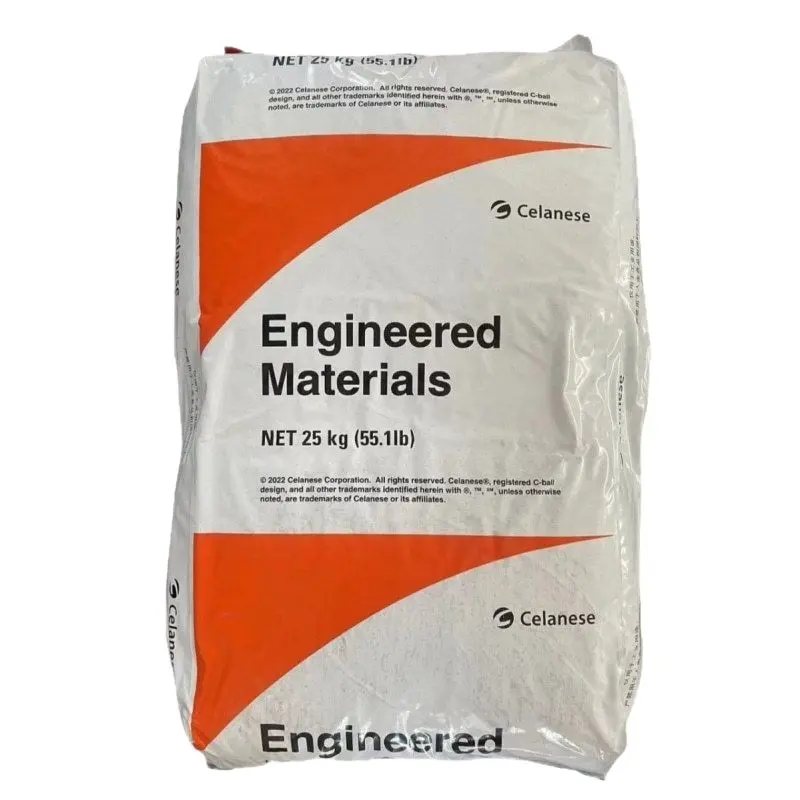
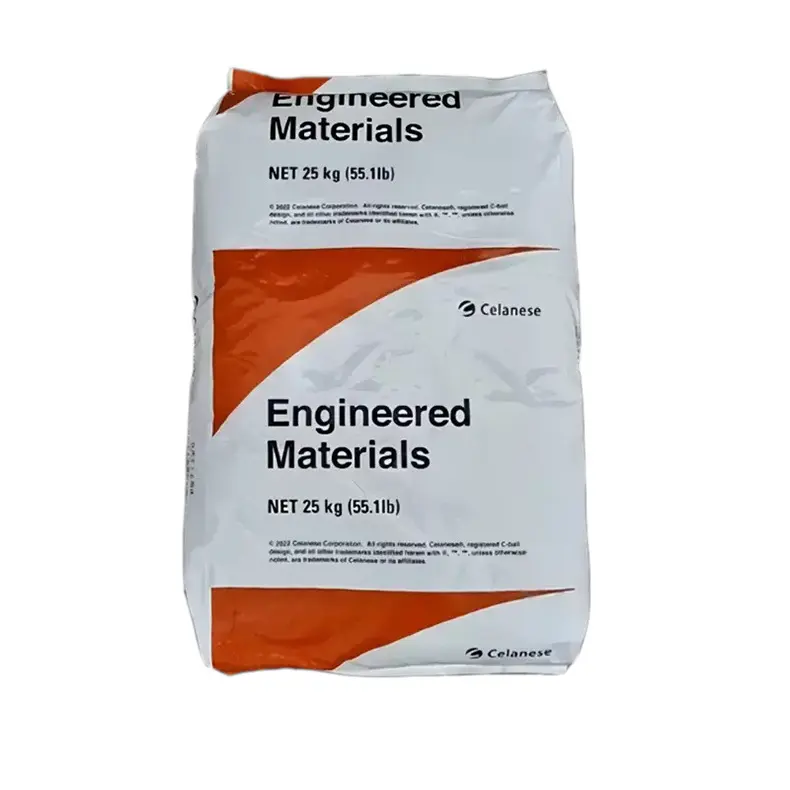
- Packaging Specifications: Original factory standard 25kg moisture-proof sealed bags with a built-in moisture barrier layer, effectively isolating air and moisture, preventing raw material from dampening and deteriorating, and ensuring material batch stability.
- Hazardous Chemical Attribute: This product belongs to general engineering plastic pellets and is not classified as a hazardous chemical. There are no special storage and transportation restrictions, and it can be normally stored and transported as common chemical raw materials.
- Delivery Lead Time: Regular spot orders can be quickly dispatched and delivered; large-batch orders can be arranged through negotiation, supporting long-term stable bulk supply to accommodate continuous procurement needs of overseas customers.
- Logistics and Transportation: Supports land transportation, full container load (FCL), and less than container load (LCL) ocean shipping, catering to foreign trade bulk export scenarios and matching standard shipping coordination.
- Compliance Documentation Support: Original factory TDS, MSDS, and COA quality inspection reports can be provided along with the batch. Document data is consistent with official standards, satisfying customer factory audits, overseas customs clearance, and product testing declaration requirements.
- Environmental Compliance Certification: The material complies with REACH and RoHS international environmental regulatory standards, featuring low VOC, low fogging, and low organic emissions, adapting to strict environmental market access requirements overseas for automotive and high-end electronics.
- ESG Environmental Statement: It is a recyclable thermoplastic engineering plastic; industrial scrap and defective products can be recycled and reprocessed compliantly. Production and storage/transportation processes follow environmental regulatory standards to reduce pollutant emissions, aligning with the green manufacturing ESG philosophy.
Frequently Asked Questions (FAQs)
Q1: Why must Zytel® 73G30L NC010 PA6 be dried before processing? What are the effects if it is not dried?
A: The PA6 base material possesses strong hygroscopicity, and the mechanical properties and dimensional accuracy of this grade undergo distinct changes after absorbing moisture. Direct injection molding of undried raw material easily results in silvery streaks, bubbles, and surface defects, while also causing decreases in tensile and impact strength as well as abnormal molding shrinkage, leading to dimensional deviations in precision parts. Strict drying stabilizes the raw material moisture content, ensuring that the mechanical performance and appearance quality of the finished product meet standards.
Q2: What are the core selection differences between this 30% glass fiber reinforced PA6 and regular unreinforced PA6?
A: Compared to pure PA6, 73G30L is modified with 30% glass fiber, resulting in substantially enhanced rigidity, tensile strength, bending performance, creep resistance, and heat resistance, along with superior dimensional stability to withstand high-load conditions. Pure PA6 offers better toughness and appearance, but its rigidity and temperature resistance are weaker. This grade is more suitable for industrial structural components requiring high structural strength, load-bearing capacity, and dimensional accuracy, and is not suitable for high-transparency exterior part scenarios.
Q3: Is this material suitable for low-temperature operating environments?
A: It possesses favorable low-temperature performance across a wide temperature range, maintaining stable notched impact strength without easily fracturing even in low-temperature environments at -40°C. It can adapt to complex service conditions such as alternating high and low temperatures, outdoor low temperatures, and automotive low temperatures, making it a high-strength nylon structural material suited for low-temperature environments.
Q4: Does the product possess complete compliance qualifications for overseas export?
A: This original Celanese material complies with global environmental regulations such as RoHS and REACH, while also meeting FMVSS 302 automotive flame retardancy and VDA series low-volatility and low-fogging standards. We can provide a full set of batch-specific official TDS, MSDS, and COA documents, which can be directly used for overseas customs clearance, customer factory audits, and product certification declarations, satisfying market access requirements across multiple global regions.