Product Overview & Key Features
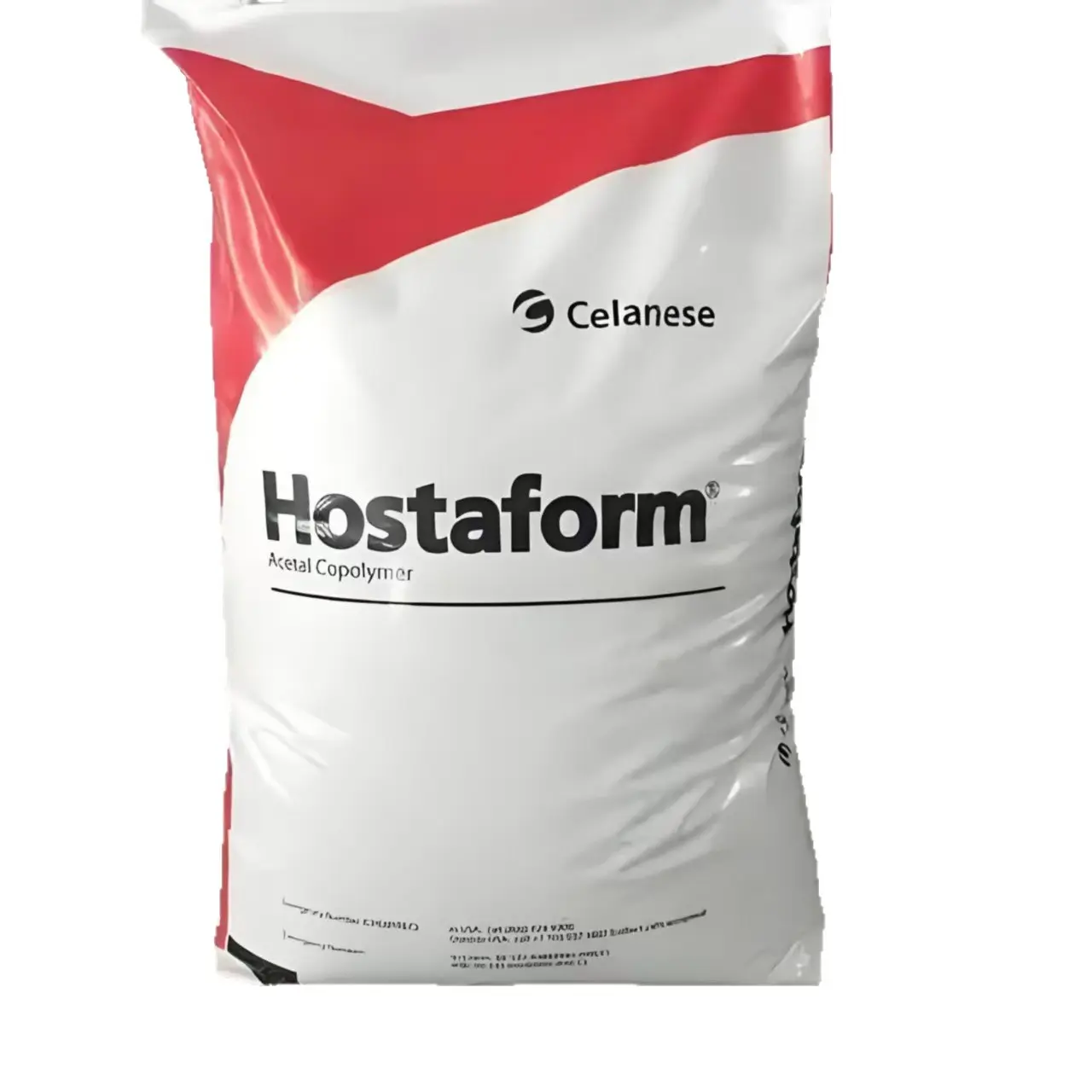
Hostaform® C9021 is a copolymer POM (polyoxymethylene) injection molding grade produced by Celanese Corporation. The material appears as opaque, milky-white pellets and is a high-rigidity, highly crystalline engineering thermoplastic with a melt mass-flow rate (MFR) of 8.0 cm³/10 min (190 °C, 2.16 kg). C9021 features the excellent comprehensive performance typical of copolymer POM: a tensile strength of up to 64.0 MPa, a heat deflection temperature (1.8 MPa) of 104 °C, and outstanding fatigue resistance and wear resistance. Its regular molecular structure and high crystallinity impart good organic solvent resistance and dimensional stability to the material. This grade is specifically designed for precision injection molding processes, and is widely used in engineering components that demand strict requirements for strength, wear resistance, and long-term dimensional stability across the automotive, electrical and electronics, precision machinery, and consumer goods sectors.
Technical Specifications
Physical Properties
| Property | Test Value | Test Unit | Test Standard |
| Density | 1.41 | g/cm³ | ISO 1183 |
| Melt Volume-Flow Rate (190 °C, 2.16 kg) | 8 | cm³/10 min | ISO 1133 |
| Mold Shrinkage, Normal | 1.9 | % | ISO 294-4 |
| Mold Shrinkage, Parallel | 2 | % | ISO 294-4 |
| Water Absorption, Saturated (23 °C) | 0.65 | % | ISO 62 |
| Water Absorption, Equilibrium (50% RH, 23 °C) | 0.2 | % | ISO 62 |
| Ball Indentation Hardness (30s) | 144 | MPa | ISO 2039-1 |
Mechanical Properties
| Property | Test Value | Test Unit | Test Standard |
| Tensile Modulus | 2850 | MPa | ISO 527-2/1A |
| Tensile Stress, Yield | 64 | MPa | ISO 527-2/1A/50 |
| Tensile Strain, Yield | 9 | % | ISO 527-2/1A/50 |
| Tensile Strain, Nominal Break | 30 | % | ISO 527-2/1A/50 |
| Tensile Creep Modulus (1h) | 2500 | MPa | ISO 899-1 |
| Tensile Creep Modulus (1.0e+3 h) | 1300 | MPa | ISO 899-1 |
| Flexural Modulus (23 °C) | 2700 | MPa | ISO 178 |
| Compressive Stress (1% strain) | 24 | MPa | ISO 604 |
| Compressive Stress (6% Strain) | 86 | MPa | ISO 604 |
| Charpy Notched Impact Strength (-30 °C) | 6 | kJ/m² | ISO 179 1eA |
| Charpy Notched Impact Strength (23 °C) | 6.5 | kJ/m² | ISO 179 1eA |
| Charpy Unnotched Impact Strength (-30 °C) | 220 | kJ/m² | ISO 179 1eU |
| Charpy Unnotched Impact Strength, Partial Break (23 °C) | 220 | kJ/m² | ISO 179 1eU |
Thermal Properties
| Property | Test Value | Test Unit | Test Standard |
| Heat Deflection Temperature, Unannealed (0.45 MPa) | 160 | °C | ISO 75-2/B |
| Heat Deflection Temperature, Unannealed (1.8 MPa) | 104 | °C | ISO 75-2/A |
| Vicat Softening Point | 150 | °C | ISO 306/B50 |
| Melting Temperature (10 °C/min) | 166 | °C | ISO 11357-3 |
| Coefficient of Linear Thermal Expansion (CTE), Parallel | 1.10E-04 | cm/cm/°C | ISO 11359-2 |
| Coefficient of Linear Thermal Expansion (CTE), Normal | 1.10E-04 | cm/cm/°C | ISO 11359-2 |
| Effective Thermal Diffusivity | 4.85E-08 | m²/s | Internal Method |
| Flammability Rating (1.5 mm) | HB | — | UL 94 |
| Flammability Rating (3 mm) | HB | — | UL 94 |
| Specific Heat Capacity | 2210 | J/kg/°C | — |
| Melt Thermal Conductivity | 0.16 | W/m·K | Internal Method |
Electrical Properties
| Property | Test Value | Test Unit | Test Standard |
| Surface Resistivity | 1.00E+14 | ohms | IEC 60093 |
| Volume Resistivity | 1.00E+14 | ohms·cm | IEC 60093 |
| Electric Strength | 35 | kV/mm | IEC 60243-1 |
| Relative Permittivity (100 Hz) | 4 | — | IEC 60250 |
| Relative Permittivity (1.0e+6 Hz) | 4 | — | IEC 60250 |
| Dissipation Factor (100 Hz) | 2.00E-03 | — | IEC 60250 |
| Dissipation Factor (1.0e+6 Hz) | 5.00E-03 | — | IEC 60250 |
| Comparative Tracking Index (CTI) | 600 | V | IEC 60112 |
Other Properties
| Property | Test Value | Test Unit | Test Standard |
| Melt Density | 1.2 | g/cm³ | Internal Method |
| Ejection Temperature | 140 | °C | — |
Disclaimer: The technical specifications for Celanese Hostaform® C9021 presented herein are derived from data issued by Celanese Corporation or certified third-party testing institutions. While we have made every effort to ensure the accuracy of the information provided, we assume no liability for any consequences arising from the use of C9021 based on these data. Given the variables involved in processing conditions, we strongly recommend conducting thorough trials of C9021 under your specific operational environment prior to final material selection.
Applications & Processing Guidelines
Typical Applications
Backed by its high rigidity, excellent fatigue resistance, and wear resistance, Hostaform® C9021 is widely utilized in engineering components demanding high dimensional accuracy and mechanical strength:
- Automotive Industry: Fuel system components (such as fuel tank floats, pump housings), door lock mechanisms, window regulator assemblies, seatbelt buckles, wiper linkages, and interior clips.
- Electronics & Electrical: Relay housings, switch buttons, connector terminals, coil formers, timer gears, and internal drive components for home appliances.
- Precision Machinery: Printer/copier gears, bearing cages, cams, sliding blocks, pump impellers, and atomizer nozzles.
- Consumer Goods & Industry: Zipper teeth, lighter structural parts, toy gears, sanitary shower knobs, and various industrial fasteners.
Processing Guidelines
- Drying Pretreatment: POM possesses a certain degree of hygroscopicity. Although the equilibrium water absorption of C9021 is only 0.20%, drying prior to processing is recommended to prevent hydrolytic degradation and improve surface gloss. It is recommended to process in a hot-air circulating dryer at 80–90 °C for 2–4 hours to ensure a moisture content below 0.1%.
- Injection Molding: Melt temperature is typically controlled between 190–210 °C. Mold temperature exerts a significant influence on the crystallinity and properties of POM; a mold temperature of 80–100 °C is recommended to achieve optimal mechanical performance, dimensional stability, and surface finish. The injection molding machine should feature a precise temperature control system to avoid material decomposition caused by local overheating (POM decomposition generates irritating formaldehyde gas).
- Shrinkage and Post-Processing: C9021 exhibits relatively high mold shrinkage (2.0% parallel, 1.9% normal), which must be fully accounted for during mold design. For high-precision parts, annealing treatment at 120–140 °C is recommended to eliminate internal stress and further enhance dimensional stability. The ejection temperature is typically set around 140 °C.
Logistics, Packaging & Compliance
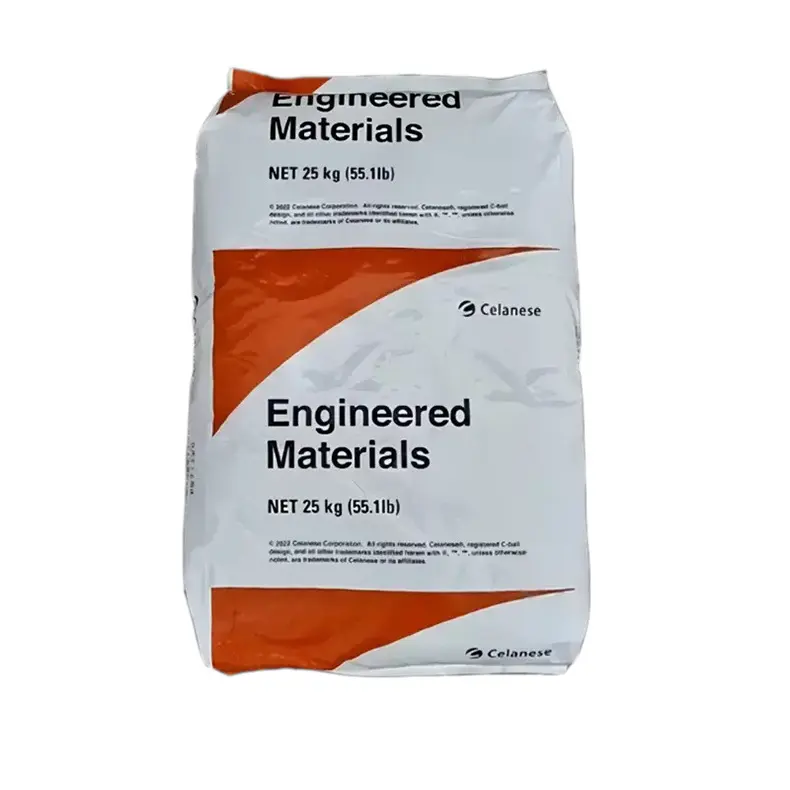
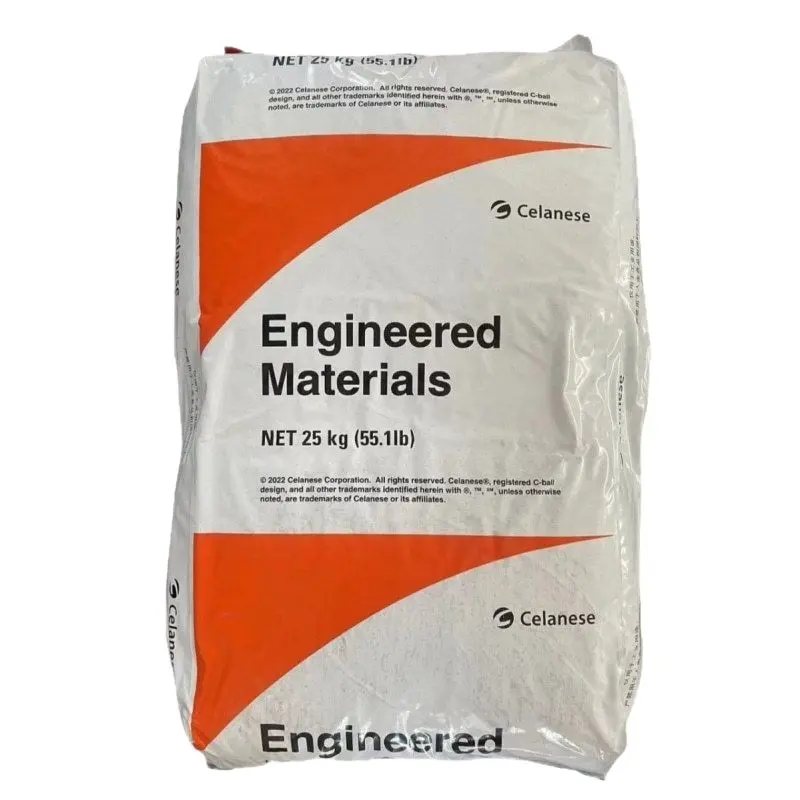
- Packaging Specifications: Standard packaging consists of 25 kg multi-layer composite paper bags or moisture-proof cartons lined with a polyethylene film, offering excellent moisture resistance and damage protection. Big bags or customized packaging solutions are also available upon customer request to meet automated production line requirements.
- Supply Attribute: Hostaform® C9021 is classified as a non-hazardous chemical (Non-DG), complying with standard engineering plastics transportation standards. It supports global sea, land, and air freight with FCL (Full Container Load) or LCL (Less than Container Load) operations, requiring no special hazardous material transport qualifications.
- Delivery Lead Time: Backed by the global supply chain network and regional inventory layout of TaiKuo New Materials, standard orders achieve rapid responses. Specific delivery lead times depend on Incoterms and destination port logistics conditions. For orders requiring customized baking or special testing, the lead time will be extended accordingly.
- Compliance and Documentation Support: Each batch of products is accompanied by complete quality management documentation, including Technical Data Sheets (TDS), Safety Data Sheets (MSDS/SDS), and Certificates of Analysis (COA). The product complies with RoHS directive and REACH regulation requirements regarding restricted substances. The Comparative Tracking Index (CTI) reaches up to 600 V, indicating outstanding arc tracking resistance suitable for electrical insulation components.
- ESG and Environmental Statement: As a thermoplastic engineering plastic, POM features physical recyclability and reusability. We support circular economy practices, encouraging customers to sort, recycle, and reprocess regrind and unqualified parts during the processing stage. Meanwhile, we are dedicated to driving the green manufacturing of specialty engineering plastics and reducing carbon emissions during production, aligning with global sustainable development trends.
Frequently Asked Questions (FAQs)
Q1: What are the performance differences between Hostaform® C9021 as a copolymer POM and homopolymer POM?
A1: Copolymer POM (such as C9021) generally offers superior long-term thermal stability and chemical hydrolysis resistance (better tolerance to hot water and alkaline environments), and is less prone to severe degradation during processing due to minor overheating. Compared to copolymer POM, homopolymer POM exhibits slightly higher crystallinity, resulting in marginally higher hardness, rigidity, and tensile strength; however, copolymer POM holds the advantage in thermal stability, alkali resistance, and hot-water resistance. As a classic copolymer POM, the Hostaform® series is exceptionally well-suited for precision parts that must endure long-term mechanical friction while facing complex operating environments.
Q2: Why is temperature control particularly emphasized when processing POM? What are the hazards after decomposition?
A2: POM possesses a relatively narrow thermal stability window, especially under conditions involving high temperatures and oxygen. If the melt temperature exceeds 220–230 °C or the residence time is excessively long, the material will undergo thermal decomposition and release formaldehyde gas. This not only leads to product discoloration, blistering, and degraded mechanical properties, but the emitted formaldehyde gas also carries an irritating odor, posing hazards to operator health and equipment. Therefore, processing temperatures must be strictly controlled to ensure no dead zones in the equipment and prevent material retention.
Q3: Given the material’s relatively high mold shrinkage (~2.0%), what factors should be noted during mold design?
A3: POM is a highly crystalline material whose crystallization process is accompanied by significant volumetric shrinkage. The shrinkage rate of C9021 is approximately 2.0%, which is significantly higher than that of amorphous plastics (such as PS, PC). During mold design, sufficient shrinkage allowance must be reserved based on the part’s geometry and flow direction. For high-precision or complex structural parts, mold flow analysis (Moldflow) is recommended, alongside the consideration of appropriate mold compensation coefficients. Additionally, the shrinkage of POM exhibits anisotropy, with slight differences between the parallel and normal flow directions (2.0% vs 1.9%), which must be distinguished during mold design.