Product Overview & Key Features
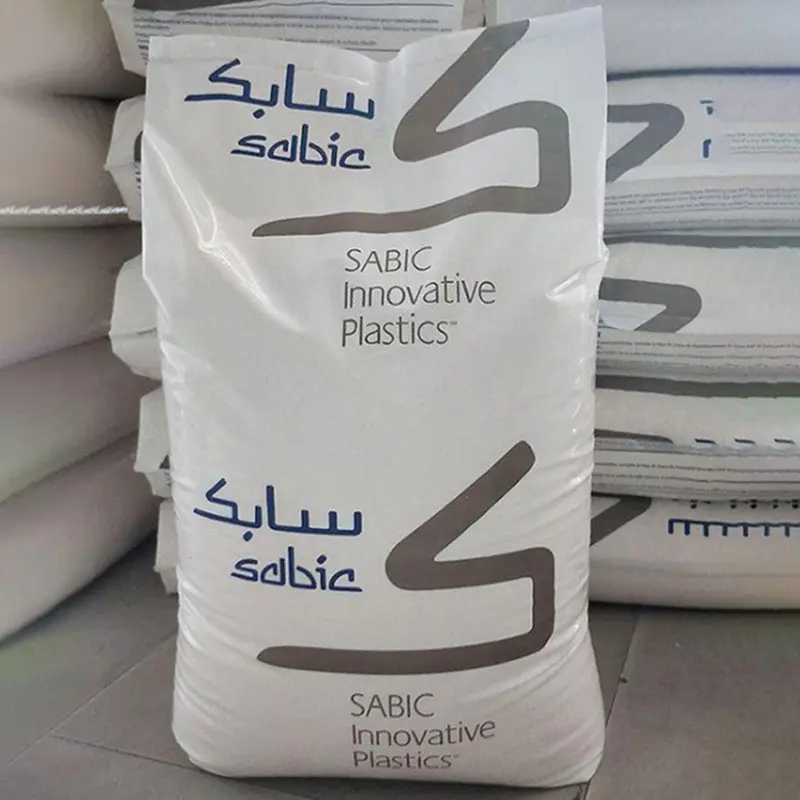
SABIC C2950 PC/ABS is a high-performance engineering plastic alloy manufactured by SABIC Innovative Plastics. This material combines the high mechanical strength and heat resistance of polycarbonate (PC) with the favorable processing fluidity of acrylonitrile-butadiene-styrene (ABS).
- Core Performance Advantages: Features high impact strength (such as a notched Izod impact strength of 534 J/m at 23 °C) and outstanding mechanical load-bearing capacity (tensile yield strength of 62.0 MPa, flexural strength of 102 MPa). Additionally, this grade exhibits excellent dimensional stability, a low coefficient of thermal expansion, outstanding flame retardancy (achieving V-0 rating at 1.49 mm thickness and 5VB at 2.48 mm), and good electrical insulation properties.
- Mainstream Processing Techniques: Suitable for conventional injection molding processes. Leveraging a favorable melt mass-flow rate (10 g/10min at 2.6 kg, 260 °C), it can smoothly fill complex or unevenly walled industrial and consumer precision molds.
Technical Specifications
Physical Properties
| Physical Properties | Test Value | Test Unit | Test Standard |
| Density | 1.18 | g/cm³ | ASTM D792 |
| Density | 1.22 | g/cm³ | ASTM D792 |
| Water Absorption (24 h, 23 °C) | 0.1 | % | ASTM D570 |
| Equilibrium Moisture Absorption (24 h, 23 °C) | 0.4 | % | ASTM D570 |
| Mold Shrinkage, Flow (3.2 mm) | 0.4-0.6 | % | — |
| Mold Shrinkage, Transverse (3.2 mm) | 0.4-0.6 | % | — |
| Melt Mass-Flow Rate (2.16 kg, 260 °C) | 10 | g/10min | ASTM D1238 |
| Rockwell Hardness, R-Scale | 123 | — | ASTM D785 |
Mechanical Properties
| Mechanical Properties | Test Value | Test Unit | Test Standard |
| Tensile Stress, Yield | 62 | MPa | ASTM D638 |
| Tensile Strain, Break | 40 | % | ASTM D638 |
| Flexural Strength, Yield | 102 | MPa | ASTM D790 |
| Flexural Modulus | 2650 | MPa | ASTM D790 |
| Izod Impact Strength, Notched (23 °C) | 534 | J/m | ASTM D256 |
| Izod Impact Strength, Notched (-30 °C) | 160 | J/m | ASTM D256 |
| Instrumented Impact Total Energy (-30 °C) | 54 | J | ASTM D3763 |
| Instrumented Impact Total Energy (23 °C) | 61 | J | ASTM D3763 |
Thermal Properties
| Thermal Properties | Test Value | Test Unit | Test Standard |
| Coefficient of Linear Thermal Expansion (CTE), Flow (-30 – 30 °C) | 72 | μm/m−∘C | ASTM D696 |
| Coefficient of Linear Thermal Expansion (CTE), Transverse (-30 – 30 °C) | 72 | μm/m−∘C | ASTM D696 |
| Thermal Conductivity | 0.2 | W/m-K | ASTM C177 |
| Heat Deflection Temperature (6.4 mm, 0.46 MPa) | 104 | °C | ASTM D648 |
| Heat Deflection Temperature (3.2 mm, 1.8 MPa) | 90 | °C | ASTM D648 |
| Heat Deflection Temperature (6.4 mm, 1.8 MPa) | 95 | °C | ASTM D648 |
| Vicat Softening Temperature | 112 | °C | ASTM D1525 |
| Relative Thermal Index (RTI), Electrical / Impact / Tensile | 85 | °C | UL 746B |
| Flammability Rating (1.49 mm) | V-0 | — | UL 94 |
| Flammability Rating (2.48 mm) | 5VB | — | UL 94 |
| Oxygen Index | 32 | % | ASTM D2863 |
| Hot Wire Ignition (HWI) | 60-120 | sec | UL 746A |
Electrical Properties
| Electrical Properties | Test Value | Test Unit | Test Standard |
| Volume Resistivity | 1.00E+17 | ohms · cm | ASTM D257 |
| Surface Resistivity | ≥1.00e+16 | Ohms | ASTM D257 |
| Dielectric Constant (50 – 60 Hz) | 3 | — | ASTM D150 |
| Dielectric Constant (100 Hz) | 3 | — | ASTM D150 |
| Dielectric Strength (3.2 mm) | 19.4 | kV/mm | ASTM D149 |
| Dissipation Factor (100 Hz) | 0.0049 | — | ASTM D150 |
| Dissipation Factor (50 – 60 Hz) | 0.005 | — | ASTM D150 |
| Arc Resistance | 60-120 | sec | ASTM D495 |
| Comparative Tracking Index (CTI) | 400-600 | V | UL 746A |
| High Voltage Arc Tracking Rate (HVTR) | 25.4-80.0 | mm/min | UL 746A |
| High-Current Arc Ignition (HAI) | ≥120 | arcs | UL 746A |
Disclaimer: The technical specifications for SABIC C2950 PC/ABS presented herein are derived from data issued by SABIC or certified third-party testing institutions. While we have made every effort to ensure the accuracy of the information provided, we assume no liability for any consequences arising from the use of C2950 based on these data. Given the variables involved in processing conditions, we strongly recommend conducting thorough trials of C2950 under your specific operational environment prior to final material selection.
Applications & Processing Guidelines
- Recommended Applications: Widely applied in electrical and electronic equipment housings, IT and telecommunication device components, automotive interior structural parts, and high-demand industrial enclosures due to its V-0 and 5VB high flame-retardant characteristics, superior electrical insulation, and excellent impact and mechanical strength.
- Processing Guidelines:
- Melt Flow and Temperature: This grade has a melt mass-flow rate of 10 g/10min at 260 °C / 2.16 kg. Barrel and nozzle temperatures must be strictly controlled during injection molding to avoid local overheating leading to material property degradation.
- Drying Treatment: PC/ABS alloys are sensitive to moisture. To prevent surface silver streaks, bubbles, or mechanical property reduction during processing, thorough drying is mandatory prior to molding (it is recommended to use a dehumidifying dryer and bake at 80–90 °C for 3–4 hours, keeping the moisture content below 0.02%).
Logistics, Packaging & Compliance
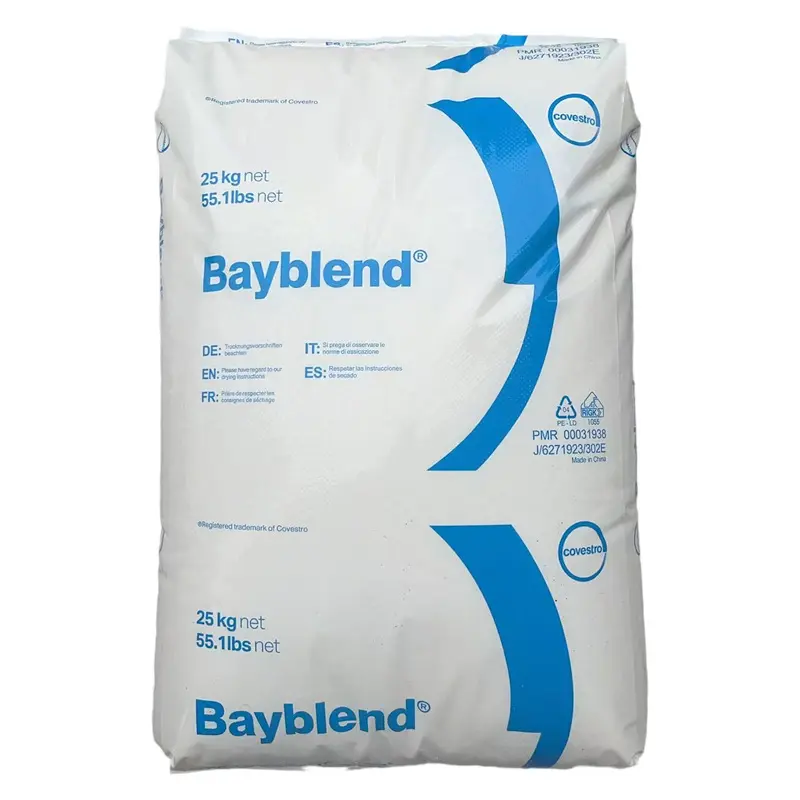
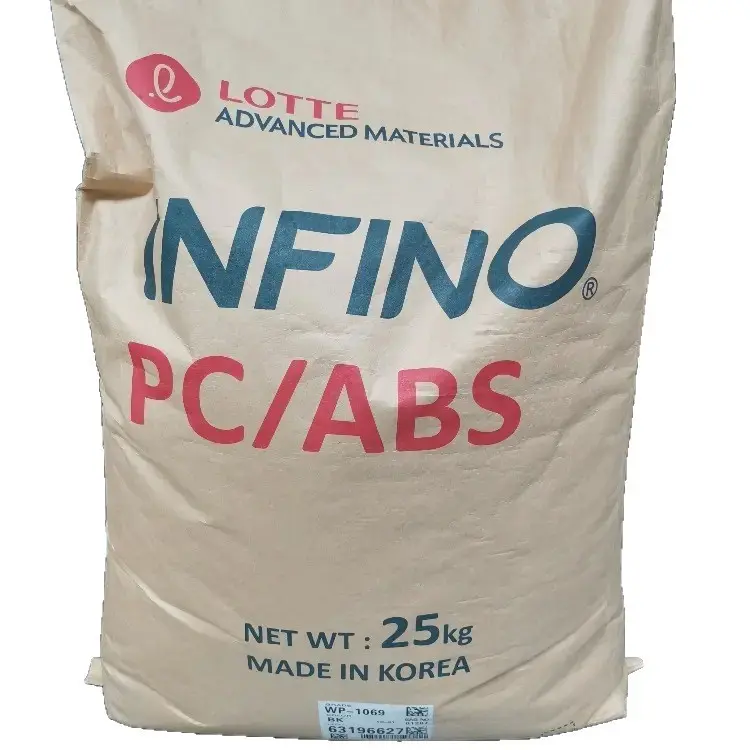
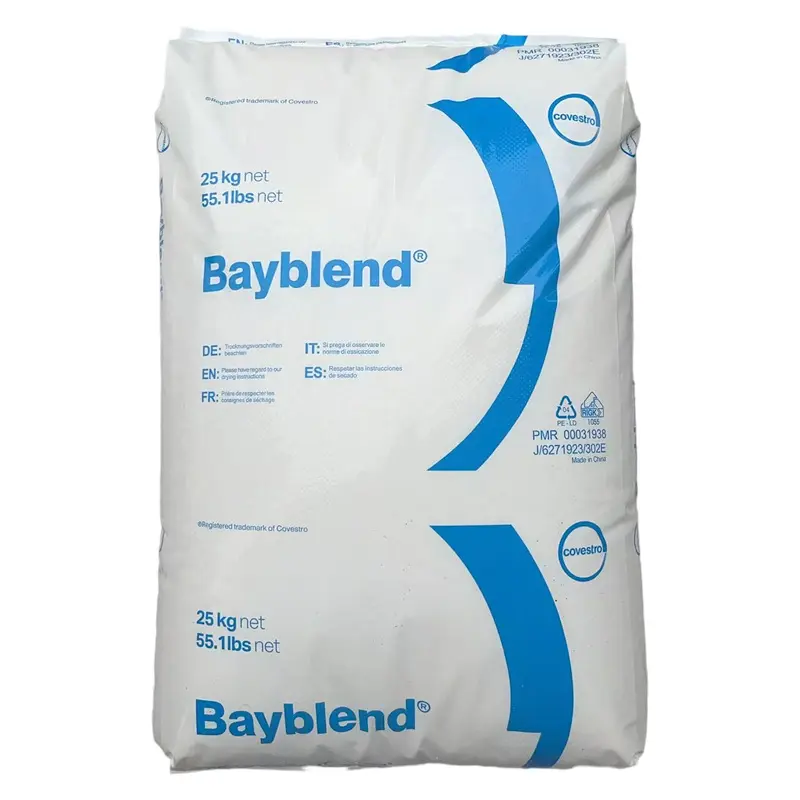
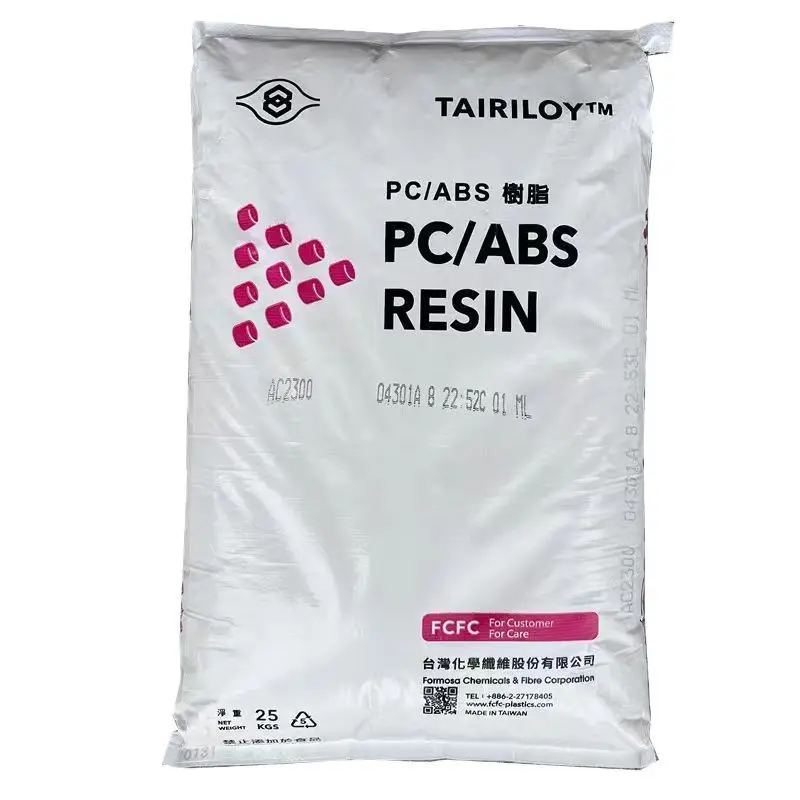
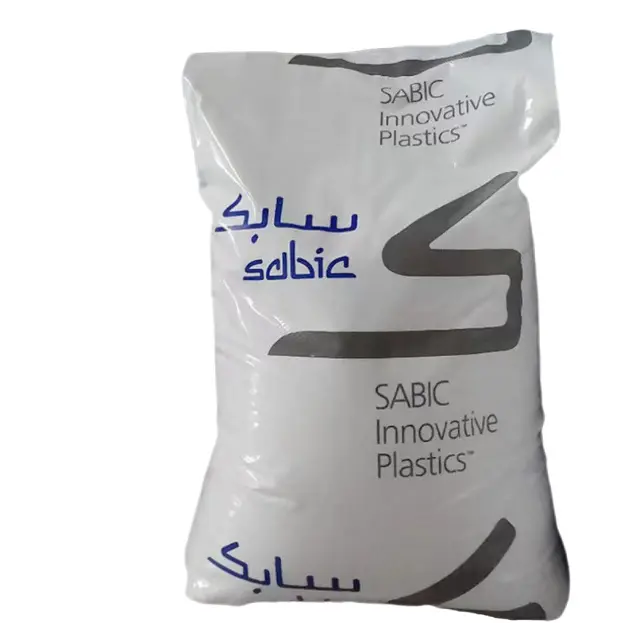
- Packaging Specifications: Packed in industrial-grade 25kg moisture-proof composite paper bags or aluminum foil-lined moisture-proof bags to effectively prevent moisture absorption during transit and storage.
- Hazardous Materials Attribute: Classified as a non-hazardous chemical, transported as general industrial plastic raw material via ocean, land, and air.
- Delivery Lead Time: Standard spot orders are arranged for shipment within 3-7 business days upon payment confirmation; custom or bulk futures orders are confirmed separately based on production schedules.
- Consolidation Instructions: Full Container Load (FCL) and Less than Container Load (LCL) ocean shipping are supported, and materials can be flexibly combined with other engineering plastics from our company (such as PC, ABS, etc.) to optimize logistics costs.
- Compliance & Environmental Protection: Manufacturer’s Technical Data Sheet (TDS), Material Safety Data Sheet (MSDS), and Certificate of Analysis (COA) can be provided along with the shipment. The product complies with EU RoHS directives and REACH regulations, satisfying the environmental and ESG compliance standards of major global markets.
Frequently Asked Questions (FAQs)
Q1: Must SABIC C2950 undergo strict drying treatment prior to injection molding?
A: Yes. Since PC/ABS has a moisture absorption tendency (e.g., equilibrium moisture absorption up to 0.40%), if moisture is not completely removed, high-temperature injection molding can easily cause silver streaks and bubbles on the product surface, leading to molecular weight degradation and reduced impact strength. Therefore, strictly executing the preceding dehumidification and drying procedure is recommended.
Q2: What core certifications does this grade have regarding flame retardancy?
A: SABIC C2950 exhibits exceptional flame-retardant performance, achieving a UL94 V-0 rating at a thickness of 1.49 mm and a 5VB rating at 2.48 mm, making it ideally suited for electrical and electronic and industrial housing applications with strict fire safety requirements.
Q3: During actual injection molding, how can yield be optimized through temperature and fluidity parameters?
A: This grade features a melt mass-flow rate of 10 g/10min at 260 °C / 2.16 kg. It is recommended to control the barrel temperature within a reasonable range (typically transitioning smoothly between 240 °C and 280 °C) and appropriately adjust injection pressure and speed in conjunction with the mold structure. This prevents material decomposition caused by local overheating or excessive shear rates, thereby effectively ensuring the surface smoothness and dimensional tolerances of complex thin-walled structural parts.