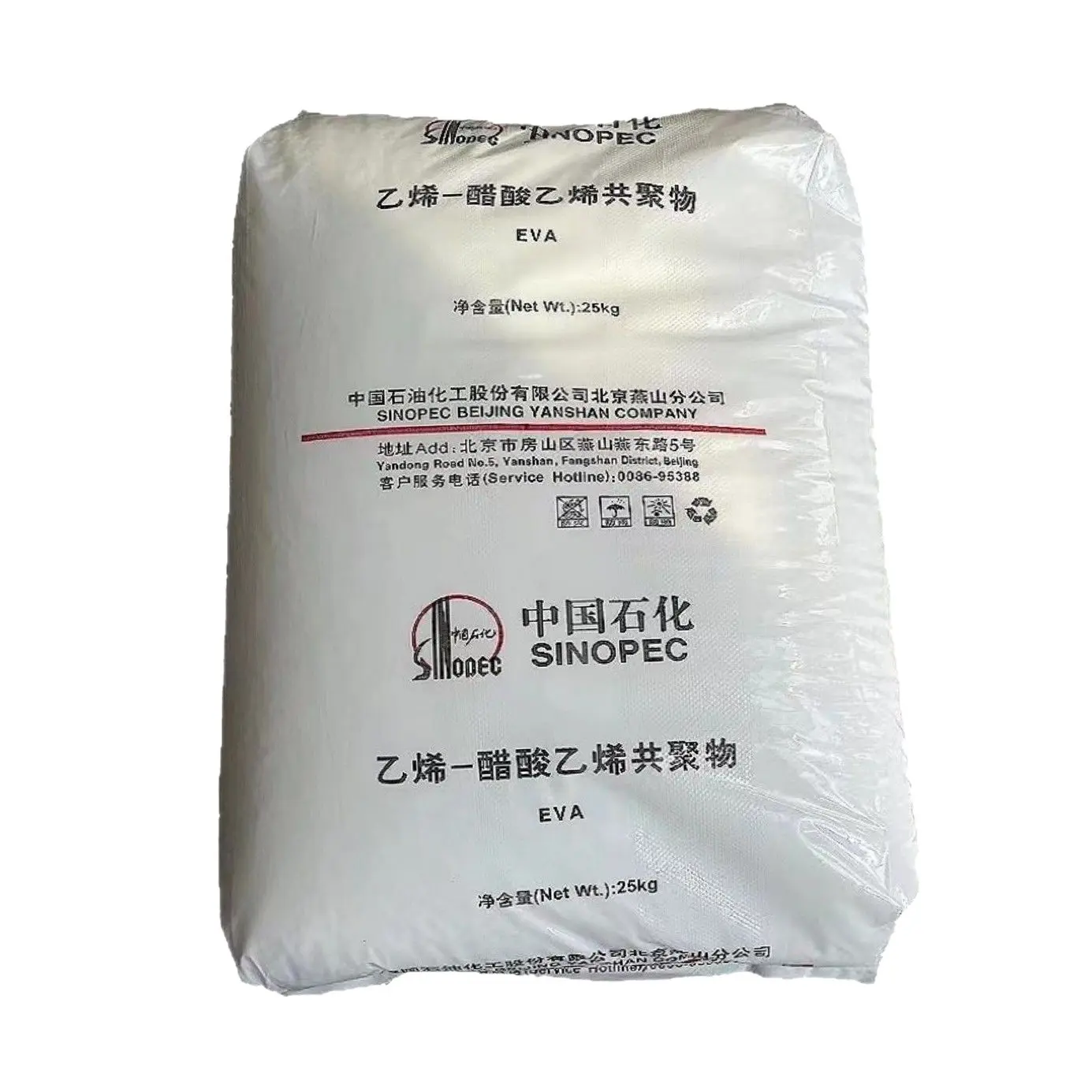
Product Overview & Key Features
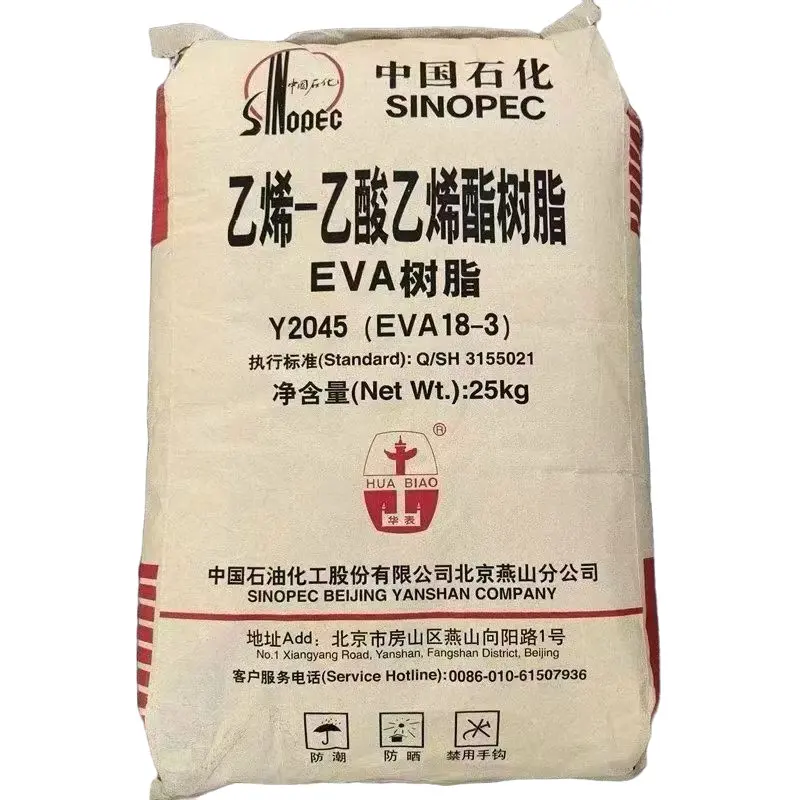
Sinopec Yanshan Petrochemical 18J3 is a high-quality ethylene-vinyl acetate (EVA) copolymer resin manufactured by Yanshan Petrochemical, a subsidiary of China Petroleum & Chemical Corporation (Sinopec). Physically, the product appears as uniform, clean cylindrical pellets. With a vinyl acetate (VA) content of approximately 18%, this grade exhibits excellent flexibility, good low-temperature performance, and outstanding environmental stress crack resistance (ESCR).
As a mature industrial-grade EVA brand from Sinopec, 18J3 features a moderate melt flow index (2.8 g/10min) and exceptional rheological processability, making it widely adaptable for conventional extrusion, injection molding, and foaming processes. While retaining the favorable processing characteristics of polyethylene, it significantly enhances product elasticity and surface smoothness, serving as a trusted base raw material for global B2B industrial manufacturing, foam products, and footwear accessories.
Technical Specifications
Physical Properties
| Physical Properties | Test Value | Test Unit | Test Standard |
| Melt Flow Rate (MFR)(190 °C, 2.16 kg) | 2.8 | g/10min | GB/T 3682-2000 |
| Vinyl Acetate (VA) Content | 18 | % | GB/T 1591-1994 |
| Density | 0.939 | g/cm3 | GB/T 1033 |
| Shore Hardness D(Instant reading 0) | 33 | — | GB/T 2411-2008 |
Mechanical Properties
| Mechanical Properties | Test Value | Test Unit | Test Standard |
| Tensile Strength, Break | 16 | MPa | GB/T 10402-2006 |
| Nominal Strain at Break(Elongation at Break) | 750 | % | GB/T 10402-2006 |
Thermal Properties
| Thermal Properties | Test Value | Test Unit | Test Standard |
| Melting Point | 86 | °C | GB/T 19466.3-2004 |
| Vicat Softening Point | 59 | °C | GB/T 1633-2000 |
Notice: The technical specifications for Sinopec Yanshan Petrochemical 18J3 EVA provided herein are compiled from data published by Sinopec Yanshan Petrochemical or certified third-party testing laboratories. While prepared with professional diligence, these values serve as reference guidelines rather than absolute performance guarantees. Because molding and processing conditions vary significantly across operational environments, we recommend performing trial runs with 18J3 under your actual manufacturing conditions prior to final material selection and mass production.
Features & Benefits
- Exceptional Tensile & Deformation Capacity (Feature: 750% Nominal Strain at Break): This grade features an elongation at break of up to 750%, exhibiting remarkable ductility and toughness under tensile stress, effectively preventing brittle fracture caused by stress concentration during application.
- Moderate Processing Flowability (Feature: 2.8 g/10min Melt Flow Rate): Its melt index balances fluidity and melt strength during extrusion and injection molding, ensuring uniform mold cavity filling, reduced operational loads, and enhanced production stability.
- Outstanding Low-Temperature Toughness & Impact Resistance (Feature: 18% VA Content Matrix): The incorporation of an optimal vinyl acetate ratio (18%) reduces crystallinity, enabling the material to maintain sound impact load-bearing capacity under both ambient and sub-zero environments.
- Low Melting Point & Efficient Heat-Sealing (Feature: 86.0 °C Melting Point & 59.0 °C Vicat Softening Point): Low melting and softening points allow rapid plasticization and thermal bonding at lower processing temperatures, helping to reduce energy consumption and shorten cycle times.
Applications & Processing Guidelines
Recommended Applications:
- Footwear Accessories & Foam Products: Widely used for manufacturing mid-to-low-grade shoe soles, athletic shoe inner cushioning layers, slippers, and various lightweight foam sheets.
- Extruded Films & Coating Substrates: Suitable for producing agricultural greenhouse films, packaging lamination films, or low-voltage protective auxiliary layers for wires and cables.
- Consumer & Industrial Injection Molded Parts: Applicable for producing household container lids, sealing gaskets, toy components, and anti-collision buffer strips requiring moderate flexibility.
Processing & Practical Guidelines:
- Temperature Control: Due to its Vicat softening point of 59.0 °C and melting point of approximately 86.0 °C, barrel temperature settings are recommended between 130 °C and 170 °C to prevent local overheating that could lead to resin degradation or cross-linking.
- Drying Recommendations: EVA is inherently non-hygroscopic, though moisture can condense on the surface in high-humidity environments. To prevent surface bubbles or silver streaks during high-speed extrusion or foaming, surface dehumidification using a circulating air dryer is recommended prior to feeding (Recommended conditions: 45–50 °C, 2–3 hours; ensure temperatures do not exceed the softening point to prevent agglomeration).
Frequently Asked Questions (FAQs)
Q1: Does Sinopec 18J3 EVA require strict pre-drying prior to processing?
A: Generally, if packaging remains intact and stored in a dry, well-ventilated warehouse, it can be fed directly into production upon opening. However, if exposed to humidity during transit or storage seasons, mild surface preheating/dehumidification (recommended below 50 °C) is advised to ensure smooth, pore-free extruded or foamed articles.
Q2: How does the 18J3 grade (18% VA) differ from higher VA grades (such as 26% or 33%)?
A: 18J3 features a VA content of 18%, resulting in higher crystallinity and moderate hardness (Shore D 33) compared to high-VA counterparts (26% and above), offering superior tensile strength and rigidity. It is tailored more toward general-purpose extrusion, injection molding, and conventional foaming rather than applications requiring ultra-high elasticity or hot-melt adhesive bonding strength.
Q3: Does this product comply with international environmental and food-contact standards?
A: Yes. Sinopec 18J3 is manufactured and quality-controlled in compliance with Chinese national standards and relevant industrial regulations. For specific compliance requirements for overseas export markets (such as EU RoHS, REACH, or food contact regulations), customers are advised to request the latest official Certificate of Analysis (COA) and compliance statements from our sales representatives prior to bulk procurement.