Product Overview & Key Features
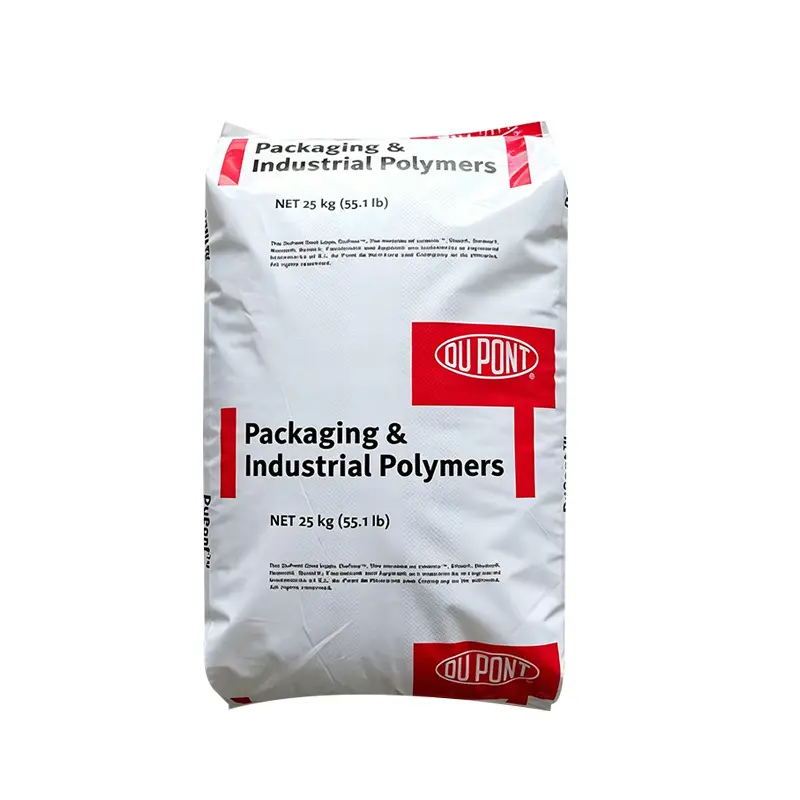
DuPont Elvax® 40W is an ethylene-vinyl acetate (EVA) elastomeric resin with a high vinyl acetate content (up to 40% VA content) produced by DuPont. This material features exceptional flexibility, low-temperature impact resistance, high polarity, and outstanding filler-loading capacity. As a benchmark-grade product in the fields of hot-melt adhesives, sealing composites, and modified blending substrates, 40W is widely used in global industrial manufacturing to enhance bond strength, flexibility, and stress-absorption performance in formulations. Its compatible mainstream processing methods include hot-melt processing, extrusion, calendering, and multi-component blend modification.
Technical Specifications
Physical Properties
| Item | Test Value | Test Unit | Test Standard |
| Density (23 °C) | 0.965 | g/cm³ | ASTM D1505 |
| Viscosity Measurement (30 °C, 0.25 g/100mL toluene) | 0.7 | — | — |
| Vinyl Acetate Content | 40 | % | DuPont Method |
| Melt Index, Compound (190 °C, 2.16 kg) | 52 | g/10min | ASTM D1238 |
| Shore Hardness A | 40 | — | ASTM D2240 |
Mechanical Properties
| Item | Test Value | Test Unit | Test Standard |
| Tensile Strength at Break (50 mm/min) | 4.80-6.20 | MPa | ASTM D1708 |
| Tensile Strain at Break (50 mm/min) | 1000-1300 | % | ASTM D1708 |
| Tensile Modulus | 3 | MPa | ASTM D638 |
Thermal Properties
| Item | Test Value | Test Unit | Test Standard |
| Ring and Ball Softening Point | 104 | °C | ASTM E28 |
Disclaimer: The technical specifications for DuPont Elvax® 40W EVA presented herein are derived from data issued by DuPont or certified third-party testing institutions. While we have made every effort to ensure the accuracy of the information provided, we assume no liability for any consequences arising from the use of 40W based on these data. Given the variables involved in processing conditions, we strongly recommend conducting thorough trials of 40W under your specific operational environment prior to final material selection.
Applications & Processing Guidelines
Typical Application Scenarios and End Products: Leveraging the strong polarity and soft touch brought by the high VA content (Shore Hardness A 40), this grade is widely applied in high-performance hot-melt adhesive (HMA) and pressure-sensitive adhesive (PSA) bases, footwear midsole foaming and cushioning layers, photovoltaic encapsulant film modification, polymer blend toughening agents, cable compound materials, and medical/food packaging sealing strips.
Processing and Practical Guidelines:
- Melt Flow and Temperature Control: This grade features a melt index (MFR) of 52 g/10min (190 °C, 2.16 kg) and exhibits excellent fluidity. During hot-melt or extrusion processing, it is recommended to control the processing temperature between 130 °C and 180 °C, avoiding prolonged stays in environments exceeding 200 °C to prevent thermal degradation of the vinyl acetate segments and the release of acetic acid odors.
- Drying Tips: EVA resin inherently features low moisture absorption. However, during high-humidity rainy seasons or in cases of damaged original packaging, hot-air circulating pre-drying at 50 °C to 60 °C for 2 to 4 hours is recommended to reduce bubbles and extrusion surface defects.
Logistics, Packaging & Compliance
- Packaging Specifications: Standard packaging utilizes 25 kg multi-layer paper-plastic composite moisture-proof bags lined with polyethylene inner film. Customized palletized packaging or 500 kg / 1000 kg bulk big bags can be provided according to customers’ automated feeding line requirements.
- Cargo Attributes: Elvax 40W is classified as a non-hazardous chemical (Non-DG) and complies with standard general cargo transportation standards. It supports standard ocean freight containers (20ft/40ft FCL) and domestic land logistics without requiring special hazardous chemical transport qualifications or vehicles.
- Delivery Lead Time: Backed by TaiKuo New Materials’ standing spot inventories across major ports and inland warehouses, standard orders achieve efficient response times. Specific delivery lead times are confirmed based on Incoterms (e.g., FOB/CIF) and destination port logistics conditions.
- Compliance Certification: Every commercial shipment is accompanied by complete quality traceability documents, including the Technical Data Sheet (TDS), Material Safety Data Sheet (MSDS/SDS), and Certificate of Analysis (COA). The product strictly adheres to the EU RoHS directive and REACH compliance controls regarding Substances of Very High Concern (SVHC).
- ESG & Environmental Declaration: TaiKuo New Materials consistently practices green supply chain principles. As a thermoplastic elastomer, EVA features a favorable physical recycling and pelletizing pathway; we support the recycling and reuse of industrial scrap, helping clients minimize the environmental impact of products throughout their lifecycle.
Frequently Asked Questions (FAQs)
Q1: Is drying pretreatment mandatory for Elvax 40W prior to processing?
A1: Typically, if the packaging is intact and stored in a dry environment, it can be fed directly into the machine. However, under high humidity or when used in the production of high-end hot-melt adhesives or cast films with stringent appearance requirements, drying at 50-60 °C for 2-4 hours is recommended to thoroughly eliminate surface-adsorbed moisture.
Q2: What are the practical impacts of the high VA content (40%) on the physical and mechanical properties of 40W?
A2: A VA content of 40% implies extremely high molecular chain flexibility and very low crystallinity. This grants 40W an exceptionally low Shore hardness (A 40) and an impressive tensile strain at break (1000-1300%), providing it with outstanding elasticity, low-temperature softness, and strong adhesion performance to various substrates (such as metals, polar plastics, and fabrics).
Q3: What role does Elvax 40W typically play in hot-melt adhesive formulations?
A3: Due to its high vinyl acetate (VA) content of up to 40% and a melt index (MFR) reaching 52 g/10min, this grade exhibits excellent polarity, high bond strength, and superior loading and compatibility capacities for various fillers (such as resins, tackifiers, and waxes). It is frequently utilized as the core base resin for high-performance hot-melt adhesives (HMAs) and pressure-sensitive adhesives (PSAs), significantly enhancing the peel strength and flexibility of adhesives on difficult-to-bond surfaces such as metals, wood, leather, and polar plastics.