Product Overview & Key Features
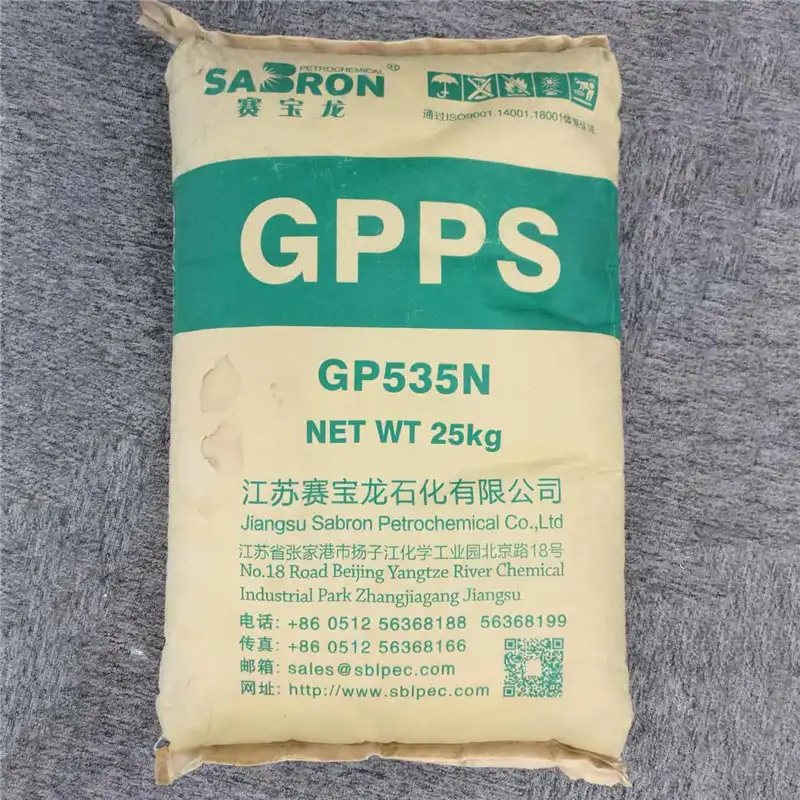
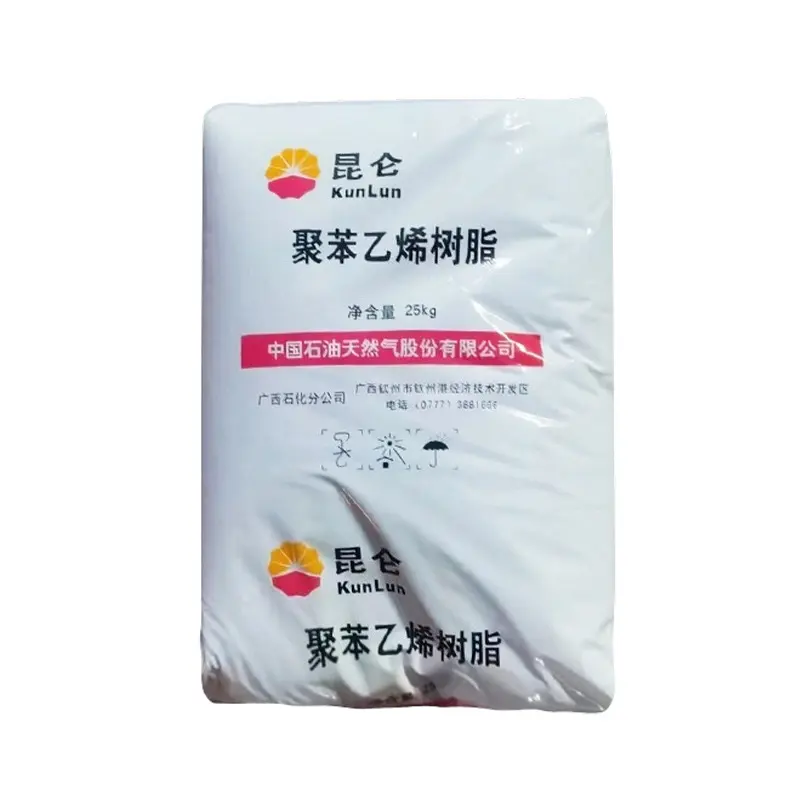
525N is a general-purpose polystyrene (GPPS) injection molding grade resin produced by PetroChina Guangxi Petrochemical Company. The material appears as water-clear to colorless transparent cylindrical pellets, representing a high-transparency, medium-high fluidity general-purpose PS benchmark grade within the PetroChina system aimed at South China and export markets. Its core performance advantages include: a melt mass-flow rate (MFR) of 8.04 g/10min (200 °C / 5 kg, GB/T 3682.1), providing good melt fluidity suitable for thin-walled complex structure mold filling; a light transmittance of 87.9% and a yellowness index of -1.3, presenting high clarity and low yellowing visual performance; a Vicat softening point of 91.1 °C (GB/T 1633), covering room temperature to moderate temperature daily commodity applications; a tensile strength at break of 43.2 MPa (GB/T 1040.2), and a Charpy unnotched impact strength of 7.8 kJ/m² (GB/T 1043.1), offering usable rigid support among transparent amorphous plastics; a residual monomer of 210 ppm, and 0 colored particles/kg (SH/T 1541.1), ensuring high cleanliness and low odor. Designed specifically for injection molding processes, this grade is widely used in transparent daily commodities, thin-walled packaging containers, stationery casings, appliance transparent interior trims, and optical display diffuser plate substrates, making it one of PetroChina’s primary circulating GPPS grades in the South China region.
Technical Specifications
Physical Properties
| Item | Test Condition | Property Value | Unit | Test Method |
| Colored Particles | — | 0 | pcs/kg | SH/T 1541.1 |
| Melt Flow Rate (MFR) | 200 °C, 5 kg | 8.04 | g/10min | GB/T 3682.1 |
| Residual Monomer | — | 210 | ppm | Internal Method |
Mechanical Properties
| Item | Test Condition | Property Value | Unit | Test Method |
| Tensile Strength at Break | — | 43.2 | MPa | GB/T 1040.2 |
| Charpy Unnotched Impact Strength | 23 °C | 7.8 | kJ/m² | GB/T 1043.1 |
Thermal Properties
| Item | Test Condition | Property Value | Unit | Test Method |
| Vicat Softening Point | — | 91.1 | °C | GB/T 1633 |
Optical Properties
| Item | Test Condition | Property Value | Unit | Test Method |
| Yellowness Index | — | -1.3 | None | Internal Method |
| Light Transmittance | — | 87.9 | % | GB/T 2410 |
Disclaimer: The technical specifications for PetroChina Guangxi 525N presented herein are derived from data issued by PetroChina Guangxi Petrochemical Company or certified third-party testing institutions. While we have made every effort to ensure the accuracy of the information provided, we assume no liability for any consequences arising from the use of 525N based on these data. Given the variables involved in processing conditions, we strongly recommend conducting thorough trials of 525N under your specific operational environment prior to final material selection.
Applications & Processing Guidelines
Typical Applications
Backed by its 87.9% light transmittance, 8.04 g/10min medium-high fluidity, and -1.3 low yellowness index, 525N is targeted primarily at the following application areas:
- Transparent Daily Commodities & Thin-Walled Packaging: Transparent storage boxes, cosmetic sub-packaging bottles, candy boxes, disposable drinking cups, and refrigeration boxes—high transparency and low yellowing safeguard contents visibility, while medium-high fluidity supports thin-wall rapid molding.
- Stationery & Office Supplies: Transparent binder clips, pen holders, drafting triangles, rulers, and display models—a Vicat softening point of 91.1 °C covers daily operating temperatures, with surfaces suitable for screen printing and offset printing.
- Home Appliances & Consumer Electronics: Small appliance transparent observation windows, router status indicator covers, instrument panels, and internal insulating transparent brackets—non-flame-retardant general parts, offering better cost efficiency than transparent ABS and PC.
- Optical & Display Substrates: Advertising light box diffuser panels, LED panel light light-guide plate substrates (requiring subsequent printing/laser dotting processes)—high light transmittance provides the foundation for optical designs.
- Toys & Crafts: Transparent building blocks, model display cases, and decorative pendants—RoHS/REACH compliance covers general export requirements.
Processing Guidelines
- Drying Pretreatment: GPPS inherently features extremely low moisture absorption (typically < 0.05%), requiring no forced drying under intact packaging and normal storage humidity (RH < 70%). However, when stored unsealed in high-humidity environments for extended periods, or when used for high-transparency optical parts and thin-walled appearance components sensitive to silver streaks, hot-air drying at 60 to 70 °C for 1 to 2 hours is recommended to eliminate surface-adsorbed moisture and minimize melt bubbles and surface flaws.
- Injection Molding Process: Recommended barrel temperature is 180 to 220 °C, with a mold temperature of 20 to 50 °C. GPPS possesses good thermal stability, but excessively high temperatures (> 230 °C) easily induce thermal degradation and yellowing. Injection speed should be set from medium to fast, holding pressure at 50 to 70% of injection pressure, and back pressure at 0.3 to 0.8 MPa. Screw rotation speed should be maintained at 60 to 100 rpm to avoid material degradation caused by excessive shear heat. Mold vent depth is recommended at 0.02 to 0.03 mm to prevent gas entrapment scorching.
- Regrind Utilization: Clean runner scraps can be recycled. Since GPPS is relatively insensitive to thermal history, virgin-to-regrind ratios can be controlled between 4:1 and 5:1, provided that light transmittance, yellowness index, and melt index are regularly tested to ensure stable optical quality and mechanical performance in final products.
Logistics, Packaging & Compliance
- Packaging Specifications: Standard packaging consists of 25 kg film-coated woven bags or kraft paper composite bags lined with a polyethylene film, providing moisture-proof performance. Big bags (typically 500 kg or 1000 kg) are also available upon customer request to accommodate continuous feeding requirements of automated injection molding lines.
- Supply Attribute: 525N is categorized as a non-hazardous chemical (Non-DG), complying with general cargo transportation standards. It supports ocean freight and land transportation via 20-foot full container loads (FCL) and less than container loads (LCL), requiring no specialized hazardous chemical transport qualifications or vehicles.
- Delivery Lead Time: Backed by TaiKuo New Materials’ readily available inventory across major ports and inland hubs, standard orders achieve rapid response. Specific delivery schedules depend on Incoterms and destination port logistics conditions, with shipments typically arranged following order confirmation.
- Compliance & Documentation Support: Every batch is accompanied by comprehensive quality management documents, including Technical Data Sheets (TDS), Safety Data Sheets (MSDS/SDS), and Certificates of Analysis (COA). The product complies with RoHS directives and REACH regulations concerning restricted substances.
- ESG & Environmental Declaration: As a recyclable thermoplastic polymer, PS features a mature pathway for physical recycling (shredding and re-pelletizing). We support circular economy practices, encouraging customers to sort, recycle, and reprocess runner scraps and unqualified items during processing. Concurrently, we are committed to driving green supply chain transformation to ensure controllable environmental impacts across the product lifecycle, aligning with global sustainable development trends.
Frequently Asked Questions (FAQs)
Q1: With a light transmittance of 87.9% and a yellowness index of -1.3, how should 525N be selected compared to PMMA and transparent ABS?
A1: The three materials occupy different market positions. PMMA features a light transmittance > 92% and high surface hardness, but exhibits lower impact resistance and high susceptibility to stress cracking; transparent ABS (MABS) has a light transmittance of approximately 88 to 90% with toughness superior to GPPS, yet incurs higher costs and requires drying; 525N (GPPS) offers an 87.9% light transmittance, the lowest cost, no drying requirement during processing, and good rigidity, but possesses the lowest toughness (charpy unnotched impact of only 7.8 kJ/m²). Selection rule: choose PMMA for ultra-high transparency and surface hardness; choose transparent ABS for transparent components requiring certain impact resistance; choose 525N for cost-sensitive, rigid transparent, and non-impact application scenarios.
Q2: What wall thickness is appropriate for this grade given its melt index of 8.04 g/10min (200 °C / 5 kg)
A2: With an MFR of 8.04 (200 °C / 5 kg), 525N falls under medium-high fluidity GPPS, capable of stably injection molding transparent parts with wall thicknesses of 1.2 to 3.0 mm. For ultra-thin wall structures below 1.0 mm, increasing mold temperature to 40 to 50 °C and setting injection speed to fast is recommended, along with evaluating weld line strength; for thick-walled components with wall thickness > 4.0 mm, attention must be paid to holding pressure compensation and sink mark control, reducing injection speed and extending holding time where necessary.
Q3: Does the residual monomer level of 210 ppm in 525N permit direct food contact applications?
A3: A residual monomer (styrene) level of 210 ppm falls within the standard control range for GPPS, but 525N itself is not pre-mixed with food-grade stabilizer systems. Food contact compliance must rely on official FDA 21 CFR §177.1640 or EU 10/2011 compliance declarations provided by the manufacturer. End-product third-party migration testing is advised prior to mass production to ensure styrene monomer residuals and leachate levels satisfy target market regulatory standards.
Q4: How can silver streaks and bubbles be prevented when processing 525N?
A4: Silver streaks and bubbles primarily stem from material moisture content or thermal degradation. Key control points: 1) despite the low moisture absorption of GPPS, mild drying at 60 to 70 °C for 1 to 2 hours is still recommended in high-humidity environments; 2) maintain barrel temperatures below 220 °C to prevent thermal decomposition caused by localized overheating; 3) ensure steady injection speeds to avoid air entrapment; 4) design reasonable mold vent depths (0.02 to 0.03 mm) to ensure smooth cavity gas evacuation. If silver streaks appear, prioritize checking drying efficacy and the actual barrel temperature profile.