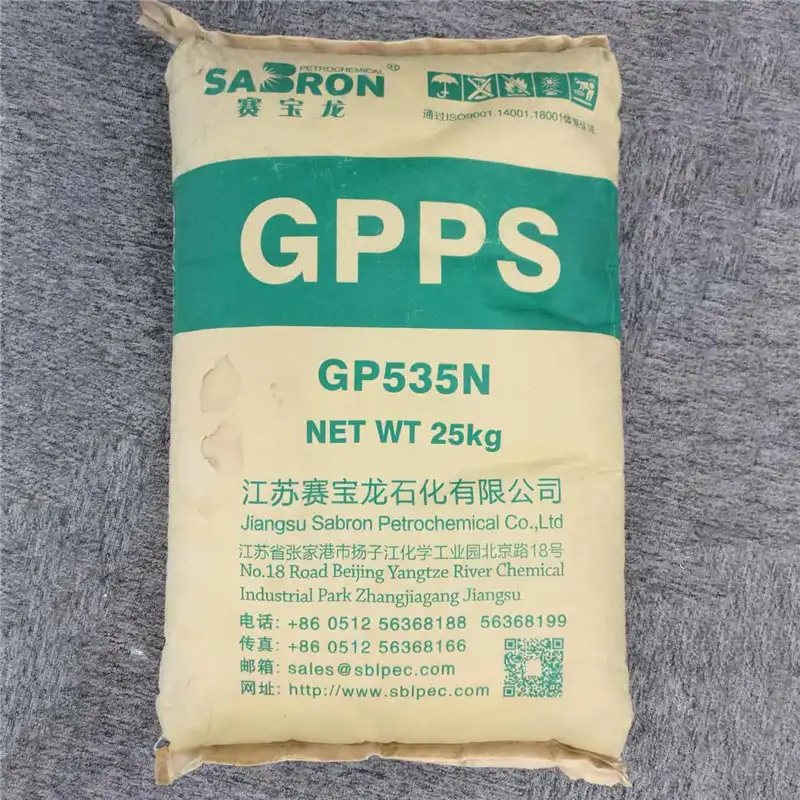
Product Overview & Key Features
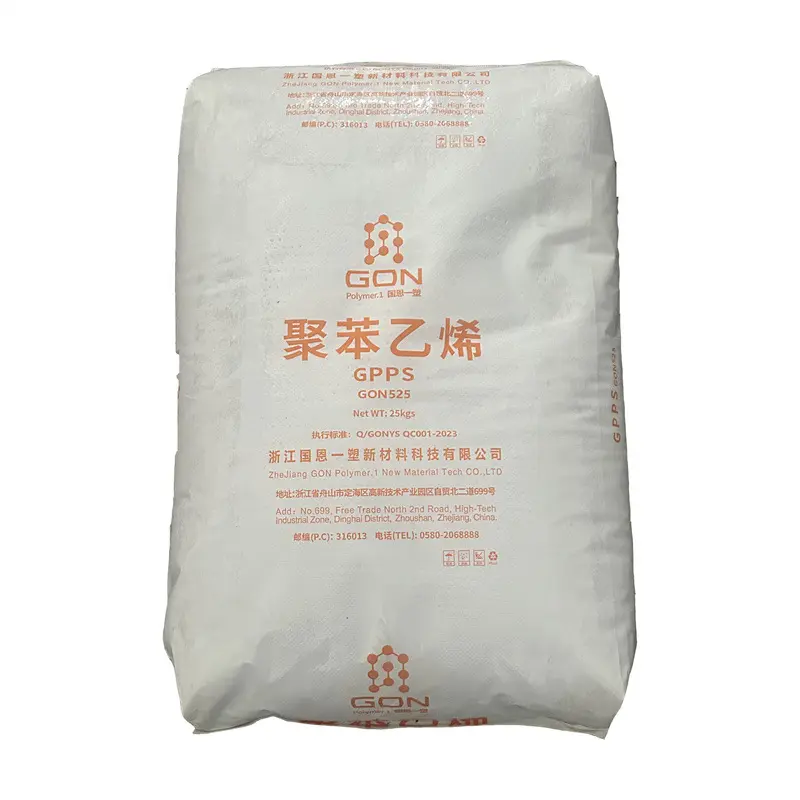
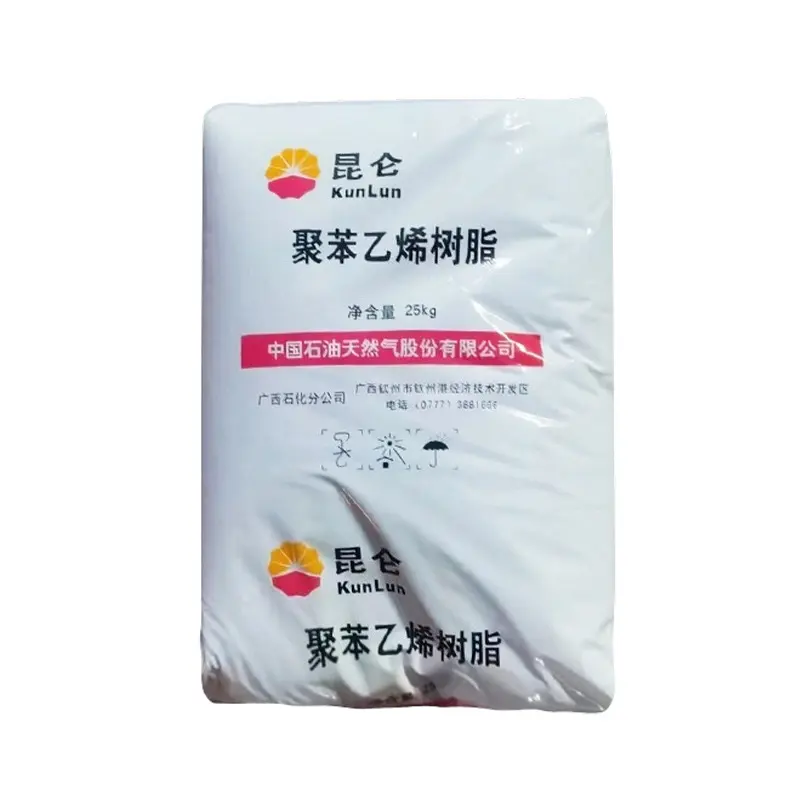
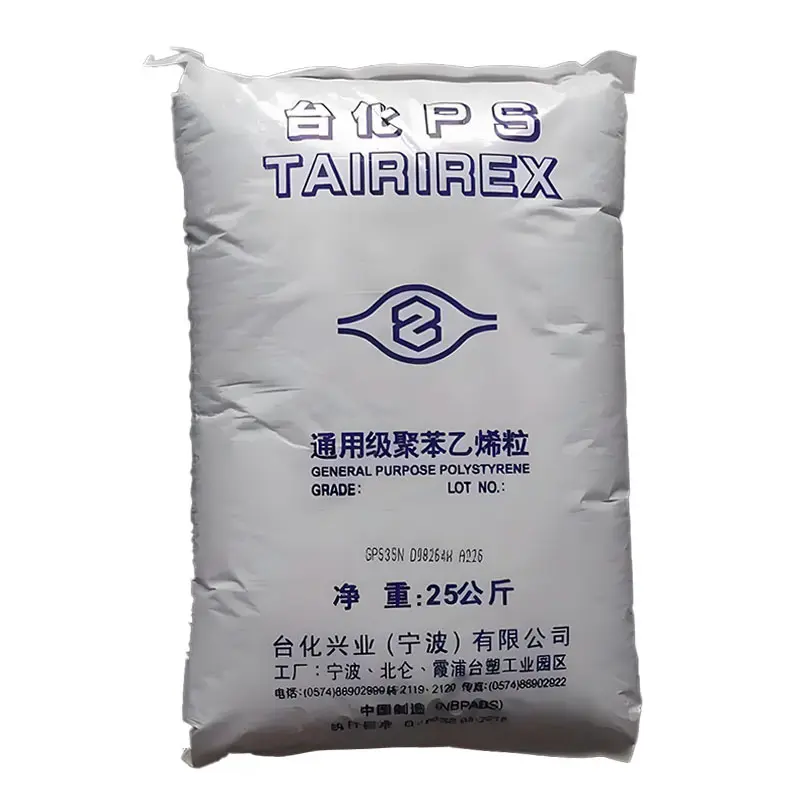
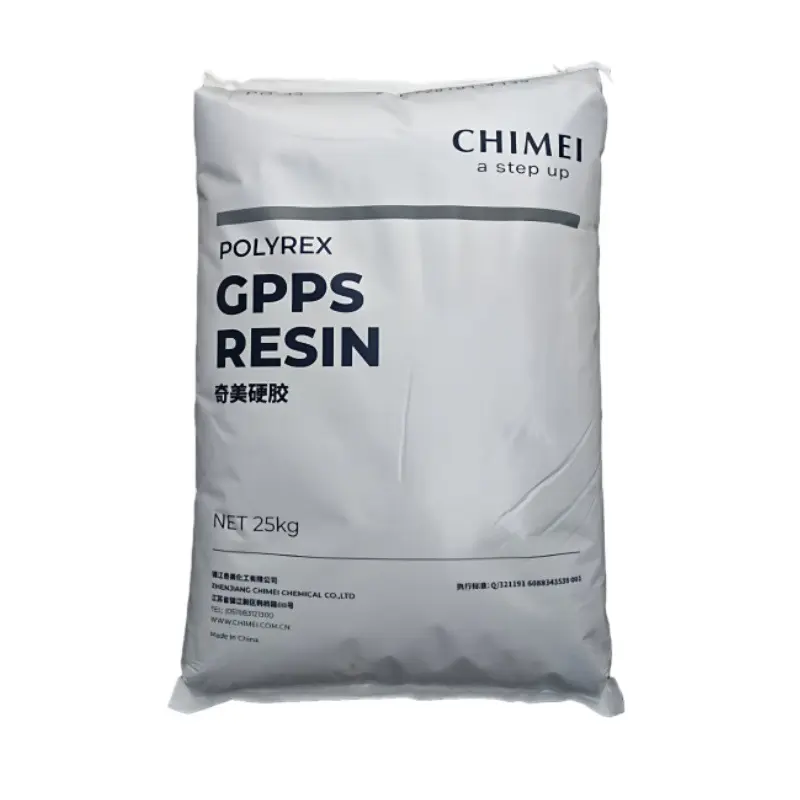
535N is an injection molding grade General Purpose Polystyrene (GPPS) resin produced by Jiangsu Saibaolong Petrochemical Co., Ltd. The material comes in colorless transparent to slightly bluish cylindrical granules. It is a general-purpose grade featuring a medium melt flow rate, high transparency, and high rigidity, with a melt flow rate (MFR) of 3–4 g/10 min (200 °C, 5 kg). The core advantage of 535N lies in its optimal balance between high optical purity and good processing flowability: exceptional light transmittance (haze as low as 0.4%), tensile yield strength of 52 MPa, and density of 1.04 g/cm³, combining lightweight properties with structural stiffness. Engineered specifically for injection molding processes, 535N is widely used in thin-wall packaging, daily necessities, and industrial components that demand high clarity, surface gloss, and dimensional stability. It is one of Saibaolong’s flagship GPPS grades circulating in the East China market.
Technical Specifications
Physical Properties
| Property | Test Condition | Value | Unit | Test Method |
| Water Absorption | — | <0.1 | % | ISO 62 |
| Melt Flow Rate (MFR) | 200°C/5kg | 3 to 4 | g/10 min | ASTM D1238 |
| Density | — | 1.04 | g/cm³ | ISO 1183 |
| Mold Shrinkage | Processing | 0.4 to 0.6 | % | ISO 294 |
Mechanical Properties
| Property | Test Condition | Value | Unit | Test Method |
| Tensile Strength at Yield | 23°C | 52 | MPa | ASTM D638 |
| Tensile Strength at Break | 23°C | 42 | MPa | ASTM D638 |
Thermal Properties
| Property | Test Condition | Value | Unit | Test Method |
| Vicat Softening Temperature | 10N, 50°C/hr | 97 | °C | ASTM D1525 |
Optical Properties
| Property | Test Condition | Value | Unit | Test Method |
| Haze | — | 0.4 | % | ASTM D1003 |
Other Properties
| Property | Test Condition | Value | Unit | Test Method |
| Izod Impact Strength | 23°C | 16 | J/m | ASTM D256 |
| Elongation at Break | 23°C | 2 | % | ASTM D638 |
Disclaimer: The technical specifications for Jiangsu Saibaolong 535N presented herein are derived from data issued by Jiangsu Saibaolong Petrochemical Co., Ltd. or certified third-party testing institutions. While we have made every effort to ensure the accuracy of the information provided, we assume no liability for any consequences arising from the use of 535N based on these data. Given the variables involved in processing conditions, we strongly recommend conducting thorough trials of 535N under your specific operational environment prior to final material selection.
Applications & Processing Guidelines
Typical Applications
Leveraging its high clarity, ultra-low haze, favorable flowability, and premium surface finish, 535N is tailored for the following applications:
- Thin-Wall Clear Packaging: Disposable food containers, cold beverage cup lids, jelly cups, confectionery boxes, and clear blister trays.
- Daily Goods & Stationery: Clear storage boxes, binder clips, compact mirror housings, clothes hangers, toothbrush handles, and display props.
- Industrial & Electronics: Small appliance transparent housings, LED lamp shades, meter windows, and clear battery case components.
- Toys & Decorations: Transparent building blocks, plastic model kit parts, holiday hanging ornaments, and artificial flower stems.
Processing Guidelines
- Predrying: GPPS exhibits extremely low moisture absorption (< 0.1%) and typically requires no drying if stored in intact packaging under normal ambient humidity (< 60% RH). However, under high-humidity conditions (> 70% RH) or prolonged exposure, hot-air drying at 70–80 °C for 1–2 hours is recommended to eliminate moisture voids or silver streaks in the molded parts.
- Injection Molding: Recommended melt temperature is set between 180–230 °C. Mold temperature should be maintained at 20–50 °C; lower mold temperatures help shorten cooling cycles and boost throughput. Moderate-to-high injection speeds are preferred to ensure complete filling of thin-wall sections. Back pressure should be set at 0.3–0.8 MPa, with screw speeds kept moderate to avoid thermal degradation and yellowing caused by excessive shear heat.
- Regrind Usage: Clean sprues and runners generated during production can be recycled. Thanks to the good thermal stability of GPPS, performance degradation remains minimal after multiple thermal histories. A virgin-to-regrind ratio of 4:1 or 3:1 is recommended, alongside routine checks on MFR and color variations to ensure the clarity and mechanical integrity of the final product.
Logistics, Packaging & Compliance
- Packaging Specifications: Standard packaging consists of 25 kg laminated woven bags or kraft paper composite bags with moisture-proof linings. Jumbo bags (Big Bags, typically 500 kg or 1000 kg) are also available upon request for automated production lines.
- Transport Classification: 535N is classified as non-hazardous cargo (Non-DG) under standard freight handling rules. It supports full container loads (FCL) and less-than-container loads (LCL) via ocean and land freight, requiring no specialized hazardous material transport licenses or vehicles.
- Lead Time: Supported by regular safety stock maintained by TaiKuo New Materials across major ports and inland hubs, standard orders are processed rapidly. Specific delivery lead times depend on Incoterms and port-of-destination logistics, with shipments typically dispatched shortly after order confirmation.
- Compliance & Documentation: Each batch comes with comprehensive quality control documentation, including Technical Data Sheets (TDS), Material Safety Data Sheets (MSDS/SDS), and Certificates of Analysis (COA). The material fully complies with RoHS directives and REACH regulations concerning restricted substances.
- ESG & Sustainability Statement: As a thermoplastic resin, polystyrene is fully recyclable through mechanical processing. We actively support circular economy practices by encouraging customers to sort and re-process sprues, runners, and off-spec parts during manufacturing. Furthermore, we are committed to driving green supply chain initiatives, minimizing life-cycle environmental impacts in line with global sustainability trends.
Frequently Asked Questions (FAQs)
Q1: With an MFR of 3–4 g/10 min, is 535N suitable for thin-wall transparent parts?
A1: This MFR range provides medium flowability, making it ideal for standard injection molded parts with a wall thickness of 1.0–3.0 mm. For ultra-thin-wall (< 0.8 mm) parts, a higher flow GPPS grade (e.g., MFR > 8 g/10 min) is recommended. The key advantage of 535N is its balance of flowability and optical clarity, making it well-suited for thin-wall packaging and consumer goods that require superior gloss and clarity.
Q2: How should one choose between 535N and HIPS (e.g., GH-660) for transparent application requirements?
A2: 535N (GPPS) features high light transmittance (0.4% haze), surface hardness, and high gloss, but lower impact resistance (Izod notched impact strength of 16 J/m). GH-660 (HIPS) contains a rubber phase making it opaque milky white, but its impact strength is significantly higher (Izod notched impact strength ≥ 71 J/m). Selection principle: Choose GPPS if the end product demands high clarity and gloss with low impact exposure (e.g., display cases, packaging covers); choose HIPS if toughness or opaque coloring is required.
Q3: Is this grade suitable for food contact applications?
A3: While GPPS base polymer can pass food contact compliance, whether 535N is suitable depends on its specific additive formulation. For use in food packaging or containers, request official FDA 21 CFR §177.1640 or EU 10/2011 compliance statements from the supplier and ensure the final molded product passes third-party testing. Direct food contact is not recommended without prior regulatory verification.
Q4: How can internal stress cracking or silver streaks be avoided during processing?
A4: GPPS is sensitive to certain organic solvents (e.g., alcohols, esters, aromatics), which can trigger environmental stress cracking (ESC). Avoid sharp corners in part design, and ensure uniform mold cooling along with adequate venting. For components that will come into contact with chemicals, post-molding annealing (e.g., at 60–70 °C for 1–2 hours) is advised, or consider switching to materials with better chemical resistance such as HIPS or ABS.