Introduction to Polypropylene
Polypropylene (PP) is a thermoplastic polymer produced through the catalytic polymerization of propylene monomers. As one of the world’s highest-volume commodity plastics, PP has become a fundamental raw material for numerous industries—from food packaging to automotive manufacturing—due to its low density, excellent chemical resistance, high heat resistance, and good mechanical strength. For global B2B buyers, accurately understanding the classification and performance differences of PP is the first step in material selection.
Chemical Structure and Material Classification
Chemically, PP is a semi-crystalline thermoplastic. Based on the spatial arrangement of the methyl group (-CH₃) along the polymer backbone and the distribution of monomer sequences, PP is primarily categorized into the following three types:
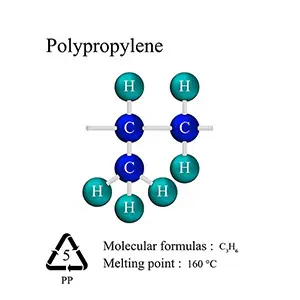
- Homopolymer PP: Produced from the polymerization of a single propylene monomer. It is characterized by high rigidity, good transparency, and strong heat resistance, and is commonly used in injection-molded consumer goods, toys, and films (such as BOPP).
- Random Copolymer PP: Incorporates a small amount of ethylene monomer (typically 1%-7%) during the polymerization process. This structure disrupts crystalline regularity, significantly enhancing transparency and impact resistance. It is commonly used for high-clarity containers, medical devices, and hot/cold water pipes.
- Impact Copolymer PP: Produced via a multi-stage polymerization process in which an ethylene-propylene rubber phase is dispersed within a continuous homopolymer PP matrix. This design drastically improves the material’s low-temperature toughness and impact strength, making it the preferred choice for automotive bumpers, dashboards, and large industrial components.
Key Physical and Processing Properties
PP’s ability to replace many traditional materials stems from its unique combination of properties:
- Chemical Resistance: PP exhibits exceptional tolerance to non-oxidizing acids, alkalis, and salt solutions, though it may swell in aromatic and chlorinated hydrocarbons.
- Heat Resistance: Homopolymer PP has a melting point of approximately 160-170°C and can be used for long periods at temperatures of 100-120°C, making it suitable for high-temperature sterilization scenarios.
- Processing Versatility: PP possesses excellent melt flowability and can be processed via various techniques including injection molding, extrusion, blow molding, thermoforming, and spinning. Notably, as a crystalline plastic, PP typically exhibits a molding shrinkage rate between 1% and 2.5%, which must be fully accounted for during mold design.
Global Applications
Leveraging its cost-effectiveness, PP has established a vast global application footprint:
- Packaging Industry: This is the largest downstream market for PP, encompassing food containers (e.g., yogurt cups, microwaveable meal boxes), bottle caps, labels, and Biaxially Oriented Polypropylene (BOPP) films.
- Automotive Industry: Used in the manufacture of interior parts (dashboards, door panels), exterior parts (bumpers), and battery casings to achieve lightweighting and improve fuel efficiency.
- Consumer Goods and Medical: Includes household items, appliance housings, medical syringes, petri dishes, and non-woven fabrics (used in masks and diapers).
Conclusion
In summary, polypropylene is more than a fundamental petrochemical product; it is an engineering material whose molecular structure is designed to meet diverse industrial needs. Whether through the high rigidity of homopolymers or the high toughness of copolymers, PP provides global manufacturing with a solution that balances economy and functionality. A deep understanding of its chemical nature and processing characteristics is key to optimizing supply chain management and product design.