Product Overview & Key Features
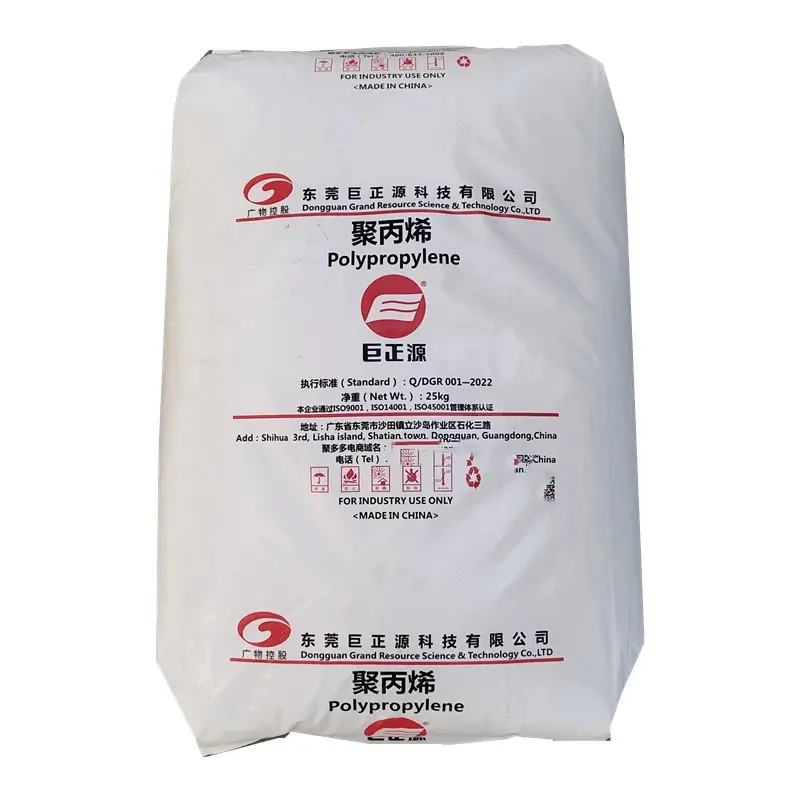
PPH-T03 is a homopolymer polypropylene (PP Homopolymer) injection molding grade resin manufactured by Grand Resource. The material appears as colorless translucent to milky-white cylindrical pellets, with a melt flow rate (MFR) of 3.3 g/10min (230 °C, 2.16 kg), classifying it as a medium-flow general-purpose injection molding grade. Its core features include high crystallinity (isotacticity index ≥ 95 wt%), low ash content (≤ 0.06 wt%), and good rigidity performance (tensile yield strength > 29 MPa). PPH-T03 exhibits typical polypropylene characteristics such as chemical resistance, low specific gravity (approx. 0.90 g/cm³), and excellent electrical insulation properties. This grade is specifically designed for conventional thermoplastic injection molding processes, and is widely applied in fields such as daily-use products, industrial accessories, and packaging containers that have specific requirements for material purity, color stability, and processing efficiency.
Technical Specifications
Physical Properties
| Property | Test Value | Test Unit | Test Standard |
| Melt Mass-Flow Rate (2.16 kg, 230 °C) | 3.3 | g/10min | GB/T 3682.1 |
| Isotactic Index | ≥ 95 | wt% | GB/T 2412 |
| Ash Content | ≤ 0.06 | wt% | GB/T 9345.1-2008 |
Mechanical Properties
| Property | Test Value | Test Unit | Test Standard |
| Tensile Strength at Yield (50 mm/min) | > 29 | MPa | GB/T 1040.2 |
Optical Properties
| Property | Test Value | Test Unit | Test Standard |
| Yellowness Index (YI) | ≤ 3 | — | GB/T 39822-2021 |
Disclaimer: The technical specifications for Grand Resource PPH-T03 presented herein are derived from data issued by Grand Resource or certified third-party testing institutions. While we have made every effort to ensure the accuracy of the information provided, we assume no liability for any consequences arising from the use of PPH-T03 based on these data. Given the variables involved in processing conditions, we strongly recommend conducting thorough trials of PPH-T03 under your specific operational environment prior to final material selection.
Applications & Processing Guidelines
Typical Applications
PPH-T03, owing to its balanced fluidity and mechanical properties, is primarily targeted at high-volume, high-efficiency injection molding scenarios:
- Daily Consumer Goods: Chairs, stools, storage boxes, trash cans, basins, buckets, and household storage containers.
- Industrial Accessories: Battery housings, cable spools, pallet blocks, tool case shells, and non-pressure pipe fittings.
- Packaging Containers: Food crates (food-grade certification required), beverage bottle caps, daily chemical bottle caps, and thin-walled containers.
- Automotive Interiors: Non-appearance parts such as door trim panels, pillar covers, and storage boxes (odor and fogging requirements must be verified).
Processing Guidelines
- Drying Pretreatment: PPH-T03 has low moisture absorption and typically does not require pre-drying when the original packaging remains well-sealed. However, in high-humidity environments (relative humidity > 70%) or when the raw material is exposed for extended periods, hot air drying at 80–90 °C for 1–2 hours is recommended to prevent bubbles or silver streaks in the melt.
- Injection Molding Process: The recommended melt temperature is set between 200–240 °C. Given its MFR of 3.3 g/10min, it possesses good mold-filling capability, making it suitable for molds with medium complexity. Mold temperature is recommended to be controlled at 40–60 °C to help shorten the molding cycle and promote crystallization. Back pressure should generally be set at 0.5–1.5 MPa to achieve favorable plasticization results.
- Regind Usage: Clean runner scrap generated during production can be recycled and reused. It is recommended to maintain a virgin-to-regind ratio of 3:1 or 4:1 to prevent material degradation caused by excessive thermal history, which could affect the impact strength and appearance of the finished parts.
Logistics, Packaging & Compliance
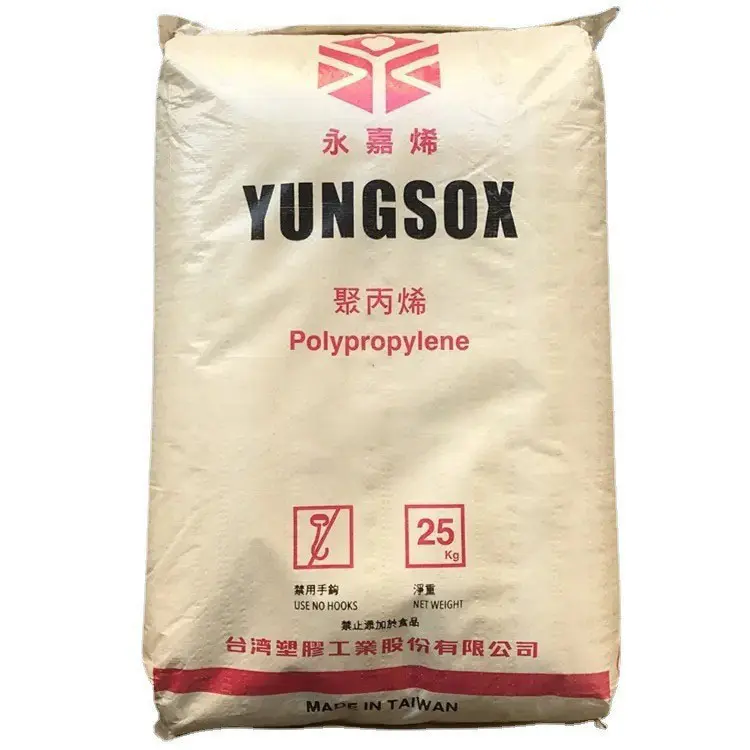
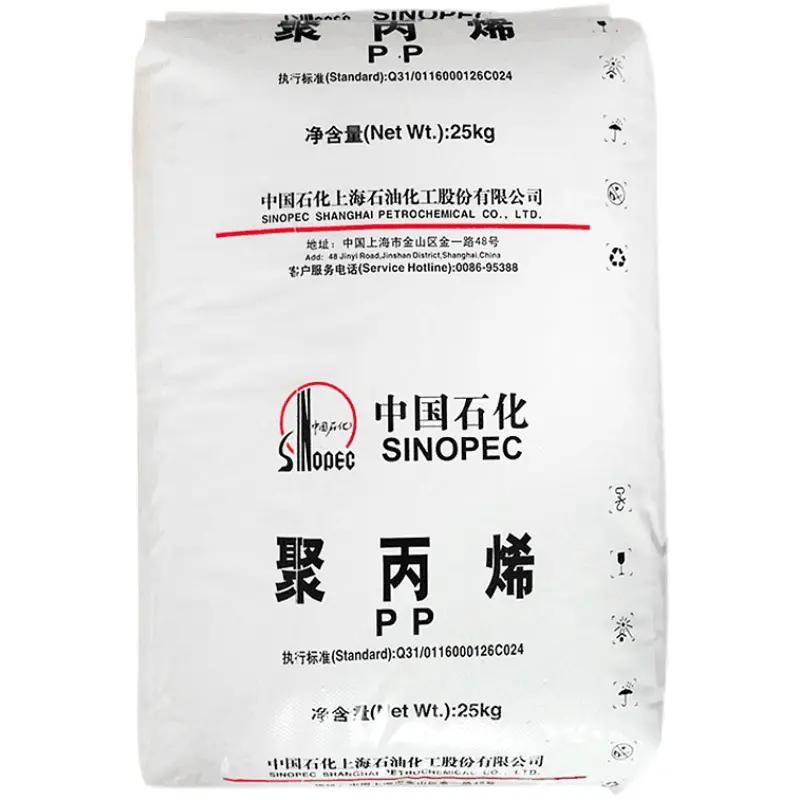
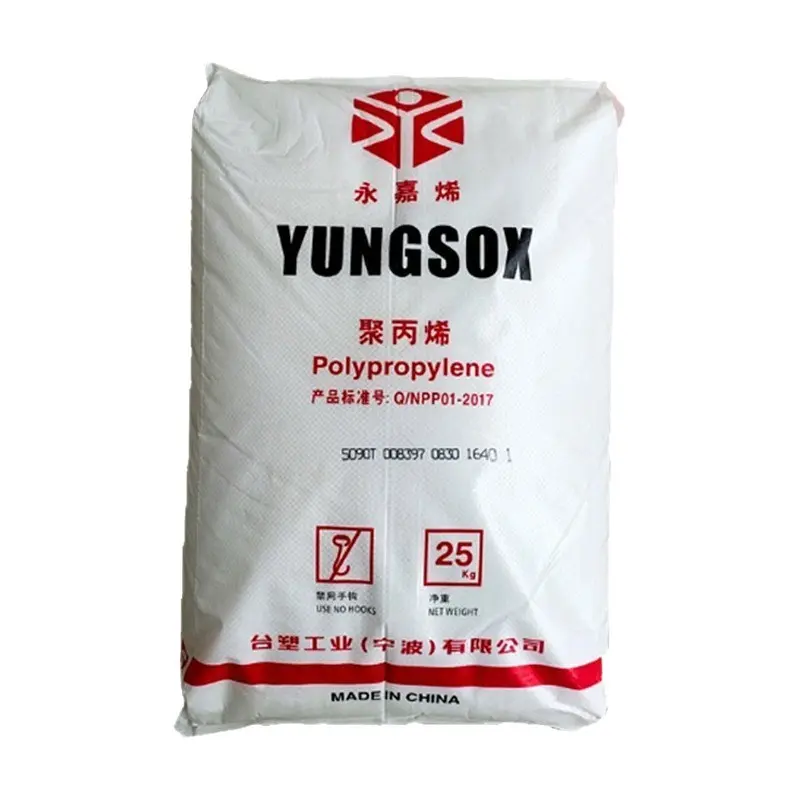
- Packaging Specifications: Standard packaging is 25 kg film-coated woven bags or kraft paper composite bags, offering basic moisture-proof functionality. Big bags (typically 500 kg or 1000 kg) can also be provided according to customer requirements to accommodate automated production line unpacking needs.
- Supply Attributes: PPH-T03 is classified as a non-hazardous chemical (Non-DG) and complies with regular cargo transportation standards. It supports 20-foot standard container (FCL) and LCL maritime and land transportation operations, requiring no special hazardous material transport qualifications.
- Delivery Lead Time: Backed by TaiKuo New Materials’ standing inventory at major ports and inland hubs, standard orders can achieve rapid response. Specific delivery schedules depend on Incoterms and destination port logistics conditions, and are generally arranged for dispatch upon order confirmation.
- Compliance & Document Support: Each batch of products is accompanied by complete quality management documents, including Technical Data Sheets (TDS), Safety Data Sheets (MSDS/SDS), and Certificates of Analysis (COA). The product complies with RoHS directive and REACH regulation requirements regarding restricted substances. The control of the yellowness index (≤ 3) indicates good color stability under natural light.
- ESG & Environmental Statement: As a thermoplastic material, polypropylene features physical recyclability and reuse characteristics. We support circular economy practices, encouraging customers to sort and reprocess runner scrap and unqualified products during processing. Meanwhile, we are committed to driving the green transformation of our supply chain to ensure controllable environmental impacts throughout the product lifecycle.
FAQs
Q1: What is the practical impact of PPH-T03’s isotactic index (≥ 95%) on product performance?
A1: The isotactic index is a key metric for measuring the stereoregularity of polypropylene. A higher isotactic index (≥ 95%) implies that the material possesses higher crystallinity and ordered molecular arrangement, which generally translates into superior rigidity, tensile strength, heat resistance (heat deflection temperature), and lower extractable content. This is particularly crucial for parts that need to withstand specific loads or high-temperature sterilization (such as turnover crates and kettle components).
Q2: Does the material’s yellowness index (≤ 3) mean it is suitable for long-term outdoor use?
A2: A yellowness index of ≤ 3 indicates that the natural color pellets exhibit exceptional initial color stability without the addition of light stabilizers, making them suitable for indoor applications or products requiring high color consistency. However, polypropylene is sensitive to UV radiation; without specialized weathering modification, long-term outdoor exposure will lead to molecular chain degradation and chalking. Therefore, if used outdoors, sufficient UV absorbers and hindered amine light stabilizers (HALS) must be incorporated into the formulation.
Q3: What should be noted when selecting materials compared to common PP Random Copolymers?
A3: PPH-T03 is a homopolymer characterized by high rigidity, hardness, and heat resistance, though its room-temperature and low-temperature impact toughness are relatively lower. In contrast, random copolymer polypropylene (PPR) reduces crystallinity by introducing ethylene monomers, thereby achieving higher transparency and superior impact resistance, at the sacrifice of some rigidity and heat resistance. If your application involves low-temperature environments or requires high toughness (such as cold-storage shelving), copolymer grades may need to be considered; whereas if the focus is on rigidity, hardness, and cost-efficiency, PPH-T03 is more suitable.
Q4: How can I apply for PPH-T03 samples for trial testing?
A4: TaiKuo New Materials provides commercial trial samples for downstream processing enterprises. We will arrange the shipment of appropriate sample quantities according to your specific requirements, with sample and freight costs borne by the customer. Samples are primarily intended for laboratory formulation screening and small-machine process verification. It is recommended to store the samples in a sealed container immediately upon receipt and conduct necessary pre-drying treatments prior to processing.