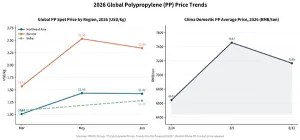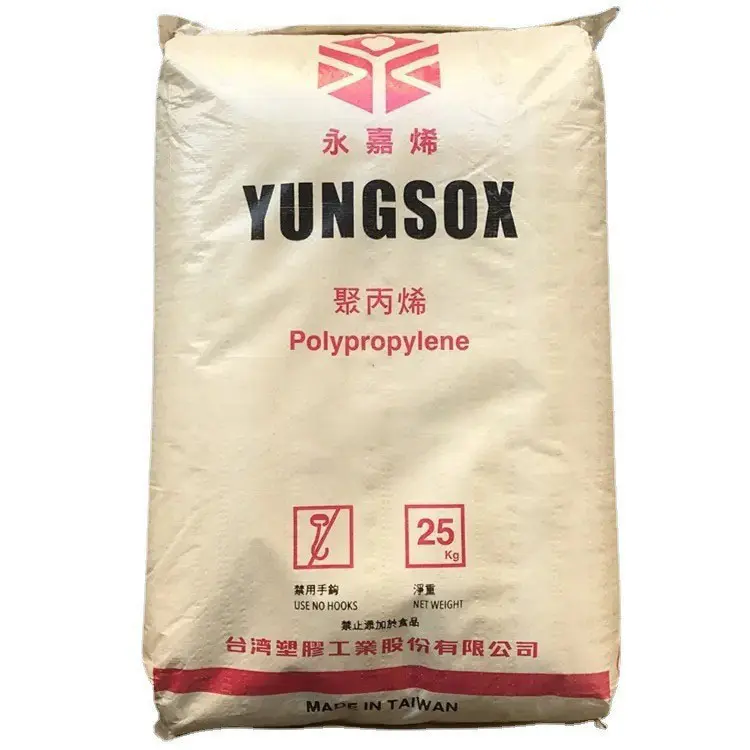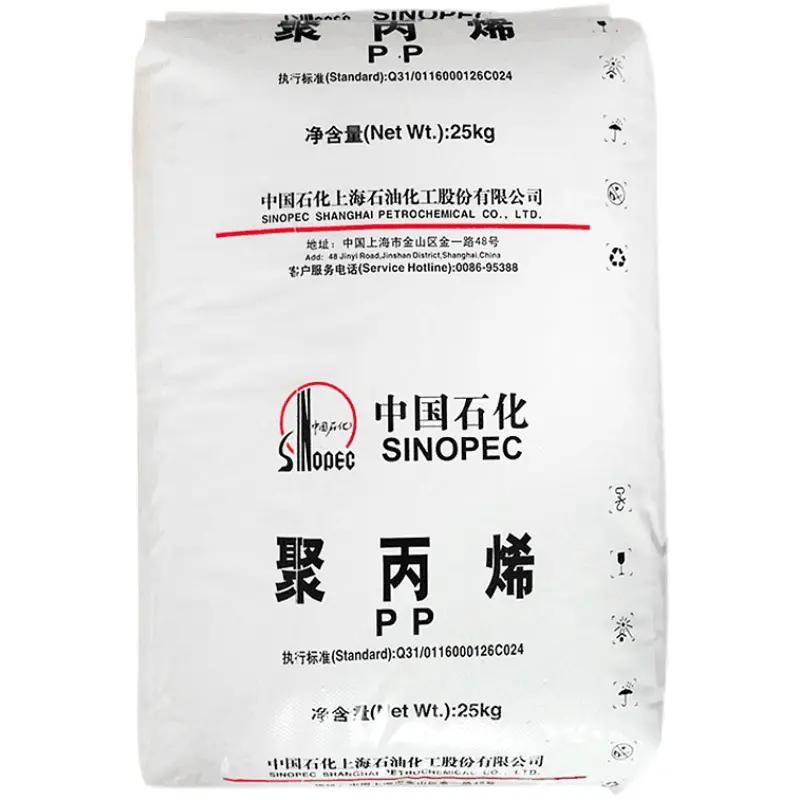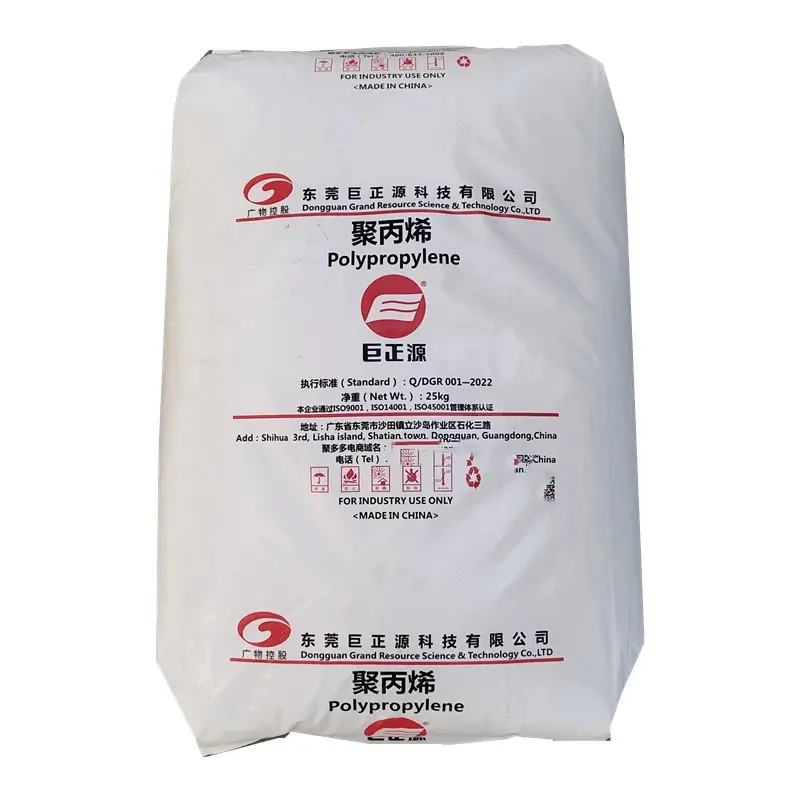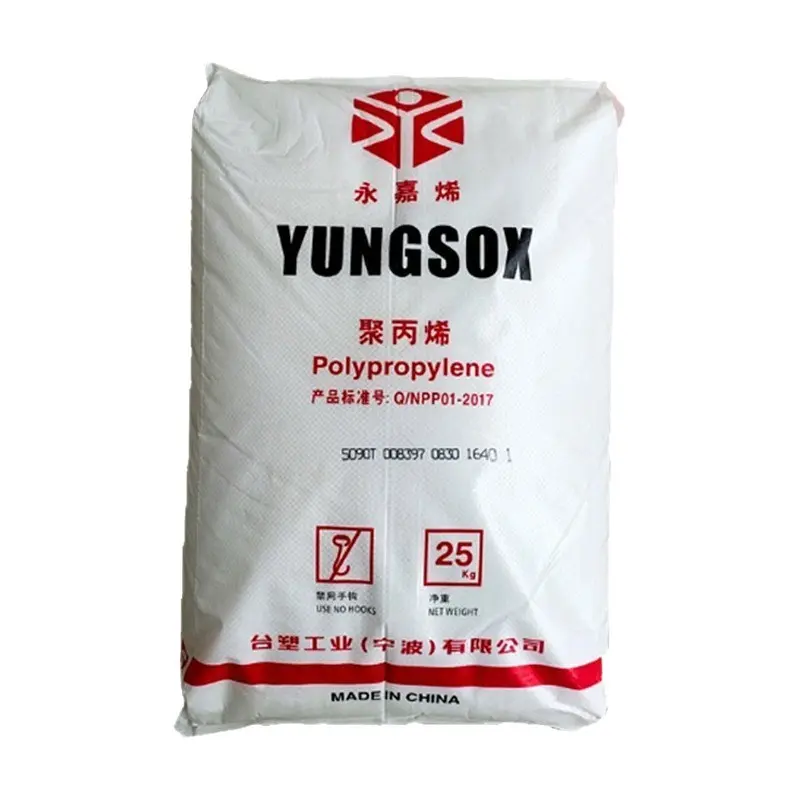
In the first half of 2026, the global polypropylene (PP) market is caught in a tug-of-war between “fire and ice.” On one side, relentless capacity expansion in China and other major producing regions has dragged polypropylene prices down to five-year lows. On the other, geopolitical conflict in the Middle East has driven up international crude oil costs, injecting periodic upward momentum into propylene monomer and PP prices. For global buyers, traders, and downstream processors, understanding this tug-of-war between two opposing forces is the key to timing procurement in the second half of the year and locking in a cost advantage.
Supply-Demand Realignment: China’s Capacity Expansion Redraws the Global Trade Map
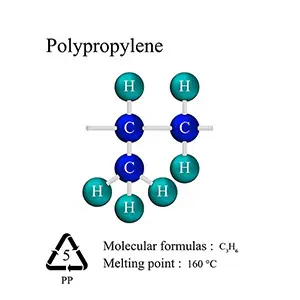
Polypropylene, one of the five major general-purpose resins, is prized for its ease of processing, impact resistance, and chemical stability, and is widely used in packaging, automotive parts, home appliances, and medical devices — making it the world’s second-largest general-purpose plastic by volume. The central variable in today’s global PP market is the structural expansion of supply out of China. China’s total polypropylene capacity has already surpassed 50 million tons per year, with new 2026 capacity concentrated in East China, Northwest China, and North China. Combined with China now accounting for nearly one-third of global propylene capacity, this continued surge in supply is compressing the spot market’s price center of gravity.
At the same time, the industry’s structure is undergoing a qualitative shift: China has moved from being a traditional net importer to a net exporter of polypropylene, posing a direct challenge to trade flows in traditional PP-exporting regions such as the Middle East and Northeast Asia. For international buyers, this means more diversified sourcing options and greater room for negotiation — but it also calls for close monitoring of China’s export policies and shifting tariff environments.
Cost-Side Dynamics: Crude Oil Volatility Drives Short-Term Trends
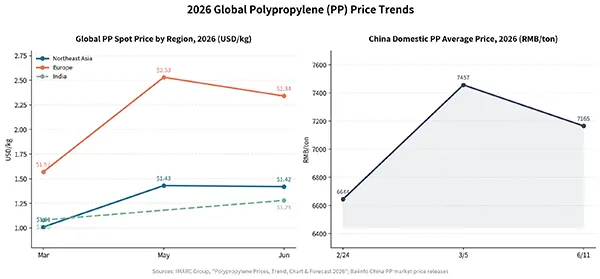
Polypropylene production costs are heavily dependent on feedstocks such as propylene, naphtha, and propane, whose prices are, in turn, closely tied to international crude oil movements. In late Q1 2026, escalating geopolitical conflict in the Middle East pushed international crude oil prices sharply higher, directly driving up the cost of naphtha, propane, and other feedstocks. This was then transmitted to PP spot prices through the amplifying effect of the futures market, producing a phase of “cost-push” price increases.
That said, the industry consensus is that geopolitically driven price surges of this kind tend to be “pulse-like” rather than trend-defining — once conflicts ease or crude oil prices retreat, PP prices tend to correct just as quickly. This explains why the PP market in the first half of 2026 has shown a distinct pattern of high-level volatility, with prices rising and falling easily. For international traders, the recommended strategy is to “purchase on an as-needed basis and take delivery in batches,” avoiding large-scale stockpiling during periods of sharp cost-side volatility.
Clear Regional Divergence: North America, Europe, and Asia-Pacific Diverge Sharply
From a global perspective, the 2026 PP market shows pronounced regional divergence. In North America, structural oversupply and sluggish downstream demand have kept net transaction prices for polypropylene under pressure, forcing producers to redirect excess capacity toward exports and creating an arbitrage opportunity with the European market. In Europe, high energy costs and carbon-compliance expenses have kept regional prices generally above the global average, while regulatory tilt toward recycled and bio-based polypropylene is reshaping local demand structures. In the Asia-Pacific region — particularly China and India — remains the world’s largest production and consumption hub, holding more than half of global capacity, with stable demand from packaging, automotive components, and consumer goods sectors underpinning regional prices.
This pattern of regional divergence creates opportunities for international traders to pursue cross-regional arbitrage and differentiated sourcing strategies, but it also demands stronger multi-region price monitoring and hedging capabilities.
Outlook for the Second Half: Supply-Demand Rebalancing Begins, Sustainability Becomes a New Growth Driver
Looking ahead to the second half of 2026 and beyond, industry analysts broadly agree that as outdated capacity in China is phased out and the pace of new capacity additions slows, global polypropylene supply growth is expected to fall below demand growth, ushering the market into a new phase of supply-demand rebalancing. Meanwhile, rigid demand from downstream sectors such as packaging, automotive lightweighting, and medical devices will continue to support polypropylene’s long-term market space, with the industry expected to maintain steady compound growth.
Notably, sustainability is emerging as a key variable shaping the industry’s future. Major global producers are ramping up investment in mechanical recycling, chemical recycling, and bio-based polypropylene to meet increasingly stringent environmental regulations and end-customer ESG demands. For foreign trade enterprises, getting ahead on recycled-content and low-carbon-certified product lines could become an important source of differentiated competitive advantage going forward.
Conclusion
The global polypropylene market in 2026 sits at a crossroads where a capacity expansion cycle intersects with geopolitical uncertainty. In the short term, crude oil price volatility will continue to drive pulse-like swings in PP pricing; over the medium to long term, supply-demand optimization and sustainability trends will jointly define the industry’s next chapter. For international buyers and trade partners, building a flexible, diversified sourcing strategy, closely tracking regional price divergence, and proactively positioning in green polypropylene product lines will be key to gaining an edge amid this cycle of volatility.