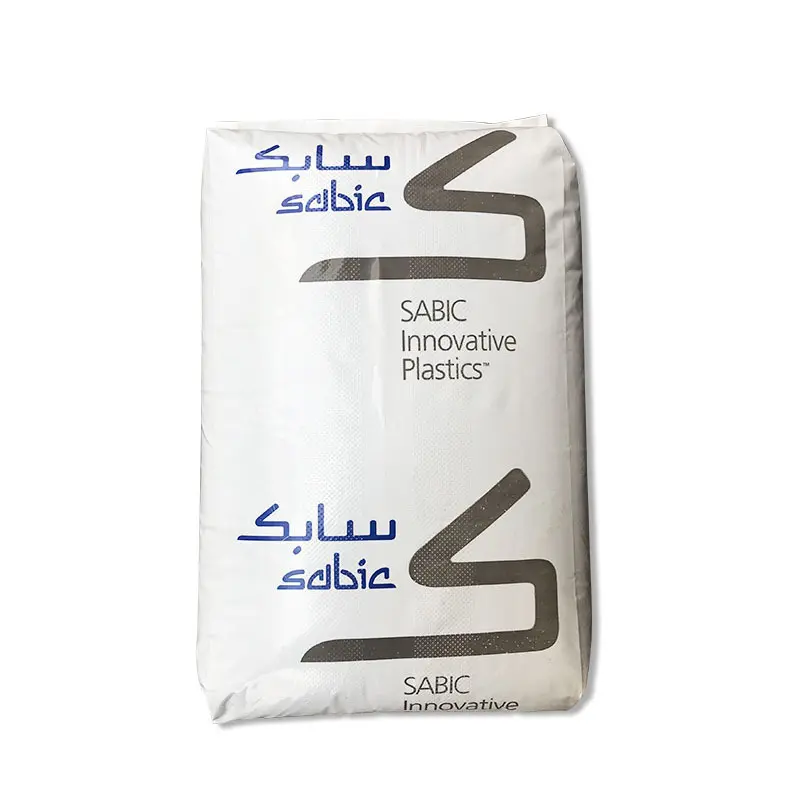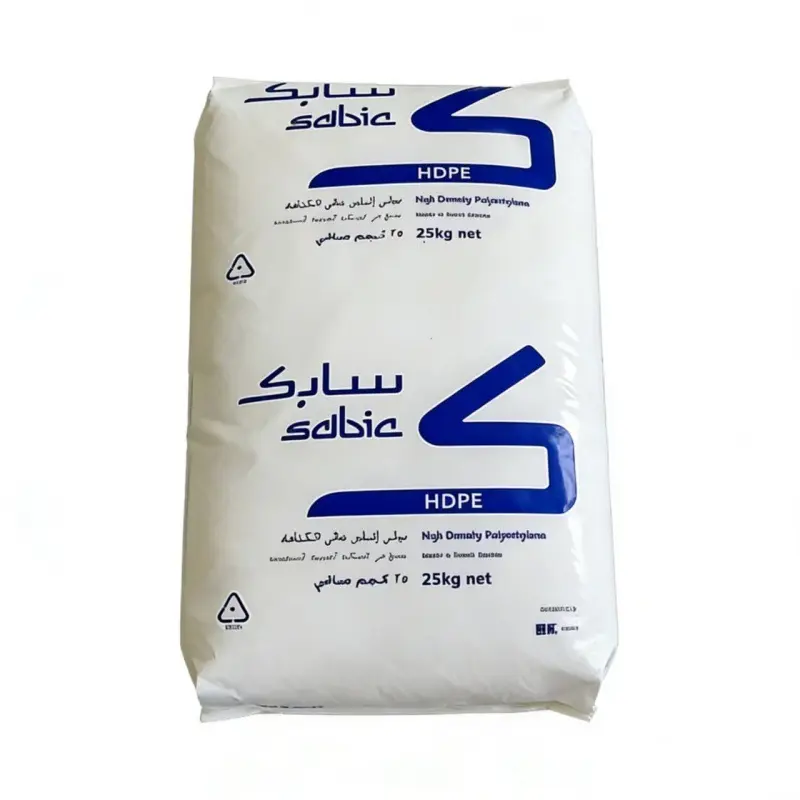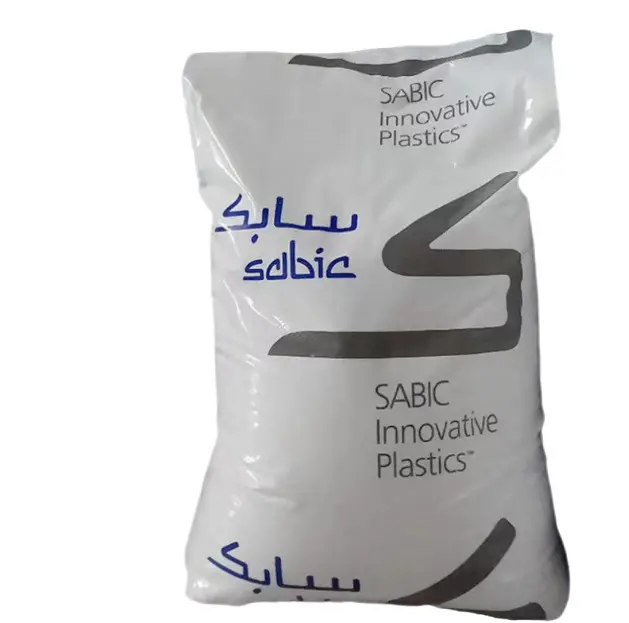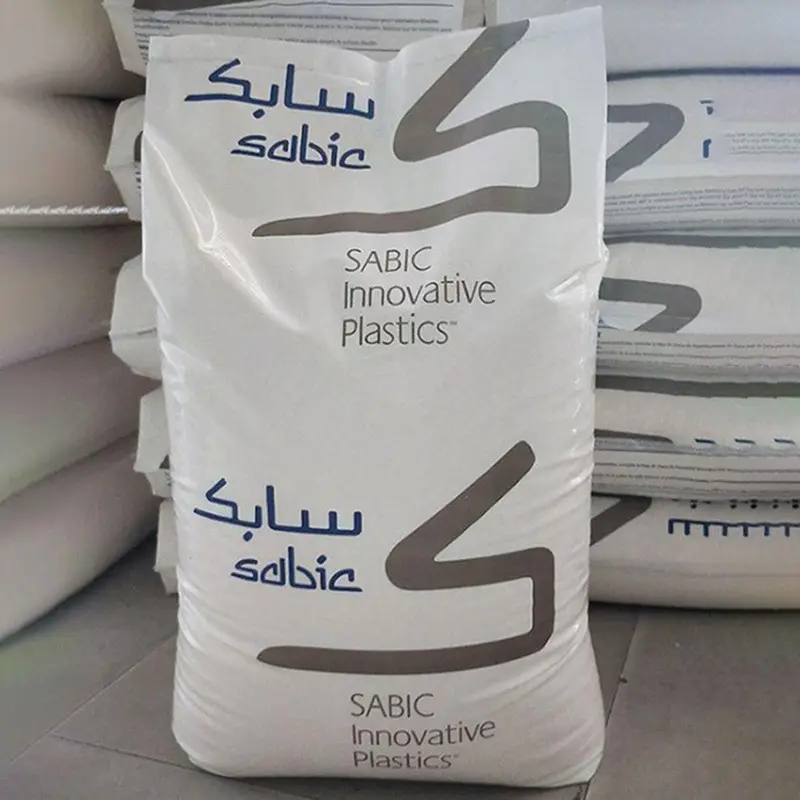
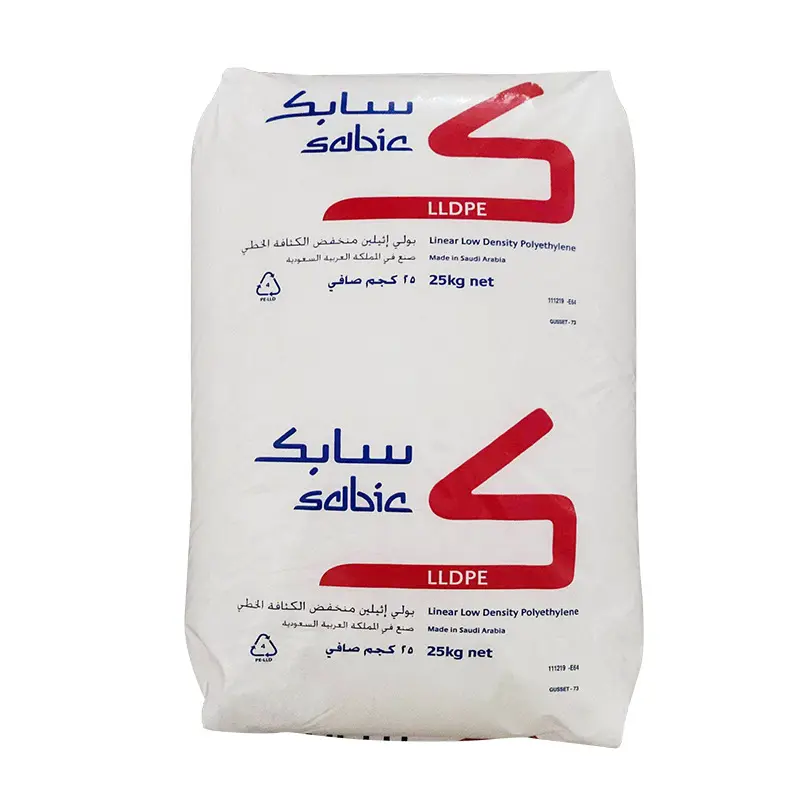
Product Overview & Key Features
- Manufacturer: SABIC
- Series: SABIC® LLDPE
- Category: Linear Low Density Polyethylene (LLDPE), C4-butene copolymer, blown film grade
- Additive Package: Contains slip and antiblock additives
- Appearance: Translucent natural pellets
- Processing Method: Blown film extrusion
SABIC® LLDPE 218WJ is a polyethylene resin developed by SABIC for high-quality flexible packaging films. Produced via gas-phase reaction technology using C4-butene as a comonomer, this grade features precisely controlled molecular weight and short-chain branching distributions. Formulated with pre-blended high-efficiency slip and antiblock additives, 218WJ significantly lowers the coefficient of friction (COF) of film surfaces, effectively resolving post-extrusion issues such as poor film opening and blocking.
In general packaging and industrial laminate films, SABIC® 218WJ is widely used in global multi-layer co-extrusion blown films and single-layer industrial packaging films due to its consistent batch quality, high gloss, low haze optical performance, and reliable heat sealability, making it a trusted resin for industrial bags, food packaging, and automated packaging films.
Technical Specifications
Physical Properties
| Property | Value | Unit | Test Standard |
| Density | 0.918 | g/cm³ | ASTM D1505 |
| Melt Flow Rate (190°C / 2.16 kg) | 2.0 | g/10min | ASTM D1238 |
Mechanical Properties
| Property | Value | Unit | Test Standard |
| Secant Modulus, Parallel (1% Secant) | 220 | MPa | ASTM D882 |
| Secant Modulus, Normal (1% Secant) | 260 | MPa | ASTM D882 |
| Tensile Strength at Yield, Parallel | 12 | MPa | ASTM D882 |
| Tensile Strength at Yield, Normal | 10 | MPa | ASTM D882 |
| Tensile Strength at Break, Parallel | 35 | MPa | ASTM D882 |
| Tensile Strength at Break, Normal | 29.0 | MPa | ASTM D882 |
| Tensile Elongation at Break, Parallel | 700 | % | ASTM D882 |
| Tensile Elongation at Break, Normal | 750 | % | ASTM D882 |
| Elmendorf Tear Strength, Parallel | 130 | g | ASTM D1922 |
| Elmendorf Tear Strength, Normal | 320 | g | ASTM D1922 |
| Dart Drop Impact | 150 (833.6) | g (kN/m) | ASTM D1709 |
Thermal Properties
| Property | Value | Unit | Test Standard |
| Vicat Softening Point | 98 | °C | ASTM D1525 |
Optical Properties
| Property | Value | Unit | Test Standard |
| Gloss (60°) | 80 | — | ASTM D2457 |
| Haze | 13 | % | ASTM D1003 |
Other Properties
| Property | Value | Unit | Test Standard |
| Puncture Resistance | 63 | J/m | Internal Method |
Notice: The technical specifications for SABIC® LLDPE 218WJ provided herein are compiled from data published by SABIC or certified third-party testing laboratories. While prepared with professional diligence, these values serve as reference guidelines rather than absolute performance guarantees. Because molding and processing conditions vary significantly across operational environments, we recommend performing trial runs with 218WJ under your actual manufacturing conditions prior to final material selection and mass production.
Features & Benefits
- Pre-blended Slip & Antiblock Additives for Improved Film Opening and Conversion Efficiency: 218WJ incorporates factory pre-blended slip and antiblock additives that effectively reduce the surface coefficient of friction (COF). During film blowing, rewinding, and bag making, the film resists blocking and exhibits easy opening, directly increasing the smooth operation and throughput of high-speed automated packaging lines.
- Balanced Tensile Strength and Toughness to Reduce Film Puncture and Failure: It features high tensile strength at break (35 MPa parallel / 29 MPa normal) combined with high elongation at break (700%–750%). Coupled with a dart drop impact strength of 150 g and puncture resistance of 63 J/m, the film resists tearing when subjected to sharp items or impact during handling and shipping.
- Excellent Longitudinal and Transverse Tear Resistance for Enhanced Packaging Protection: The Elmendorf tear strength reaches 320 g in the transverse direction (TD) and 130 g in the machine direction (MD). High tear resistance prevents tear propagation during slitting, packing, and unpacking, maintaining overall package integrity.
- High Gloss and Low Haze for Superior Display Clarity: With a 60° gloss of 80 and a haze of only 13%, it delivers clearer optical transparency and surface shine than conventional LLDPE, making it suitable for printed consumer packaging or products requiring high clarity to showcase contents.
- Melt Flow Index of 2.0 g/10min for Broad Extrusion Processability: An MFR of 2.0 allows the resin to maintain good melt strength and bubble stability during film blowing. While lowering extruder backpressure and power consumption, it accommodates higher line speeds and reduces die buildup.
Applications & Processing Guidelines
Recommended Applications
- Light- to Medium-Duty Industrial Bags: Agricultural bags, chemical liner bags, garment bags, and general shopping bags. Leverages high tensile strength and film opening properties to ensure load capacity and ease of use.
- Food and Consumer Packaging Films: Rice bags, frozen food bags, produce fresh-keeping films, and dry food laminate substrate films. Good transparency (13% haze) clearly displays goods while offering reliable heat seal strength.
- Multi-layer Co-extrusion Blown Films (ABC Structure) Sealant/Core Layers: Serves as a heat-seal layer or core toughness layer in 3-layer or multi-layer film blowing lines, working alongside LDPE or HDPE to optimize overall mechanical balance and cost structure.
- Form-Fill-Seal (FFS) Packaging Films: Suitable for high-speed automated form-fill-seal equipment, where good slip characteristics ensure smooth film feeding.
Processing Guidelines
- Processing Temperature Profile: Recommended melt temperature for blown film extrusion is 180°C – 210°C.
- Feed Zone: 160°C – 175°C
- Compression Zone: 180°C – 195°C
- Metering Zone / Die: 195°C – 205°C (Actual temperatures should be fine-tuned according to screw L/D ratio, blow-up ratio, and line speed to prevent additive volatilization or crystallinity degradation from excessive melt temperatures).
- Blow-Up Ratio (BUR) & Air Ring Control: A blow-up ratio (BUR) of 2.0:1 to 3.0:1 is recommended. Utilize dual-lip air ring cooling and properly adjust air volume and frost line height to ensure bubble stability and optimal MD/TD mechanical balance.
- Screw and Die Selection: A high-shear, low-resistance screw designed for LLDPE (such as a barrier screw with a mixing head) is recommended. The die gap should be maintained between 1.8 mm – 2.5 mm to reduce melt fracture (sharkskin effect) and lower extrusion backpressure.
- Drying Treatment: SABIC® LLDPE 218WJ is a non-hygroscopic polyolefin resin and does not require pre-drying under normal conditions. However, if stored in humid environments or warehouses with large temperature fluctuations, check the moisture level prior to processing; if necessary, dry at 70°C – 80°C for 1–2 hours to eliminate surface condensation.
Frequently Asked Questions (FAQs)
Q1: Does SABIC® LLDPE 218WJ require pre-drying prior to processing?
No. As a polyolefin resin, 218WJ has extremely low moisture absorption. As long as original packaging remains undamaged and stored in a dry warehouse, resin can be fed directly into production. Pre-drying at 70°C – 80°C for 1–2 hours is only recommended if condensation forms on cold bags brought into hot workshops or if packaging has been damaged.
Q2: What does the “WJ” suffix in SABIC 218WJ signify? How does it differ from 218N or 218W?
In SABIC LLDPE nomenclature, the “WJ” suffix denotes a specific additive combination:
- “W”: Indicates a high concentration of slip agent (such as erucamide) to lower the surface coefficient of friction (COF).
- “J”: Indicates the presence of an antiblock agent (such as silica/silicates) to prevent film layers from sticking together. Thus, 218WJ is a fully additive-formulated grade (Slip & Antiblock Grade) ready for high-opening film production, whereas grades without this suffix may require processors to add masterbatches manually.
Q3: How should processing parameters be adjusted if melt fracture (sharkskin) or high extrusion pressure occurs during film blowing?
LLDPE exhibits less shear thinning than LDPE, resulting in higher viscosity at low shear rates. If high extrusion pressure or surface roughness occurs, consider the following:
- Check Die Gap: Ensure the die gap is at least 1.8 mm; a wider die gap lowers the shear rate at the die exit.
- Increase Die Temperature: Raise the die and adapter temperatures by 5°C – 10°C to lower surface melt viscosity.
- Add Polymer Processing Aid (PPA): If screw shear capacity is limited, add 0.5%–1% fluoropolymer PPA masterbatch to eliminate die drool and melt fracture.