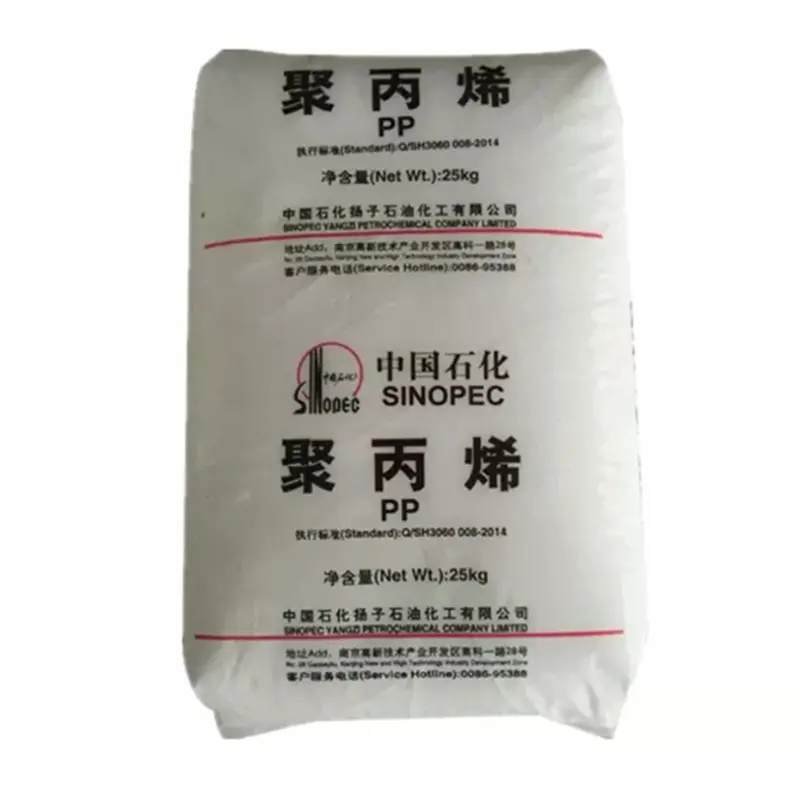
Product Overview & Key Features
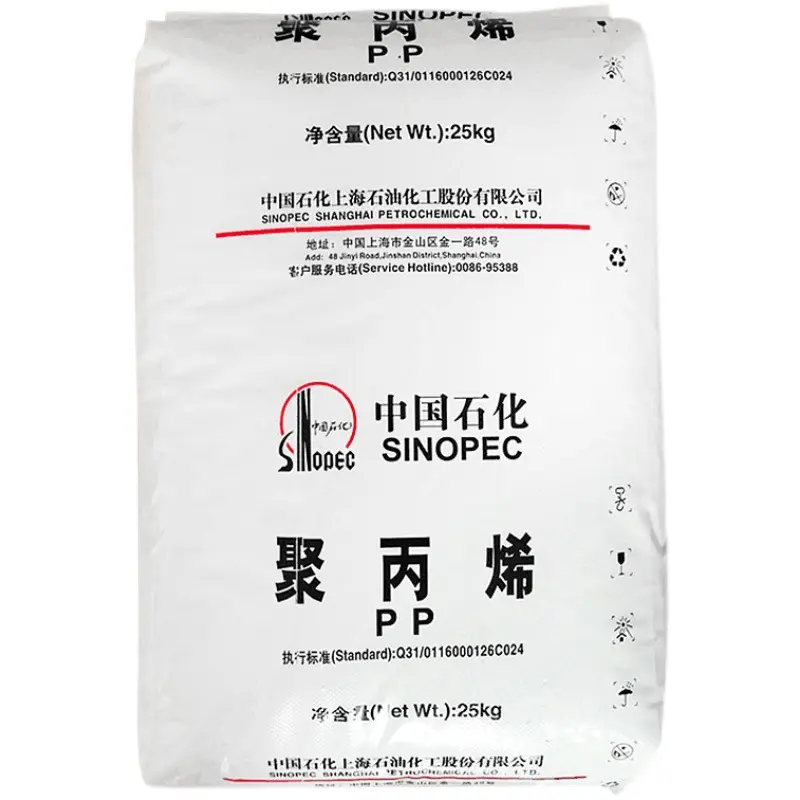
YPJ-1215C is an injection-grade high-impact copolymer polypropylene (PP) resin manufactured by Sinopec Yangzi Petrochemical Co., Ltd. Produced via a gas-phase polymerization process, this grade features a relatively high ethylene content, achieving an optimal balance between rigidity and impact resistance, making it a specialized resin developed for structural injection-molded parts.
From a fundamental material perspective, YPJ-1215C has a melt mass-flow rate (MFR) of 15 g/10 min (230 °C, 2.16 kg, GB/T 3682), offering good fluidity to meet mold-filling requirements for medium-to-large injection-molded components, while retaining the inherent low-density characteristic of copolymer polypropylene. In terms of mechanical properties, its tensile yield stress is 22 MPa, and its flexural modulus is approximately 1.03 GPa, providing the basic load-bearing rigidity required for structural parts. Low-temperature toughness is a prominent feature of this grade, with a Charpy notched impact strength reaching 6 kJ/m² even at -20 °C, making it suitable for operational environments with potential low-temperature impact risks.
Regarding chemical resistance and dimensional stability, the polypropylene matrix exhibits strong resistance to water, dilute acids, dilute alkalis, and most polar media, rendering molded parts less prone to environmental stress cracking in humid conditions. Its molding shrinkage is uniform, and its post-injection dimensional stability is favorable, making it well-suited for mass-produced components requiring strict dimensional consistency.
The primary compatible processing method is injection molding, and it can also accommodate partial extrusion and blow-molding operations. This grade is maturely applied in large or thick-walled products such as automotive bumper systems, battery housings, home appliance enclosures, and logistics turnover boxes.
Technical Specifications
Physical Properties
| Item | Test Condition | Property Value | Unit | Test Method |
| Melt Flow Rate (MFR) | 230 °C, 2.16 kg | 15 | g/10 min | GB/T 3682 |
Mechanical Properties
| Item | Test Condition | Property Value | Unit | Test Method |
| Tensile Yield Strength | — | 22 | MPa | GB/T 1040 |
| Rockwell Hardness | — | 85 | — | GB/T 9342 |
| Flexural Modulus | — | 1030 | MPa | GB/T 9341 |
| Izod Notched Impact Strength | -20 °C | 6 | kJ/m² | GB/T 1843 |
| Elongation at Break | — | 400 | % | GB/T 1040 |
| Charpy Notched Impact Strength | -20 °C | 6 | kJ/m² | GB/T 1043 |
Thermal Properties
| Item | Test Condition | Property Value | Unit | Test Method |
| Heat Deflection Temperature | — | 83 | °C | GB/T 1634 |
Notice: The technical specifications for Sinopec Yangzi YPJ-1215C provided herein are compiled from data published by Sinopec Yangzi Petrochemical or certified third-party testing laboratories. While prepared with professional diligence, these values serve as reference guidelines rather than absolute performance guarantees. Because molding and processing conditions vary significantly across operational environments, we recommend performing trial runs with YPJ-1215C under your actual manufacturing conditions prior to final material selection and mass production.
Features & Benefits
- Outstanding Low-Temperature Impact Resistance: Achieves an Izod notched impact strength of 6 kJ/m² at -20 °C (GB/T 1843), capable of withstanding impact loads in cold environments, making it ideal for automotive exteriors, battery housings, and other components requiring low-temperature toughness.
- Balance of Rigidity and Toughness: With a tensile yield strength of 22 MPa and a flexural modulus of 1030 MPa (GB/T 9341), it guarantees structural rigidity while balancing impact performance, suitable for load-bearing structural elements.
- Good Processing Flowability: A melt flow rate of 15 g/10 min (230 °C, 2.16 kg, GB/T 3682) fulfills the mold-filling demands of medium-to-large and thick-walled parts, helping to shorten molding cycles.
- Chemical Resistance: Demonstrates stable resistance to water, dilute acids, dilute alkalis, and common solvent media, fitting industrial parts and containers exposed to routine chemical substances.
- Dimensional Stability: An elongation at break of 400% (GB/T 1040) combined with uniform molding shrinkage ensures consistent product dimensions during mass production, catering to industrial parts requiring tight tolerances.
Applications & Processing Guidelines
YPJ-1215C is primarily targeted at large and thick-walled injection-molded products demanding high impact resistance, with typical applications including:
- Automotive Components: Exterior and functional parts such as automotive bumpers and battery housings, leveraging its low-temperature toughness and rigidity balance to suit vehicle operational conditions in cold climates.
- Home Appliances: Large injection-molded pieces like washing machine inner drums and appliance housings, meeting comprehensive requirements for impact resistance and dimensional stability.
- Logistics & Storage: Turnover boxes, pallets, and industrial containers suited for repeated handling and transport operations.
- Industrial Accessories: Battery boxes, toolboxes, and non-load-bearing structural brackets.
Processing Guidelines:
- Drying Treatment: Polypropylene features low hygroscopicity and generally requires no specialized drying. If raw materials are stored in highly humid environments or if surface defects such as silver streaks and bubbles appear, drying at 80–90 °C for 1–2 hours is recommended to eliminate surface moisture.
- Melt Temperature: With an MFR of 15 g/10 min, the recommended melt temperature ranges between 200–240 °C, subject to actual mold runner layouts and product wall thickness.
- Mold Temperature: Maintaining mold temperature between 30–60 °C is advised; for large thick-walled parts, mold temperature can be appropriately increased to improve mold filling and reduce internal stress.
- Screw Speed & Back Pressure: Utilize medium-low screw speeds and lower back pressure to prevent excessive melt heating via shear stress, minimizing flash and internal stress in molded parts.
- Holding & Cooling: Ensure adequate holding pressure and cooling time for thick-walled products to prevent sink marks and warpage.
Frequently Asked Questions (FAQs)
Q1: Does YPJ-1215C require drying prior to processing?
A: Polypropylene raw materials have very low moisture absorption and generally can be processed directly without drying. However, in cases of long-term storage in high-humidity environments, damaged packaging, or high surface aesthetic demands, pre-drying at 80–90 °C for 1–2 hours is advised to eliminate silver streaks and bubbles caused by surface moisture.
Q2: How does YPJ-1215C differ from standard PP homopolymer?
A: YPJ-1215C is a high-impact copolymer polypropylene containing ethylene copolymer units within its molecular chain, rendering its impact performance—especially low-temperature toughness—significantly superior to homopolymer PP. Conversely, homopolymer PP offers higher rigidity, heat resistance, and surface hardness. Prioritize YPJ-1215C if low-temperature impact resistance is mandatory (e.g., automotive bumpers, battery housings); select homopolymer grades if rigidity and heat resistance are the primary demands without low-temperature impact risks.
Q3: What precautions should be taken during processing given YPJ-1215C’s MFR of 15 g/10 min?
A: An MFR of 15 g/10 min represents a medium-high fluidity level, making it well-suited for filling medium-to-large and thick-walled articles. Control melt temperatures within 200–240 °C during processing to prevent thermal degradation from overheating, while applying lower back pressure and medium-low screw speeds to reduce shear-induced heating. For thin-walled items, monitor for potential venting issues and flash caused by high-speed mold filling.
Q4: Is YPJ-1215C suitable for producing automotive exterior parts like bumpers?
A: Yes. This grade is specifically developed as a specialized resin for high-impact large injection-molded parts, featuring a -20 °C impact strength of 6 kJ/m² and sound rigidity, making it maturely applied in exterior and functional components such as automotive bumpers and battery housings. If further requirements regarding weathering grade, paint adhesion, or UV aging resistance apply, confirm against specific technical agreements and perform trial molding verification as necessary.