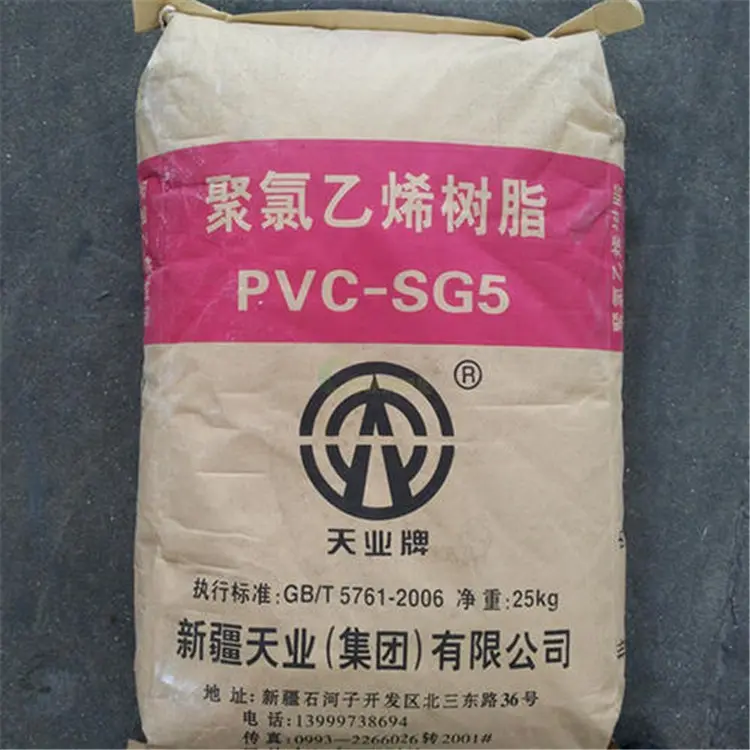
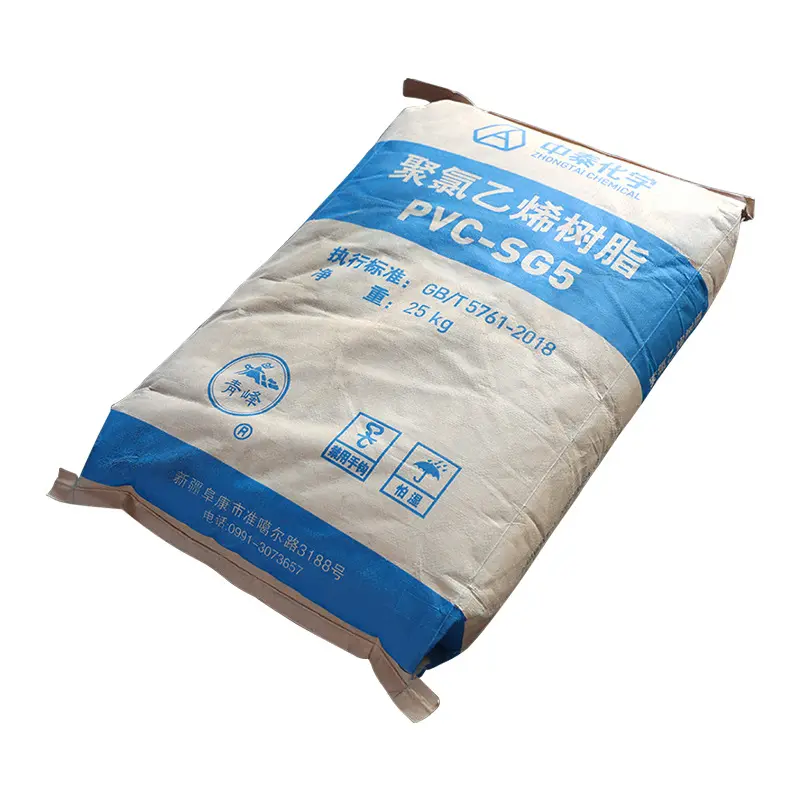
Product Overview & Key Features
SG-3 PVC is a suspension polyvinyl chloride resin manufactured by Xinjiang Zhongtai Chemical Co., Ltd. This material belongs to the high-molecular-weight polyvinyl chloride grade, with a viscosity number ranging from 125-127 mL/g, featuring a longer molecular chain structure compared to general-purpose SG-5 or SG-8 grades. This molecular characteristic endows SG-3 with higher tensile strength and toughness, while exhibiting higher melt viscosity and a slower plasticization rate during processing. SG-3 possesses typical polyvinyl chloride characteristics, including good chemical corrosion resistance, self-extinguishing properties, and electrical insulation performance. This grade is specifically designed for the processing technology of flexible products, making it particularly suitable for extrusion and calendering processes with specific requirements for mechanical properties and flexibility, such as wire and cable insulation layers, high-grade artificial leather, medical hoses, and high-strength films.
Technical Specifications
Basic Properties
| Property | Test Condition [State] | Test Method | Test Data | Unit |
| Viscosity Number | — | — | 125-127 | mL/g |
| Apparent Density | Superior Grade | — | 0.45 | g/cm³ |
| First-class Grade | — | 0.42 | g/cm³ | |
| Qualified Grade | — | 0.4 | g/cm³ |
Biochemical Properties and Physicochemical Indicators
| Property | Test Condition [State] | Test Method | Test Data | Unit |
| Impurity Particle Count | Superior Grade | — | 16 | counts |
| First-class Grade | — | 30 | counts | |
| Qualified Grade | — | 90 | counts | |
| Volatile Matter Content Including Water | Superior Grade | — | 0.3 | % |
| First-class Grade | — | 0.4 | % | |
| Qualified Grade | — | 0.5 | % | |
| Sieve Residue | Superior Grade, 0.063mm Sieve Aperture | — | 90 | % |
| First-class Grade, 0.063mm Sieve Aperture | — | 90 | % | |
| Qualified Grade, 0.063mm Sieve Aperture | — | 80 | % | |
| Sieve Residue | Superior Grade, 0.25mm Sieve Aperture | — | 2 | % |
| First-class Grade, 0.25mm Sieve Aperture | — | 2 | % | |
| Qualified Grade, 0.25mm Sieve Aperture | — | 8 | % | |
| “Fish-eye” Count | Superior Grade | — | 20 | counts/400cm² |
| First-class Grade | — | 40 | counts/400cm² | |
| Qualified Grade | — | – | counts/400cm² | |
| Plasticizer Absorption of 100g Resin | Superior Grade | — | 26 | g |
| First-class Grade | — | 25 | g | |
| Qualified Grade | — | – | g | |
| Whiteness | Superior Grade, After 160°C, 10min | — | 74 | % |
| First-class Grade, After 160°C, 10min | — | – | % | |
| Qualified Grade, After 160°C, 10min | — | – | % | |
| Water Extract Conductivity | Superior Grade | — | 0.005 | S/m |
| First-class Grade | — | 0.005 | S/m | |
| Qualified Grade | — | – | S/m | |
| Residual Vinyl Chloride Content | Superior Grade | — | 8 | ppm |
| First-class Grade | — | 10 | ppm | |
| Qualified Grade | — | – | ppm |
Disclaimer: The technical specifications for Xinjiang Zhongtai Chemical SG-3 PVC presented herein are derived from data issued by Xinjiang Zhongtai Chemical Co., Ltd. or certified third-party testing institutions. While we have made every effort to ensure the accuracy of the information provided, we assume no liability for any consequences arising from the use of SG-3 based on these data. Given the variables involved in processing conditions, we strongly recommend conducting thorough trials of SG-3 under your specific operational environment prior to final material selection.
Applications & Processing Guidelines
Typical Applications
Benefiting from its higher molecular weight (viscosity number 125-127 mL/g) and excellent plasticizer absorption capacity per 100g of resin (26 g for superior grade), SG-3 PVC is primarily used for flexible products requiring high physical and mechanical performance:
- Wires and Cables: Insulation layers and sheaths for power cables and signal cables, utilizing its high electrical insulation and heat resistance.
- Artificial Leather and Wallpaper: High-grade polyurethane artificial leather (PU leather) backing fabric, flexible PVC calendered leather, and specialty wallpaper, utilizing its good paste-forming properties and surface smoothness.
- Medical Materials: Flexible transparent products such as medical catheters, infusion tubes, and blood bags, which require coordination with specific non-toxic stabilizers.
- High-Performance Films: Agricultural weathering-resistant films, industrial packaging films, and liner films, utilizing high tensile strength and tear resistance.
Processing Guidelines
- Premixing and Kneading: SG-3 resin particles have moderate porosity, which facilitates plasticizer absorption. In a high-speed mixer, it is recommended to control the kneading temperature at 100-120°C to ensure that the plasticizer fully penetrates and undergoes preliminary gelation. The end point of kneading should be judged by loose material without white cores or agglomerates.
- Plasticizing Processing: Due to its higher molecular weight, the melt viscosity of SG-3 is higher than that of SG-5 or SG-8. During extrusion or calendering, processing temperatures need to be appropriately increased (usually 5-10°C higher than SG-5) and the dwell time of materials in the high-temperature zone should be extended to ensure complete plasticization. Melt pressure and current load must be closely monitored to prevent material degradation caused by excessive shear heat.
- Thermal Stability: PVC is sensitive to heat, and sufficient heat stabilizers (such as calcium-zinc stabilizers, organotin stabilizers, etc.) must be added during processing. It is recommended to add them evenly during the mixing stage and clean the barrel in time when processing equipment shuts down to prevent carbonization of residual materials.
Logistics, Packaging & Compliance
- Packaging Specifications: Standard packaging is 25 kg multi-layer paper bags lined with polyethylene film, featuring moisture-proof functions. Ton bags (Big Bags, typically 500kg or 1000kg) can also be provided according to customer requirements to accommodate the unbagging needs of automated production lines.
- Supply Attributes: SG-3 PVC resin is classified as a non-dangerous chemical (Non-DG) and complies with general cargo transportation standards. It supports 20-foot dry container (FCL) and consolidated cargo (LCL) sea and land shipping operations, requiring no special hazardous chemical transportation qualifications or vehicles.
- Delivery Lead Time: Relying on TaiKuo New Materials’ standing inventory at major ports and inland hubs, standard orders can achieve rapid response. Specific delivery lead times depend on Incoterms and destination port logistics conditions, normally arranged for shipment after order confirmation.
- Compliance and Documentation Support: Each batch of products is accompanied by complete quality management documents, including Technical Data Sheets (TDS), Safety Data Sheets (MSDS/SDS), and Certificates of Analysis (COA). The product complies with RoHS directive and REACH regulation requirements regarding restricted substances, and the residual vinyl chloride monomer content (8 ppm for superior grade) conforms to international health standards.
- ESG and Environmental Statement: As a thermoplastic material, PVC possesses the characteristics of physical recycling and reuse. We support circular economy practices, encouraging customers to classify and reprocess regrind and unqualified products during processing. At the same time, we are committed to promoting the green transformation of the supply chain, ensuring that the environmental impact of the product throughout its lifecycle is controllable and aligned with global green supply chain development trends.
FAQs
Q1: What are the core differences in processing and application between SG-3, SG-5, and SG-8?
A1: The core difference lies in the degree of polymerization (viscosity number). SG-3 has the highest viscosity number (125-127 mL/g) and the largest molecular weight, thus offering optimal tensile strength and toughness. However, it features high melt viscosity, requiring higher processing temperatures and longer plasticization times. It is primarily used for flexible, high-strength extruded or calendered products (such as cables and high-grade leather). In contrast, SG-5 (viscosity number 107-109 mL/g) is the main grade for general rigid products (pipes, profiles), while SG-8 (viscosity number 72-73 mL/g) is used for injection molded parts. Material selection should be determined based on product hardness requirements and the plasticizing capacity of processing equipment.
Q2: What precautions should be taken during the storage of SG-3 PVC to prevent performance degradation?
A2: Although PVC resin has low hygroscopicity, prolonged exposure to humid environments can still cause volatile matter content to exceed standards, affecting electrical insulation performance and thermal stability. It is recommended to store it in a ventilated, dry warehouse, avoiding direct sunlight, and stacking heights should not be excessive to prevent packaging damage. First-in, first-out (FIFO) inventory management principles help ensure the resin is used within its shelf life, preventing thermal stability degradation caused by long-term storage.
Q3: Does the residual vinyl chloride monomer (VCM) content of this grade comply with food-contact or medical-grade standards?
A3: According to the specification sheet, the residual vinyl chloride content of SG-3 superior grade is 8 ppm. Although this indicator is superior to many general-purpose resins, if applied to food-contact or implantable medical devices, specific national/regional regulations (such as FDA 21 CFR, EU 10/2011) must still be verified. We recommend requesting third-party testing reports for final products targeting specific applications, and adding food/medical-grade stabilizers and additives into the formulation to ensure compliance of the end product.
Q4: How can I apply for SG-3 samples for formulation testing?
A4: TaiKuo New Materials can provide commercial trial samples for downstream processing enterprises, with material and logistics costs covered by the customer. It is recommended to seal and store samples immediately upon receipt, and conduct necessary pre-heating and drying treatments prior to processing.