Product Overview & Key Features
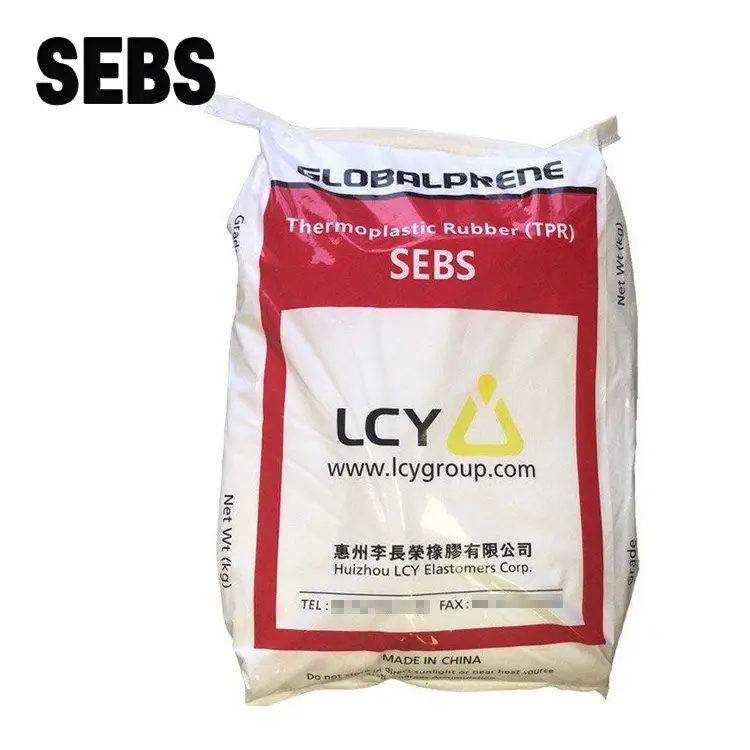
This product is manufactured by LCY Chemical and belongs to the Globalprene® series of thermoplastic elastomer (SEBS) resins, specifically the 9901 grade. This grade is a maleic anhydride-grafted styrene-ethylene-butylene-styrene block copolymer (MAH-g-SEBS), combining the high-elastic processing characteristics of thermoplastic elastomers with the strong polar compatibility of active functional groups. The material exhibits good thermal stability and weather resistance, and its polar groups endow it with excellent coupling, compatibilization, and blending modification efficiency for polar/non-polar materials. The raw material is suitable for mainstream polymer processing and modification technologies such as twin-screw extrusion, injection molding, and coating.
Technical Specifications
Physical Properties
| Physical Properties | Test Value | Test Unit | Test Standard |
| Density | 0.91 | g/cm³ | ASTM D792 |
| Melt Flow Rate (230 ℃, 5 kg) | 10 | g/10min | ASTM D1238 |
| Ash | 0.3 | % | ASTM D5667 |
| Maleic Anhydride Content | 1.6 | % | Internal Method |
| Styrene Content | 30 | % | ASTM D5775 |
| Volatiles | 0.3 | % | ASTM D5668 |
Disclaimer: The technical specifications for LCY Chemical Globalprene® 9901 SEBS presented herein are derived from data issued by LCY Chemical or certified third-party testing institutions. While we have made every effort to ensure the accuracy of the information provided, we assume no liability for any consequences arising from the use of Globalprene® 9901 SEBS based on these data. Given the variables involved in processing conditions, we strongly recommend conducting thorough trials of Globalprene® 9901 SEBS under your specific operational environment prior to final material selection.
Applications & Processing Guidelines
Globalprene® 9901 SEBS is widely used in engineering plastics (such as PA, PBT, PC/PBT, etc.) as a toughening modification compatibilizer, as a coupling component for halogen-free flame-retardant wire and cable compounds, and as an adhesion promoter for specialty adhesives and polar substrates, thanks to the maleic anhydride active groups grafted onto its molecular chain. In terms of processing, with a melt flow rate of 10 g/10min (230 ℃, 5 kg), it features moderate fluidity and thermal processability. To ensure the activity of the grafted groups and prevent moisture absorption from causing bubbles, it is recommended to conduct hot-air drying at 70–80 ℃ for 2–4 hours prior to processing. During extrusion or melt blending granulation, processing temperatures across each zone should be reasonably regulated to avoid cross-linking or degradation caused by excessive shear heat.
Logistics, Packaging & Compliance
LCY Chemical Globalprene® 9901 SEBS is supplied in standard 25kg moisture-proof packaging bags. The product is in solid pellet form, is not classified as a hazardous chemical, and is not subject to special hazardous materials transportation controls. Cooperative warehouse nodes maintain reliable safety stock. The average delivery lead time for domestic spot orders is 3–8 working days, and for export orders is 10–15 working days, with actual delivery executed in accordance with the agreed trade terms between both parties. The product complies with general ocean and land freight specifications and can be co-loaded and shipped in mixed containers with other non-hazardous thermoplastic elastomers or resins, helping customers consolidate multi-category raw materials for unified dispatch and optimize overall logistics costs. Purchasers may request electronic or paper copies of the manufacturer’s TDS, MSDS, and COA batch quality inspection documents. This grade complies with EU REACH and RoHS regulations, satisfying market entry requirements for terminal products across various global regions. A comprehensive traceability system is established for all raw material batches, with each batch linked to an independent production lot number. Production, quality inspection, and warehouse outbound records are fully archived to ensure batch performance consistency. At the same time, the raw material production process effectively controls pollutant emissions during manufacturing, is free from regulated hazardous substances, and meets downstream green supply chain audit and ESG requirements.
Frequently Asked Questions (FAQs)
Q1: Does Globalprene® 9901 SEBS require drying prior to processing?
A: Although the SEBS matrix has low moisture absorption, because 9901 contains maleic anhydride grafted groups, it easily adsorbs surface moisture in humid environments. To prevent bubbles, silver streaks, or anhydride hydrolysis caused by high-temperature processing that could impair compatibilization performance, hot-air drying at 70–80 ℃ for 2–4 hours is recommended prior to processing.
Q2: What is the primary role of this maleic anhydride-grafted SEBS grade in engineering plastic modification?
A: 9901 features a maleic anhydride grafting rate of 1.6% and a styrene content of 30%. Its anhydride groups can chemically react with end groups of engineering plastics such as polyamide (PA) and polyester (PBT), significantly improving the interfacial adhesion between the elastomer and the polar matrix, thereby acting as an efficient compatibilizer and toughening agent to substantially enhance the impact toughness of composite materials.
Q3: What processing key points should be noted regarding the melt index (10 g/10min) of 9901 during twin-screw extrusion or blending?
A: This grade exhibits favorable melt flowability. During multi-component blending and granulation, it is recommended to properly match the screw configuration and shear rate to ensure uniform dispersion of the grafted elastomer within the matrix, while strictly controlling the barrel temperature window to prevent localized overheating. Customers are advised to conduct laboratory-scale trials based on their own equipment and formulation systems to determine optimal process parameters.
Q4: Can samples be provided for formulation testing and preliminary evaluation?
A: Sample requests are supported for preliminary laboratory R&D and formulation evaluation. Sample specifications, delivery schedules, and related logistics rules can be negotiated separately. Prior to official bulk procurement, completing comprehensive melt blending processing verification and terminal physical performance testing is highly recommended.