Product Overview & Key Features
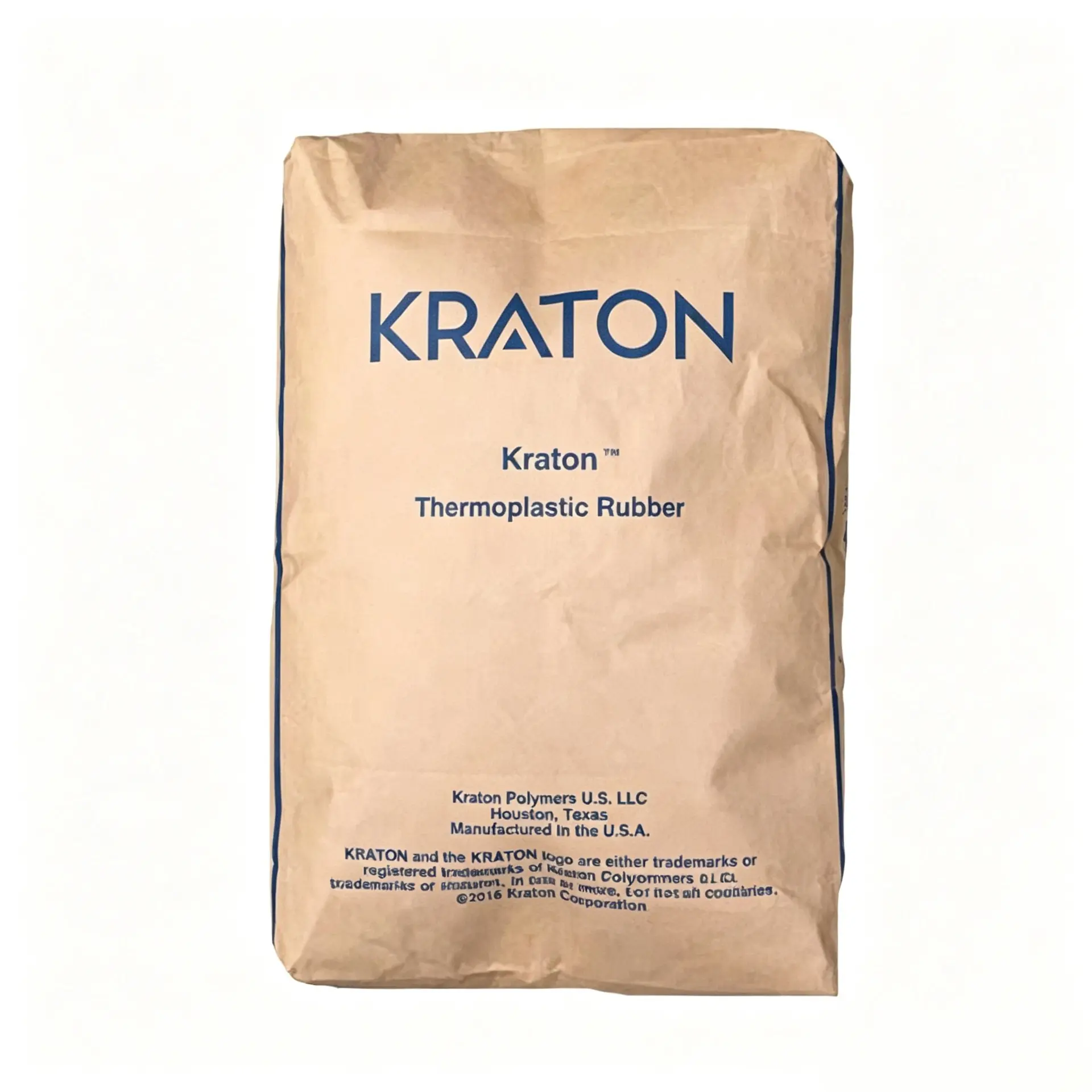
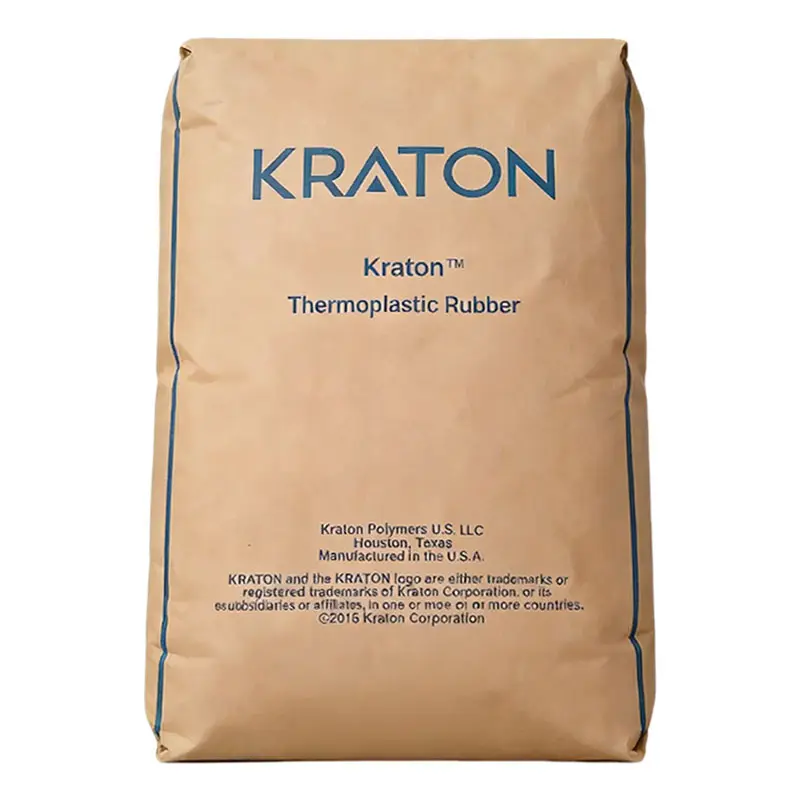
- Manufacturer: Kraton
- Product Series: KRATON® G Series (Hydrogenated Styrenic Block Copolymers)
- Core Material Attributes: KRATON® G1651 H is a linear triblock copolymer based on styrene-ethylene/butylene-styrene (SEBS), supplied in pellet form, with a density of 0.910 g/cm³ and a polystyrene (PS) content of 31–35%.
As a classic hydrogenated SBC grade from Kraton, G1651 H is renowned in the amorphous SEBS field for its “low extractables, high purity, and excellent UV stability,” serving as a benchmark raw material in polymer modification, adhesives, sealants, and personal care formulations. Its molecular chains are hydrogenated to eliminate unsaturated double bonds, imparting exceptional antioxidant, ozone-resistant, and weather-resistant properties while retaining the elasticity and processing convenience of traditional SBS.
Technical Specifications
Physical Properties
| Property | Value / Unit | Test Standard |
| Density | 0.910 g/cm³ | ASTM D792 |
| Polystyrene Content | 31-35 % | Internal Method |
| Total Extractables | < 1 % | Internal Method |
| Volatiles | < 0.5 % | Internal Method |
| Shore Hardness A (10 s, Compression Molded) | 60 | ASTM D2240 |
Mechanical Properties
| Property | Value / Unit | Test Standard |
| Tensile Strength | > 27.6 MPa | Internal Method |
| Tensile Strain, Break | > 800 % | Internal Method |
Notice: The technical specifications for KRATON® G1651 H provided herein are compiled from data published by Kraton or certified third-party testing laboratories. While prepared with professional diligence, these values serve as reference guidelines rather than absolute performance guarantees. Because molding and processing conditions vary significantly across operational environments, we recommend performing trial runs with G1651 H under your actual manufacturing conditions prior to final material selection and mass production.
Features & Benefits
- Low Extractables & Low Volatiles (<1% / <0.5%): High material purity, ideal for medical, food contact, and personal care applications sensitive to total migration, reducing the risk of downstream formulation contamination.
- Excellent UV Stability & Weather Resistance: The hydrogenated SEBS backbone features no conjugated double bonds, making it resistant to yellowing and cracking under long-term outdoor exposure or UV irradiation, thereby extending end-product service life.
- High Elasticity & Low Hardness (Shore A 60): Delivers a soft touch and high elongation (>800%), suitable for manufacturing flexible parts, soft-touch overmolding, and cushioning seals.
- Good Compatibility & Modification Capability: The 31–35% PS blocks impart compatibility with polar resins (such as PS, PP, and PE), frequently serving as a toughening agent or compatibilizer in polymer blend systems.
- Stable Processing Rheology: Uniform pellet morphology, easy to compound with white oils, resins, and fillers, compatible with conventional thermoplastic processing techniques such as extrusion, injection molding, and calendering.
Applications & Processing Guidelines
Typical Applications
- Polymer Modification: Used as an impact modifier for substrates like PP, PE, and PS to enhance low-temperature toughness; utilized in producing toughened alloys for automotive bumpers and appliance housings.
- Adhesives & Sealants: Formulating solvent-based or hot-melt pressure-sensitive adhesives (HMPSA) and sealants, leveraging its high cohesive strength and low extractables to meet label and medical dressing requirements.
- Personal Care & Medical: Used for producing soft medical tubing, infusion bag components, and baby care products, subject to original manufacturer FDA compliance statements.
- Soft-Touch Overmolding & Consumer Goods: Overmolding for dual-durometer components such as tool handles, toothbrush grips, and electronic device protective cases.
- Asphalt & Waterproofing Materials: Serving as a modifier for paving asphalt to improve high-temperature rutting resistance and low-temperature cracking resistance.
Processing Guidelines
- Drying: SEBS has low inherent moisture absorption; however, if stored in high-humidity environments or used in demanding electronic/medical applications, drying at 60–80°C for 2–4 hours is recommended to keep the moisture content below 0.1%.
- Compounding: G1651 H is typically supplied as a neat polymer and must be compounded with white oils, resins (such as APP or C5 petroleum resins), and additives. Twin-screw extruders are recommended for dynamic vulcanization or simple compounding, with barrel temperatures set between 180–220°C.
- Injection Molding / Extrusion: Pure SEBS has relatively low melt strength; direct injection molding requires a specialized screw (compression ratio 2.0–2.5) with recommended mold temperatures of 20–40°C. When used as a modifying base, it is usually blended with PP to form thermoplastic vulcanizates (TPV) prior to further processing.
- Storage & Safety: Store in a cool, dry place away from direct sunlight. Classified as a non-dangerous chemical (Non-DG), but should be kept away from open flames and strong oxidizing agents.
Frequently Asked Questions (FAQs)
Q1: What is the fundamental difference between G1651 H and unhydrogenated SBS (such as the Kraton D series)?
A1: G1651 H is an SEBS (hydrogenated product) in which the butadiene blocks in the molecular chain have been fully hydrogenated, eliminating unsaturated bonds. Compared to SBS, SEBS offers superior thermal-oxidative aging resistance, UV stability, and chemical resistance, maintaining elasticity across a wider temperature range (-50°C to 120°C). However, its cost is relatively higher, making it suitable for outdoor or high-weatherability scenarios.
Q2: Does this material require drying? What are the effects of insufficient drying?
A2: SEBS generally has low hygroscopicity, and conventional processing can often proceed without drying. However, for optical-grade, medical-grade, or high-transparency products, trace moisture may cause surface silver streaks or bubbles. For moisture-sensitive applications, drying at approximately 70°C for 2 hours is recommended. Insufficient drying primarily affects appearance rather than mechanical properties.
Q3: Does G1651 H comply with food contact or FDA regulations?
A3: Kraton offers SEBS grades compliant with regulations such as FDA 21 CFR 177.2600 (rubber articles); however, the specific compliance status of G1651 H should be verified against the manufacturer’s latest official statement. Buyers should request the lot-specific FDA certificate or food contact compliance documentation; compliance cannot be automatically assumed for all SEBS grades.