Product Overview & Key Features
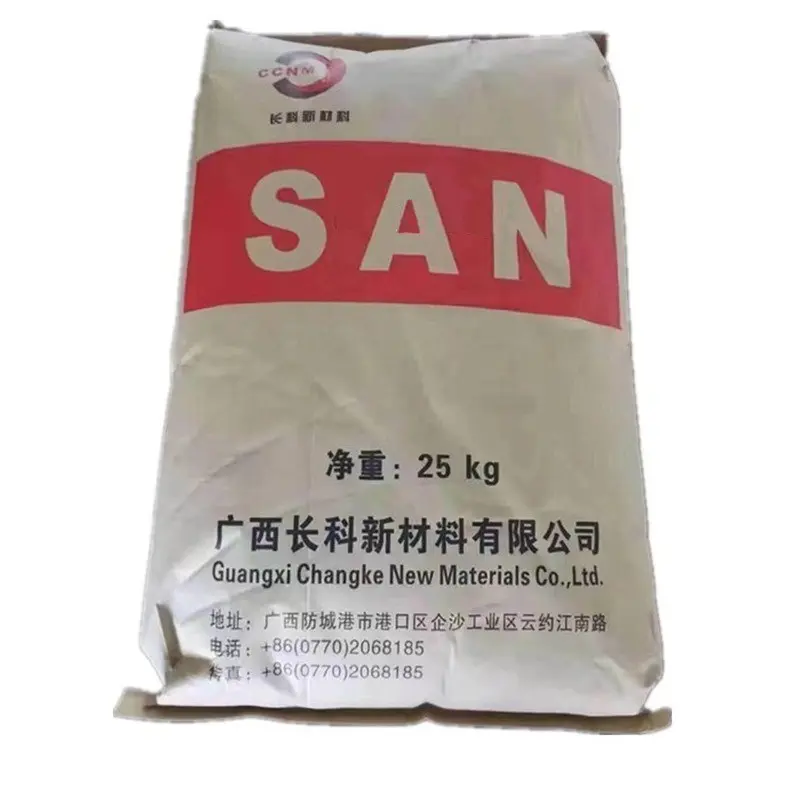
Changke New Materials CN-2800 is a high-flow styrene-acrylonitrile copolymer (SAN / AS resin) produced by Changke New Materials, supplied as natural transparent pellets and positioned as a general-purpose injection molding grade raw material. This grade features a high melt flow rate, excellent mold-filling capability, and a controllable molding cycle; the material maintains a stable transparent appearance, high rigidity, and good surface gloss. Compared to GPPS, it offers better resistance to household chemicals, a higher heat deflection temperature, lower susceptibility to environmental stress cracking, and good dimensional stability.
Key Features
- High melt flowability, suitable for injection molding of thin-walled and complex structural transparent parts
- High transparency with uniform surface gloss on molded parts
- Balanced rigidity with stable tensile and flexural performance
- Resistant to greases, weak acids and bases, detergents, and other media
- Narrow molding shrinkage range, facilitating dimensional control of precision aesthetic parts
- UL94 HB flame rating, meeting basic flame retardancy requirements for general electrical enclosures
Suitable Processing Technology
Mainstream technology: Injection molding; high-speed extrusion of sheets/thick plates is not recommended.
Technical Specifications
Physical Properties
| Physical Property | Value | Unit | Test Standard |
| Density | 1.06 | g/cm³ | ASTM D792 |
| Molding Shrinkage, Parallel (3.2 mm) | 0.2–0.6 | % | ASTM D955 |
| Melt Flow Rate (220 ℃, 10 kg) | 30 | g/10min | ASTM D1238 |
| Rockwell Hardness R | 122 | — | ASTM D785 |
Mechanical Properties
| Mechanical Property | Value | Unit | Test Standard |
| Tensile Strength, Break (50 mm/min, 3.2 mm) | 68 | MPa | ASTM D638 |
| Tensile Strain, Break (50 mm/min, 3.2 mm) | 6 | % | ASTM D638 |
| Flexural Strength (10 mm/min, 6.4 mm) | 108 | MPa | ASTM D790 |
| Flexural Modulus (10 mm/min, 6.4 mm) | 3530 | MPa | ASTM D790 |
| Charpy Notched Impact Strength (23 ℃, 6.4 mm) | 1.9 | kg·cm/cm | ASTM D256 |
Thermal Properties
| Thermal Property | Value | Unit | Test Standard |
| Heat Deflection Temperature, Unannealed (6.4 mm, 18.6 kg) | 80 | ℃ | ASTM D648 |
| Flammability Rating | HB | — | UL 94 |
| Relative Thermal Index (RTI), Electrical | 50 | ℃ | UL 746B |
| Relative Thermal Index (RTI), Impact | 50 | ℃ | UL 746B |
| Relative Thermal Index (RTI), Tensile | 50 | ℃ | UL 746B |
Electrical Properties
| Electrical Property | Value | Unit | Test Standard |
| Arc Resistance (23 ℃) | 6 | s | ASTM D495 |
Disclaimer: The technical specifications for Changke New Materials CN-2800 presented herein are derived from data issued by Changke New Materials or certified third-party testing institutions. While we have made every effort to ensure the accuracy of the information provided, we assume no liability for any consequences arising from the use of CN-2800 based on these data. Given the variables involved in processing conditions, we strongly recommend conducting thorough trials of CN-2800 under your specific operational environment prior to final material selection.
Applications & Processing Guidelines
Recommended Applications
Leveraging its high fluidity advantage, it is primarily suited for thin-walled and complex structural transparent injection molded parts:
- Transparent cosmetic packaging, storage containers, and transparent bottle cap components
- Small appliance transparent windows, control panel decorative parts, and coffee machine accessories
- Office stationery: transparent pen barrels, rulers, file storage boxes, and transparent display boxes
- Small instrument housings and transparent observation windows
- Modification base material: can be used as a matrix raw material for ABS and other polymer blend modifications
Processing Operation Key Points
Drying Requirements
SAN resin is hygroscopic; molding with damp raw material easily generates silver streaks, bubbles, and water marks. Recommended drying conditions: 80–85 ℃, hot air drying for 2–4 h; control moisture content below 0.05% before molding. The drying process must not be skipped in high-humidity environments.
Injection Temperature Reference
Barrel temperature range: 210–250 ℃; mold temperature: 40–70 ℃. Strictly avoid prolonged retention at high temperatures above 260 ℃ to prevent resin thermal degradation, loss of transparency, and yellowing of the finished product.
Screw and Process Control
Use moderate back pressure and control screw speed to minimize excessive shear heating; adopt smooth multi-stage filling to reduce internal residual stress in the product and lower the risk of subsequent solvent stress cracking.
Regrind Usage
Clean scrap edges can be reused moderately; it is recommended that the addition proportion does not exceed 20%, and thorough drying of the regrind must be ensured.
Logistics, Packaging & Compliance
Packaging Specifications
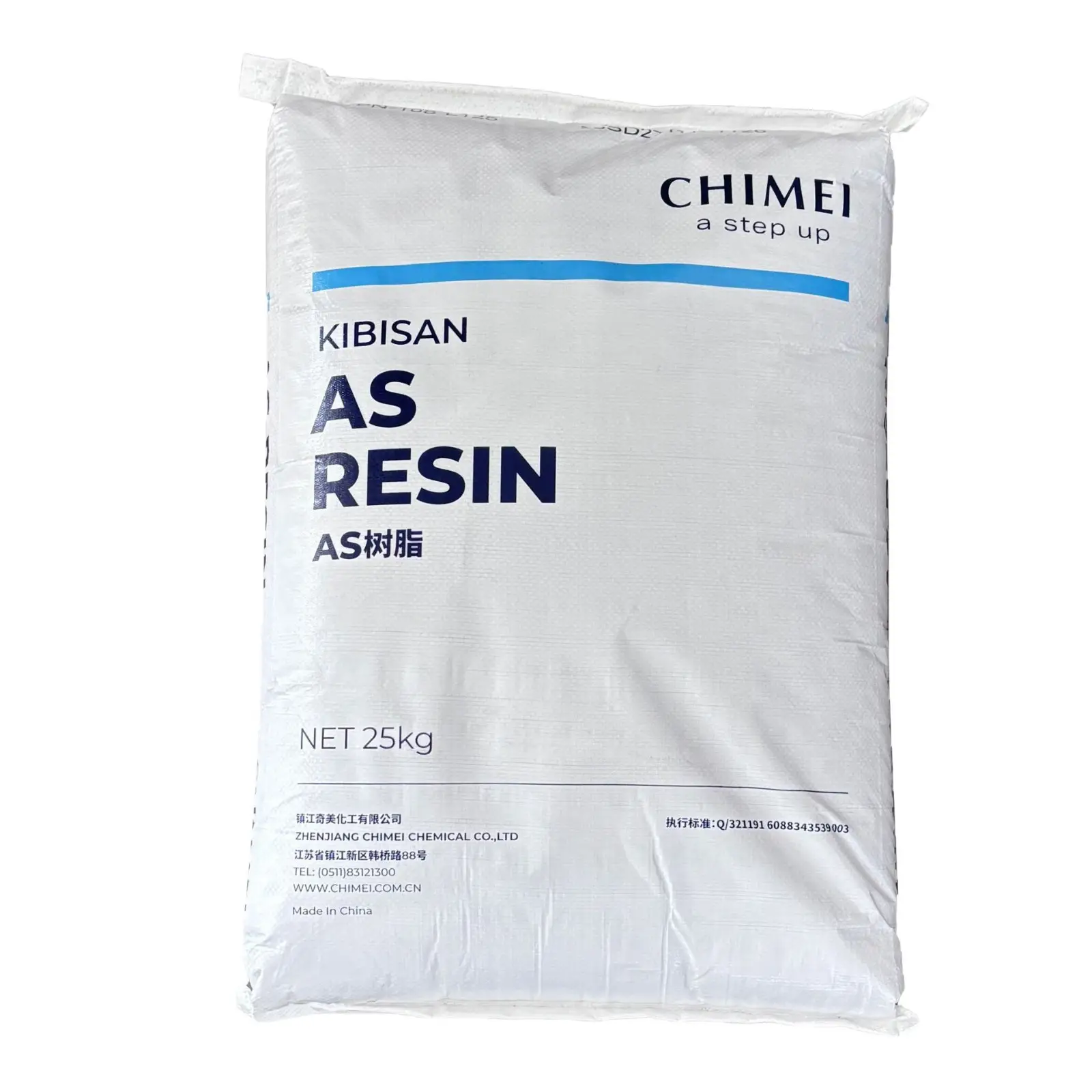
Standard packaging: 25kg/bag, woven bag with inner moisture-proof liner; large-batch orders can be provided with pallet stretch wrapping to reduce transportation damage risks.
Shipping Instructions
Non-hazardous chemical, can be handled as general cargo for land transportation, ocean freight, and LCL mixed loading; regular spot stock delivery lead time is 7–15 working days, and production schedules can be coordinated for long-term large orders.
Documentation and Compliance Qualifications
Batch COA factory test reports, original TDS, and MSDS safety data sheets can be provided with the shipment or separately; the material complies with RoHS and REACH regulatory control requirements. If customers require specialized third-party testing reports, the testing submission process can be arranged accordingly.
ESG Environmental Statement
Changke CN-2800 SAN does not intentionally contain restricted substances such as polybrominated flame retardants and heavy metals; clean processing scrap edges can be recycled into pellets and reintroduced into production to improve raw material utilization. TaiKuo New Materials can assist customers in completing supply chain document archiving and import/export declaration material organization.
Frequently Asked Questions (FAQs)
Q1: Is drying mandatory before processing CN-2800?
A: Forced drying is recommended. SAN resin easily absorbs moisture from the air, and undried raw material injection molding will very likely cause silver streaks and light transmission defects; drying procedures must be strictly executed in coastal humid areas and during the plum rain season.
Q2: With a melt index of 30g/10min, what types of products is CN-2800 suitable for?
A: This grade belongs to high-flow SAN, and its advantage lies in filling thin-walled, long-flow-length, and complex structured transparent injection parts; for thick-walled large parts and products requiring higher impact resistance, evaluating other medium-to-low melt index SAN grades is recommended.
Q3: How to select and distinguish between CN-2800 SAN and GPPS?
A: GPPS can be chosen if only pursuing low cost and working conditions without chemical contact; if products are in long-term contact with detergents and greases, requiring better heat resistance and lower cracking risk, CN-2800 SAN should be prioritized. SAN has better rigidity and chemical resistance than GPPS, with a relatively higher raw material cost.