Product Overview & Key Features
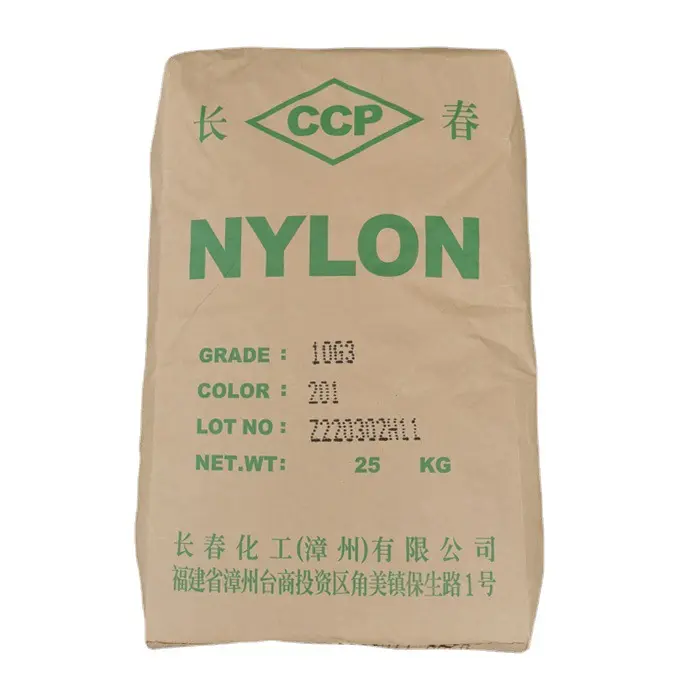
- Manufacturer: Chang Chun Plastics Co., Ltd. (Taiwan)
- Product Series: LONGLITE® Series Engineering Plastics
- Basic Material Properties: LONGLITE® PA6 10G3-201 is a 15% glass fiber reinforced polyamide 6 (PA6) injection molding grade engineering plastic manufactured by Chang Chun Plastics. Supplied as natural/uncolored pellets, it exhibits excellent mechanical strength, rigidity, and heat resistance.
- Core Performance Advantages: Features high rigidity, fatigue resistance, oil and wear resistance, and good electrical insulation. It offers sound resistance to oils, solvents (such as gasoline and engine oil), and weak acids/bases.
- Processing Compatibility: Optimized specifically for conventional injection molding processes, offering moderate fluidity and good mold release properties, making it suitable for efficient high-volume production on standard injection molding equipment.
Technical Specifications
Physical Properties
| Properties | Test Conditions | Property Values | Units | Test Methods |
| Density | — | 1.23 | g/cm³ | ASTM D792 |
| Ash Content | — | 15 | % | Internal Method |
Mechanical Properties
| Properties | Test Conditions | Property Values | Units | Test Methods |
| Flexural Modulus | — | 5000 | MPa | ASTM D790 |
| Tensile Strength | — | 120 | MPa | ASTM D638 |
| Tensile Strain at Break | — | 4.6 | % | ASTM D638 |
| Flexural Strength | — | 181 | MPa | ASTM D790 |
Thermal Properties
| Properties | Test Conditions | Property Values | Units | Test Methods |
| Heat Deflection Temperature (HDT) | 1.8 MPa | 209 | °C | ASTM D648 |
| Heat Deflection Temperature (HDT) | 0.45 MPa | 219 | °C | ASTM D648 |
| Melting Point | — | 225 | °C | Internal Method |
Electrical Properties
| Properties | Test Conditions | Property Values | Units | Test Methods |
| Comparative Tracking Index (CTI) | — | 550 | V | ASTM D3638 |
Flammability Performance
| Properties | Test Conditions | Property Values | Units | Test Methods |
| Flammability Rating | 0.8 mm | HB | dimensionless | UL 94 |
Other Properties
| Properties | Test Conditions | Property Values | Units | Test Methods |
| Dielectric Strength | — | 26 | kV/mm | ASTM D149 |
| Impact Strength | — | 8 | kg-cm/cm | ASTM D256 |
Notice: The technical specifications for LONGLITE® 10G3-201 provided herein are compiled from data published by Chang Chun Plastics Co., Ltd. (CCP Group) or certified third-party testing laboratories. While prepared with professional diligence, these values serve as reference guidelines rather than absolute performance guarantees. Because molding and processing conditions vary significantly across operational environments, we recommend performing trial runs with 10G3-201 under your actual manufacturing conditions prior to final material selection and mass production.
Features & Benefits
- High Structural Rigidity & Metal Replacement: The 15% glass fiber reinforcement endows the material with a high flexural modulus (5,000 MPa) and tensile strength (120 MPa), making it suitable for industrial structural components subjected to sustained pressures.
- Excellent Thermal Stability: Reaches a heat deflection temperature of 209 °C under 1.8 MPa, maintaining dimensional and performance stability under high-temperature operational conditions.
- Chemical & Fatigue Resistance: Exhibits good tolerance to engine oils, fuels, and weak acids/bases, making it ideal for components exposed to media in automotive and industrial environments.
- Good Electrical Insulation: Features a CTI of 550 V and a dielectric strength of 26 kV/mm, meeting the requirements for medium-load insulation parts.
- Convenient Processing & Molding: Moderate fluidity fits conventional injection molding equipment, helping to enhance production efficiency and product yield rates.
Applications & Processing Guidelines
Recommended Applications / End Products
- Automotive Components: Medium-load structural parts such as interior brackets, door lock components, lamp bases, wiring harness bases, and clips (non-engine compartment applications only).
- Electronics & Electrical: Insulating parts like connector housings, coil bobbins, and switch bases.
- Power Tools & Home Appliances: Components subjected to vibration fatigue, such as internal support housings for power tools and high-strength brackets for household appliances.
Practical Processing Guidelines
- Drying Treatment (Critical): PA6 matrix has moderate moisture absorption. Thorough drying prior to processing is mandatory; it is recommended to use hot air or desiccant drying at 80–100 °C for 3–6 hours (or vacuum drying at 105 °C for 3–4 hours), maintaining moisture content below 0.1% to prevent silver streaks and performance degradation.
- Temperature Control: Melting point is 225 °C; actual injection barrel temperatures are typically controlled between 240–270 °C, and mold temperatures are recommended at 40–120 °C.
- Precautions: The material lacks dedicated heat-stabilizing modification and is not suitable for long-term continuous thermal aging conditions in engine compartments; additional anti-UV additives are required for outdoor applications.
FAQs
Q1: Is pre-drying mandatory before processing 10G3-201? What are the conditions?
A1: Pre-drying is mandatory. PA6 has relatively high moisture absorption; molding without sufficient drying will cause silver streaks, voids, and tensile strength attenuation. Hot air or desiccant drying at 80–100 °C for 3–6 hours (or vacuum drying at 105 °C for 3–4 hours) is recommended, followed by airtight transfer while warm.
Q2: How to choose between Chang Chun Plastics’ 10G3-201 and unreinforced PA6 or other grades?
A2: Containing 15% glass fiber, 10G3-201 offers significantly superior rigidity and heat resistance compared to standard unreinforced PA6. It benchmarks against grades like BASF Ultramid B3EG3 and DuPont Zytel 73G15L. Opt for this material if the end application requires high rigidity, fatigue resistance, and oil resistance (such as automotive brackets or tool housings); it is not suitable if high-gloss surface finish or extrusion blow molding is required.
Q3: What about the material’s flammability and compliance certifications?
A3: The baseline flammability rating of this grade is UL 94 HB (at 0.8 mm), classifying it as a non-flame-retardant modified grade, making it unsuitable for fire-retardant parts requiring mandatory V-0 certification. The product complies with RoHS requirements. For specific batch RoHS/REACH declarations and UL Yellow Cards (File No. E304813), please refer to third-party test reports issued by the manufacturer.
Q4: What precautions should be taken when using this material outdoors or in high-temperature environments?
A4: 10G3-201 lacks dedicated heat stabilizers and is unsuited for long-term continuous thermal aging environments like automotive engine bays. Additionally, it lacks UV-resistant modification; extra ultraviolet (UV) stabilizing additives must be incorporated if deployed in long-term outdoor weathering applications.